This article suggests a fixed time terminal sliding mode control (FTSMC) design for the position stability of the hovercraft dynamics. The aim is to ensure the finite time convergence of the tracking errors to zero, whilst guaranteeing robustness to external disturbances and system uncertainties. The proposed sliding mode control (SMC) is derived based on a novel sliding manifold for the nonlinear dynamics of hovercraft. A main feature of the proposed FTSMC approach is its robustness and fixed settling time independent of the change in initial conditions. Stability of the close loop system is derived using the Lyapunov stability theory. The assurance of the imposed constraint on the vibration amplitude is achieved through the utilization of a barrier Lyapunov function (BLF). The accuracy and efficiency of the proposed approach is assessed using a nonlinear model of the hovercraft. The comparison analysis with a standard SMC approach is also carried out.
A Model-Independent Design approach (U-Model) is studied with the example of Quadrotor UAV. A Multiple-Input Multiple-Output (MIMO) dynamic model of a quadrotor UAV is derived, and U-Model-based Dynamic Inverse control approach is used to design a controller, which is made of two parts. The first part consists of a general controller designed independently to guarantee the performance requirements defined in advance. Secondly, this independent controller is then integrated with the inverse of the model. In this chapter, we consider a Parrot Mambo Minidrone as a research subject to simulate and validate the controller performance. The simulations results are presented at the end with graphical illustrations demonstrating the effectiveness of the proposed controller.
This paper develops a novel U-model enhanced double sliding mode controller (UDSMC) for a quadrotor based on multiple-input and multiple-output extended-state-observer (MIMO-ESO). UDSMC is designed using Lyapunov synthesis and Hurwitz stability to not only cancel the complex dynamics and nonlinearity, but also stabilize the uncertainty and external disturbance of the underlying quadrotors. MIMO-ESO is designed to estimate the unmeasurable velocities which can reduce the impact of sensor measurement errors in practice. The difficulties associated with quadrotor velocity's measurement disturbances and uncertain aerodynamics are successfully addressed in this control design. Rigorous theoretical analysis has been carried out to determine whether the proposed control system can achieve stable trajectory tracking performance, and a comparative real-time experimental study has also been carried out to verify the better effectiveness of the proposed control system than the built-in PID control system.
This paper presents a new method to calculate the inversion of the controlled linear/nonlinear dynamic plants which are described by input–output differential equation models. This new U-model-based inverter (U-inverter), cancels both system dynamics and nonlinearities, can be used directly to facilitate the control system design, which the design of U-model-based control (U-control) systems is selected for demonstration in this study. The most important advantage of this U-inverter is that it does not require system state variables, only uses the input/output measurements from the controlled plants. A nonlinear disturbance observer is introduced into the U-control design framework to increase its robustness. The analysis explains the properties of this developed the disturbance observer-based U-control (DOBUC) method and its design procedures. Finally, a wind energy conversion system is simulated to illustrate the design of this DOBUC and the corresponding performance.
This paper proposes a U-Model-Based Two-Degree-of-Freedom Internal Model Control (UTDF-IMC) structure with strength in nonlinear dynamic inversion, and separation of tracking design and robustness design. This approach can effectively accommodate modeling error and disturbance while removing those widely used linearization techniques for nonlinear plants/processes. To assure the expansion and applications, it analyses the key properties associated with the UTDF-IMC. For initial benchmark testing, computational experiments are conducted using MATLAB/Simulink for two mismatched linear and nonlinear plants. Further tests consider an industrial system, in which the IMC of a Permanent Magnet Synchronous Motor (PMSM) is simulated to demonstrate the effectiveness of the design procedure for potential industrial applications.
A robust standard gradient descent (SGD) algorithm for ARX models using the Aitken acceleration method is developed. Considering that the SGD algorithm has slow convergence rates and is sensitive to the step size, a robust and accelerative SGD (RA-SGD) algorithm is derived. This algorithm is based on the Aitken acceleration method, and its convergence rate is improved from linear convergence to at least quadratic convergence in general. Furthermore, the RA-SGD algorithm is always convergent with no limitation of the step size. Both the convergence analysis and the simulation examples demonstrate that the presented algorithm is effective.
U-model, which is a control-oriented model set with the property of generally facilitate nonlinearity dynamic inversion/cancellation, has been introduced to the Disturbance Observer-Based control (DOBC) methods to improve the performance of the nonlinear systems in this paper. A general DOB based U-Control (DOBUC) framework is proposed to improve the disturbance attenuation capability of U-controller for both linear and nonlinear systems combined with (based on) the U-model-based dynamic inversion which expands the classical linear disturbance observer control to general nonlinear systems. The proposed two-step DOBUC design procedures in which the design of DOB and U-controller are totally independent and separated, enables the establishment of global exponential stability without being subject to disturbances and uncertainties. Comparative simulation experiments with Nonlinear DOBC in controlling Wind Energy Conversion Systems (WECS) and Permanent Magnet Synchronous Motors (PMSM) demonstrated the proposed method.
In this work, we propose a robust stabilizer for nonholonomic systems with time varying time delays and nonlinear disturbances. The proposed approach implements a composite nonlinear feedback structure in which a linear controller is designed to yield a fast response and a nonlinear feedback control law is considered to increase the system's damping ratio. This structure results in the simultaneous improvement of the steady-state accuracy and transient performance of time-delay nonholonomic systems. Asymptotic stability of the proposed feedback control approach is derived using a Lyapunov-Krasovskii functional aimed at reaching a compromise between system's transient performance and asymptotic stability. Simulation and analytical results are considered to highlight the robustness and superior performance of the proposed approach in controlling high-order-time-delay nonholonomic systems with nonlinear disturbances.
This study proposes two improved gradient descent parameter estimation algorithms for rational state-space models with time-delay. These two algorithms, based on intelligent search method and momentum method, can simultaneously estimate the time-delay and parameters without the matrix eigenvalue calculation in each iteration. Compared with the traditional gradient descent algorithm, the improved algorithms come with two advantages: having quicker convergence rates and less computational efforts, particularly meaningful for those large-scale systems. A simulated example is selected to illustrate the efficiency of the proposed algorithms.
This study presents the fundamental concepts and technical details of a U-model-based control (U-control for short) system design framework, including U-model realisation from classic model sets, control system design procedures, and simulated showcase examples. Consequently, the framework provides readers with clear understandings and practical skills for further research expansion and applications. In contrast to the classic model-based design and model-free design methodologies, this model-independent design takes two parallel formations: (1) it designs an invariant virtual controller with a specified closed-loop transfer function in a feedback control loop and (2) it determines the real controller output by resolving the inverse of the plant U-model. It should be noted that (1) this U-control provides a universal control system design platform for many existing linear/nonlinear and polynomial/state-space models and (2) it complements many existing design approaches. Simulation studies are used as examples to demonstrate the analytically developed formulations and guideline for potential applications.
This study investigated the design, development, and validation of an alternative method to achieve morphing in wings through the implementation of a sliding mechanism concept. Performance was tested at a specific Reynolds number (Re = 0.62 × 10⁶). Manufacturing an initial wing that incorporated a modular flap design allowed both hinge and morphing flap to be tested using the same primary setup. A subsonic wind tunnel was used to experimentally test the two setups at the same conditions. The goal of this study was to verify the experimental findings against Computational Fluid Dynamics results completed by Abdessemed et al. regarding statically set flaps. Results of this study showed trends that matched [1] despite the slightly different set up used. This study confirmed that such designs could achieve greater performance at lower angles of attack.
Flow response to rapid morphing flap deflection is investigated at a Reynolds number based on chord of 0.62×10^6 for a 2D NACA 0012 airfoil fitted with a morphing Trailing-edge flap (TEF) at a range of angles of attack and morphing frequencies. The study was performed using a framework developed based on combining an unsteady parametrization method and dynamic mesh scheme integrated within the software ANSYS Fluent. Turbulence closure was provided using a hybrid RANS-LES turbulence model to capture smallscale eddies for in-depth flow analysis. Time histories of lift and drag coefficients were found to be proportional to the morphing frequency. Contrary to the lift, the drag experienced an overshoot in its instantaneous values resulting in instantaneous efficiency loss before relaxing to a steady state. Qualitative analysis showed that some similarities exist between rapid morphing and ramp-type pitching motion. Specifically, the morphing flap induces upstream propagating turbulent structures, which interacts with a laminar separation bubble near the leading edge resulting in dynamic stall.
Due to the nature of autonomous Unmanned Aerial Vehicles (UAV) missions, it is important that the decisions of a UAV stay consistent with the priorities of an operator, while at the same time allowing them to be easily audited and explained. We therefore propose a multi-layer decision engine that follows the logic of an operator and integrates its preferences through a Multi-Criteria Decision Aiding model. We also propose an incremental approach to elicit the operator’s preferences, in view of minimizing his/her cognitive fatigue during this task.
A pitching airfoil problem is addressed in this paper to assess the use of a non-iterative time-advancement (NITA) scheme with dynamic mesh method, and also to estimate possible CPU time savings. Simulations have shown that using a combination of dynamic mesh and NITA scheme can efficiently predict dynamic loads with quality results similar to those obtained by iterative time-advancement scheme and sliding mesh method, but merely consuming half of CPU time of the latter approach. This study also confirms the validity of an in-house developed user-defined function integrated in a RANS CFD solver and demonstrates the efficiency and the accuracy of NITA scheme.
This paper proposes a case study in the control of a heavy oil pyrolysis/cracking furnace with a newly extended U-model based pole placement controller (U-PPC). The major work of the paper includes: 1) establishing a control oriented nonlinear dynamic model with Naphtha cracking and thermal dynamics; 2) analysing a U-model (i.e., control oriented prototype) representation of various popular process model sets; 3) designing the new U-PPC to enhance the control performance in pole placement and stabilisation; 4) taking computational bench tests to demonstrate the control system design and performance with a user-friendly step by step procedure.
© 2018, American Institute of Aeronautics and Astronautics Inc, AIAA. All rights reserved. A numerical study of the NACA 0012 airfoil fitted with a harmonically morphing trailing edge flap (TEF) is performed at an angle of attack of 4o and a Reynolds number Re = 0.62×10⁶The study focuses on high frequency, low amplitude configurations for the morphing flap and their effects on the aerodynamic performance and flow structures in the wake. Dynamic meshing methods implemented in the commercial software Ansys Fluent and driven by an in-house user-defined function (UDF) were used to model the TEF deformation using a modified unsteady parametrization. The Stress Blended Eddy Simulation (SBES) hybrid turbulence model was used for all parametric studies. For a fixed amplitude, a range of morphing frequencies (lower and higher than the natural shedding frequency) was explored. Obtained results show that at certain high frequencies a slight increase in aerodynamic efficiency could be achieved compared with a baseline design. When the morphing frequency was fixed at its shedding value, the range of amplitudes investigated indicated the presence of an optimal morphing amplitude for which up to 3% increased aerodynamic efficiency could be obtained. Some preliminary results for upstroke and downstroke TEF oscillations are briefly presented to illustrate some differences compared with the main morphing strategy adopted in the paper.
In this paper, an aeroacoustic study of a NACA 0012 airfoil fitted with a morphing Trailing Edge Flap (TEF) was performed at conditions of an Angle of Attack (AoA) = 4o, Reynolds number = 0.62×10^6 and Mach number = 0.11. A modified parametrization method was used to mathematically define the TEF deformation motion. Using the commercial software ANSYS Fluent, unsteady flow simulations were performed using a hybrid Stress Blended Eddy Simulation (SBES) RANS-LES method and the far-field noise was predicted using the Ffowcs-Williams and Hawkings (FW-H) acoustic analogy. The aerodynamic coefficients of the baseline NACA 0012 agree well with published CFD and experimental results. Furthermore, the study showed that it is possible to predict accurately the spectra of the dominant tonal frequencies. Nevertheless, the magnitude of the Sound Pressure Levels (SPL) was over-predicted by up to 22 dB. The preliminary results of an oscillating TEF at 100 Hz shows that the aerodynamic performance is practically unchanged for a 1% deflection, but for a 0.1% deflection a 2% increase in aerodynamic efficiency was achieved, despite the increase in the SPL magnitude for both cases.
© 2018, American Institute of Aeronautics and Astronautics Inc, AIAA. All rights reserved. In this paper, a comparative study between a NACA 0012 rectangular wing with a statically morphed Trailing Edge Flap (TEF) and the same wing with a hinged flap is performed at a Reynolds number based on the chord length of Re = 0.62×10⁶and a Mach number of 0.115. Furthermore, an unsteady flow analysis of a dynamically morphing wing is performed, taking care to model the flap side-edge between the morphing and static parts. The deformation is parametrized in time for the morphing TEF portion and a parametrization for the transition is introduced to eliminate the flap side-edge gap and model its deformation as a seamless surface. Dynamic meshing methods were used to deform the computational grid and accurately capture the aerodynamic features of the unsteady morphing wing. The modified parametrization method was implemented successfully and an analysis of the unsteady morphing effects was carried out. The Shear Stress Transport (SST) model was utilized to model turbulence in all studied configurations whose performances were evaluated for a range of angles of attack. It was found that at low Angles of Attack the morphing TEF with the seamless transition displays an increased aerodynamic efficiency compared with the hinged flap configuration, yet the performance of the morphed TEF deteriorates at higher AoA while the hinged flap wing performs consistently. Finally, this paper introduces a framework to model accurately a 3D morphing wing with a seamless transition using an unsteady parametrization method and dynamic meshing. The unsteady analysis of the dynamically morphed wing has shown that the TEF motion induces complex flow phenomena, paving the way for in-depth high fidelity analysis using the developed framework.
Purpose The purpose of this paper is to use dynamic meshing to perform CFD analyses of a NACA 0012 airfoil fitted with a morphing trailing edge (TE) flap when it undergoes static and time-dependent morphing. The steady CFD predictions of the original and morphing airfoils are validated against published data. The study also investigates an airfoil with a hinged TE flap for aerodynamic performance comparison. The study further extends to an unsteady CFD analysis of a dynamically morphing TE flap for proof-of-concept and also to realise its potential for future applications. Design/methodology/approach An existing parametrization method was modified and implemented in a user-defined function (UDF) to perform dynamic meshing which is essential for morphing airfoil unsteady simulations. The results from the deformed mesh were verified to ensure the validity of the adopted mesh deformation method. ANSYS Fluent software was used to perform steady and unsteady analysis and the results were compared with computational predictions. Findings Steady computational results are in good agreement with those from OpenFOAM for a non-morphing airfoil and for a morphed airfoil with a maximum TE deflection equal to 5 per cent of the chord. The results obtained by ANSYS Fluent show that an average of 6.5 per cent increase in lift-to-drag ratio is achieved, compared with a hinged flap airfoil with the same TE deflection. By using dynamic meshing, unsteady transient simulations reveal that the local flow field is influenced by the morphing motion. Originality/value An airfoil parametrisation method was modified to introduce time-dependent morphing and used to drive dynamic meshing through an in-house-developed UDF. The morphed airfoil’s superior aerodynamic performance was demonstrated in comparison with traditional hinged TE flap. A methodology was developed to perform unsteady transient analysis of a morphing airfoil at high angles of attack beyond stall and to compare with published data. Unsteady predictions have shown signs of rich flow features, paving the way for further research into the effects of a dynamic flap on the flow physics.
 Quanmin Zhu (朱全民)合作论文数Department of Engineering Design and Mathematics
University of the West of England
Bristol, U.K.12
Quanmin Zhu (朱全民)合作论文数Department of Engineering Design and Mathematics
University of the West of England
Bristol, U.K.12 Yufeng Yao合作论文数6Chawki Abdessemed合作论文数Sch Aerosp Transport & Mfg, Cranfield Univ6
 A. Bouferrouk合作论文数School of Engineering, University of Birmingham6
 Duncan A. Campbell合作论文数4Ruobing Li合作论文数4
 Xin Liu合作论文数Fac. of Environ. & Technol., Univ. of the West of England;c;Fac. of Environ. & Technol., Univ. of the West of England4
 Rodney A. Walker合作论文数4
 Saleh Mobayen (莫薩利)合作论文数Department of Electrical Engineering, Faculty of Engineering, University of Zanjan;Graduated School of Intelligent Data Science, National Yunlin University of Science and Technology4
 Ji Qiu合作论文数University of the West of England3
 Wu, P.P.-Y.合作论文数3Weicun Zhang (张维存)合作论文数3
 Hamidreza Nemati合作论文数Lancaster University2
 Patrick Meyer合作论文数Lab-STICC, Institut Télécom2
 Afef Fekih合作论文数2
 Xicai Yue合作论文数Department of Bioengineering, Imperial College London2
 Duncan (Jock) Campbell合作论文数St Vincent's Institute of Medical Research, Molecular Cardiology Laboratory;St Vincent's Hospital2Steve Wright合作论文数1Xicia Yue合作论文数1Rod Walker合作论文数1
 Shuzhan Zhang合作论文数1Ge Zhu合作论文数1
 Reza Ghasemi合作论文数1Arwa Khannoussi合作论文数Université Lumière Lyon 21Ye Yang合作论文数1
 Luis Felipe Gonzalez合作论文数1
 Marcos P. Gerardo-Castro合作论文数1
 Khem Emrith合作论文数1
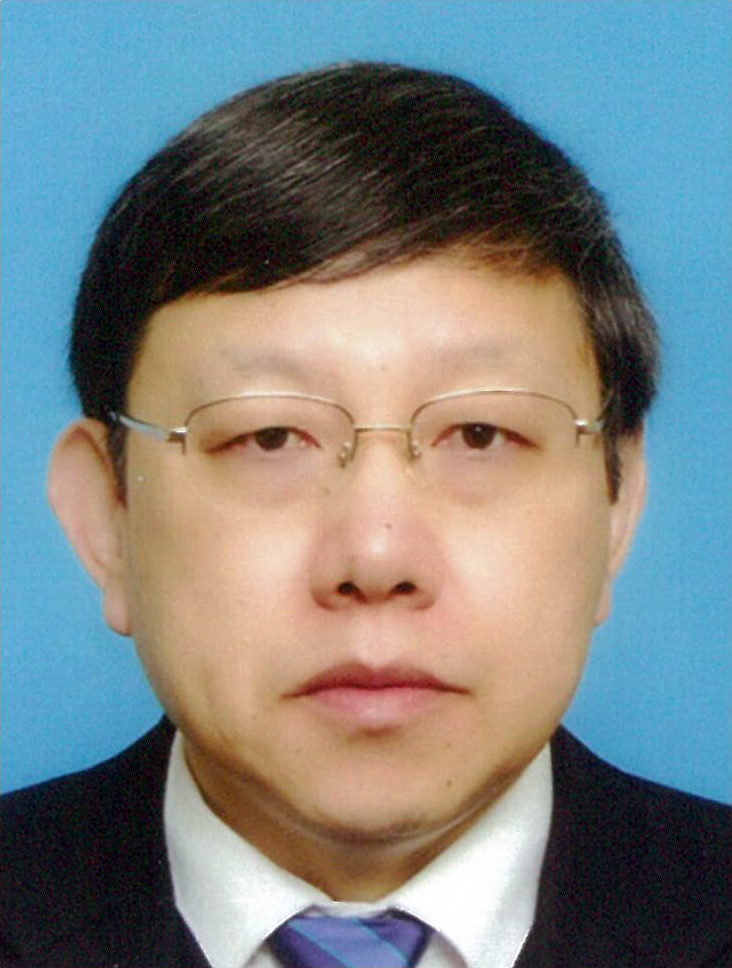 Mingcong Deng合作论文数Department of Electrical and Electronic Engineering, The Graduate School of Engineering, Tokyo University of Agriculture and Technology1Yanjun Liu (刘艳君)合作论文数School of Internet of Things Engineering, Jiangnan University1
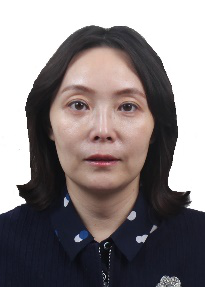 Jing Chen (陈靖)合作论文数School of Optics and Photonics, Beijing Institute of Technology1Ping Lin合作论文数1
 Manfeng Hu (胡满峰)合作论文数School of Science, Jiangnan University1
 Liuxiao Guo (过榴晓)合作论文数School of Science, Jiangnan University1
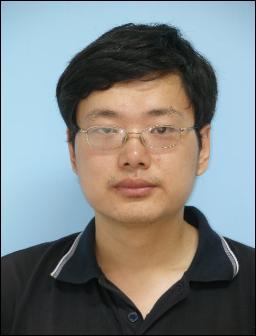 Hao Yan (延皓)合作论文数School of Mechanical,Electronic and Control Engineering, Beijing Jiaotong University1Michael Lees合作论文数1
 Min Gan (甘敏)合作论文数College of Mathematics and Computer Science, Fuzhou University;College Of Software, Fuzhou University1
 Jun Yang (杨俊)合作论文数Mechatronic Systems Control Laboratory, School of Automation, Southeast University1
 Christophe Labreuche合作论文数Industrial AI Laboratory, Thales Research & Technology1Yuan Peng合作论文数1Les Zeller合作论文数1Jean-Philippe Diguet合作论文数UBS university1
 Paolo Mercorelli合作论文数Department of Control and Drive Systems, Institute of Product and Process Innovation, Leuphana University Lueneburg1
 Dongya Zhao (赵东亚)合作论文数College of New Energy, China University of Petroleum;College of Chemistry and Chemical Engineering, China University of Petroleum1
 Huajie Chen (陈华杰)合作论文数School of Automation, Hangzhou Dianzi University1
 Alexandru-Liviu Olteanu合作论文数Faculty of Engineering, "Lucian Blaga" University of Sibiu1
 Fengxia Xu合作论文数1




