Forest tree species are increasingly subject to severe mortalities from exotic pests, pathogens, and invasive organisms, accelerated by climate change. Such forest health issues are threatening multiple species and ecosystem sustainability globally. One of the most extreme examples of forest ecosystem disruption is the extirpation of the American chestnut ( Castanea dentata ) caused by the introduction of chestnut blight and root rot pathogens from Asia. Asian species of chestnut are being employed as donors of disease resistance genes to restore native chestnut species in North America and Europe. To aid in the restoration of threatened chestnut species, we present the assembly of a reference genome for Chinese chestnut ( C. mollissima ) “Vanuxem,” one of the donors of disease resistance for American chestnut restoration. From the de novo assembly of the complete genome (725.2 Mb in 14,110 contigs), over half of the sequences have been anchored to the 12 genetic linkage groups. The anchoring is validated by genetic maps and in situ hybridization to chromosomes. We demonstrate the value of the genome as a platform for research and species restoration, including signatures of selection differentiating American chestnut from Chinese chestnut to identify important candidate genes for disease resistance, comparisons of genome organization with other woody species, and a genome-wide examination of progress in backcross breeding for blight resistance. This reference assembly should prove of great value in the understanding, improvement, and restoration of chestnut species.
Forest tree species are increasingly subject to severe mortalities from exotic pests, diseases, and invasive organisms, accelerated by climate change. Forest health issues are threatening multiple species and ecosystem sustainability globally. While sources of resistance may be available in related species, or among surviving trees, introgression of resistance genes into threatened tree species in reasonable time frames requires genome-wide breeding tools. Asian species of chestnut (Castanea spp.) are being employed as donors of disease resistance genes to restore native chestnut species in North America and Europe. To aid in the restoration of threatened chestnut species, we present the assembly of a reference genome with chromosome-scale sequences for Chinese chestnut (C. mollissima), the disease-resistance donor for American chestnut restoration. We also demonstrate the value of the genome as a platform for research and species restoration, including new insights into the evolution of blight resistance in Asian chestnut species, the locations in the genome of ecologically important signatures of selection differentiating American chestnut from Chinese chestnut, the identification of candidate genes for disease resistance, and preliminary comparisons of genome organization with related species.
Database URL Tripal Elasticsearch module:https://github.com/tripal/tripal_elasticsearch. Tripal Analysis Expression module:https://github.com/tripal/tripal_analysis_expression.
Differential expression results. Each differential expression experiment is included as a separate table and includes a transcript name and all output from DESeq2 including log fold change and adjusted p-values. Annotation information available for each transcript has been added. (XLSX 3320Â kb)
Background: To develop a set of transcriptome sequences to support research on environmental stress responses in green ash (Fraxinus pennsylvanica), we undertook deep RNA sequencing of green ash tissues under various stress treatments. The treatments, including emerald ash borer (EAB) feeding, heat, drought, cold and ozone, were selected to mimic the increasing threats of climate change and invasive pests faced by green ash across its native habitat.Results: We report the generation and assembly of RNA sequences from 55 green ash samples into 107,611 putative unique transcripts (PUTs). 52,899 open reading frames were identified. Functional annotation of the PUTs by comparison to the Uniprot protein database identified matches for 63 % of transcripts and for 98 % of transcripts with ORFs. Further functional annotation identified conserved protein domains and assigned gene ontology terms to the PUTs. Examination of transcript expression across different RNA libraries revealed that expression patterns clustered based on tissues regardless of stress treatment. The transcripts from stress treatments were further examined to identify differential expression. Tens to hundreds of differentially expressed PUTs were identified for each stress treatment. A set of 109 PUTs were found to be consistently up or down regulated across three or more different stress treatments, representing basal stress response candidate genes in green ash. In addition, 1956 simple sequence repeats were identified in the PUTs, of which we identified 465 high quality DNA markers and designed flanking PCR primers.Conclusions: North American native ash trees have suffered extensive mortality due to EAB infestation, creating a need to breed or select for resistant green ash genotypes. Stress from climate change is an additional concern for longevity of native ash populations. The use of genomics could accelerate management efforts. The green ash transcriptome we have developed provides important sequence information, genetic markers and stress-response candidate genes.
The Hardwood Genomics Database (HGD, www.hardwoodgenomics.org) serves forest tree scientists by providing online access to hardwood tree genomic and genetic data. HGD currently houses data for economically and phylogenetically important hardwood species including assembled reference genomes, transcriptomes, and genetic mapping information. The results of bioinformatic analysis including functional annotation of genes, ontology assignment, analysis of gene expression patterns across RNASeq libraries and simple sequence repeat (SSR) identification are available to enhance the utility of the information. The web site provides access to online tools for mining and visualization of these data sets, including BLAST for comparing sequences, Jbrowse1 for browsing genomes, Apollo2 for community annotation and SyMAP3 for comparative genomics. However, these tools are limited in scope. To maximize the ability for users of community databases to harness this information and perform their own custom analysis, we are collaborating with other genome databases to build an interface to the Galaxy data analysis platform4. Users will be able to select and transfer data from the HGD to a Galaxy instance or run a pre-designed Galaxy workflow on selected datasets.
Online community genome databases offer curated and mission-specific data and information to scientists with shared basic and applied research goals. In an effort to share a common code base, standardize storage formats, and simplify site construction, a coalition of genome databases have developed the software Tripal . Tripal is an open-source platform that bridges Drupal , a popular content management system (CMS), and Chado , a standardized relational database for storage of biological data. There is a need for users of community databases to not only discover, visualize and download genomic information but to directly port it to analysis workflow software such as the Galaxy platform. Through development of the new Tripal Galaxy module, site visitors will be able to select custom datasets from within and across Tripal databases and import those directly to a Galaxy instance from within a Tripal-based site. Additionally, a set of pre-designed workflows for common analyses needed by users of community databases will be made publicly available, including functional annotation of gene sequences, genomic variant discovery and genotype/phenotype association. Current efforts are focused on enabling authenticated users to move data from within a Tripal community database to the Tripal community Galaxy instance or a public Galaxy instance, creation of PHP bindings for the Galaxy API, and establishment of the most commonly needed analysis workflows for database users.
Patients are increasingly reliant on implantable medical device systems today. For patients with diabetes, an implantable insulin pump system can greatly improve their quality of life. As with any device, these devices can and do suffer from software and hardware issues, often reported as a safety event. For a forensic investigator, a safety event is indistinguishable from a potential security event. In this paper, we propose a new sensor system that can be transparently integrated into existing and future electronic diabetes therapy systems while providing additional forensic data to help distinguish between safety and security events.
Films of poly(3-hexyl thiophene) (P3HT):[6,6]-phenyl C61-butyric acid methyl ester (PCBM) were controllably exposed to CS2 vapor in a column with a linear solvent vapor pressure gradient. Changes in the morphology of the P3HT:PCBM thin film were monitored and correlated to the ability of this thin film to act as the active layer in an organic solar cell. The results show that the crystallinity and crystal size of the P3HT increase initially with solvent vapor pressure and annealing time, but longer exposure to solvent decreases P3HT crystallinity and photovoltaic efficiency. Neutron reflectivity indicates that the PCBM segregates to the Si substrate in the as-cast thin film, but distributes throughout the film with solvent annealing. The changes in crystallinity and the depth profile of the P3HT:PCBM mixture differ from those induced by thermal annealing. The structural variation with solvent exposure is correlated to photovoltaic function, demonstrating that the solvent annealing provides a window of optimum efficiency, which depends on solvent exposure. Moreover, the control of depth profile and structure should be generally applicable to a broad range of polymer-nanoparticle mixtures and thus these results provide fundamental information that can be used to control the depth profile, morphology and function of thin film nanocomposites.
Experiments are designed and completed to identify an effective polymeric compatibilizer for ligninpolystyrene blends. Copolymers of styrene and vinylphenol are chosen as the structure of the compatibilizer as the VPh unit can readily form intermolecular hydrogen bonds with the lignin molecule. Electron microscopy, thermal analysis, and neutron reflectivity results demonstrate that among these compatibilizers, a copolymer of styrene and VPh with similar to 20%30% VPh most readily forms intermolecular interactions with the lignin molecule and results in the most well-dispersed blends with lignin. This behavior is explained by invoking the competition of intra- and intermolecular hydrogen bonding and functional group accessibility in forming intermolecular interactions.
Lithographically defined suspended nanocrystalline silicon microstructures are crystallized through rapid (mu s) self-heating and growth-from-melt. SEM imaging and electrical resistance measurements suggest formation of two large single-crystal domains upon re-solidification, initiated from the cold pads anchoring the structure to the underlying film. The crystallized regions acquire uniform cylindrical or flat ribbon forms depending on the size, geometry and electrical stress conditions. The structures crystallized as flat ribbons have extremely smooth surfaces and no visible line-edge roughness, suggesting faceted growth. Simulation results indicate that the anchors and the underlying film remain at room temperature making this rapid self-heating technique compatible with low temperature substrates.
 Mark Dadmun合作论文数Department of Chemistry, University of Tennessee;College of Arts & Sciences, University of Tennessee13
 Margaret Staton合作论文数Genetics, Biochemistry & Life Science Studies, Clemson University9
 John E. Carlson合作论文数School of Forest Resources and Huck Institutes of the Life Sciences, The Pennsylvania State University6
 Kai Xiao合作论文数Center for Nanophase Materials Sciences,Oak Ridge National Laboratory5
 Stephen Ficklin合作论文数Clemson University Genomics Institute, Clemson University5
 Nicole Zembower合作论文数4Yin Wen合作论文数Chemistry Department, University of Tennessee4
 Stephan C. Schuster合作论文数School of Biological Sciences, Nanyang Technological University;Singapore Centre for Environmental Life Sciences Engineering, Nanyang Technological University;Air Microbiome Laboratory, SCELSE4
 Philippe Tingaut合作论文数Laboratoire de Chimie des Substances Vegetales, Universite Bordeaux 14Nathaniel Cannon合作论文数3
 Jiali Yu合作论文数3Albert Abbott合作论文数3Thomas Lane合作论文数Holobiome3
 Jill L. Wegrzyn合作论文数Department of Plant Sciences, University of California3Catherine Bodénès合作论文数INRAE3C. Dana Nelson合作论文数3Doreen Main合作论文数2Teodora Best合作论文数2jack davitt合作论文数2Tyler Wagner合作论文数2Abdullah Almsaeed合作论文数2Ming Chen合作论文数2Matthew L Huff合作论文数2Laura Georgi合作论文数2Yi Xu合作论文数2Christopher Saski合作论文数2Emily S Bellis合作论文数Oregon State Univ, Dept Integrat Biol, Corvallis, OR 97331 USA2
 Gokhan Bakan合作论文数2
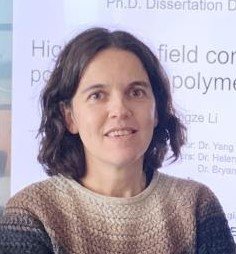 Helena Silva合作论文数2
 Noorai Rooksana E合作论文数2Mandal Mihir K合作论文数Department of Plant Pathology, University of Kentucky2
 Jared W Westbrook合作论文数Department of Biology, University of Florida2
 Daniela I. Drautz-Moses合作论文数King Abdullah University of Science and Technology2McGraw John J合作论文数2
 Conrad Anna O合作论文数Department of Plant Pathology, The Ohio State University2Haiying Liang (梁海鹰)合作论文数Fisheries College,Guangdong Ocean University2M. N. Islam-Faridi合作论文数2Mark V. Coggeshall合作论文数2
 Shenghua Fan合作论文数Key Laboratory of Advanced Films of Hebei Province, Shijiazhuang 050016, China2
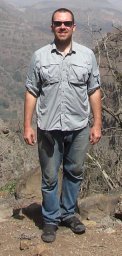 Jesse R. Lasky合作论文数Penn State Univ, University Pk2
 Dilru R. Ratnaweera合作论文数Department of Chemistry, Clemson University2
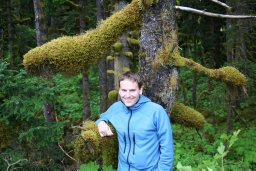 Jason A. Holliday合作论文数2
 Ali Gokirmak合作论文数Center for Superconductivity Research;Department of Physics;University of Maryland;Center for Superconductivity Research, University of Maryland2
 Jennifer L. Koch合作论文数2
 T. Zhebentyayeva合作论文数Department of Genetics & Biochemistry, Clemson University2
 Donghwan Shim合作论文数Department of Biological Sciences, College of Bioscience and Biotechnology, Chungnam National University;Center for Genome Engineering, Institute for Basic Science2
 David A.T. Harper合作论文数Department of Earth Sciences, Durham University2
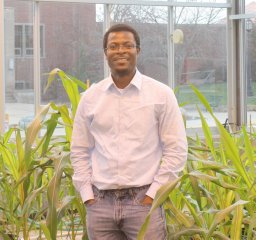 Charles Addo-Quaye合作论文数Department of Computer Science and Engineering, Pennsylvania State University2Timothy G. Rials合作论文数Forest Products Center, University of Tennessee2




