In human behavior recognition using machine learning, model performance degrades when the training data and operational data follow different distributions which is a phenomenon known as domain shift. This study proposes a method for domain adaptation in the hidden semi-Markov model (HSMM) by modifying only the emission probability distributions. Assuming that the state transition probabilities remain unchanged, the method updates the emission probabilities based on the posterior distribution of the target domain. This approach enables domain adaptation with minimal computational cost without requiring model retraining. The effectiveness of the proposed method was evaluated on synthetic time-series data from different domains and actual care work data, achieving recognition performance comparable to that of models retrained for each domain. These findings suggest that the proposed method applies to various time-series data analysis tasks requiring domain adaptation.
This study develops a system to visualize areas where accidents can occur due to children's reach in indoor environments, using the posture estimation function of digital human models considering mechanics and plausible environmental modification such as a step tool repositioning by children.
This study aims to develop a system that quantitatively evaluates and visualizes indoor areas prone to accidents from the perspective of accessibility by analyzing the reach postures of a digital human model. To obtain a feasible final posture using an optimization method, it is crucial to provide an appropriate initial posture. However, because reach postures vary dynamically depending on location, these postures exhibit discontinuous mechanical modes. Therefore, this study introduces a machine learning-based approach for estimating initial postures and quantitatively evaluates the preventive effects of existing accident prevention products, thereby verifying the effectiveness of the proposed system.
With the rapid technological advancements in wearable devices, motion and health management have significantly improved, enabling the measurement of various biometric data with compact equipment. Our research focuses on motion measurement but, in general, full-body motion estimation requires motion capture systems or multiple inertial sensors, making it necessary to directly measure movement itself. In this study, we propose estimating full-body posture using inverse kinematics based on trunk posture and limb-end information collected through wearable devices. To enhance estimation accuracy in this underdetermined problem, we employ Physics-Informed Neural Networks (PINNs), which efficiently learn using physical laws as a loss function, along with a high-precision inverse kinematics model of a digital human. Through this approach, we enable high-accuracy full-body posture estimation even with wearable devices in underdetermined scenarios.
This paper proposes a VR-based system to experience a hand with restricted ROM, which differs from the system user’s hand, using visual and vibrational stimuli. In order to cope with ethical difficulty to ask an adequate number and variety of actual users with disabilities for usability test, it would be helpful to train engineers to anticipate how to use products designed for various disability conditions. By considering force closure to determine whether a grasp has been established, the grasps realized during the VR experience became more natural. Preliminary experimental results suggested the effectiveness of the experience through the proposed VR system on the degree of understanding of the behavior of a hand with a different joint ROM.
For virtual usability evaluation of universal design, our previously-developed grasp synthesis method for human hand model was extended by employing soft finger model. Our previous method treated a hand model as a hard finger that assumes point contact with friction, which was not able to synthesize a grasp with two-point contact that often observed in the real world. Therefore, we incorporated the judgment of graspability based on the soft finger model and confirmed the synthesis of multiple types of plausible grasps including two-point contact through the simulation.
This study focuses on an environmental assessment tool for preventing unintentional injuries in children. One suggested effective approach to prevent such injuries involves improving the environment by appropriately relocating commodities or furniture. However, accurately determining “what kids can do” in a given environment is often challenging, making it difficult to recognize the associated risks and necessary countermeasures. We focused on estimating reachability, as many unintentional accidents, such as burns and accidental ingestions, can be attributed to a child’s ability to access objects or locations. We developed a system that combines statistical values of behavioral dimensions, such as reachable horizontal distances and climbable heights, to visualize potential risk for the environmental model with the generated posture of statistically representative child digital human models. A primary simulation was conducted to evaluate and visualize the risk associated with reachability, serving as a demonstration of the system.
This paper proposes the synthesis of grasp postures using a digital hand with limited range of motion (ROM) of the thumb. To virtually evaluate universal design products, it is necessary to synthesize natural grasps for different hands, including those with disabilities. In terms of disability, we focused on limited ROM of the thumb, which is typically observed in patients with carpal tunnel syndrome (CTS). Based on a musculoskeletal model, we extended a contact-region-based method for a grasp synthesis to include an ROM-limited hand and succeeded in synthesizing the mechanically feasible grasp postures that viably reflect the grasp features of an ROM-limited thumb.
To develop a method by which a dual-arm robot can simulate collision avoidance while replicating motions of a laboratory biologist. Using a kinematic robot model with constraints between the joint arms, the robot arm trajectory is calculated using rigid body dynamics. Collision barriers are introduced to avoid collisions between the arms and other obstacles. Our prototype simulator was implemented using Blender 3D graphics software with Bullet physics engine for the physics simulation. The simulator worked as an offline teaching method to generate robot motions, as if guided directly by a human hand. The method was tested with publicly available motion capture data, and it also worked for our original data obtained from a cell culture study at a biological laboratory. We also discuss necessary software functions for teaching a dual-arm robot on the basis of human motions.
In this paper, we propose a synthesis method for grasping postures by using a digital hand for the elderly. For the virtual evaluation of inclusive design products, it is necessary to synthesize natural grasps for non-healthy hands, including those of the elderly. In modeling the hand of the elderly, we focused on the following three features: (1) narrowed range of motion (ROM), (2) decline in muscle strength, and (3) decline in friction coefficient. The modeling was based on existing studies of physical characteristics of the elderly, and it is possible to create hand models of any age from 20 to 100 years old. We improved our previous method for synthesizing grasps, which was developed for hands with limited thumb ROM, and synthesized grasping postures for elderly people. We found that the grasping posture of the 60-year-old hand was slightly different from that of the healthy hand and that the 100-year-old hand experienced great difficulty in grasping objects.
In this study, we analyzed experimenters’motional characteristics that lead to uniform cell seeding. The motion to seed cell was measured using a motion capture system for three novices who were taught to execute stirring by ”a rotational movement” of a multi-well plate and four experients who were asked to seed as usual. Skill indices were defined as a feature of the seeding motion. Cell uniformity was evaluated as an averaged intensity variation from binarized microscope cell images. The correlation analysis between each skill index and uniformity index showed that the stirring movement of the plate was strongly related to uniformity of the seeded cell. Significant difference between the novice group and the experient group was observed in uniformity index and several skill indices in stirring process. These results indicated that teaching rotational stirring to a novice worked to guarantee uniform cell seeding to a certain extent.
Considering the growing market size for universal design product, it is helpful if we can evaluate its usability virtually by synthesizing feasible grasp postures for a digital hand model. In this paper, we focus on the elderly people. We generate grasp postures by using a digital hand that emulates elderly hands. Generally, range of motion (ROM), muscular force, and frictional force are decreased for elderly hands. So we determine the proper rate of decrease in these features and implement them in the digital hand for grasp synthesis.
For virtual evaluation of inclusive design products, it is necessary to synthesize feasible grasps for various hands including those with limited range of motion (ROM). In this paper, we study synthesizing grasps for digital hands with limited ROM in their thumb joints. In our previous study, two types of grasps were observed under the limitation of the thumb’s ROM. One was a type that used the lateral region of the thumb, and the other was a type that used the same contact regions as healthy hands. The use of thumb’s lateral region is the feature only observed in the ROM-limited hands. Therefore, it is necessary to synthesize the grasps with this feature for the ROM-limited hands. We adopt a contact region-based grasp synthesis method for healthy hands. The two grasp styles using thumb’s lateral region are added to a grasp database and grasps of the thumb’s ROM-limited hand are synthesized.
For virtual evaluation of universal design products, it is necessary to synthesize natural grasps for various hands including those with limited range of motion (ROM). In this paper, we study synthesizing grasps for digital hands with limited ROM in their thumbs' joints. We apply a contact-region-based method for grasp synthesis to this problem. In our previous study, two types of grasps were observed under the limitation of the thumb's ROM. One was a type that used the lateral region of the thumb, and the other was a type that used he same contact regions as healthy hands. In this paper, grasps are synthesized for two objects using three hand models whose lengths are different. With the same input information as the healthy hand, it is not possible to synthesize the grasps for the ROM-limited hand. On the other hand, when grasps are synthesized by changing the information about grasping target points of the thumb and the palm, feasible grasps for the ROM-limited hand can be found. For a camera object, the grasp using the thumb's radial region is automatically synthesized without changing the specified contact region. Also, for a spray object, a grasp that uses the same contact region as the healthy hand is synthesized. These results demonstrate our method can synthesize natural grasps even for ROM-limited hands, which will contribute to universal product design.
It is difficult to keep motivation for daily house cleaning as people must repeat the same task monotonically. Floor wiping is a task to wipe the entire floor, but it is usually difficult to complete the task due to such obstacles as furniture. Therefore, the purpose of this study is to provide a system that supports a complete and enjoyable floor wiping by multimodal feedbacks including tactile and auditory feedbacks. We developed a system composed of floor wiper, optical motion capture system for reconstruction of the location of the wiper, tactile feedback device, Bluetooth surround sound headphone, and PC. In addition, we implemented "rhythm game" to increase enjoyment, and 3D surround sound and vibration to present unwiped area. As a result of the evaluation experiment of our developed system, cleaning became fun with our system. However, the improvement of feedbacks as well as the accuracy of the wiper's location restoration remain as future work.
Today, cameras have become smaller and cheaper and can be utilized in various scenes. We took advantage of that to develop a thumb tip wearable device to estimate joint angles of a thumb as measuring human finger postures is important in terms of human-computer interface and to analyze human behavior. The device we developed consists of three small cameras attached at different angles so the cameras can capture the four fingers. We assumed that the appearance of the four fingers would change depending on the joint angles of the thumb. We made a convolutional neural network learn a regression relationship between the joint angles of the thumb and the images taken by the cameras. In this paper, we captured the keypoint positions of the thumb with a USB sensor device and calculated the joint angles to construct a dataset. The root mean squared error of the test data was 6.23 ^∘ and 4.75 ^∘ .
 Masaaki Mochimaru合作论文数38
 Yusuke Maeda (前田雄介)合作论文数Division of Systems Research, Faculty of Engineering, Yokohama National University31makiko kouchi合作论文数22
 Jun Ota (太田順)合作论文数Center for Engineering, School of Engineering, University of Tokyo20
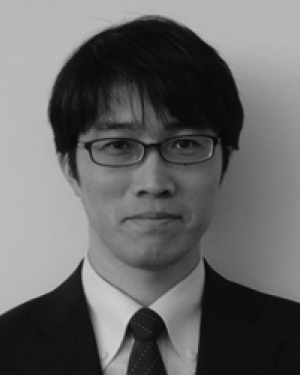 Mitsunori Tada合作论文数20Yui Endo合作论文数Graduate School of Information Science and Technology, Hokkaido University16
 Yuta Sugiura合作论文数Department of Information and Computer Science, Keio University13
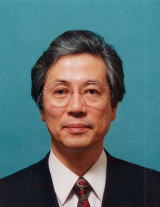 Tamio Arai (新井民夫)合作论文数Department of Precision Engineering, Schoolof Engineering, The University of Tokyo;International Research Institute for Nuclear Decommissioning13
 Satoshi Kanai合作论文数hokkaido university10Reiko Takahashi合作论文数Yokohama Natl Univ, Yokohama, Kanagawa 2408501, Japan8
 Tsuneya Kurihara合作论文数Central Research Laboratory Hitachi Ltd.8
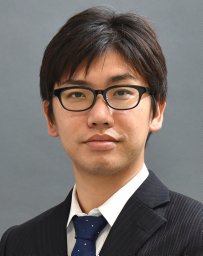 Takayuki Tanaka合作论文数citings index terms collaborative colleagues7Takeshi KISHINAMI合作论文数6
 Hideo Saito合作论文数Department of Information and Computer Science, Faculty of Science and Technology, Keio University;School of Science for Open and Environmental Systems, Faculty of Science and Technology, Keio University5M. Kouchi合作论文数4Kenji TERABAYASHI合作论文数4Saori Miyajima合作论文数4Sasaki, J.合作论文数4
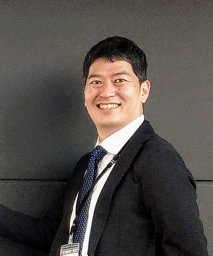 Koji Fujita合作论文数4
 Yasumichi Aiyama合作论文数4Aiyama, Y.合作论文数3Yuta Nakanishi合作论文数3Kazunori UMEDA合作论文数3Yuki SHIMIZU合作论文数3Naoaki Kashiwagi合作论文数3Yuya YONEOKA合作论文数3
 Naoto Ienaga合作论文数Keio Univ, Yokohama, Kanagawa, Japan3
 Hikaru Ibayashi合作论文数University of Southern California Japan3Motoki, Y.合作论文数3
 Eiichi Yoshida (吉田英一)合作论文数Department of Medical and Robotic Engineering Design, Faculty of Advanced Engineering, Tokyo University of Science;TICO-AIST Cooperative Reseach Laboratory for Advanced Logistics, Department of Information Technology and Human Factors, National Institute of Advanced Industrial Science and Technology3
 Daisuke Kurabayashi合作论文数Dept Mech & Control Engn, Tokyo Inst Technol3
 Takeshi Kurata (蔵田武志)合作论文数Human Augmentation Research Center, National Institute of Advanced Industrial Science and Technology;Applied Service Engineering Laboratory, Faculty of Engineering, Information and Systems, University of Tsukuba;The Institute of Innovation for Future Society, Nagoya University3
 Daisuke Sakamoto合作论文数ATR Intelligent Robotics and Communication Laboratories, Future University-HAKODATE3
 Takeo Igarashi合作论文数Department of Computer Science, Graduate School of Information Science and Technology, The University of Tokyo3
 Takashi Okuma合作论文数Augmented Reality Interaction Subgroup
Real World Based Interaction Group
Information Technology Research Institute
National Institute of Advanced Industrial Science and Technology (AIST)3
Takashi Okuma合作论文数Augmented Reality Interaction Subgroup
Real World Based Interaction Group
Information Technology Research Institute
National Institute of Advanced Industrial Science and Technology (AIST)3 Takashi Kusaka合作论文数Faculty of Medicine, Kagawa University3
 Hajime Asama合作论文数Asama Laboratory, Department of Precision Engineering, University of Tokyo3
 Maki Sugimoto (杉本真樹)合作论文数Okinaga Research Institute, Teikyo University2Noritsune YOKOYAMA合作论文数2H. Hirukawa合作论文数2katsuaki kawachi合作论文数2I. Kohara合作论文数2Yoshihiro EHARA合作论文数2jun konno合作论文数2Adachi Shungo合作论文数2Koji HASHIMOTO合作论文数2Kengo SASAKI合作论文数2Takehiro Honoki合作论文数2Takehisa KURAMOTO合作论文数2




