This paper proposes a VR-based system to experience a hand with restricted ROM, which differs from the system user’s hand, using visual and vibrational stimuli. In order to cope with ethical difficulty to ask an adequate number and variety of actual users with disabilities for usability test, it would be helpful to train engineers to anticipate how to use products designed for various disability conditions. By considering force closure to determine whether a grasp has been established, the grasps realized during the VR experience became more natural. Preliminary experimental results suggested the effectiveness of the experience through the proposed VR system on the degree of understanding of the behavior of a hand with a different joint ROM.
For virtual usability evaluation of universal design, our previously-developed grasp synthesis method for human hand model was extended by employing soft finger model. Our previous method treated a hand model as a hard finger that assumes point contact with friction, which was not able to synthesize a grasp with two-point contact that often observed in the real world. Therefore, we incorporated the judgment of graspability based on the soft finger model and confirmed the synthesis of multiple types of plausible grasps including two-point contact through the simulation.
This paper proposes the synthesis of grasp postures using a digital hand with limited range of motion (ROM) of the thumb. To virtually evaluate universal design products, it is necessary to synthesize natural grasps for different hands, including those with disabilities. In terms of disability, we focused on limited ROM of the thumb, which is typically observed in patients with carpal tunnel syndrome (CTS). Based on a musculoskeletal model, we extended a contact-region-based method for a grasp synthesis to include an ROM-limited hand and succeeded in synthesizing the mechanically feasible grasp postures that viably reflect the grasp features of an ROM-limited thumb.
In this paper, we propose a synthesis method for grasping postures by using a digital hand for the elderly. For the virtual evaluation of inclusive design products, it is necessary to synthesize natural grasps for non-healthy hands, including those of the elderly. In modeling the hand of the elderly, we focused on the following three features: (1) narrowed range of motion (ROM), (2) decline in muscle strength, and (3) decline in friction coefficient. The modeling was based on existing studies of physical characteristics of the elderly, and it is possible to create hand models of any age from 20 to 100 years old. We improved our previous method for synthesizing grasps, which was developed for hands with limited thumb ROM, and synthesized grasping postures for elderly people. We found that the grasping posture of the 60-year-old hand was slightly different from that of the healthy hand and that the 100-year-old hand experienced great difficulty in grasping objects.
Considering the growing market size for universal design product, it is helpful if we can evaluate its usability virtually by synthesizing feasible grasp postures for a digital hand model. In this paper, we focus on the elderly people. We generate grasp postures by using a digital hand that emulates elderly hands. Generally, range of motion (ROM), muscular force, and frictional force are decreased for elderly hands. So we determine the proper rate of decrease in these features and implement them in the digital hand for grasp synthesis.
Limitation of range of motion (ROM) changes grasping style. Therefore, we proposed a method to clarify the features of grasping styles of ROM-limited hands. First, we proposed to artificially limit ROM of healthy hands by using rigid strapping tape. The palmar adduction of the thumb's carpometacarpal (CM) joint and the extension of the thumb's metacarpal (MP) joint were the target of limitation. Then, we conducted an experiment to clarify the features of grasping styles of a ROM-limited hand. For the ROM-limited hand, several grasping styles were found in trials, and there was a tendency that one grasping style was chosen finally. Grasping styles finally selected by the ROM-limited hand tend to use side region of the thumb. CM joint and MP joint of the grasping styles finally selected by the ROM-limited hand tend to be farther from ROM boundary than those temporary appeared in the trial process.
This paper proposed a method to clarify the features of grasping styles of ROM-limited hands. We measured the contact regions and joint angles of grasping by a ROM-limited hand. The joint angles were analyzed with respect to ROM boundary. Muscle loads of grasps were also estimated. Grasping styles finally selected by the ROM-limited hand tend to use side region of the thumb. In the grasping styles finally selected by the ROM-limited hand, ROM-limited joints tend to be farther from ROM boundary. In addition, the influence of muscle loads is not confirmed.
This paper proposes a measurement of grasping strategy by healthy volunteers with artificially disabled hand as a substitute for measurement in patients with disabilities in hand function for product design modeling. As a first step, we focused on limitation of the thumb and observed grasping strategy change when fixing the thumb joint range of motion using a taping technique. Different grasping styles and some typical contact regions were observed for the artificially disabled hand.
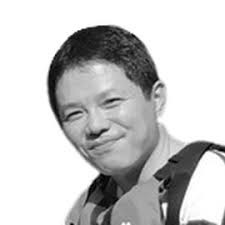 Yusuke Maeda (前田雄介)合作论文数Division of Systems Research, Faculty of Engineering, Yokohama National University8
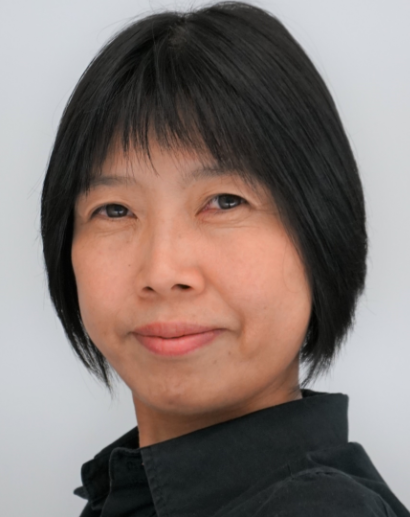 Natsuki Miyata (宮田なつき)合作论文数Laboratory for Application of Cybernetics, Graduate School of Engineering, Hiroshima University;Living Activity Modeling Research Team, Artificial Intelligence Research Center, Department of Informatation Technology and Human Factors, National Institute of Advanced Industrial Science and Technology;Graduate School of Advanced Science and Engineering, Hiroshima University;Research Group of Informatics for Digital Human, Graduate School of Information Science and Technology, Hokkaido University8
 Yuta Nakanishi合作论文数3
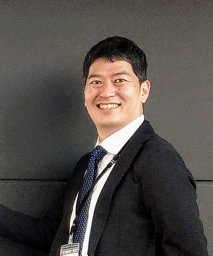 Koji Fujita合作论文数2




