Handwritten signature verification is one of the frequently used biometric in administrative, financial, legal, and similar scenarios to verify the identity of a person. Unfortunately, the offline nature of this task makes it more challenging as it involves intra-signature variance, and various temporal and environmental factors. This paper presents a novel offline signature verification system (OSVS) called SignGuard. It is designed by using Gray Wolf Optimization (GWO) for preprocessing. Also, Principal Orientation Alignment (POA) is used to mitigate their rotation as the proposed method has rotation sensitive descriptors. It is followed by two writer-independent models with new texture features namely, Centre Symmetric local binary pattern (CS-LBP) and Orthogonal Central Symmetric Local Binary Pattern (OC-CSLBP). They are trained using hybrid machine learning framework such that Support Vector Machine and XGBoost classifiers are integrated for the verification of a signature image in an offline mode. The performance of SignGuard is exploited on CEDAR, SID, and BHSig260 datasets, along with a novel dataset called DeepSignVault, such that OC-CSLBP and CS-LBP yields an accuracy of 98.77% and 97.46%, respectively. It is observed that SignGuard outperforms the existing OSVSs. The proposed architecture shows enhanced security and reliability for real-world applications in business, legal, and administrative systems. The outstanding performance of SignGuard highlights the authenticity of legal documents and financial transactions.
Maritime communication supports worldwide trade and safety, but digital links are easy targets for intercepting, jamming, and spoofing. These attacks can confuse ship routes and slow joint operations. We present a blockchain-based authentication framework that connects ships, drones, and shore stations while keeping shared data and images safe. The scheme combines a distributed ledger with secure big data analytics so that vessel paths and visual records are tamper-proof and easy to audit. We describe each registration and key agreement phase, study common cyber threats, and report simulation results for different blockchain settings. We also show how large-scale image analytics can match ship photos and help confirm vessel identities. Together, these steps offer a practical and scalable base for trusted maritime communication.
The advent of Simultaneously Transmitting and Reflecting Reconfigurable Intelligent Surfaces (STAR-RIS) has transformed vehicular communications by enabling dynamic control over wireless propagation environments. This paper presents a Federated Deep Reinforcement Learning (FDRL) based resource allocation framework for STAR–RIS-assisted Vehicular Road Cooperative Systems (VRCS), which jointly optimizes spectrum reuse, transmit power, and phase-shift configuration. The formulated mixed-integer nonlinear problem is modeled as a Markov Decision Process (MDP) and efficiently solved using a Federated Soft Actor–Critic (Fed-SAC) algorithm, enabling privacy-preserving and distributed learning among vehicles and edge servers. Extensive 3GPP-based simulations demonstrate that the proposed Fed-SAC framework achieves up to 18.7% higher V2V transmission success rate, 15.2% higher V2I throughput, and 21.4% faster convergence compared to Fed-PPO, Fed-TD3, and Fed-DDPG baselines. These results confirm that the proposed approach significantly enhances reliability, scalability, and latency performance in dynamic 6G VRCSenvironments.
Due to changing lifestyles, human physical exercise has dropped rapidly which leads to several health-related problems. It is not easy to detect heart-related diseases, but with the emergence and advancement in technologies like Edge, Fog computing, Machine learning, Cloud computing, and the Internet of Things (IoT), it's a cinch to track heart diseases. Cloud computing provides the resources for computation as well as online storage over the internet, but it does not support latency-sensitive and real-time applications. To overcome this bottleneck, a new emerging technology named Edge Computing is used to bring the computation resource to local nodes for the services and reduces the latency as compared to the cloud. Current Edge computing-based models failed to achieve the output of real-time applications along with high accuracy and low latency simultaneously. Hence, we have proposed an autonomic Edge-assisted Cloud-IoT framework for smart healthcare that used a Random Forest and Logistic Regression Grid (RF-LRG) approach at edge nodes for analysis of heart disease and improves the various influential parameters such as accuracy (3.88%, 7.66% and 14.18%), precision (3.7%, 9%, and 16.6%), F1 Score (5%, 7.7%, and 16.9%.), recall (3.7%, 10.5%, and 15.06%.) compared with LR, RF and KNN algorithm. The simulation results ensured that the proposed framework using the RF-LRG algorithm predicted and diagnosed heart diseases with more accuracy and reduced the latency and energy consumption significantly when compared between the cloud and edge paradigms.
The rapid increase in IoT devices in smart homes has demanded the creation of urgent monitoring systems that are reliable, real-time, efficient, secure, and scalable. Conventional methods face issues such as high latency, communication overloading, and energy use, thus it is not very appropriate in limited resources environments. To address these limitations, this paper presents a new Lightweight Holographic Counterpart Integration framework intended to be used in the monitoring of smart home IoT devices in real-time. It adopted an adaptive critical sensor signal importance-weighting scheme, dynamic time synchronization of vital sensor signals to reduce unnecessary updates and a fault-detecting scheme based on residues. It also does cross-device correlation analysis to learn the dependencies in the system and support maintenance. Experimental results show that the latency and energy consumption is reduced and improve anomaly detection. Its benefits in the reliability of the device, its energy consumption, and the confidence of users are presented in case studies. This study is a fusion of digital twin theory and consumer IoT applications, with the aim of being sustainable, intelligent, and resilient smart homes.
The continued deployment and presence of landmines pose a serious threat to human life and post-conflict recovery efforts. Landmine detection remains a challenging task, requiring accurate and efficient surveying of large target regions using suitable sensing technologies. UAV-based airborne magnetometry has emerged as a promising technology for automating landmine detection, particularly in Internet of Things (IoT)-enabled environments. When integrated with unmanned aerial vehicles (UAVs), the sensing modality enables automated, large-scale surveys using airborne magnetometry imaging. However, the system may fail to detect some landmines due to environmental noise, sensor limitations, or terrain interference. Such missing magnetic signatures introduce serious operational risks for demining teams and civilians. To address this issue, this study presents a graph-based post-processing framework for identifying and predicting undetected landmines in structured minefield layouts. The approach targets minefields with row-pattern deployments and includes: (1) a graph-based approach to identify row clusters from detected coordinates, (2) detecting discontinuities caused by missing detections, and (3) predicting the locations of missing landmines through spatial interpolation. The framework is evaluated on a simulated dataset modeling diverse minefield configurations with varying levels of missing landmines. Experimental results demonstrate the effectiveness of the proposed method in both row identification and missing landmine prediction. The sensitivity analysis further confirms the robustness of the method to threshold variations. This work highlights the critical role of spatial pattern recognition in minefield analysis and contributes to the reliability of automated UAV-based landmine detection systems.
Electric Vehicles (EVs) now function as both energy consumers and producers within the energy internet-enabled smart grid, enabling bidirectional energy exchange with the grid. To facilitate secure Vehicle-to-Grid (V2G) communication, mutual authentication between EVs and charging stations (CSs) over open wireless channels is crucial. While several authentication schemes have been proposed, most are vulnerable to post-quantum threats. To address this gap, this article presents an efficient lattice-based lightweight authentication protocol specifically designed for V2G communication. The protocol’s security is rigorously validated through formal analysis and formal security verification using an automated verification tool, known as the Automated Validation of Internet Security Protocols and Applications (AVISPA) tool. Additionally, an informal security analysis is performed to evaluate resilience against practical attacks. Moreover, comprehensive performance simulations confirm the protocol’s efficiency and feasibility for real-world V2G communication.
Timely identification of foliar diseases is vital for reducing yield losses and guiding targeted interventions in agriculture, in specific system targeted by high crop diversity. This paper presents a streamlined pipeline for plant leaf disease classification that couples principled preprocessing with dual-backbone feature fusion from InceptionNet and ResNet-50. First, images undergo color constancy (Shades-of-Gray), illumination correction via CLAHE in the V channel of HSV, and background suppression using GrabCut seeded by simple green-ratio masks; small artifacts are removed with morphological opening. To increase robustness, we apply class-balanced augmentation (random rotation, scale jitter, flips, CutOut) and resize inputs to 299 × 299 while preserving aspect ratio through letterboxing. Next, transfer-learned InceptionNet and ResNet-50, initialized with ImageNet weights, extract complementary descriptors: Inception captures multi-scale contextual cues, whereas ResNet emphasizes deeper residual semantics. Global average pooling, L2 normalization, and channel-wise attention are used before concatenating both embeddings. Dimensionality is reduced with a light 1 × 1 bottleneck and dropout. The fused representation feeds a softmax classifier; alternatively, for imbalanced classes we report a linear SVM head trained on the frozen fused features. Training employs class-balanced focal loss, cosine-annealed learning rates, and early stopping based on macro-F1. We evaluate using stratified k-fold cross-validation and report accuracy, macro-F1, and confusion analyses. The proposed design improves generalization under variable lighting, complex backgrounds, and subtle inter-class differences while remaining computationally tractable for edge deployment. This overview and modular recipe offer a practical blueprint for researchers seeking reliable plant leaf disease recognition with modern deep networks. Implementation details and code structure are intentionally concise to ease replication and adaptation across platforms worldwide.
Energy efficiency and minimization of redundant transmissions are critical challenges in Wireless Sensor Networks (WSNs), especially in heterogeneous IoT environments where sensor nodes (SNs) are resource-constrained and deployed in remote or inaccessible areas. This paper aims to address the dual problem of uneven energy distribution and limited network lifespan by proposing a novel Artificial Protozoa Optimizer-based Cluster Head Selection (APO-CHS) algorithm. The proposed APO-CHS is inspired by the adaptive behavior of Euglena, integrating foraging, dormancy, and reproduction mechanisms to optimize cluster head and relay node selection through a multi-objective fitness function. The function incorporates residual energy, node density, neighbor distance, and energy consumption rate to guide the selection process effectively. Additionally, to tackle communication inefficiency, a lightweight data aggregation scheme is employed. This scheme reduces redundant transmissions by introducing a multi-level aggregation model that eliminates full, partial, and duplicate data in both intra-and inter-cluster communication. The simulation results demonstrate that the proposed framework improves network stability by 29.24%, extends network lifetime by 283.96%, and increases throughput by over 60% compared to baseline methods, thus making it a highly efficient and scalable solution for energy-aware IoT-enabled WSN applications.
The Internet of Vehicles (IoV) facilitates wireless communication between vehicles and traffic authoritiesto enhance road safety. However, ensuring authentication, integrity, and confidentiality in open networksremains challenging. Additionally, issues like message delays and congestion are affecting efficiency. To mitigate these limitations, a novel dynamic-anonymous edge-assisted certificate-based signcryption scheme has been proposed. By integrating dynamic anonymity and signcryption, the scheme eliminates multiple pseudonym storage. Besides, its certificate-based framework removes secure channel dependency and mitigates key escrow risks. A formal security proof is provided, based on the hardness of the Elliptic Curve Discrete Logarithm Problem. An informal security analysis confirms the scheme's robustness against various practical attacks. Additionally, detailed efficiency evaluation shows that the offline and online signcryption processes incur only 16.88% and 22.81% of the computational cost of the same phases of a recent design.
The Smart Grid (SG) is a key enabler for achieving efficient and reliable electricity demand-supply management through real-time monitoring. In SG infrastructures, Smart Meters (SMs) periodically report fine-grained consumption data to the grid control center. However, the open nature of communication channels exposes sensitive user information to cyber threats, raising serious privacy concerns. Privacy-Preserving Data Aggregation (PPDA) schemes have been proposed to address this issue, typically relying on an encrypt-then-sign paradigm to ensure confidentiality and integrity. Despite their security guarantees, such approaches incur substantial computational and communication overhead, resulting in increased response latency and reduced scalability. To overcome these limitations, this paper proposes the first Homomorphic Signcryption (HS)-based PPDA scheme for smart meter-to-grid communication, referred to as PP-HDA. By tightly integrating encryption and digital signatures into a single logical operation, the proposed PP-HDA scheme enables secure data aggregation and authentication simultaneously, significantly reducing bandwidth consumption and computational cost. The homomorphic property allows the control center to recover the aggregated consumption data from multiple smart meters in a single step while supporting efficient batch verification. A thorough security analysis demonstrates that PP-HDA achieves strong privacy preservation, authentication, and resistance against practical attacks. Performance evaluation shows that, compared with a recent benchmark scheme, PP-HDA reduces computational cost at SMs by approximately 72%, communication overhead for SM-to-aggregator transmission by 38.78%, and aggregator-to-control office transmission by 63.16%. These results confirm that PP-HDA is a secure, lightweight, and practical solution for large-scale SG deployments.
Nanotechnology, when integrated with the Internet of Things (IoT), has led to the Internet of Nano Things (IoNT), revolutionizing sectors such as healthcare, industry, and defense. In healthcare, this evolution forms the Internet of Nano Medical Things (IoNMT), enabling real-time monitoring and treatment. However, the adaptability of 6G networks introduces vulnerabilities related to privacy, reliability, and secure data storage. To mitigate these challenges, this paper presents Q-BlockAuth, a blockchain-based authentication framework incorporating Quantum Key Distribution (QKD) to enhance data security in IoNMT networks. The framework employs decentralized peer-to-peer edge servers to ensure transparency, robustness, and minimal latency. Security validation using the Scyther tool and informal analysis confirms its resilience, while performance evaluation demonstrates superior efficiency and scalability compared to existing methods. Overall, Q-BlockAuth strengthens IoNMT communication by offering low latency, enhanced security, and resistance to cyber threats.
Quantum computing (QC) has gained significant attention over the past two decades due to its potential for speeding up classically demanding tasks. This transition from an academic focus to a thriving commercial sector is reflected in substantial global investments. While advancements in qubit counts and functionalities continues at a rapid pace, current quantum systems still lack the scalability for practical applications, facing challenges such as too high error rates and limited coherence times. This perspective paper examines the relationship between QC and high-performance computing (HPC), highlighting their complementary roles in enhancing computational efficiency. It is widely acknowledged that even fully error-corrected QCs will not be suited for all computational tasks. Rather, future compute infrastructures are anticipated to employ quantum acceleration within hybrid systems that integrate HPC and QC. While QCs can enhance classical computing, traditional HPC remains essential for maximizing quantum acceleration. This integration is a priority for supercomputing centers and companies, sparking innovation to address the challenges of merging these technologies. The novelty of this work lies in its unique perspective, reflecting the collective insights of the Accelerated Data Analytics and Computing (ADAC) Institute, a global consortium of over 20 leading HPC centers. Recognizing the growing importance of QC, ADAC established a Quantum Computing Working Group in 2023 to foster collaboration and knowledge-sharing among its members. This paper synthesizes insights from the group’s collaborative efforts and incorporates findings from a member survey that captures shared experiences, ongoing projects, and strategic directions. By outlining the current landscape and challenges of QC integration into HPC ecosystems, this work offers HPC specialists practical and forward-looking guidance on the opportunities and implications of QC in computationally intensive endeavors.
The application of deep neural networks (DNNs) in the area of autonomous driving is becoming increasingly widespread. However, its network security risk also highlights, which seriously threatens the security of the auto drive system. Firstly, due to the high feature dimension of traffic data in autonomous driving network, the trained model has a lower detection rate for certain attack classes. Secondly, the imbalance between normal and abnormal samples in the traffic dataset of autonomous driving network can also affect the performance of detection. For alleviating the above problems, this paper proposes auxiliary classifier generative adversarial networks improved by convolutional block attention module (ACGAN-CBAM). The main idea is to remove redundant samples from the autonomous driving network dataset and generate minority class samples, making the processed dataset more balanced. The core of Convolutional Block Attention Module (CBAM) in ACGAN lies in the collaborative work of channel and spatial attention modules to focus on key features. The experimental results show that when analyzing the risk characteristics of autonomous driving network, ACGAN-CBAM can more efficiently extract and utilize effective information, significantly improve the accuracy of analysis.
Optimization algorithms are crucial for energy-efficient routing in Internet of Things (IoT)-based Wireless Sensor Networks (WSNs) because they help minimize energy consumption, reduce communication overhead, and improve overall network performance. By optimizing the routing paths and scheduling data transmission, these algorithms can prolong network lifetime by efficiently managing the limited energy resources of sensor nodes, ensuring reliable data delivery while conserving energy. In this work, we present Greylag Goose-based Optimized Clustering (GGOC), which aids in selecting the Cluster Head (CH) using the proposed critical fitness parameters. These parameters include residual energy, sensor sensing range, distance of a candidate node from the sink, number of neighboring nodes, and energy consumption rate. Simulation analysis shows that the proposed approach improves various performance metrics, namely network lifetime, stability period, throughput, the network’s remaining energy, and the number of clusters formed.
The rapid expansion of smart technologies and IoT has made Wireless Sensor Networks (WSNs) essential for real-time applications such as industrial automation, environmental monitoring, and healthcare. Despite advances in sensor node technology, energy efficiency remains a key challenge due to the limited battery life of nodes, which often operate in remote environments. Effective clustering, where Cluster Heads (CHs) manage data aggregation and transmission, is crucial for optimizing energy use. Motivated from the above, in this paper, we introduce a novel metaheuristic approach called Hippopotamus Optimization-Based Cluster Head Selection (HO-CHS), designed to enhance CH selection by dynamically considering factors such as residual energy, node location, and network topology. Inspired by natural behaviors, HO-CHS effectively balances energy loads, reduces communication distances, and boosts network scalability and reliability. The proposed scheme achieves a 35% increase in network lifetime and a 40% improvement in stability period in comparison to the other existing schemes in literature. Simulation results demonstrate that HO-CHS significantly reduces energy consumption and enhances data transmission efficiency, making it ideal for IoT-enabled consumer electronics networks requiring consistent performance and energy conservation.
Ensuring extremely high reliability and efficiency of communication in dynamic heterogeneous environments is critical for Space-Air-Ground Integrated Networks (SAGIN). To address the error floor phenomenon encountered in low-density parity check (LDPC) codes, we design an innovative decoder based on HyperNet and boosted learning: boosted HyperNet Neural Min-Sum (BHNMS) decoder. This decoder features: (1) Layered Activation Mechanism dynamically activates HyperNet to solve the explosion of training resources due to forward computation required for HyperNet, multi-stage training for boosted learning, and block-wise iterative chunk training; (2) Quantization-aware weight generation relies on differentiable quantization gates, dynamic precision-aware training, and quantization domain consistency constraints to solve the compatibility disconnect between HyperNet's floating-point computation and quantization weight generation; (3) Cross-stage State Relay achieves continuous reconstruction of node evolution trajectories across stages through spatiotemporal compression transmission and adaptive accuracy control to solve the dynamic feedback imbalance issue; (4) Block Gradient Bridge reconstructs the global gradient propagation path through learnable bridge parameters and cross-block consistency constraints, ensuring the end-to-end trainability of dynamic weight generators to solve the problem of gradient propagation disruption. Simulation shows that BHNMS does not exhibit significant error floors, and its performance far exceeds that of traditional decoders, reaching 10-9 earlier
 Sudeep Tanwar合作论文数Department of Computer Science and Engineering, Institute of Technology, Nirma University;Sudeep Tanwar's Research Group Lab148
 Joel Rodrigues合作论文数Instituto de Telecomunicações108
 Sudhanshu Tyagi合作论文数Department of Electronics and Communication Engineering, Thapar Institute of Engineering & Technology77
 Gagangeet Aujla合作论文数Department of Computer Science, Faculty of Science, Durham University68
 Mohammad S. Obaidat合作论文数Department of Computer Science, University of Texas-Permian Basin61
 Shubhani Aggarwal合作论文数Thapar Institute of Engineering and Technology, Patiala, Punjab, India60
 Ashok Kumar Das合作论文数Center for Security, Theory and Algorithmic Research, International Institute of Information Technology, Hyderabad;Department of Computer Science and Engineering, International Institute of Information Technology, Hyderabad58
 Debiao He (何德彪)合作论文数School of Cyber Science and Engineering, Wuhan University;School of Computer Science, Wuhan University57
 Mohsen Guizani合作论文数Mohamed bin Zayed University of Artificial Intelligence50
 Peiying Zhang (张培颖)合作论文数College of Computer Science and Technology, China University of Petroleum47
 Ishan Budhiraja合作论文数Thapar University45
 Rajesh Gupta合作论文数Department of Computer Science & Engineering, Institute of Technology, Nirma University42
 Sahil Garg合作论文数Ultra Intelligence and Communications40
 Amit Dua合作论文数40
 Kim-Kwang Raymond Choo合作论文数Department of Information Systems and Cyber Security, College of AI, Cyber and Computing, The University of Texas at San Antonio39
 Naveen Chilamkurti合作论文数Department of Computer Science and Computer Engineering, La Trobe University34
 Rajat Chaudhary合作论文数Thapar Univ, Comp Sci & Engn Dept, Patiala, Punjab, India33
 Kuljeet Kaur合作论文数Dept. of Comput. Sci. & Eng., Thapar Univ.;c;Dept. of Comput. Sci. & Eng., Thapar Univ.32
 Anish Jindal合作论文数31
 Ahmed Barnawi合作论文数Department of Information Technology, Faculty of Computing and Information Technology, King Abdulaziz University27
 Sherali Zeadally合作论文数School of Information Science, College of Communication and Information, University of Kentucky26
 P. Vijayakumar合作论文数University College of Engineering Tindivanam24
 Aaisha Makkar合作论文数Thapar Inst Engn & Technol, Comp Sci & Engn Dept, Patiala, Punjab, India23
 Mamoun Alazab合作论文数NT Academic Centre for Cyber Security and Innovation, Charles Darwin University;Faculty of Science and Technology, Charles Darwin University23
 Pronaya Bhattacharya合作论文数Nirma Univ, Inst Technol, Dept Comp Sci & Engn, Ahmadabad 382481, Gujarat, India22
 Shalini Batra合作论文数22
 Bikram Singh合作论文数CCS Haryana Agricultural University Hisar22
 Mukesh Kumar Singh合作论文数21
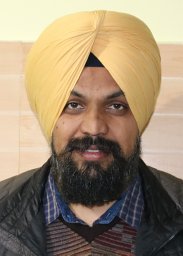 Amritpal Singh合作论文数Thapar Univ, Comp Sci & Engn Dept, Patiala, Punjab, India19
 Selvi Munuswamy合作论文数VIT Univ, Sch Comp Sci & Engn, Vellore, Tamil Nadu, India18
 Muhammad Khurram Khan合作论文数Center of Excellence In Information Assurance, College of Computer & Information Sciences, King Saud University18
 Jong Hyouk Lee合作论文数Department of Computer and Information Security, Sejong University18
 Tekchandani, R.合作论文数17
 Girraj Kumar合作论文数17
 Rahat Iqbal合作论文数16
 Sudip Misra合作论文数Department of Computer Science and Engineering, Indian Institute of Technology16
 Himanshu Sharma合作论文数15
 Vinay Chamola合作论文数Department of Electrical & Electronics Engineering, Birla Institute of Technology and Science Pilani15
 Mohammad Wazid合作论文数Department of Computer Science and Engineering, Graphic Era Deemed to be University15
 Aparna Kumari合作论文数Nirma Univ, Inst Technol, Dept Comp Sci & Engn, Ahmadabad, Gujarat, India14
 Albert Y. Zomaya合作论文数School of Computer Science, Faculty of Engineering, The University of Sydney;Centre for Distributed and High-Performance Computing, The University of Sydney;The Net Zero Institute, The University of Sydney14
 Rajeev Kumar合作论文数14
 Seema Bawa合作论文数Comp Sci & Engn Dept, Thapar Univ14
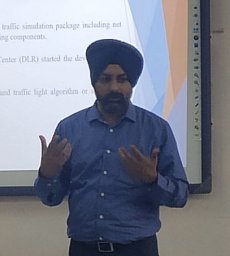 Rasmeet Singh Bali合作论文数Department of Computer Science and Engineering, NITTTR14
 Arpit Shukla合作论文数Nirma Univ, Inst Technol, Dept Comp Sci & Engn, Ahmadabad, Gujarat, India13
 Jian Wang (王健)合作论文数College of Science, China University of Petroleum13
 Athanasios V. Vasilakos合作论文数Center for AI Research, University of Agder;Department of Computer Science, Electrical and Space Engineering, Lulea University of Technology13
 Upendra Sharma合作论文数12
 Haotong Cao合作论文数Nanjing Univ Posts & Telecommun, Coll Commun & Informat Engn, Nanjing, Jiangsu, Peoples R China12