Plug-and-play (PnP) image reconstruction methods leverage pretrained deep neural network denoisers as image priors to solve general inverse problems, and can obtain a competitive performance without having to train a network on a specific problem. Despite their flexibility, PnP methods often require several iterations to converge and their performance can be highly sensitive to the choice of the initialization and of the hyperparameters. In this paper, we propose a new multilevel PnP framework to accelerate the convergence of PnP methods in the context of large-scale images. The proposed scheme, following a coarse-to-fine strategy, is initialized at the coarsest scale and the resolution of the starting point is progressively improved to reach the fine level with the highest resolution. The scheme then combines classical PnP iterations with cheaper iterations, involv ing representations of the images at coarser scales. As a result of the combination of these two ingredients, the multilevel PnP scheme accelerates the convergence and improves the robustness to the choice of initialization and hyperparameters. In a series of experiments, including image inpainting, demosaicing, and deblurring, we show that the proposed multilevel PnP method outperforms other PnP methods in both speed and reconstruction performance.
The initialisation of deep neural networks determines whether information and gradients can propagate across depth, yet a unified theory connecting these properties to learning dynamics remains elusive. Combining mean-field theory and random matrix theory, we establish a direct link between correlation propagation and the Neural Tangent Kernel (NTK) that governs learning in the sequential limit of infinitely wide, infinitely deep networks. Correlation propagation to infinite depth is possible only at a single critical point in the weight-bias variance plane. At this point, we show that the end-to-end Jacobian vanishes algebraically with depth, and use this to prove that the NTK becomes exactly proportional to the output correlation at infinite depth. This equivalence between information propagation and learning dynamics had not yet been noticed. We further show that orthogonal initialisation suppresses the leading finite-size corrections present under Gaussian initialisation, clarifying the respective roles of the two initialisation ensembles in this limit. These theoretical predictions are validated quantitatively on finite-width, finite-depth networks. Together, these results demonstrate that orthogonal initialisation at criticality plays a central role in controlling the asymptotic dynamics of deep learning.
Classical first-order optimization methods for imaging inverse problems scale poorly with image resolution. Wavelet based multilevel strategies can accelerate convergence under strong blur, but their fixed coarse-to-fine schedules lose effectiveness in moderate-blur or noise-dominated regimes. In this work, we propose an adaptive multiresolution block coordinate Forward-Backward algorithm for image restoration. Multiresolution block selection is driven by the local magnitude of the proximal update via a stochastic non-smooth Gauss-Southwell rule applied to the wavelet decomposition of the image. This adaptive selection strategy dynamically balances updates across scales, emphasizing coarse or fine blocks according to the degradation regime. As a result, the proposed method automatically adapts to varying blur and noise levels without relying on a predefined hierarchical update scheme.
The temporal and spatial analysis of river dynamics is a key factor for studying and understanding human impacts on floodplains. To assess the changes taking place, it is necessary to have high-resolution images with a large spatial coverage and a high temporal revisit frequency over the long term. Satellite imagery meets several of these criteria. For instance, Sentinel data provide high-resolution images but only after 2015. Therefore, to study water surface evolution prior to this date, it is necessary to rely on other satellite images such as Landsat, which offers longer historical coverage, albeit with lower spatial resolution. In this study, we aim to increase the spatial resolution of Landsat data from 30 to 10 meters (resolution of Sentinel images). To achieve this goal, we develop an innovative single image super-resolution method based on a plug-and-play approach.
In this paper, we propose an approach combining diffusion models and inverse problems for the reconstruction of circumstellar disk images. Our method builds upon the Rhapsodie framework for polarimetric imaging, substituting its classical prior with a diffusion model trained on synthetic data. Our formulation explicitly incorporates stellar leakage while efficiently handling missing data and high level noise inherent to high-contrast polarimetric imaging. Experiments show significant improvement over conventional methods within our framework of assumptions, opening new perspectives for studying circumstellar environments.
We consider a nonlinear inverse problem where the unknown is assumed to be piecewise affine, which is motivated by an application in DNA replication analysis. Since traditional algorithmic and theoretical tools from linear inverse problems do not apply, we propose a novel formalism and computational approach to harness it. In the noiseless case, we establish sufficient identifiability conditions, and prove that the solution is the unique minimizer of a non-convex optimization problem. The latter is specially challenging because of its multiple local minima. We propose an optimization algorithm that provably finds the global solution in the noiseless case and is shown to be numerically effective for noisy signals. When instantiated in a DNA replication analysis scenario, where the unknown is a so-called timing profile, the approach is shown to be more computationally effective than the state-of-the-art optimization methods by at least 30 orders of magnitude. Besides, it automatically recovers the full configuration of the DNA replication dynamics, which is crucial for DNA replication analysis and was not possible with previous methods.
In this paper, we present a new edge detection model based on proximal unfolded neural networks. The architecture relies on unfolding proximal Blake-Zisserman iterations, leading to a composition of two blocks: a smoothing block and an edge detection block. We show through simulations that the proposed approach efficiently eliminates irrelevant details while retaining key edges and significantly improves performance with respect to state-of-the-art strategies. Additionally, our architecture is significantly lighter than recent learning models designed for edge detection in terms of number of learnable parameters and inference time.
Block coordinate descent (BCD) methods are prevalent in large scale optimization problems due to the low memory and computational costs per iteration, the predisposition to parallelization, and the ability to exploit the structure of the problem. The theoretical and practical performance of BCD relies heavily on the rules defining the choice of the blocks to be updated at each iteration. We propose a new deterministic BCD framework that allows for very flexible updates, while guaranteeing state-of-the-art convergence guarantees on non-smooth nonconvex optimization problems. While encompassing several update rules from the literature, this framework allows for priority on updates of particular blocks and correlations in the block selection between iterations, which is not permitted under the classical convergent stochastic framework. This flexibility is leveraged in the context of multilevel optimization algorithms and, in particular, in multilevel image restoration problems, where the efficiency of the approach is illustrated.
In this paper, we propose a new algorithm for separating geometry and texture in noisy images. The proposed algorithm uses a novel primal-dual approach exploiting postcomposition. We show that the latter exhibits significantly better computational performance than standard forward-backward iterations and provides a more flexible formulation, opening the door to future integration with proximal neural networks.
This work focuses on joint image denoising and contour detection. On the one hand, contour detection on clean images (without noise) has been extensively studied from both variational formulation and deep learning perspectives. On the other hand, although the task of jointly denoising and contour detection has been largely considered in image processing literature using variational formulations, it has not been handled from the model-based neural network perspective. In this work, we propose an unfolded discrete Mumford-Shah procedure that enables us to bridge the gap between standard variational procedures designed to perform the combined denoising/edge detection task and black-box neural network designed for edge detection purpose.
In this letter, we focus on the challenging problem of designing an off-the-grid method for dictionaries involving both positional and scale shifts. To tackle this challenge, we introduce a novel algorithm inspired by the Sliding Frank-Wolfe approach. In our proposed algorithm, positions are treated as continuous variables, whereas scales are discretized. Such a strategy eliminates numerical instabilities inherent to the direct application of Sliding Frank-Wolfe. We successfully apply this algorithm to the study of DNA replication data.
A common approach to solve inverse imaging problems relies on finding a maximum a posteriori (MAP) estimate of the original unknown image, by solving a minimization problem. In this context, iterative proximal algorithms are widely used, enabling to handle non-smooth functions and linear operators. Recently, these algorithms have been paired with deep learning strategies, to further improve the estimate quality. In particular, proximal neural networks (PNNs) have been introduced, obtained by unrolling a proximal algorithm as for finding a MAP estimate, but over a fixed number of iterations, with learned linear operators and parameters. As PNNs are based on optimization theory, they are very flexible, and can be adapted to any image restoration task, as soon as a proximal algorithm can solve it. They further have much lighter architectures than traditional networks. In this article we propose a unified framework to build PNNs for the Gaussian denoising task, based on both the dual-FB and the primal-dual Chambolle-Pock algorithms. We further show that accelerated inertial versions of these algorithms enable skip connections in the associated NN layers. We propose different learning strategies for our PNN framework, and investigate their robustness (Lipschitz property) and denoising efficiency. Finally, we assess the robustness of our PNNs when plugged in a forward-backward algorithm for an image deblurring problem.
This paper presents a multilevel framework for inertial and inexact proximal algorithms, that encompasses multilevel versions of classical algorithms such as forward-backward and FISTA. The methods are supported by strong theoretical guarantees: we prove both the rate of convergence and the convergence of the iterates to a minimum in the convex case, an important result for ill-posed problems. We propose a particular instance of IML (Inexact MultiLevel) FISTA, based on the use of the Moreau envelope to build efficient and useful coarse corrections, fully adapted to solve problems in image restoration. Such a construction is derived for a broad class of composite optimization problems with proximable functions. We evaluate our approach on several image reconstruction problems and we show that it considerably accelerates the convergence of the corresponding one-level (i.e. standard) version of the methods, for large-scale images.
Selecting the fastest algorithm for a specific signal/image processing task is a challenging question. We propose an approach based on the Performance Estimation Problem framework that numerically and automatically computes the worst-case performance of a given optimization method on a class of functions. We first propose a computer-assisted analysis and comparison of several first-order primal optimization methods, namely, the gradient method, the forward-backward, Peaceman-Rachford, and Douglas-Rachford splittings. We tighten the existing convergence results of these algorithms and extend them to new classes of functions. Our analysis is then extended and evaluated in the context of the primal-dual Chambolle-Pock and Condat-Vũ methods.
In this paper we introduce a new approach for solving image restoration problems by using the infimal postcomposition of a convex function by a linear operator. We derive this formulation for general linear composite convex problems in Hilbert spaces and we provide globally weakly convergent algorithms based on the Douglas–Rachford splitting. We apply our algorithms to the image restoration problem, giving an explicit closed expression for the proximity operator of the infimal postcomposition. Comprehensive numerical experiments are performed in order to serve two key objectives: first, to highlight the advantages of the proposed procedure over a wide array of state-of-the-art methods, considering diverse levels of image degradations; and second, to assess the impact of TV-l2 penalization, which introduces strong convexity while maintaining high performance, contrary to conventional beliefs.
Plug-and-play algorithms constitute a popular framework for solving inverse imaging problems that rely on the implicit definition of an image prior via a denoiser. These algorithms can leverage powerful pre-trained denoisers to solve a wide range of imaging tasks, circumventing the necessity to train models on a per-task basis. Unfortunately, plug-and-play methods often show unstable behaviors, hampering their promise of versatility and leading to suboptimal quality of reconstructed images. In this work, we show that enforcing equivariance to certain groups of transformations (rotations, reflections, and/or translations) on the denoiser strongly improves the stability of the algorithm as well as its reconstruction quality. We provide a theoretical analysis that illustrates the role of equivariance on better performance and stability. We present a simple algorithm that enforces equivariance on any existing denoiser by simply applying a random transformation to the input of the denoiser and the inverse transformation to the output at each iteration of the algorithm. Experiments on multiple imaging modalities and denoising networks show that the equivariant plug-and-play algorithm improves both the reconstruction performance and the stability compared to their non-equivariant counterparts.
This paper presents a multilevel algorithm specifically designed for radio-interferometric imaging in astronomy. The proposed algorithm is used to solve the uSARA (unconstrained Sparsity Averaging Reweighting Analysis) formulation of this image restoration problem. Multilevel algorithms rely on a hierarchy of approximations of the objective function to accelerate its optimization. In contrast to the usual multilevel approaches where this hierarchy is derived in the parameter space, here we construct the hierarchy of approximations in the observation space. The proposed approach is compared to a reweighted forward-backward procedure, which is the backbone iteration scheme for solving the uSARA problem.
Numerous signal/image processing tasks can be formulated as variational problems, whose solutions depend, often crucially, on the values of hyperparameters. Their automated selection usually involves the computation of gradients of a well chosen loss function, which often turns unfeasible analytically. The deep-learning inspired use of automatic differentiation to compute such gradients, though appealing, is significantly impaired by the usually large number of iterations inherently attached to functional minimization in variational problems. The present work proposes and assesses the use of a restart strategy for automated hyperparameter tuning, combining the benefits of automatic differentiation with properties of proximal iterative algorithms. It studies theoretically its conditions of applicability in a generic algorithmic framework and its specification to accelerated Chambolle-Pock iterations when dealing with strongly convex objective function. The effectiveness is illustrated for image denoising and texture segmentation problems.
Studying circumstellar environments is crucial for understanding exoplanets and stellar systems. Instruments like SPHERE can extract information about these environments by leveraging advanced image reconstruction methods, possibly based on deep learning. This work focuses on unfolded proximal neural networks based on Condat-Vu iterations and proposes a new nonlinear formulation. To evaluate and compare the performance of the proposed reconstruction strategies, two datasets dedicated to circumstellar environments analysis in the context of high-contrast imagery have been created offering different level of complexity in the evaluation of the performance.
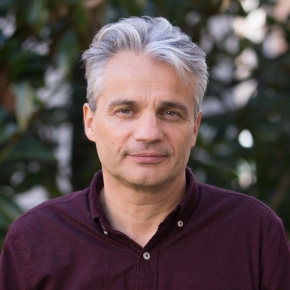 Patrice Abry合作论文数Physics Laboratory, École Normale Supérieure de Lyon43
 Jean-Christophe Pesquet合作论文数Center for Visual Computing, Université Paris-Saclay17
 Barbara Pascal合作论文数Univ Claude Bernard Lyon 1, Univ Lyon, ENS Lyon, CNRS,Lab Phys, F-69342 Lyon, France16
 Caroline Chaux合作论文数Institut Gaspard Monge16
 Herwig Wendt合作论文数Informatics Research Institute of Toulouse Laboratory, University of Toulouse15
 Pierre Borgnat合作论文数Laboratoire de Physique11
 Laurent Condat合作论文数Visual Computing Center, King Abdullah University of Science and Technology10
 Jordan Frecon合作论文数LITIS, INSA Rouen Normandie10
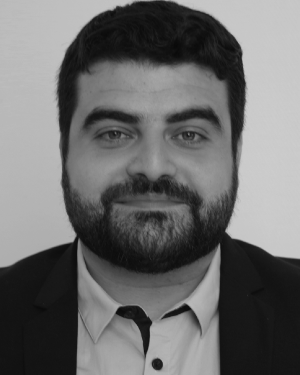 Giovanni Chierchia合作论文数Università Federico II9
 Beatrice Pesquet-Popescu合作论文数Thales LAS/SRA;NATO8
 Jeanchristophe Pesquet合作论文数Signal Processing and Communication Group
Institut Gaspard Monge
and
CNRS - UMR 80498
Jeanchristophe Pesquet合作论文数Signal Processing and Communication Group
Institut Gaspard Monge
and
CNRS - UMR 80498 Elisa Riccietti合作论文数7Guillaume Lauga合作论文数7
 Marion Foare合作论文数7
 Nicolas Dobigeon合作论文数University of Toulouse, IRIT;INP-ENSEEIHT;Artificial and Natural Intelligence Toulouse Institute7
 Patrick Flandrin合作论文数Laboratoire de Physique, Ecole Normale Superieure de Lyon7
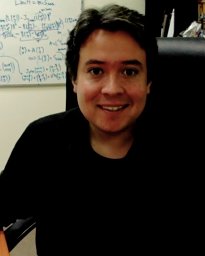 Luis M. Briceno-Arias合作论文数7
 Gersende Fort合作论文数LTCI, CNRS and TELECOM ParisTech6
 Audrey Repetti合作论文数School of Engineering Physical Sciences6
 Goncalves, Paulo合作论文数ENS Lyon, Univ Lyon5
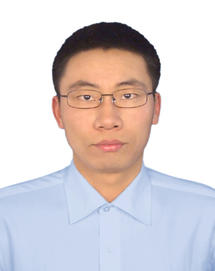 Mingyuan Jiu (酒明远)合作论文数School of Computer and Artificial Intelligence, Zhengzhou University5Hoang Trieu Vy Le合作论文数4Laurence Denneulin合作论文数4
 Julián Tachella合作论文数French National Centre for Scientific Research, Centre National de La Recherche Scientifique;Sisyph Laboratory, École Normale Supérieure de Lyon4Jiri Spilka合作论文数Czech Technical University in Prague4Doret Muriel合作论文数4
 Jeremy Schmitt合作论文数4
 Roberto Fabio Leonarduzzi合作论文数4Valerie Vidal合作论文数Laboratoire de Physique, Ecole Normale Sup´erieure de Lyon-CNRS4Philippe Ricoux合作论文数4
 Éric Thiébaut合作论文数Centre de recherche astrophysique de Lyon, Claude Bernard University Lyon 14Paulo Gonçalves合作论文数3Clara Lage合作论文数3
 Gabriel Michau合作论文数Swiss Fed Inst Technol, Zurich, Switzerland3
 Arbona Jean-Michel合作论文数3
 Stephane Jaffard合作论文数D´epartement de Math´ematiques, Université Paris-Est3
 Lotfi Chaari合作论文数I²BM, Université Paris-Est3
 Rémi Gribonval合作论文数Laboratoire de l’Informatique du Parallélisme, École Normale Supérieure de Lyon;Inria3Jérôme Boulanger合作论文数Systemes cognitifs Projet3
 Claude Comtat合作论文数3
 Patrick L Combettes合作论文数Department of Mathematics, North Carolina State University3
 Audit Benjamin合作论文数Chromatin & Genome Group, Laboratoire de Physique, Ecole Normale Supérieure de Lyon3Leo Davy合作论文数2Maud Langlois合作论文数2
 Yannick Berthoumieu合作论文数2
 Meriam Chebre合作论文数2
 Charles-Gérard Lucas合作论文数2Marion Serres合作论文数Univ Lyon 1, Univ Lyon, CNRS, Lab Phys,ENS Lyon, F-69342 Lyon, France2




