Out-of-distribution (OOD) detection is critical for the safe deployment of deep neural networks. State-of-the-art post-hoc methods typically derive OOD scores from the output logits or penultimate feature vector obtained via global average pooling (GAP). We contend that this exclusive reliance on the logit or feature vector discards a rich, complementary signal: the raw channel-wise statistics of the pre-pooling feature map lost in GAP. In this paper, we introduce Catalyst, a post-hoc framework that exploits these under-explored signals. Catalyst computes an input-dependent scaling factor (γ) on-the-fly from these raw statistics (e.g., mean, standard deviation, and maximum activation). This γ is then fused with the existing baseline score, multiplicatively modulating it – an “elastic scaling” – to push the ID and OOD distributions further apart. We demonstrate Catalyst is a generalizable framework: it seamlessly integrates with logit-based methods (e.g., Energy, ReAct, SCALE) and also provides a significant boost to distance-based detectors like KNN. As a result, Catalyst achieves substantial and consistent performance gains, reducing the average False Positive Rate by 32.87 on CIFAR-10 (ResNet-18), 27.94
Detecting out-of-distribution (OOD) inputs is a critical safeguard for deploying machine learning models in the real world. However, most post-hoc detection methods operate on penultimate feature representations derived from global average pooling (GAP) – a lossy operation that discards valuable distributional statistics from activation maps prior to global average pooling. We contend that these overlooked statistics, particularly channel-wise variance and dominant (maximum) activations, are highly discriminative for OOD detection. We introduce DAVIS, a simple and broadly applicable post-hoc technique that enriches feature vectors by incorporating these crucial statistics, directly addressing the information loss from GAP. Extensive evaluations show DAVIS sets a new benchmark across diverse architectures, including ResNet, DenseNet, and EfficientNet. It achieves significant reductions in the false positive rate (FPR95), with improvements of 48.26% on CIFAR-10 using ResNet-18, 38.13% on CIFAR-100 using ResNet-34, and 26.83% on ImageNet-1k benchmarks using MobileNet-v2. Our analysis reveals the underlying mechanism for this improvement, providing a principled basis for moving beyond the mean in OOD detection.
Service-based architecture (SBA) has gained attention in industry and academia as a means to modernize legacy systems. It refers to a design style that enables systems to be developed as suites of small, loosely coupled, and autonomous components (services) that encapsulate functionality and communicate via language-agnostic APIs. However, defining appropriately sized services that capture cohesive subsets of system functionality remains challenging. Existing work often relies on the availability of documentation, access to project personnel, or a priori knowledge of the target number of services, assumptions that do not hold in many real-world scenarios. Our work addresses these limitations using a deep reinforcement learning-based approach to identify appropriately sized services directly from implementation artifacts. We present Rake, a reinforcement learning-based technique that leverages available system documentation and source code to guide service decomposition at the level of implementation methods. Rake does not require specific documentation or access to project personnel and is language-agnostic. It also supports a customizable objective function that balances modularization quality and business capability alignment, i.e., the degree to which a service covers the targeted business capability. We applied Rake to four open-source legacy projects and compared it with two state-of-the-art techniques. On average, Rake achieved 7-14 percent higher modularization quality and 18-22 percent stronger business capability alignment. Our results further show that optimizing solely for business context can degrade decomposition quality in tightly coupled systems, highlighting the need for balanced objectives.
Many languages for modeling various aspects of software systems’ architectures have been proposed over the past three decades. In the late 1990s, we provided the first systematic foundation for understanding, classifying, and comparing the quickly emerging architecture description languages (ADLs). This culminated in a 2000 IEEE TSE publication, which has subsequently been referenced widely. In this paper, we revisit the 2000 framework, consider how it influenced a foundational study of the suitability of the Unified Modeling Language (UML) as an ADL and influenced the development of an extensible ADL (xADL) with a set of highly innovative features. We show how further work with modeling efforts led to a new and deeper understanding of software architecture itself. We conclude by analyzing a series of recent developments that have reshaped the software architecture landscape, posing new questions about the nature of architecture description.
Recent research has revealed that the reported results of an emerging body of deep learning-based techniques for detecting software vulnerabilities are not reproducible, either across different datasets or on unseen samples. This paper aims to provide the foundation for properly evaluating the research in this domain. We do so by analyzing prior work and existing vulnerability datasets for the syntactic and semantic features of code that contribute to vulnerability, as well as features that falsely correlate with vulnerability. We provide a novel, uniform representation to capture both sets of features, and use this representation to detect the presence of both vulnerability and spurious features in code. To this end, we design two types of code perturbations: feature preserving perturbations (FPP) ensure that the vulnerability feature remains in a given code sample, while feature eliminating perturbations (FEP) eliminate the feature from the code sample. These perturbations aim to measure the influence of spurious and vulnerability features on the predictions of a given vulnerability detection solution. To evaluate how the two classes of perturbations influence predictions, we conducted a large-scale empirical study on five state-of-the-art DL-based vulnerability detectors. Our study shows that, for vulnerability features, only similar to 2% of FPPs yield the undesirable effect of a prediction changing among the five detectors on average. However, on average, similar to 84% of FEPs yield the undesirable effect of retaining the vulnerability predictions. For spurious features, we observed that FPPs yielded a drop in recall up to 29% for graph-based detectors. We present the reasons underlying these results and suggest strategies for improving DNN-based vulnerability detectors. We provide our perturbation-based evaluation framework as a public resource to enable independent future evaluation of vulnerability detectors.
In this paper, I overview the research trends in software engineering, specifically as reflected in papers published in IEEE TSE over the 30-year period between 1994 and 2024. I used ChatGPT-4o to extract summaries of top-3 topics for each individual year during this period. I make three key observations: (1) Our research community—probably not unlike others—has tended to abandon unsolved difficult problems and move onto new “shiny” topics, even when that has not been warranted by the circumstances. (2) Some of the research problems that are widely-acknowledged as critically important have not been given appropriate attention. (3) There seems to be an emerging expectation that AI, most recently in the form or LLMs, will obviate much of the painstaking work our community has put into solving a range of problems, and that carries with it serious risks.
Software developers increasingly rely on AI code generation utilities. To ensure that “good” code is accepted into the code base and “bad” code is rejected, developers must know when to trust an AI suggestion. Understanding how developers build this intuition is crucial to enhancing developer-AI collaborative programming. In this paper, we seek to understand how developers (1) define and (2) evaluate the trustworthiness of a code suggestion and (3) how trust evolves when using AI code assistants. To answer these questions, we conducted a mixed method study consisting of an in-depth exploratory survey with (n=29) developers followed by an observation study (n=10). We found that comprehensibility and perceived correctness were the most frequently used factors to evaluate code suggestion trustworthiness. However, the gap in developers' definition and evaluation of trust points to a lack of support for evaluating trustworthy code in real-time. We also found that developers often alter their trust decisions, keeping only 52% of original suggestions. Based on these findings, we extracted four guidelines to enhance developer-AI interactions. We validated the guidelines through a survey with (n=7) domain experts and survey members (n=8). We discuss the validated guidelines, how to apply them, and tools to help adopt them.
The pervasiveness of mobile apps in everyday life necessitates robust testing strategies to ensure quality and efficiency, especially through end-to-end usage-based tests for mobile apps' user interfaces (UIs). However, manually creating and maintaining such tests can be costly for developers. Since many apps share similar functionalities beneath diverse UIs, previous works have shown the possibility of transferring UI tests across different apps within the same domain, thereby eliminating the need for writing the tests manually. However, these methods have struggled to accommodate real-world variations, often facing limitations in scenarios where source and target apps are not very similar or fail to accurately transfer test oracles. This paper introduces an innovative technique, LLMigrate, which leverages Large Language Models (LLMs) to efficiently transfer usage-based UI tests across mobile apps. Our experimental evaluation shows LLMigrate can achieve a 97.5% success rate in automated test transfer, reducing the manual effort required to write tests from scratch by 91.1%. This represents an improvement of 9.1% in success rate and 38.2% in effort reduction compared to the best-performing prior technique, setting a new benchmark for automated test transfer.
Deep Neural Networks (DNNs) tend to accrue technical debt and suffer from significant retraining costs when adapting to evolving requirements. Modularizing DNNs offers the promise of improving their reusability. Previous work has proposed techniques to decompose DNN models into modules both during and after training. However, these strategies yield several shortcomings, including significant weight overlaps and accuracy losses across modules, restricted focus on convolutional layers only, and added complexity and training time by introducing auxiliary masks to control modularity. In this work, we propose MODA, an activation-driven modular training approach. MODA promotes inherent modularity within a DNN model by directly regulating the activation outputs of its layers based on three modular objectives: intra-class affinity, inter-class dispersion, and compactness. MODA is evaluated using three well-known DNN models and five datasets with varying sizes. This evaluation indicates that, compared to the existing state-of-the-art, using MODA yields several advantages: (1) MODA accomplishes modularization with 22
Deep learning (DL) has been a common thread across several recent techniques for vulnerability detection. The rise of large, publicly available datasets of vulnerabilities has fueled the learning process underpinning these techniques. While these datasets help the DL-based vulnerability detectors, they also constrain these detectors' predictive abilities. Vulnerabilities in these datasets have to be represented in a certain way, e.g., code lines, functions, or program slices within which the vulnerabilities exist. We refer to this representation as a base unit. The detectors learn how base units can be vulnerable and then predict whether other base units are vulnerable. We have hypothesized that this focus on individual base units harms the ability of the detectors to properly detect those vulnerabilities that span multiple base units (or MBU vulnerabilities). For vulnerabilities such as these, a correct detection occurs when all comprising base units are detected as vulnerable. Verifying how existing techniques perform in detecting all parts of a vulnerability is important to establish their effectiveness for other downstream tasks. To evaluate our hypothesis, we conducted a study focusing on three prominent DL-based detectors: ReVeal, DeepWukong, and LineVul. Our study shows that all three detectors contain MBU vulnerabilities in their respective datasets. Further, we observed significant accuracy drops when detecting these types of vulnerabilities. We present our study and a framework that can be used to help DL-based detectors toward the proper inclusion of MBU vulnerabilities.
Software Architecture is the most important determinant of the functional and non-functional attributes of a system [1]–[3]. Put simply, software systems “live and die” by their architectures [4]. Despite the importance, the architecture of a software system is often not explicitly documented, especially in the prevalent Agile methods in the past decades. Instead, the architecture of a system often becomes hidden in the myriad system implementation details, and gradually decays and accumulates grime-causing significant challenges to its long-term evolution and maintenance [5]–[8]. Recovering, understanding, and updating a system's architecture is an important facet of overcoming this challenge to support the evolution and maintenance of long-lived software systems.
Today, more than 3 million websites rely on online advertising revenue. Despite the monetary incentives, ads often frustrate users by disrupting their experience, interrupting content, and slowing browsing. To improve ad experiences, leading media associations define Better Ads Standards for ads that are below user expectations. However, little is known about how well websites comply with these standards and whether existing approaches are sufficient for developers to quickly resolve such issues. In this paper, we propose ADHERE, a technique that can detect intrusive ads that do not comply with Better Ads Standards and suggest repair proposals. ADHERE works by first parsing the initial web page to a DOM tree to search for potential static ads, and then using mutation observers to monitor and detect intrusive (dynamic/static) ads on the fly. To handle ads' volatile nature, ADHERE includes two detection algorithms for desktop and mobile ads to identify different ad violations during three phases of page load events. It recursively applies the detection algorithms to resolve nested layers of DOM elements inserted by ad delegations. We evaluate ADHERE on Alexa Top 1 Million Websites. The results show that ADHERE is effective in detecting violating ads and suggesting repair proposals. Comparing to the current available alternative, ADHERE detected intrusive ads on 4,656 more mobile websites and 3,911 more desktop websites, and improved recall by 16.6% and accuracy by 4.2%.
Writing and maintaining UI tests for mobile apps is a time-consuming and tedious task. While decades of research have produced automated approaches for UI test generation, these approaches typically focus on testing for crashes or maximizing code coverage. By contrast, recent research has shown that developers prefer usage-based tests, which center around specific uses of app features, to help support activities such as regression testing. Very few existing techniques support the generation of such tests, as doing so requires automating the difficult task of understanding the semantics of UI screens and user inputs. In this paper, we introduce AVGUST, which automates key steps of generating usage-based tests. AVGUST uses neural models for image understanding to process video recordings of app uses to synthesize an app-agnostic state-machine encoding of those uses. Then, AVGUST uses this encoding to synthesize test cases for a new target app. We evaluate Avgust on 374 videos of common uses of 18 popular apps and show that 69% of the tests AVGUST generates successfully execute the desired usage, and that AVGUST'S classifiers outperform the state of the art.
Architectural decay imposes real costs in terms of developer effort, system correctness, and performance. Over time, those problems are likely to be revealed as explicit implementation issues (defects, feature changes, etc.). Recent empirical studies have demonstrated that there is a significant correlation between architectural "smells" -- manifestations of architectural decay -- and implementation issues. In this paper, we take a step further in exploring this phenomenon. We analyze the available development data from 10 open-source software systems and show that information regarding current architectural decay in these systems can be used to build models that accurately predict future issue-proneness and change-proneness of the systems' implementations. As a less intuitive result, we also show that, in cases where historical data for a system is unavailable, such data from other, unrelated systems can provide reasonably accurate issue- and change-proneness prediction capabilities.
Writing UI tests manually requires significant effort. Several approaches have tried to address this problem in mobile apps: by exploiting the similarities of different apps within the same domain on a single platform, they have shown that it is possible to transfer tests that exercise similar functionality between the apps. A related recent technique enables transfer of UI tests uni-directionally, from an open-source iOS app to the same app implemented for Android. This paper presents MAPIT, a technique that expands existing work in three important ways: (1) it enables bi-directional UI test transfer between pairs of "sibling" Android and iOS apps; (2) it does not assume that the apps’ source code is available; (3) it is capable of transferring tests containing oracles in addition to UI events. MAPIT runs existing tests on a "source" app and builds a partial model of the app corresponding to each test. The model comprises the app’s screenshots, obtainable properties of each screenshot’s constituent elements, and labeled transitions between the screenshots. MAPIT uses this model to determine the corresponding information on the "target" app and generates an equivalent test, via a novel approach that leverages computer vision and NLP. Our evaluation on a diverse set of widely used, closed-source sibling Android and iOS apps shows that MAPIT is feasible, accurate, and useful in transferring UI tests across platforms.
This paper identifies a model of software evolution that is prevalent in large, long-lived academic research tool suites (3L-ARTS). This model results in an "archipelago" of related but haphazardly organized architectural "islands", and inherently induces technical debt. We illustrate the archipelago model with examples from two 3L-ARTS archipelagos identified in literature.
Prefetching web pages is a well-studied solution to reduce network latency by predicting users' future actions based on their past behaviors. However, such techniques are largely unexplored on mobile platforms. Today's privacy regulations make it infeasible to explore prefetching with the usual strategy of amassing large amounts of data over long periods and constructing conventional, "large" prediction models. Our work is based on the observation that this may not be necessary: Given previously reported mobile-device usage trends (e.g., repetitive behaviors in brief bursts), we hypothesized that prefetching should work effectively with "small" models trained on mobile-user requests collected during much shorter time periods. To test this hypothesis, we constructed a framework for automatically assessing prediction models, and used it to conduct an extensive empirical study based on over 15 million HTTP requests collected from nearly 11,500 mobile users during a 24-hour period, resulting in over 7 million models. Our results demonstrate the feasibility of prefetching with small models on mobile platforms, directly motivating future work in this area. We further introduce several strategies for improving prediction models while reducing the model size. Finally, our framework provides the foundation for future explorations of effective prediction models across a range of usage scenarios.
Over the past three decades software engineering researchers have produced a wide range of techniques and tools for understanding the architectures of large, complex systems. However, these have tended to be one-off research projects, and their idiosyncratic natures have hampered research collaboration, extension and combination of the tools, and technology transfer. The area of software architecture is rich with disjoint research and development infrastructures, and datasets that are either proprietary or captured in proprietary formats. This paper describes a concerted effort to reverse these trends. We have designed and implemented a flexible and extensible infrastructure (SAIN) with the goal of sharing, replicating, and advancing software architecture research. We have demonstrated that SAIN is capable of incorporating the constituent tools extracted from three independently developed, large, long-lived software architecture research environments. We discuss SAIN's ambitious goals, the challenges we have faced in achieving those goals, the key decisions made in SAIN's design and implementation, the lessons learned from our experience to date, and our ongoing and future work.
Noise in software patches impacts their understanding, analysis, and use for tasks such as change prediction. Although several approaches have been developed to identify noise in patches, this issue has persisted. An analysis of a dataset of security patches for the Tomcat web server, which we further expanded with security patches from five additional systems, uncovered several kinds of previously unreported noise which we call nonessential casualty changes. These are changes that themselves do not alter the logic of the program but are necessitated by other changes made in the patch. In this paper, we provide a comprehensive taxonomy of casualty changes. We then develop CasCADe, an automated technique for automatically identifying casualty changes. We evaluate CasCADe with several publicly available datasets of patches and tools that focus on them. Our results show that CasCADe is highly accurate, that the kinds of noise it identifies occur relatively commonly in patches, and that removing this noise improves upon the evaluation results of a previously published change-based approach.
 Richard Newton Taylor合作论文数School of Information and Computer Sciences, University of California40
 Sam Malek合作论文数Institute for Software Research, Department of Informatics, Donald Bren School of Information & Computer Sciences, University of California, Irvine34
 Joshua Garcia合作论文数Department of Informatics, Donald Bren School of Information and Computer Sciences, University of California, Irvine33
 Marija Mikic-Rakic合作论文数Google Inc33
 George Edwards合作论文数Science Department, Computer;University of Southern California;Computer Science Department, University of Southern California33
 Yuriy Brun合作论文数Manning College of Information and Computer Sciences, University of Massachusetts Amherst30
 Ivo Krka合作论文数University of Southern California22
 Daniel Popescu合作论文数Staff Software Engineer @ Google21
 Nikunj Mehta合作论文数Department of Computer Science;University of Southern California;Department of Computer Science, University of Southern California19
 Peyman Oreizy合作论文数Dynamic Variable LLC19
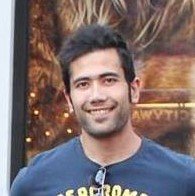 Arman Shahbazian合作论文数University of Southern California17
 Alexander Egyed合作论文数Institute for Software Systems Engineering, Johannes Kepler University17
 Roshanak Roshandel合作论文数Amazon16
 David S. Rosenblum合作论文数Department of Computer Science, George Mason University15Chiyoung Seo合作论文数15
 Chris A. Mattmann合作论文数Department of Computer Science, Viterbi School of Engineering13Jae Young Bang合作论文数Kakao Corporation12
 Duc Le合作论文数11
 Youn Kyu Lee合作论文数University of Southern California11
 Yixue Zhao合作论文数University of Southern California10
 David M. Woollard合作论文数10
 Paul Grunbacher合作论文数Johannes Kepler University Linz10
 Leana Golubchik合作论文数Thomas Lord Department of Computer Science, Viterbi School of Engineering, University of Southern California;Ming Hsieh Department of Electrical and Computer Engineering, Viterbi School of Engineering, University of Southern California10
 Barry Boehm合作论文数Parallel Agile;University of Southern California9Marcelo Schmitt Laser合作论文数University of Southern California, USA8Hossein Tajalli合作论文数7L. Cheung合作论文数7
 Jason E. Robbins合作论文数7Ebru Dincel合作论文数7Saad Shafiq合作论文数6
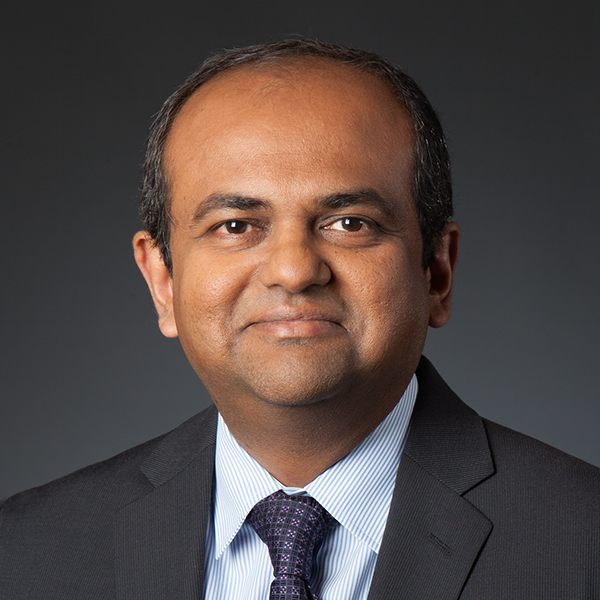 Gaurav Sukhatme合作论文数Thomas Lord Department of Computer Science, Viterbi School of Engineering, University of Southern California;Robotic Embedded Systems Laboratory, University of Southern California;Amazon6Vladimir Jakobac合作论文数Computer Science Department, University of Southern California6
 Adriana Sejfia合作论文数School of Informatics, University of Edinburgh5
 Saghar Talebipour合作论文数University of Southern California5
 André Van Der Hoek合作论文数Software Design and Collaboration Laboratory, Department of Informatics, Donald Bren School of Information & Computer Sciences, University of California5
 Yuanfang Cai (蔡元方)合作论文数Department of Computer Science, Drexel University;College of Computing & Informatics, Drexel University5
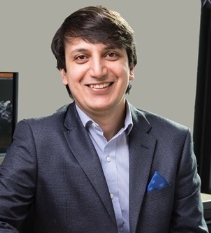 Mehdi Mirakhorli合作论文数Software Engineering & Global Cybersecurity Institute, Rochester Institute of Technology5
 Daniel J. Crichton合作论文数Jet Propulsion Laboratory;California Institute of Technology;Jet Propulsion Laboratory, California Institute of Technology5Eric M. Dashofy合作论文数University of California, Irvine, CA5Somo Banerjee合作论文数4
 Daye Nam合作论文数Department of Informatics, University of California, Irvine4
 Hakan Erdogmus合作论文数Department of Electrical and Computer Engineering, College of Engineering, Carnegie Mellon University4Daniel Link合作论文数4
 David Garlan合作论文数Institute for Software Research, School of Computer Science, Carnegie Mellon University4
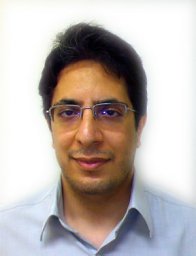 Gholamreza Safi合作论文数Software Quality Research Lab, Sharif University of Technology4Chris Mattmann合作论文数Department of Computer Science, Viterbi School of Engineering4Brad Petrus合作论文数4Suhrid Karthik合作论文数3
 Nikola Lukic合作论文数3