Traditional microarray scanners typically rely on high-performance computers to process the acquired images. To address these challenges, we propose a novel microarray detection (MD) method designed for deployment on a charge-coupled device (CCD) microarray scanner integrated with an edge computing. In this MD method, we propose a novel model named C2f_SC, which integrates the computational efficiency of the star operation with contextual anchor attention to enhance detection accuracy within a compact model architecture. We further integrate the C2f_SC module into the You Only Look Once v8 (YOLOv8) framework, utilizing MobileNetV3 with the convolutional block attention module (CBAM) as the backbone, removing the detection heads for medium and large objects, replacing the bounding box loss function with the signed intersection over union, and incorporating ResBlock_CBAM before the small object detection head. With the microarray images from the gene expression omnibus database, experimental results demonstrate that our method significantly reduces the required giga floating point operations per seconds (GFLOPs) and model size compared to other YOLO models, while maintaining comparable or higher mAP@50 performance with only a slight drop at mAP@50–95. Specifically, against YOLOv8n, our approach matches mAP@50 while using just 32.9% of GFLOPs and 43.3% of model weights. In addition, we conducted a comparative experiment between the laser confocal scanner and the CCD scanner on the BAC Microarray from MGmed Inc., Republic of Korea (MGMED BAC) to verify the reliability of the CCD scanner. Extensive experimental results demonstrate that the proposed MD method significantly reduces reliance on large-scale computing systems.
The reliable, real-time detection of surface defects on aeroengine blades (AEBs) is severely limited by complex geometry and lighting variations, which reduce detection precision under strict computational budgets. To address these coupled challenges, we present a lightweight detection framework, termed tensor-attention- and differentiable architecture search (DARTS)-guided network (TAD-Net), featuring a task-tailored architectural design that improves defect detectability while maintaining deployment-level efficiency for aeroengine inspection. TAD-Net consists of three synergistic components: 1) a tensor-attention fusion block (TAF-Block) enhances long-range dependence modeling for weak defect cues while suppressing redundant shallow activations; 2) a DARTS-guided residual attentive large-receptive-field neck improves multiscale feature fusion by enforcing cross-scale alignment and representation consistency; and 3) a hierarchical-rank tensor decomposition (HRTD) strategy reduces high-dimensional feature redundancy with minimal loss of semantic capacity, thereby lowering computational cost. These components are coordinated within a unified design to address the interplay between feature representation, multiscale aggregation, and computational efficiency in aeroengine inspection scenarios. TAD-Net is evaluated on four benchmark datasets and consistently improves the accuracy and efficiency balance. On the Aeroengine-Blade dataset, average precision increases by about 4%, while computational cost can be reduced by over 10% through the proposed design, with comparable recall. These gains support real-time deployment in resource-limited aeroengine inspection systems, demonstrating the suitability of TAD-Net for integration into sensor-driven inspection and monitoring pipelines in safety-critical industrial applications.
Many-objective evolutionary optimization can be viewed as a population-based learning process, yet learning effective search behaviors becomes increasingly difficult as the number of objectives grows due to weakened selection pressure, severe crowding, and limited computational resources. To address this challenge, this pa per proposes a learning-driven coevolutionary framework with adaptive computational resource allocation for many-objective optimization. A high-dimensional projection-based coordinate mapping mechanism is introduced to obtain compact learning representations of the Pareto front distribution. Based on this representation, a crowd ing entropy indicator is developed to capture both local density and global distribution characteristics, enabling population-level structural learning. Leveraging the learned information, a parameter-free computational re source scheduling strategy is designed to adaptively allocate search effort to more informative regions in the objective space, achieving an effective balance between exploration and exploitation. Experimental results on benchmark many-objective problems demonstrate that the proposed approach consistently improves convergence and diversity under limited computational budgets compared with several state-of-the-art algorithms.
In this paper, a novel particle swarm optimizer (PSO) is proposed based on a designed failure-aware searching (FAS) framework. Named FAS-PSO, the proposed algorithm seeks to learn potential valuable information from those non-improved evolutionary experiences rather than directly discarding them. Considering the topological status of population, each particle is equipped with a structural probe to assess local regions, which integrates information from different individuals and enhances the communication among population. Next, in case of a probing location with better fitness, the swarm will be updated accordingly. Otherwise, by measuring the deterioration extent of the probe as compared to the initial particle, an information reinvestigation mechanism is adopted to generate a positional modification for swarm update, including continuous forward search and escape in the opposite direction. Extensive experiments demonstrate the performance of FAS-PSO is superior to that of other state-of-the-art swarm intelligence-based algorithms. Moreover, the proposed FAS-PSO is further extended to a multi-objective version and is successfully applied to accomplish the reliable and robust parameter estimation of a Wendling neural mass model, showing considerable engineering practicality in solving the complicated biomedical model inversion task.
Cross-Domain Few-Shot Object Detection (CD-FSOD) aims to transfer a detector pretrained on a large-scale source domain to a target domain with only a few annotated examples. While recent studies emphasize architecture de sign and target-side augmentation, the impact of auxiliary labeled domains during target adaptation is still poorly understood, especially regarding when they help as opposed to cause negative transfer. In this work, we show that jointly training with an auxiliary domain can affect target performance, yet the outcome is highly dependent on the specific target-auxiliary pairing and often leads to negative transfer. To predict auxiliary-domain effects without exhaustive retraining, we propose a training-free feature framework that measures target-auxiliary relat edness and refines it via a source-anchored calibration. By explicitly referencing the pretraining source domain, the calibration helps separate target-dependent effects from auxiliary compatibility, allowing auxiliary benefits to be analyzed more reliably across different targets. Experiments on standard CD-FSOD benchmarks demon strate consistent improvements. Additional results on an industrial aero-engine defect dataset further show that auxiliary selection is particularly effective under severe domain shifts, and that lightweight RPN fine-tuning can provide complementary gains when proposal quality is limiting factor.
To achieve multi-failure related reliability estimation of aviation structural systems, the vectorial importance-weighted neural network framework (VIWNF) is developed by fusing the matrix theory, self-attention mechanism, compact support region (CSR) thought, neural network model, multi-objective black-winged kite (MOBWK) algorithm, synchronous sampling mechanism, and Copula strategy. In this framework, the matrix theory is applied to convert known sample information and unknown parameters into vectors, matrix, and cells array; the self-attention mechanism is utilized to attribute various importance degrees for input variables; the CSR thought is adopted to obtain the weights of different samples; the neural network model is utilized to determine the correlation relationship; the MOBWK algorithm is tended to optimize the CSR; the synchronous sampling mechanism and Copula strategy are employed for multi-failure synchronous correlation reliability evaluation. In addition, the multi-objective mathematical benchmark case demonstrates the validity of the proposed VIWNF method from a mathematical viewpoint; the landing gear brake temperature (LGBT) and aeroengine turbine blade multi-failure are taken to validate the effectiveness of VIWNF approach in the engineering field. The results reveal that the explored method exhibits outstanding advantages in both modeling and simulation properties. The research work in this paper can provide guidance for aeroengine health monitoring and optimization design, and further enrich the multi-failure related reliability theory in aviation structural systems.
Neural Architecture Search (NAS) has emerged as a pivotal approach for automating the design of high-performance neural networks, with Differentiable Architecture Search (DARTS) widely being recognized for its efficiency. However, DARTS suffers from critical limitations, including a soft-hard mismatch and a depth mismatch between the search and evaluation phases, leading to instability and performance collapse. To address these issues, we propose DartsNeXt, a sequential differentiable NAS framework that aligns search and evaluation across both the operator and macro levels. At the operator level, we introduce a novel router-based selection method that replaces magnitude-based selection with input-conditioned sparse routing, ensuring that the forward graph during search is consistent with the final discrete architecture while reducing bias toward skip connections. At the macro level, a stage-wise backbone with large-kernel depthwise convolutions minimizes memory usage and mitigates the depth discrepancy, enabling search to be performed directly at the evaluation depth. Extensive experiments demonstrate that DartsNeXt achieves stable and robust performance on NAS-Bench-201 and the DARTS search space. Furthermore, DartsNeXt provides a fully automated and compute-efficient pipeline that discovers competitive token mixers without manual design, delivering near-expert performance on ImageNet-1 K classification and COCO detection tasks under realistic compute budgets.
Data-driven surface defect detection in intelligent manufacturing heavily relies on well-annotated defect samples, yet such data are often scarce in real production lines. Synthesizing defect samples with image generation models provides an effective way to alleviate this limitation. However, existing methods under limited data often struggle to generate defects that blend naturally with surrounding backgrounds, while also offering limited controllability and diversity. To address these issues, we propose MaCoDiff, a mask-guided controllable defect image generation framework based on an inpainting diffusion model, which can synthesize high-quality defect images with pixel-level annotations from only a few defect samples. We introduce a semantic-aware dual-branch loss with two text-conditioned objectives. One branch focuses on fine-grained defect appearance modeling, while the other explicitly constrains defect-background semantic consistency, enabling the generated defects to better preserve both realism and contextual coherence. We further design a saliency control module (SCM) to modulate defect-related semantic contributions in the latent space, allowing flexible adjustment of defect saliency to simulate different severity levels. In addition, a spatial transformation-based mask generation strategy is employed to provide mask conditions with diverse shapes and locations, further improving the diversity of generated defects. Extensive experiments demonstrate that the proposed method can effectively control the location, morphology, and saliency of generated defects, producing realistic defect images that align well with the target masks. Compared with state-of-the-art methods, the generated image-mask pairs more effectively improve the performance of defect segmentation models, providing a practical data augmentation solution for few-shot surface visual inspection.
Joint angle estimation plays a crucial role in the control of exoskeleton robots. Predicting lower limb joint angles based on wearable sensor signals has been proven reliable in the field of machine learning. However, the raw signals collected by sensors usually contain irrelevant features, and existing methods struggle to capture representative features in both temporal and spatial domains simultaneously. In this article, we propose a hybrid (TS-ConvGRU) network with a single IMU that incorporates efficient spatiotemporal attention to adaptively extract representative features in the spatiotemporal domain. The network consists of three key components: the multiscale convolution (MSC) module, the spatiotemporal attention module, and the long-term memory (LM) module. We validate the proposed method using data from multiple healthy subjects recorded with inertial measurement units (IMUs) under various walking conditions: level ground, treadmill, stair, and ramp conditions. We employ root-mean-square error (RMSE) and Pearson correlation coefficient (PCC) as evaluation metrics for prediction accuracy. Compared with previous works, our model achieves more satisfactory prediction accuracy with higher PCC and lower RMSE values. Furthermore, our model only utilizes shank-placed IMU data to predict the angles of the three joints of the lower limb. Overall, this study provides a novel approach to obtain more powerful feature representation by adaptively capturing representative features in the spatiotemporal domain of sensor signals, with tremendous potential for applications in exoskeleton robot control.
Traditional power system state estimation (PSSE) methods face challenges when dealing with increasingly complex grid dynamics and non-Gaussian noise. Data-driven methods offer new insights into addressing these issues, but capacities in capturing complex spatio-temporal correlations can still be enhanced. Therefore, based on the Spatio-Temporal Transformer (STT) and long short-term memory (LSTM), a novel and robust PSSE method named as STTL using the complementary and parallel feature extraction architecture is proposed for power systems. The Spatio-Temporal Transformer employing a decoupled spatio-temporal attention mechanism is designed to capture long-term temporal dependencies and global spatial correlations across the system, thereby effectively learning the operational patterns and electrical coupling of the power system. Meanwhile, the LSTM based component is developed to focus on modeling local sequence dynamics in the evolution of time series data. Simulation results from IEEE 14-bus, 57-bus, and 118-bus systems demonstrate that the proposed STTL method achieves high estimation accuracy and computational efficiency in both Gaussian and non-Gaussian noise scenarios.
Surface-Enhanced Raman Spectroscopy (SERS) combined with deep learning demonstrates considerable potential for liver disease diagnosis. However, acquiring large-scale clinical datasets is challenging due to patient privacy constraints and sample collection complexity, leading to data scarcity that limits deep learning performance. Most existing methods rely heavily on data-driven approaches and fail to effectively utilize prior biomolecular knowledge, making them prone to overfitting. To address these limitations, we present a prior knowledge-guided adaptive multi-scale deep learning model that incorporates literature-validated biomolecular peak positions into feature learning. The model employs a dual-path architecture: an expert-guided path extracts structured features using adaptive multi-scale Gaussian convolutions optimized for distinct biomolecular markers, while a global context path captures comprehensive spectral information. An adaptive fusion mechanism integrates these paths to achieve synergy between prior knowledge and data-driven learning. In a five-class liver disease classification task with 215 subjects, our method achieved 93.66% accuracy, a 5.37% improvement over the baseline convolutional neural network (Baseline CNN, 88.29%). Data constraint experiments demonstrated superior robustness; when training data was reduced to 20%, our approach maintained 86.01% accuracy with a 10.73 percentage point margin over the baseline. Furthermore, independent external validation on a cohort of 35 subjects yielded an overall accuracy of 82.74%, significantly outperforming the Baseline CNN’s 68.23% and reducing the generalization gap from 20.15% to 10.72%, validating the model’s robustness in cross-center clinical scenarios. This work provides an effective integration of domain knowledge with artificial intelligence for Surface-Enhanced Raman Spectroscopy-based medical diagnosis.
In this paper, a two-stage diagnostic framework, PAWS-Net, is proposed, which leverages a novel pseudo supervision strategy to alleviate common challenges in weakly supervised lung CT analysis, including annotation scarcity at the nodule level, incomplete feature learning and poor discrimination between nodules and background regions. Specifically, the framework cascades a lung nodule detection network with a disease classification network, where pseudo-label masks are generated to guide attention of the classifier toward potential lesion regions, thereby enhancing both discriminative capability and learning efficiency. Simultaneously, an efficient heterogeneous module (EHM) is introduced in the backbone of the detection network, incorporating dimensionality reduction and heterogeneous multi-branch convolution structures to efficiently capture shallow lesion features with improved robustness. In the neck part, a sparse selective attention (SSA) module is employed, which utilizes multi-scale dilated convolutions to construct sparse receptive fields, directing attention to critical areas while suppressing background noise. Moreover, the classification network adopts a CNN-BiLSTM hybrid structure to jointly model intra-slice spatial features and inter-slice contextual dependencies across CT sequences, thereby enhancing the ability to perceive lesion morphology and improving multi-disease recognition accuracy. Experimental results show that the proposed PAWS-Net achieves State-Of-The-Art (SOTA) performance under weakly supervised conditions, reaching an accuracy of 82.5% on the TriPulmoCT dataset, which outperforms other advanced models by a notable margin and confirms its effectiveness for lung CT-based disease diagnosis.
Under complex observation environments, target tracks often interrupt from sensor blind zones, interference or target maneuvering, causing track fragmentation that impairs unified identification and continuous tracking reliability. To address this, this paper proposes Track Segment Association Global-Local Hierarchical Associator (TSAGLHA), a track segment association method based on global-local hierarchical feature modeling. TSAGLHA uses a Siamese network with shared-weight dual-branch encoder to represent pre- and post-interruption track segments: the global branch adopts Transformer for long-term temporal dependencies and motion patterns, while the local branch introduces Residual-Stacked 1D Convolution (RSC-1D) module to strengthen short-term details. Fused features are mapped to a unified space and optimized via contrastive loss. Experimental results show TSAGLHA outperforms IMM-TSA, Hungarian algorithm and TSADCNN, with 100% recall and 0.9012 F1-score, lowering false/missed association risks. Ablation experiments verify the synergy of Transformer, RSC-1D and Siamese structure. The method is robust and practical in complex scenarios, offering an efficient track segment association solution.
Thrust is a critical performance parameter of aero-engines; however, it cannot be directly measured during flight, which fundamentally constrains the advancement of engine control and health management systems. To address this limitation, virtual thrust sensing has been proposed as an effective solution, yet no publicly reported engineering applications have been achieved in China to date. This paper presents a comprehensive review of the development demands, research progress, and engineering application challenges associated with aero-engine virtual thrust sensing technology, and explores feasible technical pathways toward practical deployment. First, the requirements arising from advanced control systems and health management systems are analyzed. Subsequently, existing thrust sensing approaches are systematically reviewed, including model-based methods and measured-parameter-based (data-driven) methods. Key challenges in engineering applications are then discussed in detail, with particular emphasis on robustness to sensor noise and faults, engine-to-engine performance variability, performance degradation, control system discrepancies, non-standard atmospheric temperature drift, and limited onboard computational resources. Finally, a reference technical route integrating mechanism–data collaborative design and dissimilar redundancy is proposed, providing guidance for future engineering implementation. The insights presented may also serve as a reference for virtual sensing of other aero-engine parameters.
To improve the problem of insufficient multi-objective reliability evaluating accuracy and efficiency of aerospace structural systems, the synchronous enhanced polynomial chaos expansions combining moving regression strategy (SEP-MRS, short for) is presented based on the matrix analytical theory, moving regression strategy, polynomial chaos expansions (PCE), Bayesian optimization technique, and Copula thought. In this approach, the matrix analytical thought is utilized to synchronously establish a multi-objective output response model; the moving regression strategy is applied to select effective training samples for local approximation; the PCE is employed as a basis function for capturing global features; the Copula thought is used to construct the correlation multi-objective reliability evaluation model. Besides, the multi-objective benchmark function, engine exhaust gas temperature, and turbine blade multi-failures are served as numerical and engineering cases to validate effectiveness of the developed SEP-MRS method. The results demonstrate that the SEP-MRS method has certain advantages in modeling characteristics (i.e., modeling efficiency and accuracy) and reliability evaluation performances (i.e., evaluation efficiency and precision) by comparing various approaches. The contribution of this paper is to provide powerful theoretical guidance for the long-life and high-reliability design of aerospace structural systems.
Considering that the increasing scale of power systems may lead to high measurement transmitted load and the large amount of measurements also includes many bad data and outliers, a novel distributed multi-agent fusion state estimation (DMFSE) method leveraging the finite-time average consensus algorithm and influence function is proposed for large-scale power systems in this paper. Large-scale power systems are partitioned into multiple subareas, where each subarea deploys a local estimator. Measurements from each subarea are sent directly to their respective local estimator rather than to the central estimator, which reduces the burden of extensive data transmission. The finite-time average consensus algorithm and the influence function are combined together so as to make each local estimator obtain the global state estimation results. The optimization function for the proposed DMFSE method is derived from the generalized correntropy loss function, aiming to mitigate issues arising from bad data and outliers. The simulation results obtained from the IEEE 30-bus, 118-bus and 300-bus systems demonstrate the superior performances of the proposed DMFSE method.
Surface defect detection on critical aero-engine components is pivotal for ensuring flight safety. Addressing challenges such as computational resource constraints, minute defect targets, and severe interference from metallic surface noise, this paper proposes a lightweight, high-precision real-time defect detection model. The approach adopts the latest YOLO26-n as the base network, fully leveraging its efficient, Non-Maximum Suppression (NMS)-free architecture optimized for edge devices. Innovatively, the Simple Attention Module (SimAM) parameter-free attention mechanism is integrated at a critical node within the feature fusion network. SimAM simultaneously derives three-dimensional channel and spatial attention weights through energy function theory, enabling adaptive enhancement of defect features and suppression of complex background interference without introducing any learnable parameters. Experiments on a self-built aerospace engine component defect dataset demonstrate that this model achieves a significant improvement in detection accuracy with minimal computational overhead, while maintaining YOLO26’s original high inference speed. This provides an excellent solution for deploying reliable and efficient visual inspection systems in resource-constrained industrial environments.
Accurate detection of surface anomalies on aero-engine blades is critical for ensuring flight safety. Deep learning-based inspection systems have been widely adopted in industrial scenarios, but their performance is constrained by the scarcity and long-tailed distribution of real defect samples. Existing anomaly synthesis methods often fail to ensure precise spatial alignment between synthesized defects and masks, and they remain sensitive to domain-specific background variations caused by illumination and viewpoint changes. To address these challenges, a Mask-Conditioned Diffusion framework for Aero-engine Blade Anomaly Synthesis (MCD-AAS) is proposed. MCD-AAS integrates a Mask-Aligned Attention Module (MAAM) for spatial correspondence, a Background Disentanglement Strategy (BDS) for domain-shift mitigation, and a Domain-specific Diffusion Adaptation Module (DDAM) based on DreamBooth and LoRA for adapting the generative prior to blade-specific structural and material characteristics using only a few real anomalous images as support samples. Extensive experiments demonstrate that MCD-AAS achieves superior image realism and diversity, with an Inception Score of 3.79 and an intra-cluster LPIPS of 0.50. When integrated into downstream detection pipelines, the synthesized samples improve AUROC by 3.9% without additional manual annotations beyond the few-shot support set, demonstrating that MCD-AAS is an effective few-shot anomaly synthesis framework for improving long-tail industrial defect detection.
The widespread deployment of low-altitude drones in Internet of Things (IoT) applications, such as smart transportation and urban security, demands efficient, real-time visual perception on resource-constrained edge devices. A critical challenge in this domain is the precise detection and localization of small objects against complex backgrounds. Low-altitude uncrewed aerial vehicles (UAV) imagery is particularly challenging due to blurred small-target edges, weak anti-interference for medium and large targets, and fragmented multiscale features. Existing convolutional and general-purpose Transformer-based detectors exhibit significant limitations in localization accuracy and robustness under these conditions. To address these issues, we propose E-2-Former, a novel object detection model based on the detection transformer (DETR) framework, designed for real-time performance on computational-edge devices. Our model integrates three core components: an edge-enhanced backbone that augments sensitivity to contours while preserving deep semantics; a polarized dynamic multifeature fusion (PDMF) Transformer that leverages dual-path polarized attention and frequency-domain modulation to enhance local-global feature modeling and suppress background noise; and an edge-aware path aggregation network (E-PAN) that uses bidirectional gating and multilevel context interaction to resolve feature fragmentation and promote fine-grained, cross-scale integration. On three challenging low-altitude datasets-VisDrone2019, UAVDT, and CODrone-E-2-Former achieves leading AP(50 )scores of 48.9%, 41.2%, and 33.0%, respectively, outperforming existing mainstream methods in both detection accuracy and robustness. Practical deployment and scene detection experiments further validate its impressive performance in real-world scenarios, establishing a new paradigm for building efficient and reliable low-altitude drone perception systems.
The state of health (SOH) of lithium-ion batteries (LIBs) is an important indicator for evaluating the working condition of batteries and a crucial factor for the reliable functioning of battery management systems. The unfavorable factors of battery use and potential safety hazards can be reduced by accurately estimating the SOH. In this study, a separable LogSparse self-attention transformer (SLATrans) method is proposed, which incorporates a multichannel fusion adaptive embedding module and utilizes an encoder based on a multihead separable LogSparse self-attention module as well as an improved decoder for enhancing the estimation of SOH. The accuracy of long-sequence forecasting is improved while significantly reducing the computational complexity. To assess the efficacy of the SLATrans method, a comprehensive evaluation is carried out using the NASA and Center for Advanced Life Cycle Engineering (CALCE) datasets, focusing on mean absolute percentage error (MAPE), mean absolute error (MAE), and root-mean-square error (RMSE). The three types of minimum errors for SLATrans method on the two datasets are 1.31%, 0.97%, and 1.36% and 2.05%, 1.57%, and 2.50%, respectively. The findings indicate that the SLATrans method outperforms alternative network models in terms of estimation accuracy and dependability.
 Zidong Wang合作论文数Department of Computer Science, Brunel University London;Centre for Intelligent Data Analysis, School of Information Systems, Computing and Mathematics, Brunel University London39
 Peishu Wu合作论文数37
 Yurong Li (李玉榕)合作论文数College of Electrical Engineering and Automation, Fuzhou University;Fujian Key Lab of Medical Instrumentation & Pharmaceutical Technology, Fuzhou University33
 Min Du (杜民)合作论文数Interdisciplinary Institute for Medical Engineering, Fuzhou University24
 Xiaohui Liu合作论文数Department of Computer Science, College of Engineering, Design and Physical Sciences, Brunel University London22
 Weibo Liu合作论文数Brunel Univ London, Dept Comp Sci, Uxbridge UB8 3PH, Middx, England19
 Fuad Eid Salem Alsaadi合作论文数Department of Electrical and Computer Engineering, Faculty of Engineering, King Abdul Aziz University17
 BaoPing Xiong (熊保平)合作论文数15
 Zhenhua Gan合作论文数13
 Han Li (李寒)合作论文数College of Information and Electrical Engineering, China Agricultural University13
 Hong Zhang合作论文数11
 Binqiang Chen (陈彬强)合作论文数School of Aerospace Engineering, Xiamen University11
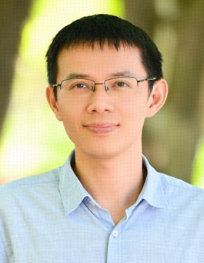 Tengpeng Chen (陈腾鹏)合作论文数Department of Instrumental and Electrical Engineering, School of Aerospace Engineering, Xiamen University9Hongyi Zhang合作论文数Microsoft Canada Development Centre7
 Yurong Liu (刘玉荣)合作论文数School of Mathematical Science, Yangzhou University7
 Wangpeng He (贺王鹏)合作论文数School of Aerospace Science and Technology, Xidian University6
 Xin Luo (罗辛)合作论文数College of Computer and Information Science, Southwest University;Chongqing Institute of Green and Intelligent Technology, Chinese Academy of Sciences;School of Computer Science and Technology, Dongguan University of Technology6
 Jinling Liang (梁金玲)合作论文数Department of System Science, School of Mathematics, Southeast University6Xincheng Cao (曹新城)合作论文数5Lyuchao Liao合作论文数4Liwei Hu合作论文数4Qin Bao合作论文数4
 Yuankun Bai合作论文数4
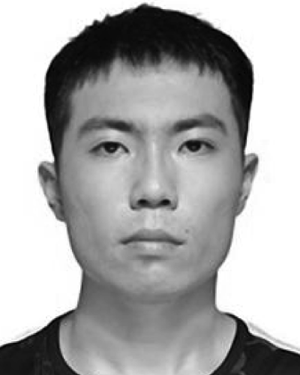 Jinyang Li合作论文数4Chengbo Lan合作论文数4
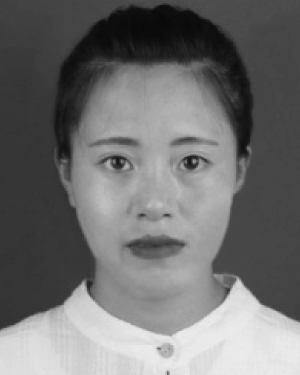 Yang Li合作论文数4
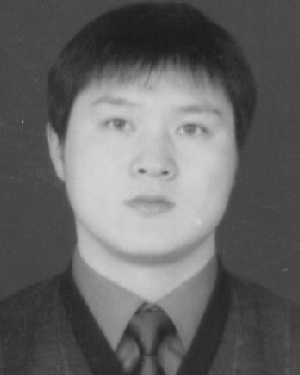 Yang Lu合作论文数4Xingen GAO (高新根)合作论文数4
 Xiaobo Zhou合作论文数Department of Bioinformatics and Systems Medicine, D. Bradley Mcwilliams School of Biomedical Informatics, University of Texas Health Science Center Houston4
 Yonghong Peng合作论文数Centre for Advanced Computational Science, Manchester Metropolitan University;Beijing University of Chemical Technology;Sichuan University4
 Fumin Zou (邹复民)合作论文数School of Electronic, Electrical Engineering and Physics, Fujian University of Technology4Bachar Zineddin合作论文数3Yiqi Yin合作论文数3
 Yuchao He合作论文数3
 Feng Guo合作论文数Fujian Univ Technol, Fujian Key Lab Automot Elect & Elect Drive, Fuzhou, Peoples R China3
 Guokai Zhang合作论文数Tongji Univ, Sch Software Engn, Shanghai 201804, Peoples R China3
 Yisha Lan合作论文数Tongji Univ, Dept Comp Sci & Technol, Shanghai 201804, Peoples R China3
 Gaowei Xu合作论文数Tongji Univ, Sch Elect & Informat Engn, Shanghai 201804, Peoples R China3JingFeng Mao (茅靖峰)合作论文数3
 Cheng-Xi Huang (黄晨曦)合作论文数Department of Software Engineering, School of Informatics, Xiamen University3
 Abdullah M. Dobaie合作论文数3
 Yudong Zhang (张煜东)合作论文数School of Informatics, University of Leicester3
 Yancheng You (尤延铖)合作论文数School of Aerospace Engineering, Xiamen University3
 Cheng Yan (闫成)合作论文数School of Aerospace Engineering, Xiamen University3Lei You合作论文数Peking Union Medical College, Peking Union Medical College3
 Weifang Sun (孙维方)合作论文数Wenzhou University3
 Lu Sun合作论文数Nanyang Technological University3
 Haiyan Jiang (姜海燕)合作论文数College of Electrical Engineering and Automation, Fuzhou University3




