Sequencing by Emergence (SEQE) is a new single-molecule nucleic acid (DNA/RNA) sequencing technology that estimates sequence as an emergent property of the binding and localization of a repertoire of short oligonucleotide probes. SEQE promises to deliver accurate, ultra-long, haplotype-phased reads at the whole genome-scale for very low cost within 10 minutes. The data SEQE generates requires entirely new inference techniques. In this paper we introduce a probabilistic model of the SEQE measurement process and an algorithm that estimates sequence by solving a convex relaxation of the corresponding maximum likelihood problem. We demonstrate the effectiveness of our algorithm on a variety of simulated datasets.
We extend the adaptive regression spline model by incorporating saturation, the natural requirement that a function extend as a constant outside a certain range. We fit saturating splines to data via a convex optimization problem over a space of measures, which we solve using an efficient algorithm based on the conditional gradient method. Unlike many existing approaches, our algorithm solves the original infinite-dimensional (for splines of degree at least two) optimization problem without pre-specified knot locations. We then adapt our algorithm to fit generalized additive models with saturating splines as coordinate functions and show that the saturation requirement allows our model to simultaneously perform feature selection and nonlinear function fitting. Finally, we briefly sketch how the method can be extended to higher order splines and to different requirements on the extension outside the data range.
Single-molecule localization super-resolution microscopy (SMLM) techniques like STORM and PALM have transformed cellular microscopy by substantially increasing spatial resolution. In this paper we introduce a new algorithm for a critical part of the SMLM process: estimating the number and locations of the fluorophores in a single frame. Our algorithm can analyze a 20000-frame experimental 3D SMLM dataset in about one second — substantially faster than real-time and existing algorithms. Our approach is straightforward but very different from existing algorithms: we train a neural network to minimize the Bayes’ risk under a generative model for single SMLM frames. The neural network maps a frame directly to a collection of fluorophore locations, which we compare to the ground truth using a novel loss function. While training the neural network takes several hours, it only has to be done once for a given experimental setup. After training, localizing fluorophores in new images is extremely fast — orders of magnitude faster than existing algorithms. Faster recovery opens the door to real-time calibration and accelerated acquisition, and future work could tackle more complicated optical systems and more realistic simulators.
Author(s): Boyd, Nicholas | Advisor(s): Jordan, Michael; Recht, Benjamin | Abstract: The purpose of this thesis is to address the following simple question:How do we design efficient algorithms to solve optimization or machine learning problems where the decision variable (or target label) is a set of unknown cardinality?In this thesis we show that, in some cases, optimization and machine learning algorithms designed to work with single vectors can be directly applied to problems involving sets. We do this by invoking a classical trick: we lift sets to elements of a vector space, namely an infinite-dimensional space of measures. While this idea has been explored extensively in theoretical analysis, we show that it also generates efficient practical algorithms.
Phase-space refers to simultaneous space-frequency information (e.g. Wigner functions, light fields), which is directly related to spatial coherence properties (e.g. Mutual Intensity). We introduce a binary pupil masking technique that allows us to computationally reconstruct the phase space distribution of optical beams from a series of images. Previous work has shown phase space to be useful for 3D imaging and localization in a multiple scattering environment. Binary masks are easy to implement compared to gray masks or phase masks and the proposed scheme requires no interferometry. After designing the masks with nonredundant arrays, we measure an intensity image for each aperture mask and reconstruct the phase space through an auxiliary coherence function. We demonstrate experimentally the reconstruction of the phase space of a collection of 3D incoherent sources.
We propose a variant of the classical conditional gradient method (CGM) for sparse inverse problems with differentiable measurement models. Such models arise in many practical problems including superresolution, time-series modeling, and matrix completion. Our algorithm combines nonconvex and convex optimization techniques: we propose global conditional gradient steps alternating with nonconvex local search exploiting the differentiable measurement model. This hybridization gives the theoretical global optimality guarantees and stopping conditions of convex optimization along with the performance and modeling flexibility associated with nonconvex optimization. Our experiments demonstrate that our technique achieves state-of-the-art results in several applications.
We present SDA-Bayes, a framework for (S)treaming, (D)istributed, (A)synchronous computation of a Bayesian posterior. The framework makes streaming updates to the estimated posterior according to a user-specified approximation batch primitive. We demonstrate the usefulness of our framework, with variational Bayes (VB) as the primitive, by fitting the latent Dirichlet allocation model to two large-scale document collections. We demonstrate the advantages of our algorithm over stochastic variational inference (SVI) by comparing the two after a single pass through a known amount of data—a case where SVI may be applied—and in the streaming setting, where SVI does not apply.
The control of biological genetic networks is an important problem. If the system is abstracted into a graph, then the affect of drugs, pharmaceuticals, and gene therapy can be abstracted as changing the topology of the graph. We consider the control objective of removing the stable oscillations of the genetic network. This control is done using several theorems relating the topology of the network to the dynamics of the system. These theorems suggest that the controller should remove all the negative feedback in the networks.We prove that the problem of minimizing the edges and vertices to remove, in order to remove negative feedback, is NP-hard. In light of this result, a heuristic algorithm to solve this graph problem is presented. The algorithm is applied to several genetic networks, and it is shown that the heuristic gives reasonable results. Additionally, we consider the p53 network and show that the algorithm gives biologically relevant results.
 Ben Recht合作论文数Department of Electrical Engineering and Computer Sciences, University of California, Berkeley3
 Michael I. Jordan (迈克尔·乔丹)合作论文数Department of Electrical Engineering and Computer Sciences, University of California, Berkeley;Department of Statistics, University of California, Berkeley;Department of Industrial Engineering and Operations Research, University of California, Berkeley2
 Hsiou-Yuan Liu合作论文数Department of Electrical Engineering & Computer Sciences, University of California, Berkeley, 94720, USA1
 jianhui wu合作论文数1
 Geoffrey Schiebinger合作论文数Institute of Applied Mathematics, Faculty of Science, The University of British Columbia1
 Andre Wibisono合作论文数Department of Computer Science, Yale University1
 Laura Waller合作论文数Department of Electrical Engineering and Computer Science,UC Berkeley1
 Claire J. Tomlin合作论文数Department of Electrical Engineering and Computer Sciences, University of California, Berkeley1
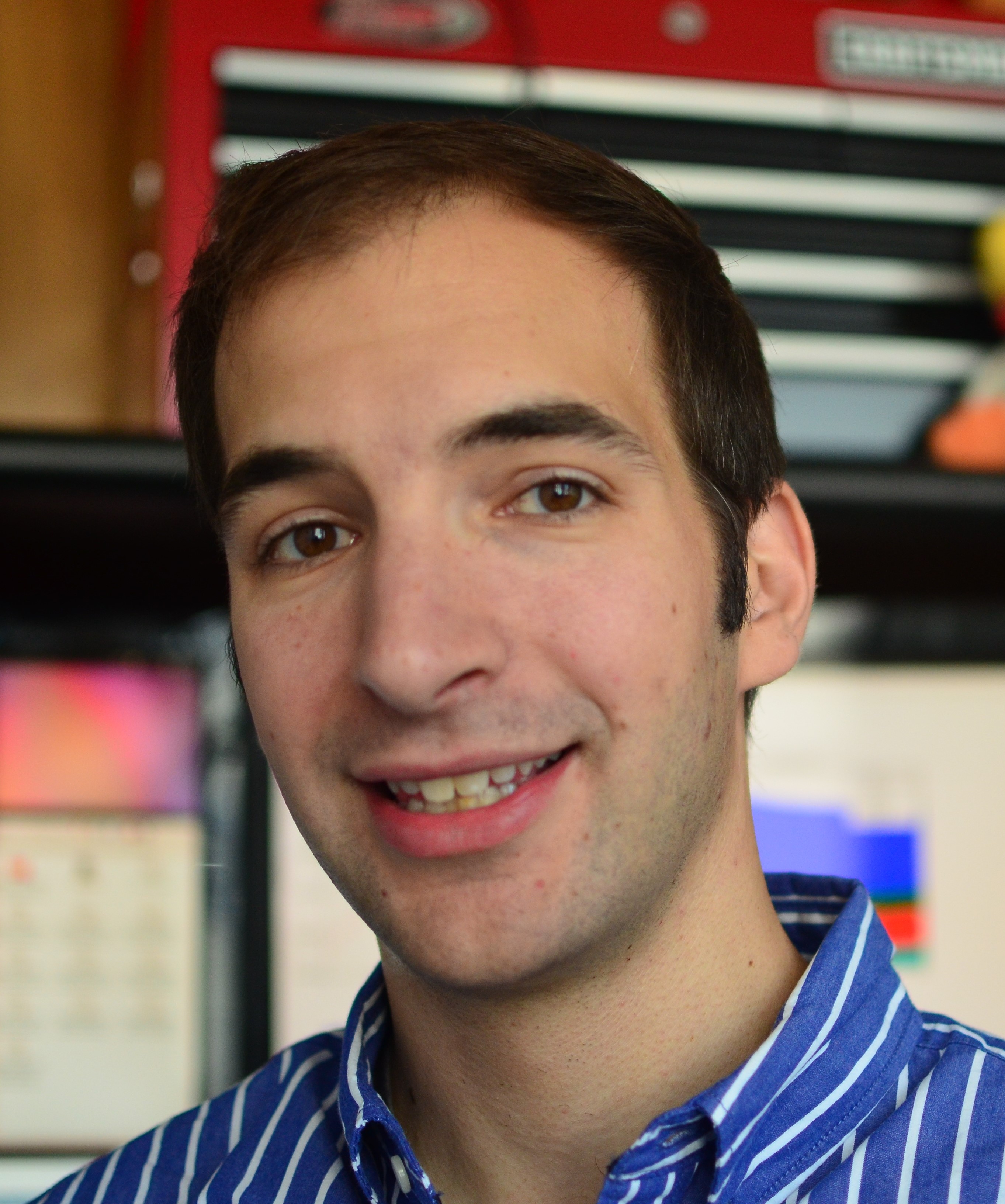 Eric Jonas合作论文数Department of Computer Science, University of Chicago1
 Stephen P. Boyd (史提芬·博伊德)合作论文数Department of Electrical Engineering, School of Engineering, Stanford University;Institute for Computational and Mathematical Engineering, School of Engineering, Stanford University1
 Trevor Hastie合作论文数Department of Biomedical Data Science, School of Medicine, Stanford University;Department of Statistics, School of Humanities and Sciences, Stanford University1
 Hazen Babcock合作论文数Axicon Instrumentation LLC1
 Anil Aswani合作论文数UC Berkeley Berkeley Engineering1
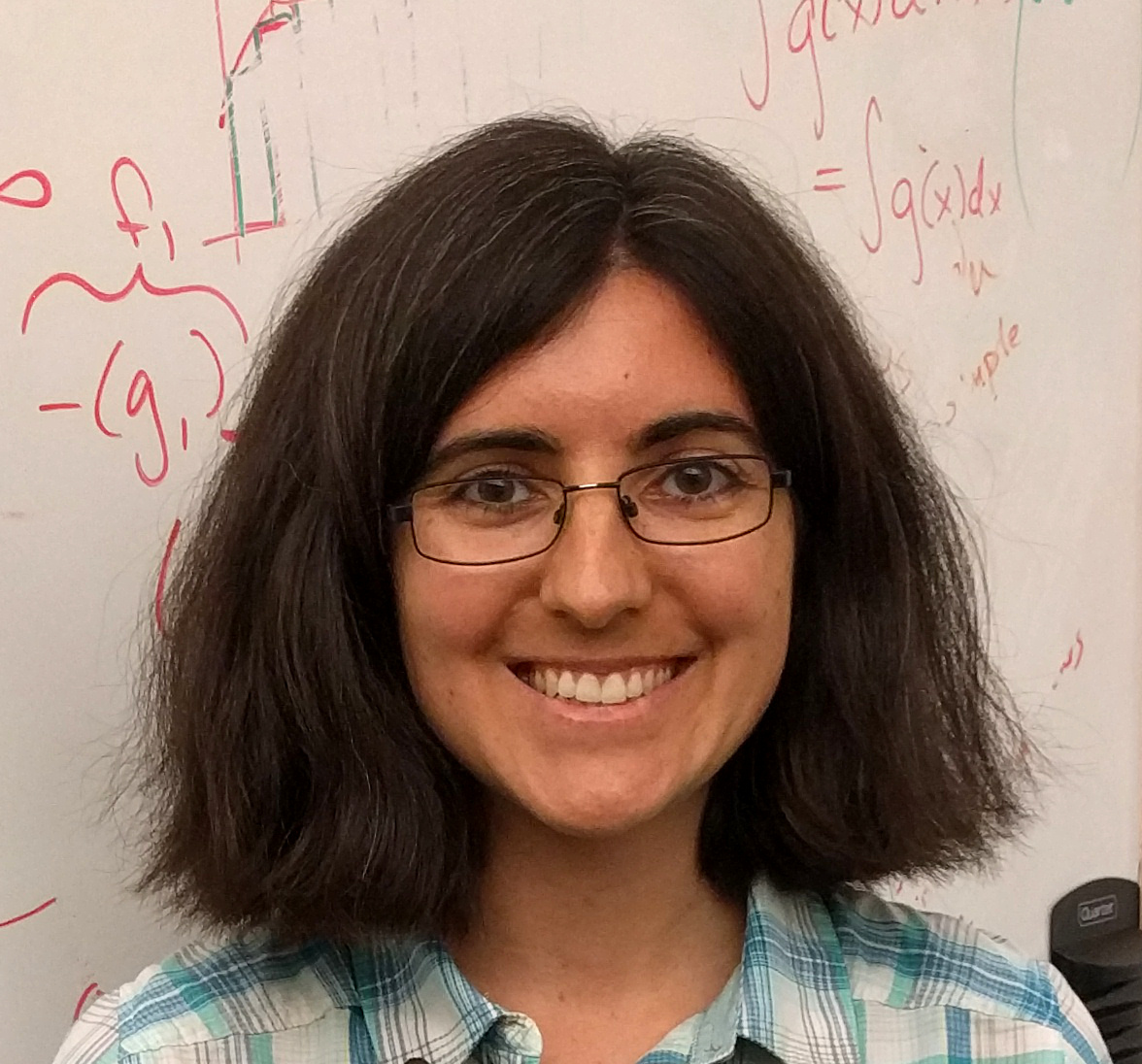 Tamara Broderick合作论文数Department of Electrical Engineering and Computer Science, Massachusetts Institute of Technology1Kalim U. Mir合作论文数The Wellcome Trust Centre for Human Genetics, University of Oxford1
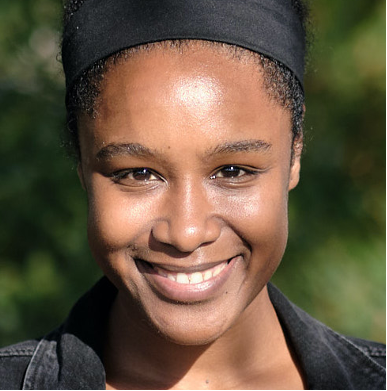 Ashia C. Wilson合作论文数Electrical Engineering and Computer Science, Massachusetts Institute of Technology;Schwarzman College of Computing, Massachusetts Institute of Technology1




