Citation: Testor P, Young Bd, Rudnick DL, Glenn S, Hayes D, Lee CM, Pattiaratchi C, Hill K, Heslop E, Turpin V, Alenius P, Barrera C, Barth JA, Beaird N, Bécu G, Bosse A, Bourrin F, Brearley JA, Chao Y, Chen S, Chiggiato J, Coppola L, Crout R, Cummings J, Curry B, Curry R, Davis R, Desai K, DiMarco S, Edwards C, Fielding S, Fer I, Frajka-Williams E, Gildor H, Goni G, Gutierrez D, Haugan P, Hebert D, Heiderich J, Henson S, Heywood K, Hogan P, Houpert L, Huh S, Inall ME, Ishii M, Ito S-i, Itoh S, Jan S, Kaiser J, Karstensen J, Kirkpatrick B, Klymak J, Kohut J, Krahmann G, Krug M, McClatchie S, Marin F, Mauri E, Mehra A, Meredith MP, Meunier T, Miles T, Morell JM, Mortier L, Nicholson S, O’Callaghan J, O’Conchubhair D, Oke P, Pallàs-Sanz E, Palmer M, Park J, Perivoliotis L, Poulain P-M, Perry R, Queste B, Rainville L, Rehm E, Roughan M, Rome N, Ross T, Ruiz S, Saba G, Schaeffer A, Schönau M, Schroeder K, Shimizu Y, Sloyan BM, Smeed D, Snowden D, Song Y, Swart S, Tenreiro M, Thompson A, Tintore J, Todd RE, Toro C, Venables H, Wagawa T, Waterman S, Watlington RA and Wilson D (2021) Corrigendum: OceanGliders: A Component of the Integrated GOOS. Front. Mar. Sci. 8:696100. doi: 10.3389/fmars.2021.696100 Corrigendum: OceanGliders: A Component of the Integrated GOOS
Communicating the value of sustained ocean observing systems is urgent and necessary for their implementation, continuity, and expansion; and relies on effective dialogue among users at all levels to build support from policymakers and the public. This Ocean-Shot will build on the outcomes of OceanObs'19 and specifically work to realize the vision articulated in " The Challenge of Sustaining Ocean Observations" (Weller, 2019) and subsequent workshops hosted by the National Academies (2020). It will engage academia, industry, government, and nongovernmental organizations involved with global ocean observing and determine how to improve pathways to policymakers, stakeholders, and the public over the UN Ocean Decade. Key outcomes will include (1) broader understanding of how existing ocean observing science and policy areas intersect nationally and internationally, (2) identification of opportunities to build global support for ocean observing through cross-sector and international partnerships, and (3) determination of actions that the ocean observing community should take to develop a collective impact organization, the Ocean Partnership for Sustained Observations.
Arguably the most important outcome of the Sustaining Ocean Observations 2.0 Workshop hosted by the Ocean Studies Board was "Strengthening the Collective Voice: Communicating the Importance of Sustained Ocean Observations." One of the most significant challenges the ocean observing community faces is articulating the value of ocean information and improving ocean literacy. The Ocean Decade presents a pivotal moment to catalyze new effort and funding that will support strategic and unified messages regarding the role that observations play in society. Led by the Consortium for Ocean Leadership (COL), the proposed strategic messaging and communications initiative will develop consistent, layered, and clear messaging regarding the value of ocean observations. COL will leverage existing interagency programs and trusted partners, along with external academic, policy, and industry collaborators, to obtain funding and other resources to support the initiative. This Ocean-Shot will build on ideas put forth by Ocean Obs'19, the Ocean Best Practices System, and other UN Ocean Decade initiatives. Primary activities will include hiring communications experts, surveying the community and relevant partners to collect input on the role of observations, and identifying messaging gaps. This effort would strengthen the community's collective voice to demonstrate the value of observations to potential funders, philanthropic or private partners, and governments, and would address the needs of the technology sector.
The importance of stakeholder engagement in ocean observation and in particular the realization of economic and societal benefits is discussed, introducing a number of overarching principles such as the convergence on common goals, effective communication, co-production of information and knowledge and the need for innovation. A series of case studies examine the role of coordinating frameworks such as the US’s Interagency Ocean Observing System (IOOS®), and the European Ocean Observing System (EOOS), public-private partnerships such as Project Azul and the Coastal Data Information Program (CDIP) and finally the role of the “third” or voluntary sector. The paper explores the value that stakeholder engagement can bring as well as making recommendations for the future.
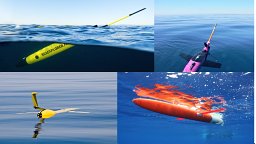
The OceanGliders program started in 2016 to support active coordination and enhancement of global glider activity. OceanGliders contributes to the international efforts of the Global Ocean Observation System (GOOS) for Climate, Ocean Health, and Operational Services. It brings together marine scientists and engineers operating gliders around the world: (1) to observe the long-term physical, biogeochemical, and biological ocean processes and phenomena that are relevant for societal applications; and, (2) to contribute to the GOOS through real-time and delayed mode data dissemination. The OceanGliders program is distributed across national and regional observing systems and significantly contributes to integrated, multi-scale and multi-platform sampling strategies. OceanGliders shares best practices, requirements, and scientific knowledge needed for glider operations, data collection and analysis. It also monitors global glider activity and supports the dissemination of glider data through regional and global databases, in real-time and delayed modes, facilitating data access to the wider community. OceanGliders currently supports national, regional and global initiatives to maintain and expand the capabilities and application of gliders to meet key global challenges such as improved measurement of ocean boundary currents, water transformation and storm forecast.
 Kruti Desai合作论文数4
 Henry A Ruhl合作论文数3
 Joaquín Tintoré Subirana合作论文数Sistema de Observación Y Prediccion Costero De Las Illes Balears2Roy Watlington合作论文数2
 Joanne O'Callaghan合作论文数2Jake Kritzer合作论文数2Beth Curry合作论文数2Joleen Heiderich合作论文数2huh sik合作论文数2Richard Crout合作论文数2
 Carlos Barrera合作论文数2Masso Ishii合作论文数2simon ruiz合作论文数2
 Shin-ichi Ito合作论文数2Diarmuid O'Conchubhair合作论文数2Jon White合作论文数2
 Victor Turpin合作论文数OceanOPS Joint WMO IOC Ctr Oceanog & Marine Meteo2
 Sarah Nicholson合作论文数Southern Ocean Carbon-Climate Observatory (SOCCO),, CSIR2Ruth L. Perry合作论文数2Yumi Song合作论文数2Martha C. Schönau合作论文数2
 Katherine L. Hill合作论文数World Meteorological Organization2Doug Wilson合作论文数2Marjolaine Krug合作论文数Dept Forestry Fisheries & Environm, Branch Oceans & Coast, ZA-8002 Cape Town, South Africa2
 J. A. Brearley合作论文数2
 Anthony Bosse合作论文数Aix Marseille Univ, Univ Toulon2
 Nicholas Beaird合作论文数Rutgers University2
 Loïc Houpert合作论文数OSE Engn2
 M. Tenreiro合作论文数Ctr Invest Cient & Educ Super Ensenada2Derrick Snowden合作论文数National Oceanic and Atmospheric Administration2
 Stephanie Waterman合作论文数Department of Earth, Ocean and Atmospheric Sciences, Faculty of Science, The University of British Columbia2
 Gerhard F. Kuska合作论文数2
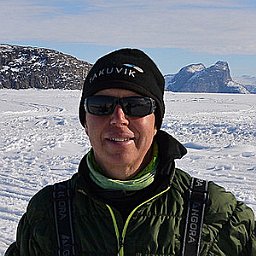 Eric Rehm合作论文数University of Washington2
 Bastien Y. Queste合作论文数Sch. of Environ. Sci., Univ. of East Anglia;c;Sch. of Environ. Sci., Univ. of East Anglia2
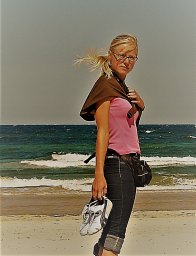 Schroeder Katrin合作论文数2
 Gustavo Jorge Goñi合作论文数United States Department of Commerce, Atlantic Oceanographic and Meteorological Laboratory, National Oceanic and Atmospheric Administration2
 Karen J. Heywood合作论文数School of Environmental Sciences, University of East Anglia2Leonidas Perivoliotis合作论文数Hellenic Centre for Marine Research, Institute of Oceanography, 46.7km Athens-Sounio Ave., P.O. Box 712, 19013 Anavyssos, Greece2Sue Chen合作论文数2
 Thomas Meunier合作论文数LPO, UEB/UBO Brest2
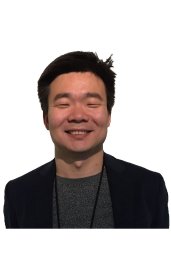 Jong Jin Park合作论文数Department of Physics;Pusan National University;Department of Physics, Pusan National University2
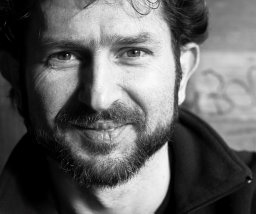 Ilker Fer合作论文数Bjerknes Centre for Climate Research2
 Bernadette Sloyan合作论文数CSIRO2
 Scott M. Glenn合作论文数2
 Peter R. Oke合作论文数Centre for Australian Weather and Climate Research2
 Daniel Rudnick合作论文数Scripps Institution of Oceanography, University of California, San Diego2Taku Wagawa合作论文数2
 Mark E. Inall合作论文数Dunstaffnage Marine Laboratory, Scottish Association for Marine Science2Catherine R. Edwards合作论文数2




