The chemistry of illitic clays reveals an influx of fresher water in strata dated to >2 Ma from the deepest part of extinct Paleolake Olduvai in northern Tanzania, from core recovered by the Olduvai Gorge Coring Project (OGCP). Dioctahedral illite exhibits a composition approaching glauconite in these strata, suggesting a source from a greensand facies formed under lower dissolved oxygen (pO₂) conditions, or from localized, stagnant lake waters within a broader, fresher, and oxic system. This interpretation contrasts with the more saline lake conditions inferred from Mg-rich illite in the younger sediments. These findings reveal a distinct geochemical shift from earlier freshwater to later saline lake phases and confirms that Paleolake Olduvai was initially a freshwater system, providing any hominins present at that time with access to freshwater habitats.
Paleolake coring initiatives result in large datasets from various proxies taken at different resolutions, ranging from continuous scans to samples collected at coarser intervals. Higher-resolution data (e.g., core-scan X-ray fluorescence [XRF]) can detect short-duration changes in the paleolake and help identify unit boundaries with precision; however, interpreting the causes of such changes may require sampling and more intensive laboratory analysis like X-ray diffraction (XRD). This study applies a published wide and deep learning model, developed for the Olduvai Gorge Coring Project (OGCP) 2014 cores from the Pleistocene Olduvai basin, Tanzania, to reconstruct the mineral assemblages from saline-alkaline paleolake Olduvai using core-scan XRF data and core lithology. A classification model (predicting mineral presence or absence) and a regression model (predicting relative abundances of minerals) yielded predictions for two OGCP cores (2A and 3A), which were compared with published XRD mineral data and detailed core sedimentological descriptions. The models were excellent at identifying dolomite-rich layers, carbonate-rich intervals, intervals of sandstone within claystone, and altered tuffs within claystone and at predicting whether illitic or smectitic clays dominate. The models struggled with less-altered tuffs and with zeolites in non-tuff sediments, especially when XRD identified chabazite and erionite (rather than phillipsite) as the dominant, non-analcime zeolite.
The Olduvai Gorge Naisiusiu Beds and Ndutu Beds are significant for understanding the cultural and biological evolution of Homo sapiens. However, the timing and span of deposition of these beds is poorly understood. We present a chronology based on luminescence dates for sedimentary drill core samples and one ostrich eggshell (OES) radiocarbon date from the Naisiusiu type section outcrop. The Naisiusiu Beds type section rests on the Olduvai protogorge floor, on a post-Ndutu incisional surface that eroded through older Olduvai Beds (∼80 m) into the top of the Bed I Basalt. The estimated minimum thickness of the Naisiusiu Beds within the gorge is >13.3 m. Three lithostratigraphic units were identified in the 9.2-m-thick type section: The lower unit comprises alternating fluvial/hyperconcentrated flow sediments and yields an OES date of 49,728 ± 1378 cal year BP; the middle unit is composed of predominantly fluvial sediments containing Later Stone Age (LSA) artifacts and faunal remains, dating between 34.2 ± 2.8 ka and 24.0 ± 2.0 ka; and the upper unit comprises volcaniclastic hyperconcentrated flow deposits with interstratified carbonate-cemented surfaces, dating between 24.0 ± 2.0 ka and 19.6 ± 1.6 ka. Slower accretion rates of the middle unit (7.3 cm/ka) are associated with repeated fluvial cutting and filling. Upper Naisiusiu stacks of hyperconcentrated flows and intervening hiatuses have faster accretion rates (54.9 cm/ka). The OES radiocarbon date of 49,728 ± 1378 cal year BP (modeled age = 49,498 ± 2385 BP) from the top part of the lower unit indicates that the type section extends back to >50 ka. The LSA assemblage is associated with sediments dated to 34.2 ± 2.8 ka using luminescence. A date of 62.7 ± 5.6 ka on the youngest Middle Stone Age occurrence in the underlying Ndutu Beds at Type Locality 26 provides a maximum age for the Middle Stone Age/LSA transition at the Olduvai Gorge.
This study develops a method to use deep learning models to predict the mineral assemblages and their relative abundances in paleolake cores using high-resolution XRF core scan elemental data and X-ray diffraction (XRD) mineralogical results from the same core taken at coarser resolution. It uses the XRF core scan data along with published mineralogical information from the Olduvai Gorge Coring Project (OGCP) 2014 sediment cores 1A, 2A, and 3A from paleolake Olduvai, Tanzania. Both regression and classification models were developed using a Keras deep learning framework to assess the predictability of mineral assemblages with their relative abundances (in regression models) or at least the mineral assemblages (in classification models) using XRF core scan data. Models were created using the Sequential class and Functional API with different model architectures. The correlation matrix of element ratios calculated from XRF element intensity records from the cores and XRD-derived mineralogical information was used to select the most useful features to train the models. 1057 training data records were used for the models. Lithological classes were also used for some models using Wide & Deep neural networks since those combine the benefits of memorization and generalization for mineral prediction. The results were validated using 265 validation data records unseen by the model and discuss the accuracy of models using six test records. The optimized Deep Neural Network (DNN) classification model achieved over 86% binary accuracy while the regression models were also able to predict the relative mineral abundances of samples with high accuracies. Overall, the study shows the efficacy of a carefully crafted Deep Learning (DL) model for predicting mineral assemblages and abundances using high-resolution XRF core scan data.
Abstract This chapter incorporates a personal retrospective on the authors’ development of experimental and other comparative approaches in researching the behavioral and cognitive evolution of early tool-making hominins. Over the past four decades, the authors have conducted experimental archaeological and other actualistic research bearing on the technology, adaptation, behavioral patterns, and cognitive complexity of Early Stone Age hominins in Africa and Eurasia (~2.5–0.5 million years ago). This research has primarily focused on the Oldowan Industrial Complex (Mode 1 or “pebble tool” industries) and the Acheulean Industrial Complex (Mode 2 or “handaxe and cleaver” industries). This actualistic research has included experimental replicative and functional studies of early stone artifacts, geoarchaeological investigations of site formation processes, teaching modern African apes (bonobos) to make and use stone tools, ethnoarchaeology, and brain imaging studies.
Abstract This chapter incorporates a personal retrospective on the authors’ development of experimental and other comparative approaches in researching the behavioral and cognitive evolution of early tool-making hominins. Over the past four decades, the authors have conducted experimental archaeological and other actualistic research bearing on the technology, adaptation, behavioral patterns, and cognitive complexity of Early Stone Age hominins in Africa and Eurasia (~2.5–0.5 million years ago). This research has primarily focused on the Oldowan Industrial Complex (Mode 1 or “pebble tool” industries) and the Acheulean Industrial Complex (Mode 2 or “handaxe and cleaver” industries). This actualistic research has included experimental replicative and functional studies of early stone artifacts, geoarchaeological investigations of site formation processes, teaching modern African apes (bonobos) to make and use stone tools, ethnoarchaeology, and brain imaging studies.
Olduvai Gorge in northern Tanzania is part of a globally important archeological and paleoanthropological World Heritage Site location critical to our understanding of modern human evolution. The Ndutu Beds in the upper part of the geological sequence at Olduvai Gorge represent the oldest unit to yield modern Homo sapiens skeletal material and Middle Stone Age technology. However, the timing of the deposition of the Ndutu Beds is poorly constrained at present, which limits our understanding of the paleoenvironments critical for contextualizing H. sapiens and related technologies in the Olduvai Basin. Using a suite of 15 luminescence ages of sedimentary core samples, combined with Bayesian statistics, this study provides a new higher-resolution age-depth model for the deposition of the uppermost Upper Ndutu and Naisiuiu Beds cored by the Olduvai Gorge Coring Project. The luminescence and modeled ages are presented as +/- 1 sigma uncertainties. The Ndutu Beds intersected by the Olduvai Gorge Coring Project cores are dated to between 117.1 +/- 17.9 and 45.3 +/- 4.2 ka (between 125.9 +/- 26.5 and 45.8 +/- 8.2 ka modeled ages), while a probable overlying layer of Naisiusiu Beds dates to 23.7 +/- 10.9 to 12.1 +/- 1.7 ka (25.7 +/- 18.9 ka and 12.0 +/- 3.4 ka modeled age). Time-averaged accretion rates are derived during this time: (1) initially low rates (<5 cm ka(-1)) from the bottom of the core at 117.1 +/- 17.9 ka up to 95.3 +/- 11.1 ka (125.9 +/- 26.5 to 95.5 +/- 23.3 ka modeled ages); (2) the middle section spanning between 95.3 +/- 11.1 and 62.7 +/- 5.7 ka (95.5 +/- 23.3 to 61.9 +/- 10.4 ka modeled ages) with mean rates above 15 cm ka(-1); and (3) the last 62.7 +/- 5.7 ka (61.9 +/- 10.4 ka modeled age) where the accretion rate reduces to below 5 cm ka(-1). This reduction can be explained by the evolution of the gorge system that was likely driven by subsidence of the Olbalbal depression and changes in climate, particularly precipitation and resulting lake and base level changes. Older Upper Ndutu and Lower Ndutu Beds are contained within proto-gorges within the modern gorge system.
The Olduvai Gorge Coring Project (OGCP) recovered sequences of Pleistocene lake sediments that correlate with those known from outcrops directly associated with hominin fossil horizons. The sedimentary succession from Core 2A (02 degrees 58' 43 '' S, 035 degrees 19' 25.5 '' E), which targeted the ancient lake-basinal depocenter, includes stratigraphic intervals (similar to 1.86 Ma) sandwiched between the Bed I basalt and Tuff IF dated horizons, where remains of two hominin holotypes have been recovered. The lower part of this sequence (72.3-86.9 mbs) consists of lacustrine claystones interbedded with sandy claystones characterized by high C-org (av. 2.5%) and includes several laminated intervals. It displays shifts in terrestrial vegetation recorded by values for delta C-13(TOC) and delta 2H(nC)(31) that reflect changes in the proportions of C-3 vs C-4 plants and precipitation, respectively. These temporal profiles represent higher-resolution signatures of the precession-scale wet/dry cycles previously recognized in the outcropping sedimentary succession of Olduvai Gorge. Several samples from this interval contain alkenones comprising C-37 and C-39 alkadien-2-ones and alkatrien-2-ones, and C-38 and C-40 alkadien-3-ones and alkatrien-3-ones. They are distinguished from the vast majority of alkenone distributions reported in lake sediments from polar and temperate latitudes (e.g., Greenland, N. and S. America, Europe, Russia, China, S. Africa, Antarctica) by the absence of tetraunsaturated alkenones (e.g., C-37:4). The alkenone distributions vary stratigraphically with higher concentrations in the drier intervals of the precession-scale cycles that exhibit characteristics resembling those of Group II haptophytes found in contemporary saline/alkaline environments rather than those of Group I haptophytes from freshwater ecosystems. Paleolake Olduvai represents the first reported occurrence of alkenones in a low-latitude Pleistocene lake, where the absence of alkatetraenones may reflect contributions from strains of Group II haptophytes that are favored by warmer temperatures or saline conditions. Temporal variations in unsaturation indices (U-3(7)K', U-3(8)K') and the proportions of alken-2-ones and alken-3-ones likely reflect influences on alkenone production by haptophytes that are associated with changes in the lake environment primarily driven by hydrologic cycles (e.g., salinity and alkalinity) rather than lake temperatures.
Olduvai Gorge in northern Tanzania contains a fossiliferous, well-characterized Pleistocene sedimentary record and provides the opportunity to study the relationships between a changing climate, ecology, and hominin evolution. The Olduvai Gorge Coring Project drilled four cores (1A, 2A, 3A, and 3B) into the depocenter of Paleolake Olduvai in 2014 to achieve increased temporal resolution of local climate and ecological data, and investigate the influence and timing of regional climate and tectonics on local signals. We present high-resolution records of bulk organic carbon isotopes (delta C-13(org), parts per thousand) from Cores 2A and 3A, total organic carbon (wt%) from Cores 2A and 3A, and organic carbon-nitrogen ratios (C:N) from Core 2A. Previous work at Olduvai linked % TOC and delta C-13(org), to orbitally paced variations in lake depth and ecosystem dynamics from Upper Bed I and Lower Bed II (1.9-1.7 Ma), associated with eccentricity maxima and the presence of a perennial saline-alkaline lake in the basin. Bulk organic geochemical properties in both cores exhibit marked shifts in variance and magnitude at 1.9 and 1.7 Ma. Low % TOC values prior to and following 1.9-1.7 Ma implicate low productivity and/or increased degradation of organic matter, while C:N ratios from Core 2A reflect increased aquatic or bacterial input. Within the 1.9 to 1.7 Ma interval, high % TOC is dominated by terrestrial inputs as evidenced by high C:N ratios, and bulk delta C-13(org) captures high variability C3-C4 ecosystem dynamics. Climate variability is highest from 1.9-1.7 Ma, but the delta C-13(org) records are not consistent between Core 2A and Core 3A. From 1.9-1.7 Ma, Core 3A has increased indicators of erosion relative to Core 2A, suggesting a sedimentary aliasing of the delta C-13(org) record in Core 3A. Outside of the 1.9-1.7 Ma interval, both changes in organic carbon source and preferential preservation of proxies for wet conditions may obscure true climate variability, inviting further investigation into the ability of the Olduvai Gorge sedimentary record to test climate variability hypotheses for hominin evolutionary events.
We present data and results of a passive seismic experiment that we operated between June 2016 and May 2018 in the Ngorongoro Conservation Area (northern Tanzania), located on the western side of the eastern branch of the Eastern African Rift (EAR) system. The motivation for this experiment is twofold: (1) investigating the extension of the Olduvai basin, referred to also as the "Cradle of Human Mankind," as it hosted a variety of paleoenvironments exploited by hominins during their evolution; and (2) studying the link between the fault system in the main EAR and in its western flank. We conduct detailed data-quality analysis of the seismic recordings based upon ambient noise characterization and numerical waveform simulations. Our data set is of good quality, and we observe that local magnitude can be overestimated up to at least 0.23, due to wave-amplifications effects occurring at sites with loose sedimentary material. Based on a new but simple approach using power spectral density measurements, we calculate the thickness of sedimentary basins. This allows us to map the bottom of the Olduvai paleolake confirming that its sedimentary record may be at least 200 m deeper than previously inferred from core drilling. We also map the bottom of the Olbalbal depression for the first time. In addition, we present a seismicity map of the Ngorongoro Conservation Area with unprecedented detail. The seismicity depicts the suture zone between the Tanzanian craton and the Mozambique belt and reveals that the fault system in the western flank of the rift merges at depth into a single detachment that joins the Manyara fault on the western side of the main rift valley.
The analysis of geochemical palaeoclimate and palaeosalinity proxy elements Ti, Mg, and Al, derived from X-ray fluorescence (XRF) scans of Olduvai Beds I and II from Olduvai Gorge Coring Project (OGCP) borehole Cores 2A and 3A, provides a record of cyclic variation between similar to 1.3 Ma and similar to 2.0 Ma. The boreholes were drilled into the depocentre of the Olduvai Basin between Fifth and FLK Faults, where Palaeolake Olduvai was most persistent and deepest. During most of Bed I the lake was particularly deep and probably meromictic, preserving high TOC contents and commonly preserving fine lamination due to lack of bioturbation. Accretion rates were also high during Bed I, when rates of basinal subsidence were maximal due to crustal stretching, associated with basaltic volcanism, towards the end of bimodal Ngorongoro volcanism. Basaltic magma effusive activity is manifested as tuffs, scoriaceous layers and the Bed I Basalt complex lava flows. A magnesium anomaly is recorded in the claystone geochemistry at this time and deposition of dolomite and limestone beds are restricted to this synvolcanic phase of basin history. During Bed I deposition, accretion rates (0.23 mm/yr) were high enough to permit recognition of cycles with an average periodicity of 22.3 kyr corresponding to the Earth's precession. Only the high values during the Mg anomaly are adequate for the application of the palaeosalinity proxy element ratio Mg/Al. But Ti counts provide a cyclic record in both Bed I and Bed II. During Bed II deposition, the accretion rate was much slower (0.058 mm/yr) and cyclicity averaged 40.4 kyr, corresponding to Earth's orbital obliquity. The Bed II interval corresponds to MIS Stages 40 to 64. Coincidence of precessional and obliquity minima at 1.8 Ma explains the superdrought that affected the basin at the time of emplacement of Tuff IF, when the lake was dried out. The aridity of the sequence containing Tuff IA is also associated with a precessional minimum. The cyclic record suggests that three Bed I Basalt flows were extruded at similar to 1.94 Ma during a time span lasting between 6 kyr and 15 kyr.
Volcano-sedimentary cores recovered from Pleistocene Palaeolake Olduvai by the Olduvai Gorge Coring Project (OGCP) provide a high-resolution record for reconstructing climatic and environmental contexts of hominin evolution. Approximately 612 m were recovered from four cores from three drill sites across the basin depocentre through scientific drilling, and these have yielded unprecedented data that substantially extend the Olduvai record both temporally and spatially. Results from multiproxy analyses based on sedimentological, mineralogical, isotopic, and geochemical measurements, along with analysis of organic matter and microfossils, backed up by new 40Ar/39Ar dating, palaeomagnetic reversal analysis and tuff fingerprinting, provide detailed palaeoecological and palaeoenvironmental data, and stratigraphic resolution adequate to provide context for the palaeoanthropological records from outcrops. In this Special Issue we present the first phase reporting of the core results, which establishes a new stratigraphic and palaeogeographic framework upon which palaeoenvironmental and palaeoanthropological data can be contextualized. The cores revealed thick intercalated lakebeds below the Bed I Basalt and the even older Naabi Ignimbrite, more than doubling the thickness of the known Olduvai stratigraphy. Seismic studies suggest that the sedimentary sequence contained in the lake's depositional sump extends even further back in time, perhaps back to similar to 2.5 Ma, nearly 500 kyr older than the deepest strata exposed in outcrop. From stratal characteristics, we deduce that the palaeolake was deeper, more permanent, and longer-lived within the lake sump than previously thought, at least until the Masek Beds (before similar to 0.82 Ma), although frequent phases of total or nearly total lake emptying/drying were detected, and the lake depocentre was at times filled by volcaniclastic fan progradation during periods of intense volcanic activity in the neighboring Ngorongoro Volcanic Highlands. Furthermore, biogeochemical evidence supports our interpretation of the lake history, and documents abrupt transitions in terrestrial vegetation, aquatic biota, and lake dynamics on a Milankovitch and sub-Milankovitch scale, which potentially exerted complex influences on hominin-exploited palaeolandscapes. This work revises the longstanding view of the basin history and transforms the scientific debate about the environmental conditions under which hominins evolved in the Olduvai Basin.
 Kathy D. Schick合作论文数Department of Anthropology, University of California105
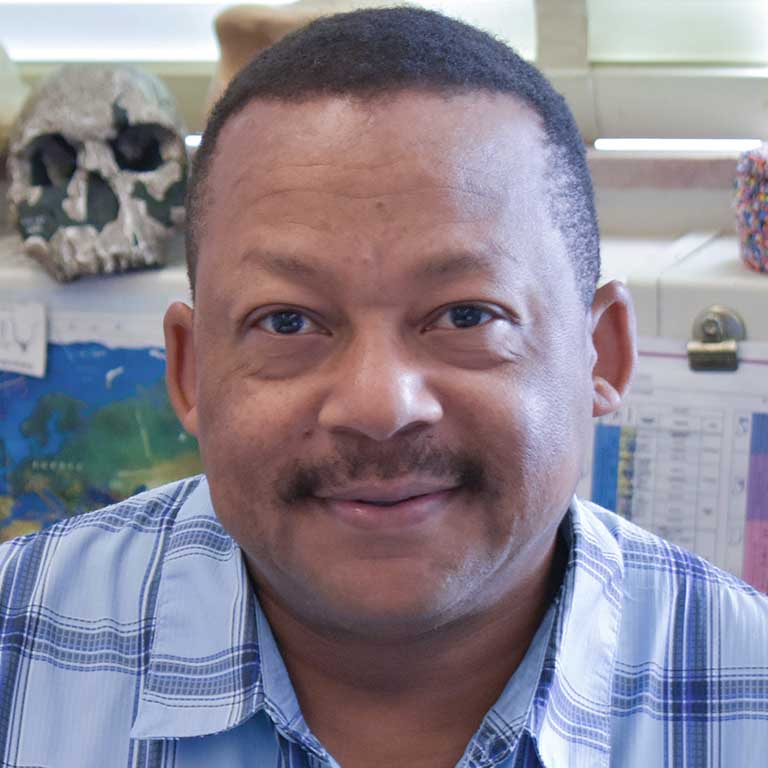 Jackson K. Njau合作论文数National Natural History Museum, P.O. Box 2160, Boma Road, Arusha, Tanzania37
 Ian G. Stanistreet合作论文数33
 Harald Stollhofen合作论文数32Lindsay J. Mchenry合作论文数12Travis Pickering合作论文数Department of Anthropology, College of Letters & Science, University of Wisconsin-Madison11
 Simon C. Brassell (Simon Brassell)合作论文数Department of Earth and Atmospheric Sciences, College of Arts & Sciences, Indiana University Bloomington10
 Andrea Shilling合作论文数9Devon E. Colcord合作论文数9
 Katherine H. Freeman合作论文数Department of Chemistry, Eberly College of Science, Pennsylvania State University;Department of Geosciences, College of Earth and Mineral Sciences, The Pennsylvania State University9
 Dietrich Stout合作论文数Institute of Archaeology, University College London6
 Tim D. White合作论文数Department of Integrative Biology, College of Letters & Science, University of California, Berkeley;Human Evolution Research Center, The University of California at Berkeley5Sileshi Semaw合作论文数Stone Age Institute and CRAFT Research Center, Indiana University5J. Desmond Clark合作论文数4
 Gayantha R. L. Kodikara合作论文数4
 Alan L. Deino合作论文数4
 Doug Broadfield合作论文数4Desmond Clark合作论文数3MW Marzke合作论文数3Angela Hansen合作论文数3KN An合作论文数3
 Troy Ferland合作论文数Dept Geosci, Penn State Univ3Ralph L. Holloway合作论文数3
 Lana Ruck合作论文数3S Reece合作论文数3
 Benjamin Steinberg合作论文数3
 Scott W Simpson合作论文数Laboratory of Physical Anthropology, Cleveland Museum of Natural History3
 Jonathan A. Karty合作论文数Department of Chemistry, Indiana University3
 Gerard Schuster合作论文数Center for Fluid Modeling and Seismic Imaging, King Abdullah University Science and Technology3
 Jay Quade合作论文数Department of Geosciences, College of Sciences, The University of Arizona3
 Sherif M. Hanafy合作论文数Geophysics Department;Faculty of Science;Cairo University;Faculty of Science, Cairo University3
 Kevin D. Hunt合作论文数Department of Anthropology;Indiana University;Department of Anthropology, Indiana University3Rl Linscheid合作论文数2
 Michael J. Rogers合作论文数Department of Anthropology, Southern Connecticut State University2
 Henry Bunn合作论文数Department of Anthropology, College of Letters & Science, University of Wisconsin-Madison2
 Kelsey Doiron合作论文数Department of Earth and Atmospheric Sciences, Indiana University2
 Ágata Rodríguez-Cintas合作论文数Department of History and Archaeology, Universitat de Barcelona2
 Paul Farrugia合作论文数Department of Earth and Atmospheric Sciences, Indiana University2Kai Lu合作论文数2
 Edward Herrmann合作论文数Department of Earth and Atmospheric Sciences, Indiana University2
 Laura Parisi合作论文数PSE Div, King Abdullah Univ Sci & Technol2
 Andrew M. Zipkin合作论文数Center for the Advanced Study of Hominid Paleobiology, The George Washington University2
 Kaja Fenn合作论文数Department of Geography and Planning, School of Environmental Sciences, University of Liverpool2Rose A. Sevcik合作论文数2Dennis Etler合作论文数2
 Duane M. Rumbaugh合作论文数2Lawrence H. Keeley合作论文数2
 Henry Schwarcz合作论文数School of Earth, Environment & Society, Faculty of Science, McMaster University2Robert J Blumenschine合作论文数Palaeontological Scientific Trust2




