As exascale systems increasingly rely on hardware overprovisioning to sustain throughput under strict power limits, accurate, fine-grained power prediction becomes critical. We present a machine learning framework leveraging lightweight, always-on NVIDIA DCGM telemetry from the Perlmutter super-computer to predict runtime GPU power consumption, designed with real-time deployment constraints in mind. Using a month-long production telemetry dataset for training and evaluation, we demonstrate that a generic, application-agnostic model achieves an average Root Mean Squared Error (RMSE) of 50 W. Specialized application-aware models for dominant workloads (e.g., Chroma, VASP) further reduce prediction error by up to 48% compared to generic models, while combining DCGM metrics with historical power data improves accuracy by up to 15.8% over power-only models with negligible inference latency. Our framework provides a scalable building block for dynamic power management systems that allow hardware-overprovisioned systems to reclaim performance otherwise lost to static power cans.
Power is a fundamental constraint as supercomputing advances to exascale. Efficient operation within strict power budgets requires application-aware power management based on a detailed understanding of application-level power behavior. This work analyzes the Energy Exascale Earth System Model (E3SM) atmosphere component, SCREAM, on Perlmutter (NERSC) and Frontier (OLCF). We characterize power variation across inputs, concurrency levels, and power caps, evaluate the energy impact of code optimizations, and attribute energy within the code using a newly developed GPU energy model. Results show that SCREAM’s peak power remains stable during its core execution phase and decreases gradually as concurrency increases. Power capping experiments reveal a performance–energy "sweet spot". On Perlmutter, limiting GPU power to 50% of thermal design power (TDP) achieves up to 15% energy savings with a 7% performance penalty. On Frontier, a 40% TDP cap yields up to 10% energy savings with less than 10% performance loss. Code optimizations reduce SCREAM energy by shortening run time without increasing power. Modeling reveals a critical insight: data movement accounts for approximately 70% of SCREAM’s GPU energy. This fundamentally shifts the optimization focus from FLOPS to data transfer reduction for this class of applications, offering the most impactful strategy for improving energy efficiency. This work establishes a foundation for practical, application-aware power management at exascale.
The National Energy Research Scientific Computing Center (NERSC), as the high-performance computing (HPC) facility for the Department of Energy's Office of Science, recognizes the essential role of quantum computing in its future mission. In this report, we analyze the NERSC workload and identify materials science, quantum chemistry, and high-energy physics as the science domains and application areas that stand to benefit most from quantum computers. These domains jointly make up over 50
Electrical provisioning in high performance computing is transitioning from simple nameplate Thermal Design Power (TDP) models to more nuanced approaches based on expected electrical load. This paper captures current power provisioning strategies across six international supercomputing centers and seven systems, three of which (Lumi, Summit, Sierra) were in the top 10 of the Top500 list at the time of data collection1. We present longitudinal and summary data of actual power consumption as well as a discussion of how each site approached the question of provisioning. We conclude with a discussion on future directions of hardware overprovisioning and its implications for machine and electrical utilization.
High Performance Computing (HPC) datacenters must handle realtime streams demanding sub-millisecond latency and bulk transfers requiring sustained multi-gigabit throughput-objectives that inherently compete on a shared network. Achieving both simultaneously requires end-to-end performance guarantees, typically provided by Quality of Service (QoS) that classify traffic, reserve bandwidth, and enforce priorities across every hop. While backbone and Wide Area Network (WAN) providers (e.g., ESnet) already enforce QoS, the local Ethernet ingress "last-mile" in HPC remains best-effort, creating a blind spot where latency accumulates and jeopardizes time-sensitive workflows. We fill this gap with standards-based Differentiated Services Code Point (DSCP) QoS solution on existing leaf-spine switches: packets are marked at the host, queued per class, and shaped on every last-mile hop through to the High Speed Network (HSN) gateway network interface card (NIC). We evaluate our solution in two scenarios representative of HPC traffic: Intra-domain-traffic that stays entirely within the datacenter (e.g., server-to-server flows over the leaf-spine Ethernet network), and Inter-domain-traffic that crosses the datacenter boundary (e.g., instrument Local Area Network (LAN) - WAN - HPC ingress). Our solution yields up to 60% more stable throughput, 30% fewer retransmissions, and tightly bounded jitter-deployable instantly on operational fabrics without hardware upgrades or proprietary extensions, and paving the way for true policy-driven, end-to-end performance in HPC datacenters.
Maximizing supercomputing throughput within power and cooling limits is a key challenge for exascale systems, which are increasingly constrained by power rather than performance. Effective power management is essential. Whereas power capping has been well-known to increase energy efficiency and reduce energy costs, power variability has emerged as an orthogonal driving force on cost through service pricing models and increased electronic component wear out. This paper presents a performance-power-efficiency model that combines application performance, empirical power usage, power variability, and energy efficiency in a single methodology to enable optimization of HPC system operation. Using seven workloads and three microbenchmarks, we demonstrate the ability of our methodology to understand performance and energy efficiency through power capping on NVIDIA A100 GPUs and motivate future system design and execution policies. We show that power capping can reduce power spikes without sacrificing energy efficiency, and power capping can potentially improve power-constrained system throughput by 1.8× based on capped maximum node power and 2.5× based on peak node power usage.
Power is a critical limiting factor in supercomputing as systems scale to exascale levels. To advance scientific computing, supercomputers must operate efficiently under limited power budgets. Power-aware scheduling can help by enforcing power management strategies, but this requires a deep understanding of application power behavior, especially on modern GPU-centric supercomputers. This study examines the power behavior of VASP, a leading HPC application, on the Perlmutter A100 GPU system at NERSC. We explore how VASP’s power usage changes with various inputs and parallelism, and assess its response to power cappings. We find that VASP’s power usage varies significantly with different workloads, more so than with parallel concurrency. Additionally, power capping GPUs to 50% of their Thermal Design Power can be applied to most VASP workloads with less than a 10% performance loss. These findings shed light on the feasibility and effectiveness of power-aware scheduling based on application power profiles on HPC systems.
As next-generation experimental and observational instruments for scientific research are being deployed with higher resolutions and faster data capture rates, the fundamental demands of producing high-quality scientific throughput require portability and performance to meet the high productivity goals. Understanding such a workflow’s end-to-end performance on HPC systems is formidable work. In this paper, we address this challenge by introducing a Workflow Roofline model, which ties a workflow’s end-to-end performance with peak node- and system-performance constraints. We analyze four workflows: LCLS, a time-sensitive workflow that is bound by system external bandwidth; BerkeleyGW, a traditional HPC workflow that is bound by node-local performance; CosmoFlow, an AI workflow that is bound by the CPU preprocessing; and GPTune, an auto tuner that is bound by the data control flow. We demonstrate the ability of our methodology to understand various aspects of performance and performance bottlenecks on workflows and systems and motivate workflow optimizations.
NERSC's newest system, Perlmutter, features a 35 PB all-flash Lustre file system built on HPE Cray ClusterStor E1000. We present its architecture, early performance figures, and performance considerations unique to this architecture. We demonstrate the performance of E1000 OSSes through low-level Lustre tests that achieve over 90% of the theoretical bandwidth of the SSDs at the OST and LNet levels. We also show end-to-end performance for both traditional dimensions of I/O performance (peak bulk-synchronous bandwidth) and nonoptimal workloads endemic to production computing (small, incoherent I/Os at random offsets) and compare them to NERSC's previous system, Cori, to illustrate that Perlmutter achieves the performance of a burst buffer and the resilience of a scratch file system. Finally, we discuss performance considerations unique to all-flash Lustre and present ways in which users and HPC facilities can adjust their I/O patterns and operations to make optimal use of such architectures.
HPC system architects routinely use many forms of application profiling and performance modeling to evaluate hardware and software performance trade-offs. However, the focus on individual applications can leave gaps in the understanding of total system utilization because it is impractical to collect profiles and models for every combination of application and input. In this paper, we use hardware activity metrics data gathered from thousands of GPUs on NERSC’s Perlmutter system to perform a roofline performance analysis of the full cross-section of a diverse scientific workload and provide quantitative empirical evidence for widely held beliefs that had previously been inferred from scattered analyses of individual applications. Specifically, we confirm the predominance of double-precision (FP64) floating point operations in scientific computing, responsible for two thirds of the total flop count; single-precision (FP32) accounts for another third while half-precision (FP16) operations are rare. Additionally, the arithmetic intensity for these operations are below the machine balance for 46% of samples and above it for 54%, which suggests near equal fractions of the workload are compute-bound and bandwidth-bound on Perlmutter’s GPUs. These results stand in contrast to hardware performance trends where artificial intelligence applications are driving processors to emphasize the performance of reduced-precision operations, and gains in memory bandwidth are not keeping pace with peak processing rates.
Scientific experiments are producing unprecedented volumes of data with real-time High Performance Computing (HPC) needs. Understanding and ensuring efficient data movement in these emerging data-intensive workloads is becoming critical for successful workflow execution. The need for end-to-end that integrates compute, network, and storage resources across facilities is resulting in a new integrated infrastructure paradigm. In this paper, we present an extensive analysis of three years of network traffic data from NERSC and identify critical data movement trends while detecting bottlenecks that significantly curtail transfer performance. Our results show that data movement patterns have shifted in the three years, and current infrastructure cannot sufficiently handle competing transfers, leading up to 30% throughput degradation for individual flows. In addition, we provide design recommendations for data movement management in future integrated research infrastructures that aim to reduce data transfer latency, reducing overall time to scientific results.
We develop a new model to evaluate the necessary classical computing and networking resources required to support a large-scale fault-tolerant quantum computer based on superconducting qubits and a surface code architecture. We focus specifically on quantum error decoding, which is the main classical computational task required to enable quantum error correction during runtime. Our model reveals that the quantum computer operates at a logical clock speed in the 100-10,000 Hz range, using state-of-the-art quantum error decoders. For a prototypical large-scale quantum chemistry computation, this translates to an overall runtime on the order of months, and this workload is estimated to generate syndrome data for error correction at a rate of 2–500 Gbps depending on whether data compression is used. We estimate the total computational processing power required for online error syndrome decoding equals about 1 petaflop. The results of our analysis show that current computing and networking technology can meet the requirements, in terms of bandwidth, latency, and compute, to support large-scale quantum computation. However, major technological challenges remain both for quantum and classical hardware, including scalable fabrication of high-quality qubits, scalable qubit control, and syndrome communication within a limited power budget.
Power has been a key constraint for supercomputers, and limitations on power become increasingly noticeable through the exascale era. Limited power availability pushes the facilities to operate under power constraints and develop power management methods, making it crucial to understand applications’ power consumption behavior and their performance under power constraints. In this study, we examine the power consumption of MILC, a widely used lattice quantum chromodynamics application, on the Perlmutter GPU system at NERSC. We analyze the power consumption of Generation and Spectrum applications of MILC using varying parallel concurrencies and input sizes. We then investigate the performance under GPU power caps and show that MILC is well-suited for GPU power capping. Up to 50% of GPU’s TDP can be applied to MILC jobs with less than 15% of performance decrease.
The rising power demands of supercomputers put high importance on understanding the underlying sources of power use. We compare a comprehensive set of power measurements covering six months from two supercomputers, the Cori and Perlmutter machines at the National Energy Research Scientific Computing Center (NERSC). We show that power usage varies considerably, and is always significantly below the peak provisioned power. Several factors cause this - the machine may not be fully utilized, applications' computational characteristics are not those which maximize power usage, and/or applications can be waiting on resources external to the node. Our analysis shows that while the power usage of applications in the same science domain is similar, the power usage of the same application run by different users is even more similar. As NERSC transitioned to GPU accelerated nodes, the peak power capabilities increased, but the production workload's power demands did not increase at the same rate, further decreasing the fraction of thermal design power (TDP) used. These results indicate that future machines could be power capped and over-provisioned and a metric different than thermal peak design is needed for future procurement, in alignment with the actual power needs of production workloads. These results suggest that with appropriate technologies, such as power-aware scheduling or dynamic power management, future HPC systems could be operated with power caps well below TDP, avoiding the high cost of over-provisioned infrastructure.
Generative AI, in particular large transformer models, are increasingly driving HPC system design in science and industry. We analyze performance characteristics of such transformer models and discuss their sensitivity to the transformer type, parallelization strategy, and HPC system features (accelerators and interconnects). We utilize a performance model that allows us to explore this complex design space and highlight its key components. We find that different transformer types demand different parallelism and system characteristics at different training regimes. Large Language Models are performant with 3D parallelism and amplify network needs only at pretraining scales with reduced dependence on accelerator capacity and bandwidth. On the other hand, long-sequence transformers, representative of scientific foundation models, place a more uniform dependence on network and capacity with necessary 4D parallelism. Our analysis emphasizes the need for closer performance modeling of different transformer types keeping system features in mind and demonstrates a path towards this.
Disaggregated memory is a promising approach that addresses the limitations of traditional memory architectures by enabling memory to be decoupled from compute nodes and shared across a data center. Cloud platforms have deployed such systems to improve overall system memory utilization, but performance can vary across workloads. High-performance computing (HPC) is crucial in scientific and engineering applications, where HPC machines also face the issue of underutilized memory. As a result, improving system memory utilization while understanding workload performance is essential for HPC operators. Therefore, learning the potential of a disaggregated memory system before deployment is a critical step. This paper proposes a methodology for exploring the design space of a disaggregated memory system. It incorporates key metrics that affect performance on disaggregated memory systems: memory capacity, local and remote memory access ratio, injection bandwidth, and bisection bandwidth, providing an intuitive approach to guide machine configurations based on technology trends and workload characteristics. We apply our methodology to analyze thirteen diverse workloads, including AI training, data analysis, genomics, protein, fusion, atomic nuclei, and traditional HPC bookends. Our methodology demonstrates the ability to comprehend the potential and pitfalls of a disaggregated memory system and provides motivation for machine configurations. Our results show that eleven of our thirteen applications can leverage injection bandwidth disaggregated memory without affecting performance, while one pays a rack bisection bandwidth penalty and two pay the system-wide bisection bandwidth penalty. In addition, we also show that intra-rack memory disaggregation would meet the application's memory requirement and provide enough remote memory bandwidth.
We present a simple performance model to estimate the qubit-count and runtime associated with large-scale error-corrected quantum computations. Our estimates extrapolate current usage costs of quantum computers and show that computing the ground state of the 2D Hubbard model, which is widely believed to be an early candidate for practical quantum advantage, could start at a million dollars. Our model shows a clear cost advantage of up to four orders of magnitude for quantum processors based on superconducting technology compared to ion trap devices. Our analysis shows that usage costs, while substantial, will not necessarily block the road to practical quantum advantage. Furthermore, the combined effects of algorithmic improvements, more efficient error correction codes, and R&D cost amortization are likely to lead to orders of magnitude reductions in cost.
Power consumption poses a significant challenge in current and emerging graphics processing unit (GPU) enabled high-performance computing systems. In modern GPUs, dynamic voltage frequency scaling (DVFS) appears to be a reliable control to regulate power consumption and performance. However, the DVFS design space is large - hence, brute-force approaches are infeasible to select the optimal frequency. Furthermore, no single frequency can be universally optimal for applications with varying computational intensities. Thus, the application's complexity and the availability of a wide range of frequency settings are a challenge in selecting the optimal frequency configuration for a given GPU workload. To that end, this paper proposes a systematic approach that consists of three steps. The feature characterization study identifies the fine-grain GPU utilization metrics that influence the power consumption and execution time of a given workload. To understand the performance, power, and energy consumption behaviors of a workload across GPU's DVFS design space, we derived analytical power and performance models using the identified fine-grain features. It is shown that the same set of GPU utilization metrics can estimate both the power consumption and execution time while being agnostic of changes to frequency and input sizes. Applying a power control with the single objective of reducing power may cause performance degradation, leading to more energy consumption. A multi-objective approach is proposed to select the optimal GPU DVFS configuration for a workload that reduces power consumption with negligible degradation in performance. The evaluation was conducted using SPEC ACCEL benchmarks and three real applications - NAMD LAMMPS, and LSTM on NVIDIA GV100, GA100, and AMD MI210 GPUs. On average, real applications showed 29.6% energy savings with a performance loss of 5.2% on GA100 and 22.6% energy savings with a performance loss of 4.7% on GV100. Moreover, the proposed models are portable to real applications, GPU architectures, and vendors, and require metric collection at only the default frequency rather than all supported DVFS configurations. Additionally, we conducted a comparison between our models and the GPU assembly instructions (PTX)-based static models. The results revealed a significant reduction in the average error rates, with a decrease from 19.7% to 3.1% for power models and from 29.4% to 5.2% for performance models.
Energy efficiency will be important in future accelerator-based HPC systems for sustainability and to improve overall performance. This study proposes a deep neural network (DNN)-based learning model for execution time and power consumption of workloads across GPUs DVFS design space. Micro-architectural data obtained by running SPEC-ACCEL, DGEMM, and STREAM benchmarks are used for model training. These features are consistent for a workload unaffected by frequency and input size reducing the data required significantly. For real-world applications - LAMMPS, NAMD, GROMACS, LSTM, BERT, and ResNet50 power and time models show 89% – 98% accuracy on NVIDIA Ampere. Multi-objective functions help select optimal frequencies that lower power and minimize performance impact showing maximum energy savings of 27% at a performance loss of 1.8%. The same models trained on Ampere showed an accuracy of greater than 93% on an NVIDIA Volta, thereby demonstrating model portability across architectures.
 Brian Anthony Austin合作论文数25
 Glenn K. Lockwood合作论文数Interfacial Molecular Science Laboratory, Rutgers University24
 Christopher Daley合作论文数17
 Samuel Williams合作论文数Lawrence Berkeley National Laboratory16
 Leonid Oliker合作论文数Computational Research Division, Lawrence Berkeley National Laboratory11
 Taylor L. Groves合作论文数Lawrence Berkeley National Lab11
 Zhengji Zhao合作论文数Computational Research Division;Lawrence Berkeley National Laboratory;Computational Research Division, Lawrence Berkeley National Laboratory10
 Shane Snyder合作论文数Argonne National Laboratory9
 Philip H. Carns合作论文数Parallel Architecture Research Laboratory, Clemson University9
 Lavanya Ramakrishnan合作论文数Lawrence Berkeley National Lab9
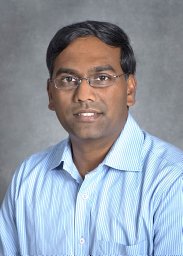 Surendra Byna合作论文数Lawrence Berkeley National Laboratory8
 Ermal Rrapaj合作论文数Department of Physics, University of California Berkeley8Douglas Doerfler合作论文数7
 Hai Ah Nam合作论文数Physics Department;San Diego State University;Physics Department, San Diego State University7
 Sridutt Bhalachandra合作论文数NVIDIA7
 Katie Antypas合作论文数Lawrence Berkeley National Laboratory6Kirill Lozinskiy合作论文数5Brandon G. Cook合作论文数Lawrence Berkeley Natl Lab5Lisa Gerhardt合作论文数5
 Wahid Bhimji合作论文数Lawrence Berkeley National Laboratory5
 David Skinner合作论文数5
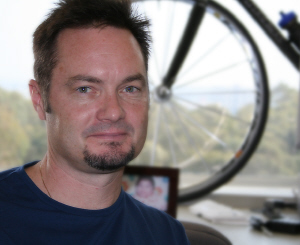 Allan Snavely合作论文数University of California5Sudip Dosanjh合作论文数Sandia National Laboratories, USA5Kevin Harms合作论文数Argonne National Laboratory5Nan Ding合作论文数5Shane Canon合作论文数4
 Steven Farrell合作论文数Lawrence Berkeley National Laboratory4Ravi Cheema合作论文数4Damian Hazen合作论文数4
 Tan Nguyen合作论文数Lawrence Berkeley Natl Lab, Berkeley, CA USA4
 Robert B. Ross合作论文数Mathematics and Computer Science Division, Argonne National Laboratory4Karl Fürlinger合作论文数Institut für Informatik, Technische Universität München4Richard A. Gerber合作论文数Departments of Physics and Astronomy, University of Illinois at Urbana-Champaign4
 John Shalf合作论文数Department of Computer Science, Lawrence Berkeley National Laboratory4
 Teng Wang合作论文数School of Environmental Engineering, Wuhan Textile University4Tina Butler合作论文数3Jay Srinivasan合作论文数3Tina Declerck合作论文数3Noel Keen合作论文数3Colin MacLean合作论文数3
 Yong Chen合作论文数Data-Intensive Scalable Computing Laboratory, Department of Computer Science, Texas Tech University3Mert Side合作论文数3
 Marco Siracusa合作论文数Politecnico di Milano3Anna Giannakou合作论文数LBNL, Berkeley, CA 94720 USA3
 R. Benny Gerber合作论文数Institute of Chemistry, Fritz Haber Center for Molecular Dynamics, Hebrew University of Jerusalem;University of California, Irvine3Klymko Katherine合作论文数3Matthew J. Cordery合作论文数3
 Daan Camps合作论文数3
 Nancy Makri合作论文数Department of Chemistry, College of Liberal Arts & Sciences, University of Illinois at Urbana-Champaign3




