The need for social and emotional learning (SEL) has never been so clear. The growing understanding of its benefits has been made more evident by the stronger focus of state, district, and school leaders, educators, and families to leverage SEL as a strategy to promote emotional well-being, to combat systemic and interpersonal inequities, and to engage students in positive learning environments. With this urgency to use SEL practices, now is the time to ensure a focus on creating environments and experiences that promote social and emotional development and deepening understanding of the motivational factors that promote student and adult success. Motivation researchers have been studying the motivational elements – and associated interventions – that better equip youth and adults to engage in their learning environments, suggesting the importance that the two fields learn with and from each other. The introductory chapter of the volume, Motivating the SEL Field Forward Through Equity, explores the intersections and accelerators of the two fields to create optimal learning environments and experiences for all youth. Specifically, we provide a high-level overview of the two fields, including ways each field takes into account personal development in relation to context and culture. We further explore ways in which the two fields intersect, elevating the importance of understanding the role of equity and excellence in research and practice. We then focus on one approach that we believe elevates equity of voice in research – research–practice partnerships. Finally, we highlight how this volume is organized.
Latino youth represent more than one quarter of the overall public school population in the United States. For decades, Latinos have been found to perform significantly lower than their peers in standardized academic and some social and emotional measures. A unique subpopulation of this ethnic group, Latino Youth of Immigration (LYOI), has historically been underrepresented in the research literature, specifically, attempting to identify effective interventions that align with their unique social, emotional, and academic needs. In this chapter, we describe the unique sociocultural risk and protective factors for this population. In addition, we provide a brief synthesis of the extant literature on the sociocultural factors that researchers and practitioners need to address in partnership with the LYOI community when developing and implementing preventative programs. We emphasize the unique impact culturally responsive social and emotional learning (SEL) can have in this population. In addition, we provide models and examples on how school-based interventions can be implemented in a transformative manner for this vulnerable population, highlighting implications for researchers and practitioners to better collaborate with the LYOI community.
Social and emotional learning (SEL) has become more central to education because of demand from educators, parents, students, and business leaders alongside rigorous research showing broad, positive impacts for students and adults. However, all approaches to SEL are not equal. Systemic SEL is an approach to create equitable learning conditions that actively involve all Pre-K to Grade 12 students in learning and practicing social, emotional, and academic competencies. These conditions require aligned policies, resources, and actions at state and district levels that encourage local schools and communities to build the personal and professional capacities of adults to: implement and continuously improve evidence-based programs and practices; create an inclusive culture that fosters caring relationships and youth voice, agency, and character; and support coordinated school-family-community partnerships to enhance student development. Promoting social and emotional competencies-including the abilities to understand and manage emotions, achieve positive goals, show caring and concern for others, establish and maintain positive relationships, and make responsible decisions-are important for success at school and in life. In this article, we summarize key concepts and evidence for systemic SEL. Next, we explain interrelated Theories of Action and resources developed by the Collaborative for Academic, Social, and Emotional Learning (CASEL) to implement and continuously improve systemic SEL in schools, districts, and states. We discuss research on nested, interacting settings and processes involved in systemic SEL at proximal (classrooms, schools, families, and communities) and distal (districts, states, national, and international) ecological levels. We conclude with recommendations for future SEL research, practice, and policy. (PsycInfo Database Record (c) 2022 APA, all rights reserved).
Classroom activities aimed at changing students' identity-based motivation (IBM) improve student outcomes by helping students experience school as the path to their adult future identities and their difficulties along the way as signals of the importance of schoolwork. One way to scale these effects would be to have teachers deliver IBM activities. Hence, we asked if, after a brief two-day training, teacher-delivered IBM intervention could meet fidelity standards and if attaining more fidelity matters. We trained all eighth grade teachers in two middle schools (N = 211 students). We used Dane and Schneider's (1988) five-component fidelity model and Durlak and DuPre's (2008) empirically derived threshold and practical maximum standards for fidelity. We found that most classrooms (88%) and students (89%) received IBM intervention at-or-above threshold standard, implying that teacher -based IBM delivery is viable. Moreover, investing in improving fidelity is worthwhile; above-threshold fidelity improved core grade-point-average and reduced risk of course failure.
People do not always take action to promote health, engaging instead in unhealthy habits and reporting fatalism about health. One important mechanism underlying these patterns involves identity-based motivation (D. Oyserman, 2007), the process by which content of social identities influences beliefs about in-group goals and strategies. Seven studies show the effect of identity-based motivation on health. Racial-ethnic minority participants view health promotion behaviors as White middle class and unhealthy behaviors as in-group defining (Studies 1 and 2). Priming race-ethnicity (and low socioeconomic status) increases health fatalism and reduces access to health knowledge (Studies 3 and 4). Perceived efficacy of health-promoting activities is undermined when racial-ethnic minority participants who identify unhealthy behavior as in-group defining are asked to consider their similarities to (middle-class) Whites (Studies 5-7).
Ample correlational evidence exists that perceived unfair treatment is negatively related to well-being, health, and goal striving but the underlying process is unclear. We hypothesized that effects are due in part to contextual priming of prevention focus and the negative consequences of chronic prevention-focused vigilance. Indeed, reasonable responses to unfair treatment—to avoid situations in which it occurs or if this is not possible, confront it head on—fit prevention self-regulatory focus response patterns. Results from three experiments support this notion. Priming stigmatized social category membership heightened students’ prevention (not promotion) focus (n = 117). Priming non-stigmatized social category membership (i.e., white) did not change prevention focus (n = 46). Priming prevention (not promotion) increased perceptions of unfair treatment (and aroused prevention-relevant fight or flight responses) in response to a negative ambiguous job situation among low and moderate income adults (n = 112).
 Daphna Oyserman合作论文数Department of Psychology, College of Letters, Arts and Sciences, University of Southern California4
 Eric Horowitz合作论文数Mind and Society Center, University of Southern California2
 Nicholas Sorensen合作论文数Department of Psychology;University of Michigan;Department of Psychology, University of Michigan2Ryan Eisner合作论文数1Alexandra Skoog-Hoffman合作论文数1Justina Schlund合作论文数1
 Stephanie Fryberg合作论文数Culture Collaboratory, Department of Psychology, College of Literature, Sciences and Arts, University of Michigan1
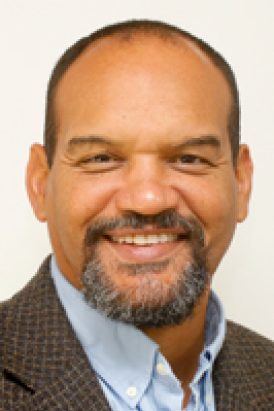 Robert Jagers合作论文数Center for the Study of Black Youth in Context, College of Literature, Science, and the Arts, University of Michigan-Ann Arbor1
 Sara Castro-Olivo合作论文数Department of Educational Psychology, College of Education and Human Development, Texas A&M University1
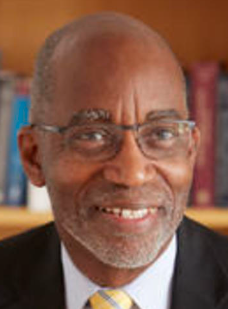 David R. Williams合作论文数Department of Social and Behavioral Sciences, Harvard T. H. Chan School of Public Health, Harvard University1Timothy P. Shriver合作论文数1
 Linda Dusenbury合作论文数Tanglewood Research1
 Joseph L. Mahoney合作论文数Panorama Education1
 Roger Weissberg合作论文数University of Illinois at Chicago1
 Ayse K. Uskul合作论文数The Institute for Social Research, The University of Michigan1
 Mark T. Greenberg合作论文数College of Health and Human Development, Pennsylvania State University1




