We present a section boundary detection framework specifically for clinical dictations. Detection is cast as a semi-supervised binary tagging problem and solved using a neural network model composed of a stack of embeddings, unidirectional long-short term memory units (LSTMs), and sigmoid outputs. Physicians' dictations documenting clinical encounters are typically transcribed using automatic speech recognition (ASR) followed by a post-processor (PP) to transform the raw text into written reports. Section boundary detection can be performed directly upon the raw text to better anticipate the post-processing stage: we describe an architecture for real-time ("live") ASR use in which sections detected by the tagger are sent individually to a machine translation-based PP (for which continuous execution in real time would not be possible). Our implementation of section detection makes viable the use of a sophisticated machine learning PP in a live dictation paradigm.
A top-down approach to speaker diarization is developed using a modified Baum-Welch algorithm. The HMM states combine phonemes according to structural positions under syllabic phonological theory. By nature of the structural phonology, there are at most 16 states, and the transition matrix is sparse, allowing efficient decoding to structural phones. This addresses the issue of phoneme specificity in speaker diarization – that speaker similarities/differences are confounded by phonetic similarities/differences. We address this here without the expensive use of a complete set of individual phonemes. The voice activity detection (VAD) issue is likewise addressed, giving a new approach to VAD.
Training models for speech recognition usually requires accurate word-level transcription of available speech data. For the domain of medical dictations, it is common to have “semi-literal” transcripts available: large numbers of speech files along with their associated formatted episode report, whose content only partially overlaps with the spoken content of the dictation. We present a semi-supervised method for generating acoustic training data by decoding dictations with an existing recognizer, confirming which sections are correct by using the associated report, and repurposing these audio sections for training a new acoustic model. The effectiveness of this method is demonstrated in two applications: first, to adapt a model to new speakers, resulting in a 19.7% reduction in relative word errors for these speakers; and second, to supplement an already diverse and robust acoustic model with a large quantity of additional data (from already known voices), leading to a 5.0% relative error reduction on a large test set of over one thousand speakers.
Healthcare professionals spend a significant amount of their time on administrative tasks rather than direct patient care. One effective way to alleviate some of this burden is to employ a medical scribe, who charts patient-physician encounters in real time. We present a complete implementation of an automated medical scribe assistant, which listens to the encounter and produces a draft of report text and the information used to create it, which can dramatically streamline the scribe's task. This system is, to our knowledge, the first automated scribe ever presented, and relies on multiple speech and language technologies, including speaker diarization, medical speech recognition, knowledge extraction, and natural language generation.
A ubiquitous task in processing electronic medical data is the assignment of standardized codes representing diagnoses and/or procedures to free-text documents such as medical reports. This is a difficult natural language processing task that requires parsing long, heterogeneous documents and selecting a set of appropriate codes from tens of thousands of possibilities---many of which have very few positive training samples. We present a deep learning system that advances the state of the art for the MIMIC-III dataset, achieving a new best micro F1-measure of 55.85\%, significantly outperforming the previous best result (Mullenbach et al. 2018). We achieve this through a number of enhancements, including two major novel contributions: multi-view convolutional channels, which effectively learn to adjust kernel sizes throughout the input; and attention regularization, mediated by natural-language code descriptions, which helps overcome sparsity for thousands of uncommon codes. These and other modifications are selected to address difficulties inherent to both automated coding specifically and deep learning generally. Finally, we investigate our accuracy results in detail to individually measure the impact of these contributions and point the way towards future algorithmic improvements.
A synthetic corpus of dialogs was constructed from the Libri-Speech corpus, and is made freely available for diarization research. It includes over 90 h of training data, and over 9 h each of development and test data. Both 2-person and 3-person dialogs, with and without overlap, are included. Timing information is provided in several formats, and includes not only speaker segmentations, but also phoneme segmentations. As such, it is a useful starting point for general, particularly early-stage, diarization system development.
Gregory Finley, Wael Salloum, Najmeh Sadoughi, Erik Edwards, Amanda Robinson, Nico Axtmann, Michael Brenndoerfer, Mark Miller, David Suendermann-Oeft. Proceedings of the 2018 Conference of the North American Chapter of the Association for Computational Linguistics: Human Language Technologies, Volume 3 (Industry Papers). 2018.
Gregory Finley, Erik Edwards, Amanda Robinson, Michael Brenndoerfer, Najmeh Sadoughi, James Fone, Nico Axtmann, Mark Miller, David Suendermann-Oeft. Proceedings of the 2018 Conference of the North American Chapter of the Association for Computational Linguistics: Demonstrations. 2018.
This paper presents the set-up and results regarding the Cooperative State University submitted system for the shared spoken CALL task. The data was collected from Swiss teenage students using a speech-enabled online tool for English conver-sation practice. The tasks consisted of training data of a German text prompt with the associated audio file containing an English language response by the students. Problems therefore consisted of recognizing children’s speech with foreign accent, grammatical and vocabulary problems and a number of false starts due to language learning issues. The task is to create software that will decide whether each response is appropriate (accept) or inappropriate (reject) in the context of the prompt. Results are reported through a single D-value that is computed specifically for this task. The contribution of this paper is a detailed analysis of a variety of changes to the baseline system (D = 1.69) and the analysis of their contribution to the overall performance. The paper reports the official result (D = 3.21) on the shared task test files but also goes beyond the originally submitted system (D = 4.79).
 David Suendermann-Oeft合作论文数Educational Testing Service San Francisco CA8
 Greg Finley合作论文数EMR.AI Inc., San Francisco, USA8
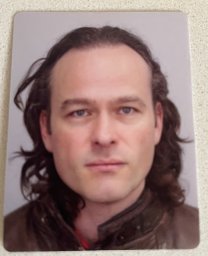 Mark Miller合作论文数EMR AI Inc, San Francisco, CA 94105 USA8
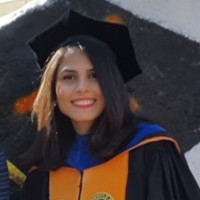 Najmeh Sadoughi Nourabadi合作论文数Amazon8
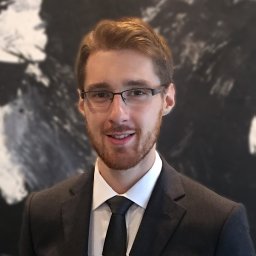 Michael Brenndoerfer合作论文数Univ Calif7Amanda Robinson合作论文数School of Psychology, Faculty of Science, The University of Sydney7
 Edwards Erik合作论文数7
 Maxim Korenevsky合作论文数5James Fone合作论文数EMR.AI Inc., San Francisco, USA3
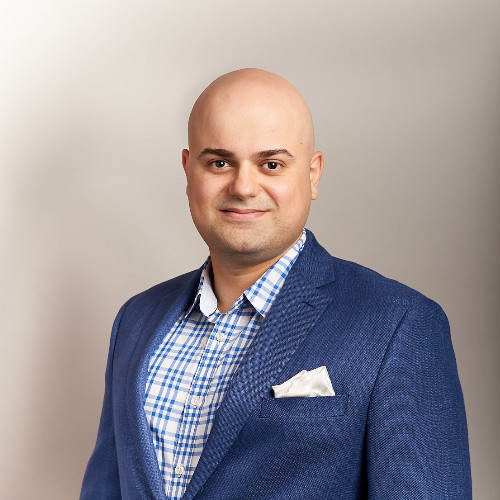 Wael Salloum合作论文数Columbia University2
 Kay Berkling合作论文数1




