This paper discusses the research done into verbal and non verbal communication in respect to Ambient Intelligence. The Information Society Technology Advisory Group (ISTAG) has published several reports on their vision of Ambient Intelligence
One of the most interesting issues in the field of cultural heritage is the adoption of multimedia systems for the visualization and organization of information. In this paper we present a natural interaction based system designed to represent multimedia contents related to the archaeological site of Shawbak, situated in the Petra region of Jordan. Contents are composed of texts, images and videos showing and explaining the archeological site areas and the history of the castle. This system was installed at the Limonaia di Palazzo Pitti (Italy) for the archeological exhibition called "From Petra to Shawbak".
This paper addresses the design and development of MediaPick [1], an interactive multi-touch system for semantic search of multimedia contents. Our solution provides an intuitive, easy-to-use way to select concepts organized according to an ontological structure and retrieve the related contents. Users are then able to examine and organize such results through semantic or subjective criteria. As use case we considered professionals who work with huge multimedia archives (journalists, archivists, editors etc.).
This paper addresses the design and development of MediaPick [1], an interactive multi-touch system for semantic search of multimedia contents. Our solution provides an intuitive, easy-to-use way to select concepts organized according to an ontological structure and retrieve the related contents. Users are then able to examine and organize such results through semantic or subjective criteria. As use case we considered professionals who work with huge multimedia archives (journalists, archivists, editors etc.).
Research work in relation to Natural Human Computer Interaction concerns the theorization and development of systems that understand and recognize human communicative actions in order to engage people in a dialogue between them and their surroundings.Natural interaction is defined in terms of "experience": people communicate in a natural way through vocal, gestural, and emotional expressions, exploring the environments through the vision and manipulation of physical objects. The key is then to allow them to interact with technology in the same way they interact with each other in everyday life.
We present our ongoing work, an application framework created to extend the concept of natural and tangible interfaces to environments composed of many interactive systems disseminated in an indoor space. In such environments users can perform solo or collaborative activities using different systems (like interactive tabletops or walls) and interacting with them through tangible smart objects provided with sensors, storage, processing and wireless communication capabilities. The smart objects become the representatives of the user navigating in the environment, and while retaining their basic affordance suggested by their shape, can assume different roles in relation to the system they approach. We investigated some application scenarios and present early observations related to the design and implementation, as well as future directions.
We present the Tangerine Smart Micrel Cube (SMCube) a smart device for Human Computer Interaction (HCI). The SMCube is a tangible smart object equipped with sensors (digital tri-axes accelerometer as default) and actuators (infrared LEDs, vibro-motors) embedded in a wooden cube. Data from accelerometer is used to locally detect the active face (the one directed upward) and a set of gesture performed by the user. These information are wirelessly sent to a base station for processing. Furthermore, through the LEDs the node can interact with a vision based system in a multi modal activity detection scenario.
The advent of new technology means we are continuously offered high-tech devices that should make our life more agreeable, safe and pleasant. Do they succeed? In his book "The Psychology of Everyday Things", Donald Norman, a leading cognitive psychologist, warns us about the technology paradox: innovation technology risks making our life more complex every day. The intention of this warning is to make us conscious of the importance of 'human-centred design', particularly when we talk about human-computer interaction.
In this paper we describe TANGerINE, a tangible tabletop environment in which users can interact with digital contents manipulating tangible smart objects. Such objects provide continuous data about their status through the embedded wireless sensors, while an overhead computer vision module tracks their position and orientation. Merging sensing data, the system is able to detect a richer language of gestures and manipulations both on the tabletop and in its surroundings, enabling for a more expressive interaction language across different contexts.
This paper addresses design and development of TANGerINE Grape, a collaborative knowledge sharing system that can be used through natural and tangible interfaces. The final goal is to realize an architecture that can enable users to enrich their knowledge through the attainment of information both from digital libraries through an informative automatic system and from the knowledge shared by other users involved at the same time in the same interaction session. In order to achieve this, we developed a natural interaction system used by multiple users at the same time for the browsing and fruition of video contents organized through an ontology-based structure.
 Lea Landucci合作论文数University of Florence14
 Alberto Del Bimbo合作论文数Department of Information Engineering, Università di Firenze;Media Integration and Communication Center, Università di Firenze9
 Stefano Baraldi合作论文数University of Florence8
 Djoerd Hiemstra合作论文数4Tok Wang Ling合作论文数4
 Marcelo Arenas合作论文数Department of Computer Science, School of engineering, Pontificia Universidad Católica de Chile;Institute for Mathematical and Computational Engineering, Pontificia Universidad Católica de Chile4George Karabatis合作论文数Department of Information Systems, UMBC George Karabatis4
 Gianpaolo D'Amico合作论文数Università di Firenze4
 Andrea Ferracani合作论文数Media Integration and Communication Center;University of Florence;Media Integration and Communication Center, University of Florence4
 Omar Cafini合作论文数3
 Kazuo Goda合作论文数3
 Jingren Zhou合作论文数Alibaba Group3
 Leopoldo Bertossi合作论文数School of Computer Science, Carleton University3Rui Zhang (张瑞)合作论文数3
 Dimitris Papadias (白德善)合作论文数Department of Computer Science and Engineering, School of Engineering, Hong Kong University of Science and Technology3
 Richard Thomas Snodgrass合作论文数Department of Computer Science, College of Science, University of Arizona3
 Christian S. Jensen合作论文数Department of Computer Science, Aalborg University3Elisabetta Farella合作论文数Dipartimento di Elettronica, Informatica e Sistemistica3
 Michael Böhlen合作论文数Department of Informatics, University of Zürich3
 Curtis Dyreson合作论文数Department of Computer Science, Utah State University3
 Gosta Grahne合作论文数Concordia University;Department of Computer Science3J. Domingo-Ferrer合作论文数2G. Dobbie合作论文数2
 Luca Benini合作论文数Institut fur Integrierte Systeme, Eidgenossische Technische Hochschule Zurich;Department of Information Technology and Electrical Engineering, Eidgenossische Technische Hochschule Zurich2
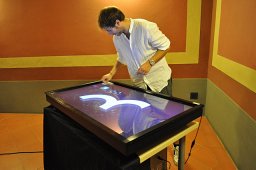 Daniele Pezzatini合作论文数University of Florence2Augusto Pieracci合作论文数University of Bologna2Matteo Mancini合作论文数1Pang-Ning Tan合作论文数1Gillian Dobbie合作论文数1Giulia Gelmini合作论文数1
 Giuseppe Serra合作论文数1Richard T. Snodgrass合作论文数1
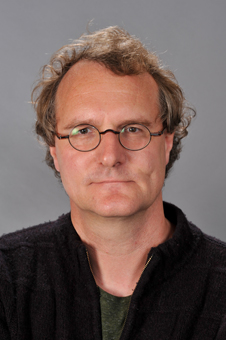 Andrew Trotman合作论文数Department of Computer Science, School of Computing, Department of Computer Science, University of Otago1
 Anirüddhā Gokhālé合作论文数Institute for Software Integrated Systems, Department of Computer Science, Vanderbilt University;School of Engineering, Vanderbilt University;Department of Electrical and Computer Engineering, Vanderbilt University1
 Thomas Seidl合作论文数Lehrstuhl für Datenbanksysteme und Data Mining, Ludwig-Maximilians-Universität München;Munich Center for Machine Learning1Nicola Martorana合作论文数1
 Josep Domingo-Ferrer合作论文数Department of Computer Engineering and Maths, School of Engineering, Universitat Rovira i Virgili1
 Fabrizio Dini合作论文数MICC - Media Integration and Communication Center, Universití degli Studi di Firenze1
 Jean-Luc Hainaut合作论文数University of Namur1
 Thomas M. Alisi合作论文数Media Integration and Communication Center;University of Florence;Media Integration and Communication Center, University of Florence1




