We introduce a novel modeling approach for time series imputation and forecasting, tailored to address the challenges often encountered in real-world data, such as irregular samples, missing data, or unaligned measurements from multiple sensors. Our method relies on a continuous-time-dependent model of the series' evolution dynamics. It leverages adaptations of conditional, implicit neural representations for sequential data. A modulation mechanism, driven by a meta-learning algorithm, allows adaptation to unseen samples and extrapolation beyond observed time-windows for long-term predictions. The model provides a highly flexible and unified framework for imputation and forecasting tasks across a wide range of challenging scenarios. It achieves state-of-the-art performance on classical benchmarks and outperforms alternative time-continuous models.
Detecting communities on graphs has received significant interest in recent literature. Current state-of-the-art approaches tackle this problem by coupling Euclidean graph embedding with community detection. Considering the success of hyperbolic representations of graph-structured data in the last years, an ongoing challenge is to set up a hyperbolic approach to the community detection problem. The present paper meets this challenge by introducing a Riemannian geometry based framework for learning communities on graphs. The proposed methodology combines graph embedding on hyperbolic spaces with Riemannian K-means or Riemannian mixture models to perform community detection. The usefulness of this framework is illustrated through several experiments on generated community graphs and real-world social networks as well as comparisons with the most powerful baselines. The code implementing hyperbolic community embedding is available online https://www.github.com/tgeral68/HyperbolicGraphAndGMM .
Deep learning has made significant advances in creating efficient representations of time series data by automatically identifying complex patterns. However, these approaches lack interpretability, as the time series is transformed into a latent vector that is not easily interpretable. On the other hand, Symbolic Aggregate approximation (SAX) methods allow the creation of symbolic representations that can be interpreted but do not capture complex patterns effectively. In this work, we propose a set of requirements for a neural representation of univariate time series to be interpretable. We propose a new unsupervised neural architecture that meets these requirements. The proposed model produces consistent, discrete, interpretable, and visualizable representations. The model is learned independently of any downstream tasks in an unsupervised setting to ensure robustness. As a demonstration of the effectiveness of the proposed model, we propose experiments on classification tasks using UCR archive datasets. The obtained results are extensively compared to other interpretable models and state-of the-art neural representation learning models. The experiments show that the proposed model yields, on average better results than other interpretable approaches on multiple datasets. We also present qualitative experiments to asses the interpretability of the approach.
Time series classification is a challenging research field with many real-life applications. Recent advances in deep learning have significantly improved the state of the art: recurrent or convolutional architectures allow automatic extraction of complex discriminating patterns that improve performance. Those approaches suffer from a lack of interpretability: the patterns are mapped into a high dimensional latent vector space, they are not representable in the time domain, and are often even not localizable. In this paper, we present a novel neural convolutional architecture that aims to provide a trade-off between interpretability and effectiveness based on the learning of a dictionary of discrete representations. The proposed model guarantees (1) that a small number of patterns are learned, and they are visualizable and interpretable (2) a shift equivariance property of the model associated with a time-consistency of the representation (3) a linear classifier over a limited number of patterns leading to an explainable decision. To ensure the robustness of the discrete representation, they are learned in an unsupervised process independently of the classification task. This allows further great performances in transfer learning. We present extensive experiments on the UCR benchmark wrt usual baselines. The interpretability of the model is illustrated empirically. The chosen trade-off results obviously in a decrease in performance compared to the state of the art. The performance drop is however limited and very dependent on the application domain. The experiments highlight the efficiency of the model for the transfer learning task, showing the robustness of the representations.
Data-driven approaches to modeling physical systems fail to generalize to unseen systems that share the same general dynamics with the learning domain, but correspond to different physical contexts. We propose a new framework for this key problem, context-informed dynamics adaptation (CoDA), which takes into account the distributional shift across systems for fast and efficient adaptation to new dynamics. CoDA leverages multiple environments, each associated to a different dynamic, and learns to condition the dynamics model on contextual parameters, specific to each environment. The conditioning is performed via a hypernetwork, learned jointly with a context vector from observed data. The proposed formulation constrains the search hypothesis space to foster fast adaptation and better generalization across environments. We theoretically motivate our approach and show state-of-the-art generalization results on a set of nonlinear dynamics, representative of a variety of application domains. We also show, on these systems, that new system parameters can be inferred from context vectors with minimal supervision. Code is available at https://github.com/yuan-yin/CoDA .
When modeling dynamical systems from real-world data samples, the distribution of data often changes according to the environment in which they are captured, and the dynamics of the system itself vary from one environment to another. Generalizing across environments thus challenges the conventional frameworks. The classical settings suggest either considering data as i.i.d. and learning a single model to cover all situations or learning environment-specific models. Both are sub-optimal: the former disregards the discrepancies between environments leading to biased solutions, while the latter does not exploit their potential commonalities and is prone to scarcity problems. We propose LEADS, a novel framework that leverages the commonalities and discrepancies among known environments to improve model generalization. This is achieved with a tailored training formulation aiming at capturing common dynamics within a shared model while additional terms capture environment-specific dynamics. We ground our approach in theory, exhibiting a decrease in sample complexity with our approach and corroborate these results empirically, instantiating it for linear dynamics. Moreover, we concretize this framework for neural networks and evaluate it experimentally on representative families of nonlinear dynamics. We show that this new setting can exploit knowledge extracted from environment-dependent data and improves generalization for both known and novel environments. Code is available at https://github.com/yuan-yin/LEADS.
The domain of time-series forecasting has been extensively studied because it is of fundamental importance in many real-life applications. Weather prediction, traffic flow forecasting or sales are compelling examples of sequential phenomena. Predictive models generally make use of the relations between past and future values. However, in the case of stationary time-series, observed values also drastically depend on a number of exogenous features that can be used to improve forecasting quality. In this work, we propose a change of paradigm which consists in learning such features in embeddings vectors within recurrent neural networks. We apply our framework to forecast smart cards tap-in logs in the Parisian subway network. Results show that context-embedded models perform quantitatively better in one-step ahead and multi-step ahead forecasting.
Detecting communities on graphs has received significant interest in recent literature. Current state-of-the-art community embedding approach called \textit{ComE} tackles this problem by coupling graph embedding with community detection. Considering the success of hyperbolic representations of graph-structured data in last years, an ongoing challenge is to set up a hyperbolic approach for the community detection problem. The present paper meets this challenge by introducing a Riemannian equivalent of \textit{ComE}. Our proposed approach combines hyperbolic embeddings with Riemannian K-means or Riemannian mixture models to perform community detection. We illustrate the usefulness of this framework through several experiments on real-world social networks and comparisons with \textit{ComE} and recent hyperbolic-based classification approaches.
Cet article decrit un nouvel algorithme predictif dedie aux series temporelles multi-variees qui se base non seulement sur les relations entre les valeurs passees et futures mais qui apprend aussi une representation de certaines caracteristiques externes comme le contexte spatio-temporel. Nous demontrons l'interet de cette approche sur des donnees issues d'un systeme de transports en commun : notre algorithme d'apprentissage de representation (qui utilise des reseaux de neurones recurrents) permet de depasser significativement les methodes de reference pour la prediction de frequentation tout en modelisant elegamment le contexte spatio-temporel des series analysees.
We approach the problem of human action recognition in videos by distinguishing between simple and complex actions. To recognize simple actions, we take advantage of the latest advances with 3D convolutional networks, which are able to offer a generic video snippet descriptor. For the complex ones, which involve interaction between more than one individual, we use the recognized simple human actions of the previous step to generate Event Calculus theories. This way, we aim to achieve a high-level human action understanding, combining the opaque effectiveness of deep learning and the transparent reasoning of computational logic. Our experimental results on a benchmark activity recognition dataset encourage further research towards this direction.
Smart card logs constitute a valuable source of information to model a public transportation network and characterize normal or abnormal events; however, this source of data is associated to a high level of noise and missing data, thus, it requires robust analysis tools. First, we define an anomaly as any perturbation in the transportation network with respect to a typical day: temporary interruption, intermittent habit shifts, closed stations, unusual high/low number of entrances in a station. The Parisian metro network with 300 stations and millions of daily trips is considered as a case study. In this paper, we present four approaches for the task of anomaly detection in a transportation network using smart card logs. The first three approaches involve the inference of a daily temporal prototype of each metro station and the use of a distance denoting the compatibility of a particular day and its inferred prototype. We introduce two simple and strong baselines relying on a differential modeling between stations and prototypes in the raw-log space. We implemented a raw version (sensitive to volume change) as well as a normalized version (sensitive to behavior changes). The third approach is an original matrix factorization algorithm that computes a dictionary of typical behaviors shared across stations and the corresponding weights allowing the reconstruction of denoised station profiles. We propose to measure the distance between stations and prototypes directly in the latent space. The main advantage resides in its compactness allowing to describe each station profile and the inherent variability within a few parameters. The last approach is a user-based model in which abnormal behaviors are first detected for each user at the log level and then aggregated spatially and temporally; as a consequence, this approach is heavier and requires to follow users, at the opposite of the previous ones that operate on anonymous log data. On top of that, our contribution regards the evaluation framework: we listed particular days but we also mined RATP(1) Twitter account to obtain (partial) ground truth information about operating incidents. Experiments show that matrix factorization is very robust in various situations while the last user-based model is particularly efficient to detect small incidents reported in the twitter dataset. (C) 2018 Elsevier B.V. All rights reserved.
Classification with a large number of classes is a key problem in machine learning and corresponds to many real-world applications like tagging of images or textual documents in social networks. If one-vs-all methods usually reach top performance in this context, these approaches suffer of a high inference complexity, linear w.r.t. the number of categories. Different models based on the notion of binary codes have been proposed to overcome this limitation, achieving in a sublinear inference complexity. But they a priori need to decide which binary code to associate to which category before learning using more or less complex heuristics. We propose a new end-to-end model which aims at simultaneously learning to associate binary codes with categories, but also learning to map inputs to binary codes. This approach called Deep Stochastic Neural Codes (DSNC) keeps the sublinear inference complexity but do not need any a priori tuning. Experimental results on different datasets show the effectiveness of the approach w.r.t. baseline methods.
This article describes a novel approach to detect anomalies in smart card logs. In this study, we chose to work on a 24h base for every station in the Parisian metro network. We also consider separately the 7 days of the week. We first build a robust averaged reference for (day,station) couples and then, we focus on the difference between particular situations and references. All experiments are conducted both on the raw data and using an NMF denoised approximation of the log flow. We demonstrate the interest and the robustness of the latter strategy. Then we mine RATP Twitter account to obtain ground truth information about operating incidents. This synchronized flow is used to evaluate our models.
 Michele Sebag合作论文数Lab. of Computer Science, Universite Paris Saclay;Centre National De La Recherche Scientifique19
 Patrick Gallinari合作论文数Criteo AI Lab;Sorbonne University15
 Vincent Guigue合作论文数AgroParisTech École Nationale du Génie Rural des Eaux et des Forêts15
 Olivier Teytaud合作论文数Meta AI Research12
 Emeric Tonnelier合作论文数UPMC Univ Paris 06, Sorbonne Univ, CNRS, UMR 7606,LIP6, 4 Pl Jussieu, F-75005 Paris, France5Cedric Hartland合作论文数5
 Sylvain Gelly合作论文数Google5
 Ludovic Denoyer合作论文数Ubisoft;UPMC-Sorbonne Universities5Ghislain Agoua合作论文数4Ali Ziat合作论文数4Thomas Gerald合作论文数CNRS ISIR, Sorbonne Univ4
 Nicolas Bredeche合作论文数Institut des Systèmes Intelligents et de Robotique, Sorbonne Université4Mary Felkin合作论文数4Etienne Le Naour合作论文数3Raphael Puget合作论文数LIP6 UMR 7606, Sorbonne Universités3
 Stephan Clémençon合作论文数Department of Image, Data, Signal, Telecom Paris3
 Marie-Claude Gaudel合作论文数LRI, Université de Paris-Sud3
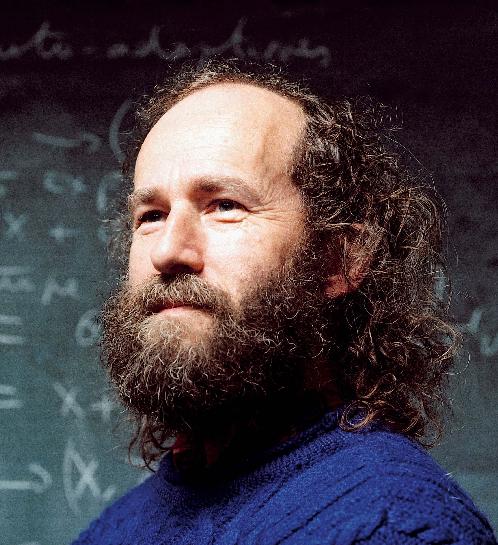 Marc Schoenauer合作论文数INRIA Saclay - Île-de-France3
 Jérémie Mary合作论文数Criteo AI Lab;Lille University3
 Tewfik Ziadi合作论文数Sorbonne Univ, UPMC Univ Paris 063Sylvain Lamprier合作论文数Faculté des Sciences, Université d'Angers3
 Lom-Messan Hillah合作论文数CNRS UMR 7606, Université Paris Ouest Nanterre La Défense3
 George Paliouras合作论文数The AI Lab SKEL, Institute of Informatics & Telecommunications, NCSR Demokritos;Center of Excellence in Document Intelligence3
 Xiangliang (Lynn) Zhang合作论文数Machine Intelligence and kNowledge Engineering Lab, University of Notre Dame3Cecile Germain合作论文数Univ. de Paris-Sud; Lab. de Recherche en Informatique3
 Yuan Yin合作论文数Institute of Intelligent Systems and Robotics, Sorbonne Université3
 Antoine Cornuejols合作论文数Laboratory for Computer Science, University of Paris-Sud;Université Paris-Saclay;AgroParisTech;INRAE3Jérôme Maloberti合作论文数2Damien Tessier合作论文数2
 Hadi Zaatiti合作论文数IRT SystemX2Gabriella Contardo合作论文数Ctr Computat Astrophys, Flatiron Inst2
 Olivier Schwander合作论文数2
 Georgios Balikas合作论文数Salesforce2
 Nicolas Vayatis合作论文数Department of Mathematics, École normale supérieure Paris-Saclay2Nicolas Usunier合作论文数H Company2
 Ion Androutsopoulos合作论文数Natural Language Processing Group, Department of Informatics, Athens University of Economics and Business2
 Eric Gaussier合作论文数Grenoble Interdisciplinary Institute in Artificial Intelligence;University Grenoble Alps2Sandrine-Dominique Gouraud合作论文数Universite Paris-Sud 112
 Arpad Rimmel合作论文数CentraleSupelec2
 Alexandre Devert合作论文数2
 Thierry Artières合作论文数Ecole Centrale Marseille LIS Lab2
 Cyril Furtlehner合作论文数Institute of Physics;University of Oslo;Institute of Physics, University of Oslo2Yves Kodratoff合作论文数Computer Science Research Laboratory, National Center for Scientific Research2
 Mohamed Jebalia合作论文数2
 Jérôme Azé合作论文数INFO, LIRMM2
 Hatem Hajri合作论文数Universite de Paris sud2
 Philippe Caillou合作论文数Laboratoire de Recherche en Informatique, Université Paris Sud XI2
 Ioannis Partalas合作论文数Viseo R&D2
 Julien Perez合作论文数Epita;IONIS Education Group2




