There is a rapidly growing need to communicate to the public and policymakers on the nature and impact of climate change and its associated extremes, which manifest themselves across essential Food-Energy-Water Systems (FEWS). The complexity of this nexus demands analytical tools that can capture the essence of FEWS with the climate system, which may be difficult to stage and implement from a computationally efficient point-of-view. Reduced Complexity Models (RCMs) can synthesize important facets of a system quickly and with less dependence on difficult-to-assign inputs. We report on the development of an RCM framework for the FEWS nexus, to serve as a basic research tool in facilitating parameter sensitivity experiments as well as a means to establish more insightful dialogue with stakeholders through joint scenario construction. Three stand-alone and coupled models at the basin scale have been configured using Stella Architect software to simulate: 1) major flows and storage of water, 2) power plant operations and subsequent impacts on river reaches; and 3) nitrogen (N) mobilization and transport from atmospheric and landmass sources to riverine receiving waters. The Delaware River Basin is chosen for a contemporary simulation test case. Modeled results are calibrated and validated using observed stream gauge data, indicating reliable model performance at the monthly and annual time steps (0.57 < NSE < 0.98). A set of single and multi-factor climate, technology, and policy experiments are then explored using the RCM framework. Basin-scale system sensitivities are investigated across a set of intensified climate extremes, revealing the crucial roles of sewage treatment and energy infrastructure for climate resilience, significant exacerbations as well as mitigations of thermal and N pollution under opposing climate extremes, and important tradeoffs between river temperature and electricity production that are explored with technology and policy scenarios.
The rate and extent of anthropogenic alteration of the global nitrogen cycle over the past four decades has been extensive, resulting in cascading negative impacts on riverine and coastal water quality. In this paper, we investigate the individual effects of a set of management, technology, and policy mechanisms that alter total reactive nitrogen (TN) flux through rivers, using a modified, spatially detailed SPARROW TN model, between 1980 and 2019 in the Northeast (NE) and Midwest (MW) of the United States. Using the recalibrated model, we simulate and validate a historical baseline, to which we compare a set of climate and non-climate single factor experiments (SFEs) in which individual factors are held at 1980s levels while all other factors change dynamically. We evaluate SFE performance in terms of differences in TN flux and willingness to pay. The largest effect on TN flux are related to reduction in cropland area and atmospheric nitrogen deposition. Multi-factor experiments (MFEs) suggest that increasingly efficient corn cultivars had a larger influence than increasing fertilizer application rate, while population growth has a larger influence than wastewater treatment. Extreme climate SFEs suggest that persistent wet conditions increase TN flux throughout the study region. Meanwhile, persistent hot years result in reduced TN flux. The persistent dry climate SFE leads to increased TN flux in the NE and reduced TN flux in the MW. We find that the potential for TN removal through aquatic decay is greatest in MW, due to the role of long travel time of rivers draining into the Lower Mississippi River. This paper sheds light on how a geographically and climatologically diverse region would respond to a representative selection of management options.
Change to global climate, including both its progressive character and episodic extremes, constitutes a critical societal challenge. We apply here a framework to analyze Climate-induced Extremes on the Food, Energy, Water System Nexus (C-FEWS), with particular emphasis on the roles and sensitivities of traditionally-engineered (TEI) and nature-based (NBI) infrastructures. The rationale and technical specifications for the overall C-FEWS framework, its component models and supporting datasets are detailed in an accompanying paper (Vörösmarty et al., this issue). We report here on initial results produced by applying this framework in two important macro-regions of the United States (Northeast, NE; Midwest, MW), where major decisions affecting global food production, biofuels, energy security and pollution abatement require critical scientific support. We present the essential FEWS-related hypotheses that organize our work with an overview of the methodologies and experimental designs applied. We report on initial C-FEWS framework results using five emblematic studies that highlight how various combinations of climate sensitivities, TEI-NBI deployments, technology, and environmental management have determined regional FEWS performance over a historical time period (1980–2019). Despite their relative simplicity, these initial scenario experiments yielded important insights. We found that FEWS performance was impacted by climate stress, but the sensitivity was strongly modified by technology choices applied to both ecosystems (e.g., cropland production using new cultivars) and engineered systems (e.g., thermoelectricity from different fuels and cooling types). We tabulated strong legacy effects stemming from decisions on managing NBI (e.g., multi-decade land conversions that limit long-term carbon sequestration). The framework also enabled us to reveal how broad-scale policies aimed at a particular net benefit can result in unintended and potentially negative consequences. For example, tradeoff modeling experiments identified the regional importance of TEI in the form wastewater treatment and NBI via aquatic self-purification. This finding, in turn, could be used to guide potential investments in point and/or non-point source water pollution control. Another example used a reduced complexity model to demonstrate a FEWS tradeoff in the context of water supply, electricity production, and thermal pollution. Such results demonstrated the importance of TEI and NBI in jointly determining historical FEWS performance, their vulnerabilities, and their resilience to extreme climate events. These infrastructures, plus technology and environmental management, constitute the “policy levers” which can actively be engaged to mitigate the challenge of contemporary and future climate change.
Climate change continues to challenge food, energy, and water systems (FEWS) across the globe and will figure prominently in shaping future decisions on how best to manage this nexus. In turn, traditionally engineered and natural infrastructures jointly support and hence determine FEWS performance, their vulnerabilities, and their resilience in light of extreme climate events. We present here a research framework to advance the modeling, data integration, and assessment capabilities that support hypothesis-driven research on FEWS dynamics cast at the macro-regional scale. The framework was developed to support studies on climate-induced extremes on food, energy, and water systems (C-FEWS) and designed to identify and evaluate response options to extreme climate events in the context of managing traditionally engineered (TEI) and nature-based infrastructures (NBI). This paper presents our strategy for a first stage of research using the framework to analyze contemporary FEWS and their sensitivity to climate drivers shaped by historical conditions (1980–2019). We offer a description of the computational framework, working definitions of the climate extremes analyzed, and example configurations of numerical experiments aimed at evaluating the importance of individual and combined driving variables. Single and multiple factor experiments involving the historical time series enable two categories of outputs to be analyzed: the first involving biogeophysical entities (e.g., crop production, carbon sequestered, nutrient and thermal pollution loads) and the second reflecting a portfolio of services provided by the region’s TEI and NBI, evaluated in economic terms. The framework is exercised in a series of companion papers in this special issue that focus on the Northeast and Midwest regions of the United States. Use of the C-FEWS framework to simulate historical conditions facilitates research to better identify existing FEWS linkages and how they function. The framework also enables a next stage of analysis to be pursued using future scenario pathways that will vary land use, technology deployments, regulatory objectives, and climate trends and extremes. It also supports a stakeholder engagement effort to co-design scenarios of interest beyond the research domain.
El artículo se enfoca en analizar la participación de la sociedad civil en la Cumbre de la Tierra de 1992, con base en las experiencias del Consejo Internacional para la Ciencia, la Unión Internacional para la Conservación de la Naturaleza y los Recursos Naturales, y la Asociación para el Progreso de la Comunicación en la Cumbre de la Tierra. El marco teórico está fundamentado en el trabajo de Andrew Hurrell y busca identificar las actividades de gobernanza compleja que fueron adelantadas por estos actores de la sociedad civil y examinar sus herramientas de influencia. La evidencia encontrada corrobora el potencial de la sociedad civil para influir en la interpretación de asuntos políticos por medio de actividades de gobernanza compleja en la Cumbre de la Tierra. Se concluye que los estudios de la sociedad internacional se deben enfocar en la manera como los Estados interactúan con una serie de actores sociales, como la sociedad civil.
This article focuses on analyzing the participation of civil society in the Earth Summit of 1992, based on the experiences of the International Council for Science, the International Union for the Conservation of Nature and Natural Resources, and the Association for the Progress of Communication in the Earth Summit. The theoretical framework is based on the book On Global Order by Andrew Hurrell. It seeks to identify the complex governance-related activities put forth by these civil society actors and to examine the tools of influence available. The evidence identified corroborates the potential of civil society to influence the interpretation of political issues through the use of complex governance activities in the Earth Summit. The conclusions are that any studies of international society must focus on how States interact with the different social actors, such as civil society.
Spanish Abstract: El articulo se enfoca en analizar la participacion de la sociedad civil en la Cumbre de la Tierra de 1992, con base en las experiencias del Consejo Internacional para la Ciencia, la Union Internacional para la Conservacion de la Naturaleza y los Recursos Naturales, y la Asociacion para el Progreso de la Comunicacion en la Cumbre de la Tierra. El marco teorico esta fundamentado en el trabajo de Andrew Hurrell y busca identificar las actividades de gobernanza compleja que fueron adelantadas por estos actores de la sociedad civil y examinar sus herramientas de influencia. La evidencia encontrada corrobora el potencial de la sociedad civil para influir en la interpretacion de asuntos politicos por medio de actividades de gobernanza compleja en la Cumbre de la Tierra. Se concluye que los estudios de la sociedad internacional se deben enfocar en la manera como los Estados interactuan con una serie de actores sociales, como la sociedad civil. English Abstract: This article focuses on analyzing the participation of civil society in the Earth Summit of 1992, based on the experiences of the International Council for Science, the International Union for the Conservation of Nature and Natural Resources, and the Association for the Progress of Communication in the Earth Summit. The theoretical framework is based on the book On Global Order by Andrew Hurrell. It seeks to identify the complex governance-related activities put forth by these civil society actors and to examine the tools of influence available. The evidence identified corroborates the potential of civil society to influence the interpretation of political issues through the use of complex governance activities in the Earth Summit. The conclusions are that any studies of international society must focus on how States interact with the different social actors, such as civil society.
 Tzu-Shun Lin合作论文数Dept Atmospher Sci, Univ Illinois4Joseph. Chang合作论文数3swarnali sanyal合作论文数Dept Atmospher Sci, Univ Illinois3
 Martha Isabel Gomez Lee合作论文数Fac Finanzas Gobierno & Relac Int, Univ Externado Colombia3
 Amy W Ando合作论文数Department of Agricultural and Consumer Economics, College of Agricultural, Consumer and Environmental Sciences, University of Illinois at Urbana-Champaign3
 Fabio Corsi合作论文数Dipartimento di Scienze Biomediche e Cliniche "Luigi Sacco", Università di Milano;Dipartimento di Scienze Biomediche e Cliniche "Luigi Sacco", Università di Milano3Miara Ariel合作论文数CUNY Environmental Crossroads Initiative, The City College of New York3Seth Tuler合作论文数3
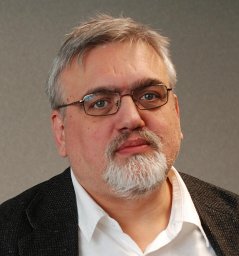 Balazs M. Fekete合作论文数The City College of New York, the City University of New York3Charles J. J. Voeroesmarty合作论文数2
 Mengye Chen合作论文数Hydrometeorol & Remote Sensing Lab, Univ Oklahoma2
 Jiaqi Zhang合作论文数Shared Co-first authorship. These authors contributed equally to this work.2
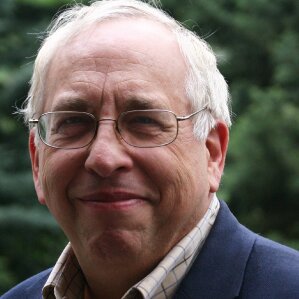 Donald J. Wuebbles合作论文数Department of Atmospheric Sciences, School of Earth, Society and Environment, College of Liberal Arts and Sciences, University of Illinois at Urbana-Champaign2
 Charles Vorosmarty合作论文数CUNY Environmental CrossRoads Initiative, City College of New York2
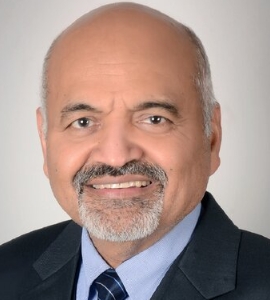 Atul Jain合作论文数Department of Climate, Meteorology & Atmospheric Sciences, School of Earth, Society & Environment, College of Liberal Arts & Sciences, University of Illinois Urbana-Champaign2
 Jerry M. Melillo合作论文数The Ecosystems Center, Marine Biological Laboratory, University of Chicago2
 David W. Kicklighter合作论文数Ecosystems Center;Marine Biological Laboratory;Ecosystems Center|Marine Biological Laboratory2
 Richard W. Smith合作论文数2
 Ehsan Najafi合作论文数CUNY, City Coll New York1
 Jhih-Shyang Shih合作论文数Resources for the Future, 1616 P Street, NW, Washington, DC 20036, USA1




