234 pathology-proven FFDM malignant cases and 3872 normal cases were culled retrospectively from 6 screening facilities. For malignant cases, location and size of the biopsied finding and breast density were recorded. All cases were run with a prototype CAD algorithm (Siemens) to evaluate the impact of breast density, lesion size and lesion pathology on CAD performance. The overall CAD sensitivity was 84.2
This study evaluates the performance of an advanced CAD algorithm that is capable of filtering detection marks by level-of-suspicion. The detection of small invasive cancers, which has the greatest impact on breast cancer survival, was investigated. The advanced algorithm (Siemens) permits the radiologist to toggle back and forth between different levels of filtering, and focus on the detection marks that appear or disappear as findings with lower or higher levels of suspicion are displayed. The performance of the algorithm at three levels of filtering was evaluated, by lesion size and breast composition. 149 malignant cases with 151 masses (60 small masses) and 528 normal cases were analyzed. When the highest level of filtering was applied, and only findings most indicative of malignancy were displayed, the number of false masses was markedly reduced by 37.8%, while the detection sensitivity for masses was slightly reduced from 84.8% to 80.1%, and similarly, the detection sensitivity for small masses in dense breast decreased from 69.6% to 65.2%. In conclusion, when using an algorithm with filtering capabilities, designed to draw radiologists' attention to prompts most indicative of malignancy, the substantial reduction in false marks offsets the slight reduction in the detection sensitivity. Reducing the false mark rate by altering the level of filtering of the CAD prompts, does not have a selectively adverse impact on the detection sensitivity of small masses.
This study evaluates the performance of a new generation algorithm designed to both increase detection sensitivity of cancers and to markedly reduce the false mark rate. In the advanced algorithm, several improvements were implemented. The algorithm for the initial detection of potential mass candidates was upgraded to ignore dense areas that do not represent masses. For the initial detection of potential clusters candidates, the advanced algorithm considers interdependence between various stages of the parametric clusterization process and implements automatic performance optimization. Moreover, the advanced algorithm includes a one-step global classification model, which assigns a score to each candidate lesion, instead of sequential multi-step filtration at various steps of the algorithm. Both the advanced and the previous algorithm were run on 83 malignant cases, with proven pathology, and on 523 normal screening cases that were consecutively culled from 4 clinical sites. The overall sensitivity of the advanced algorithm was 86%, compared to a sensitivity of 84% for the previous one. The false mark (FM) rate per case, decreased from 3.20 for the previous algorithm, to 1.39 for the advanced one. The advanced algorithm reduced both mass FMs and cluster FMs. In conclusion, the new algorithm outperforms the old one with a slight increase in sensitivity and with a substantial reduction in false mark rate for both masses and clusters.
We propose a novel multiple-instance learning (MIL) algorithm for designing classifiers for use in computer aided detection (CAD). The proposed algorithm has 3 advantages over classical methods. First, unlike traditional learning algorithms that minimize the candidate level misclassification error, the proposed algorithm directly optimizes the patient-wise sensitivity. Second, this algorithm automatically selects a small subset of statistically useful features. Third, this algorithm is very fast, utilizes all of the available training data (without the need for cross-validation etc.), and requires no human hand tuning or intervention. Experimentally the algorithm is more accurate than state of the art support vector machine (SVM) classifier, and substantially reduces the number of features that have to be computed.
The purpose of this study was to investigate feasibility of computer-aided detection of masses and calcification clusters in breast tomosynthesis images and obtain reliable estimates of sensitivity and false positive rate on an independent test set. Automatic mass and calcification detection algorithms developed for film and digital mammography images were applied without any adaptation or retraining to tomosynthesis projection images. Test set contained 36 patients including 16 patients with 20 known malignant lesions, 4 of which were missed by the radiologists in conventional mammography images and found only in retrospect in tomosynthesis. Median filter was applied to tomosynthesis projection images. Detection algorithm yielded 80% sensitivity and 5.3 false positives per breast for calcification and mass detection algorithms combined. Out of 4 masses missed by radiologists in conventional mammography images, 2 were found by the mass detection algorithm in tomosynthesis images.
Computer aided detection systems for mammography typically use standard classification algorithms from machine learning for detecting lesions. However, these general purpose learning algorithms make implicit assumptions that are commonly violated in CAD problems. We propose a new ensemble algorithm that explicitly accounts for the small fraction of outlier images which tend to produce a large number of false positives. A bootstrapping procedure is used to ensure that the candidates from these outlier images do not skew the statistical properties of the training samples. Experimental studies on the detection of clusters of micro-calcifications indicate that the proposed method significantly outperforms a state-of-the-art general purpose method for designing classifiers (SVM), in terms of FROC curves on a hold out test set.
: Several difficulties are met when detecting roads in satellite images. They aredue to the poor quality of existing information and may be solved by using global information.Dynamic programming is popular in line detection, but deals awkwardly with globalinformation due to its constraints on the decision process and to the local nature of the cost.There are various ways to integrate global information in this framework. The mostwidely used consists in attributing to each state the...
ELIESER (Extraction de Lignes sur ImagEs Satellite avec une Energie par Regions) est un programme de detection de lignes sur images satellitaires. Il a ete developpe conjointement a l'INRIA Sophia-Antipolis (France) et a l'Universite Hebraique de Jerusalem (Israel), et integre sous Motif~\copyright~dans un systeme (iview) developpe a l'INRIA. Nous en presentons ici l'interface.
ELIESER (Extraction de Lignes sur ImagEs Satellite avec une Energie par Regions) is a software for detecting lines on satellite images. It has been developed jointly at INRIA Sophia-Antipolis and at the Hebrew University of Jerusalem, and implemented using Motif~\copyright~in a package (iview) developed at INRIA. We present herein its interface.
Several difficulties are met when detecting roads in satellite images. They are due to the poor quality of existing information and may be solved by using global information. Dynamic programming is popular in line detection, but deals awkwardly with global information due to its constraints on the decision process and to the local nature of the cost. \newline There are various ways to integrate global information in this framework. The most widely used consists in computing as a pre-processing some global characteristics of a feature, and attributing these characteristics to each state belonging to the feature. A second solution is to use a hierarchic approach, from coarse to fine. Thirdly, the states may be defined in an elaborated way as a set of several successive pixels. We have developed a new algorithm of roads detection, which takes into account local curvature by defining the cost on three successive points. We present in our work a new solution : auxiliary functions. They store temporary information about the current shortest path to take into account global information in the potential. They are updated in a recursive way each time a new shortest path is found. Optimality is lost, but the constraint is properly imposed to the solution as we show in integrating global direction, global curvature, and in minimizing the average of the potential. The constraint may be modulated, and the complexity of the problem is not changed. \newline Besides shape information, we present a new method to define automatically the cost from the grey-levels in windows around the extremities of the roads. The respective influence of contrast and grey level is weighted by using conditional probabilities. \newline We finally compare the speeds of computation with various scannings of the states : by eliminating part of the states and ordering them, at initialization or during integration, and by stopping the integration before convergence. The gains are often above 50~%.
 P Bamberger合作论文数9
 Eli Ratner合作论文数6
 Josiane Zerubia合作论文数INRIA5Isaac Leichter合作论文数Siemens Computer Aided Diagnosis4
 Balaji Krishnapuram合作论文数Pinterest3Richard Lederman合作论文数3
 Bharat Rao合作论文数Carenostics2Jonathan Stoeckel合作论文数2
 Inna Stainvas合作论文数Siemens Computer Aided Diagnosis Ltd.2
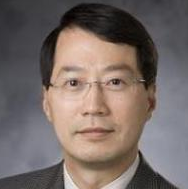 Joseph Yuan-Chieh Lo合作论文数Department of Biomedical Engineering, Pratt School of Engineering, Duke University1
 Vikas C. Raykar合作论文数Amazon1Swatee Singh合作论文数1Menachem Abramov合作论文数1
 Anna Jerebko合作论文数1Zahava Gallimidi合作论文数1Alexandra Manevitch合作论文数Siemens Computer Aided Diagnosis Ltd.1Menahem Abramov合作论文数1




