While the folding of DNA into rationally designed DNA origami nanostructures has been studied extensively with the aim of increasing structural diversity and introducing functionality, the fundamental physical and chemical properties of these nanostructures remain largely elusive. Here, we investigate the correlation between atomistic, molecular, nanoscopic, and thermodynamic properties of DNA origami triangles. Using guanidinium (Gdm) as a DNA-stabilizing but potentially also denaturing cation, we explore the dependence of DNA origami stability on the identity of the accompanying anions. The statistical analyses of atomic force microscopy (AFM) images and circular dichroism (CD) spectra reveals that sulfate and chloride exert stabilizing and destabilizing effects, respectively, already below the global melting temperature of the DNA origami triangles. We identify structural transitions during thermal denaturation and show that heat capacity changes ΔC p determine the temperature sensitivity of structural damage. The different hydration shells of the anions and their potential to form Gdm+ ion pairs in concentrated salt solutions modulate ΔC p by altered wetting properties of hydrophobic DNA surface regions as shown by molecular dynamics simulations. The underlying structural changes on the molecular scale become amplified by the large number of structurally coupled DNA segments and thereby find nanoscopic correlations in AFM images.
Guanidinium (Gdm) undergoes interactions with both hydrophilic and hydrophobic groups and, thus, is a highly potent denaturant of biomolecular structure. However, our molecular understanding of the interaction of Gdm with proteins and DNA is still rather limited. Here, we investigated the denaturation of DNA origami nanostructures by three Gdm salts, i.e., guanidinium chloride (GdmCl), guanidinium sulfate (Gdm2SO4), and guanidinium thiocyanate (GdmSCN), at different temperatures and in dependence of incubation time. Using DNA origami nanostructures as sensors that translate small molecular transitions into nanostructural changes, the denaturing effects of the Gdm salts were directly visualized by atomic force microscopy. GdmSCN was the most potent DNA denaturant, which caused complete DNA origami denaturation at 50 °C already at a concentration of 2 M. Under such harsh conditions, denaturation occurred within the first 15 min of Gdm exposure, whereas much slower kinetics were observed for the more weakly denaturing salt Gdm2SO4 at 25 °C. Lastly, we observed a novel non-monotonous temperature dependence of DNA origami denaturation in Gdm2SO4 with the fraction of intact nanostructures having an intermediate minimum at about 40 °C. Our results, thus, provide further insights into the highly complex Gdm–DNA interaction and underscore the importance of the counteranion species.
DNA origami technology enables the folding of DNA strands into complex nanoscale shapes whose properties and interactions with molecular species often deviate significantly from that of genomic DNA. Here, we investigate the salting-out of different DNA origami shapes by the kosmotropic salt ammonium sulfate that is routinely employed in protein precipitation. We find that centrifugation in the presence of 3 M ammonium sulfate results in notable precipitation of DNA origami nanostructures but not of double-stranded genomic DNA. The precipitated DNA origami nanostructures can be resuspended in ammonium sulfate-free buffer without apparent formation of aggregates or loss of structural integrity. Even though quasi-1D six-helix bundle DNA origami are slightly less susceptible toward salting-out than more compact DNA origami triangles and 24-helix bundles, precipitation and recovery yields appear to be mostly independent of DNA origami shape and superstructure. Exploiting the specificity of ammonium sulfate salting-out for DNA origami nanostructures, we further apply this method to separate DNA origami triangles from genomic DNA fragments in a complex mixture. Our results thus demonstrate the possibility of concentrating and purifying DNA origami nanostructures by ammonium sulfate-induced salting-out.
Amyloid beta 42 (Abeta42) is the principal trigger of neurodegeneration during Alzheimer's disease (AD). However, the etiology of its noxious cellular effects remains elusive. In a combinatory genetic and proteomic approach using a yeast model to study aspects of intracellular Abeta42 toxicity, we here identify the HSP40 family member Ydj1, the yeast orthologue of human DnaJA1, as a crucial factor in Abeta42-mediated cell death. We demonstrate that Ydj1/DnaJA1 physically interacts with Abeta42 (in yeast and mouse), stabilizes Abeta42 oligomers, and mediates their translocation to mitochondria. Consequently, deletion of YDJ1 strongly reduces co-purification of Abeta42 with mitochondria and prevents Abeta42-induced mitochondria-dependent cell death. Consistently, purified DnaJ chaperone delays Abeta42 fibrillization in vitro, and heterologous expression of human DnaJA1 induces formation of Abeta42 oligomers and their deleterious translocation to mitochondria in vivo. Finally, downregulation of the Ydj1 fly homologue, Droj2, improves stress resistance, mitochondrial morphology, and memory performance in a Drosophila melanogaster AD model. These data reveal an unexpected and detrimental role for specific HSP40s in promoting hallmarks of Abeta42 toxicity.
 Marcel Hanke合作论文数Tech & Macromol Chem, Paderborn Univ5Guido Grundmeier合作论文数Max-Planck-Institut fur Eisenforschung5Adrian Keller合作论文数5
 Karim Fahmy合作论文数Research Center Dresden-Rossendorf3Daniel Dornbusch合作论文数2Satoru Tsushima合作论文数School of Engineering, University of Tokyo2
 Andre Rossberg合作论文数2
 Selena Ristic合作论文数1Friederike-Nora Vögtle合作论文数1Michael Poglitsch合作论文数1Julia Westermayer合作论文数1Simon Schauer合作论文数1
 Jelena Tadic合作论文数1Daiana Nerina Moretti合作论文数1
 Tobias Eisenberg合作论文数1
 Sebastian J. Hofer合作论文数1Emilia Tomm合作论文数1Nemanja Radic合作论文数1
 David Roesel合作论文数1Martina Bergmann合作论文数1Christopher Dammbrueck合作论文数1
 Cornelia Sommer-Ruck合作论文数Graz Univ, Inst Mol Biosci, A-8010 Graz, Austria1
 Marta Maglione合作论文数Free Univ Berlin, Inst Biol Genet, Berlin, Germany1YongTian Liang合作论文数1Wolinski Heimo合作论文数1
 Dengjel Jörn合作论文数University of Freiburg1
 Cígler Petr合作论文数Inst Organ Chem & Biochem, CAS1
 Dirk Mossmann合作论文数1
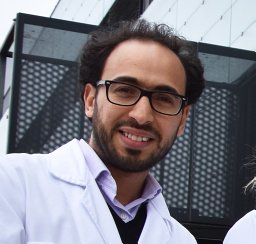 Mahmoud Abdellatif合作论文数Faculty of Medicine, University of Porto;Faculty of Medicine, University of Porto1
 Zimmermann Andreas合作论文数Institute for Molecular Biosciences, University of Graz1Broeskamp Filomena合作论文数1
 Petrakova Vladimira合作论文数Faculty of Biomedical Engineering, Czech Technical University in Prague1Küttner Victoria合作论文数Freiburg Institute for Advanced Studies (FRIAS),, University of Freiburg;Department of Dermatology, University Freiburg Medical Center;University of Freiburg, University Freiburg Medical Center1
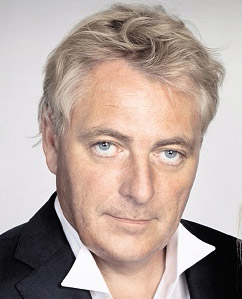 Guido Kroemer (吉多·科罗默)合作论文数Faculty of Medicine, University of Paris Cité1
 Frank Madeo合作论文数Institut für Molekulare Biowissenschaften, Universität Graz1
 Chris Meisinger合作论文数Institute for Biochemistry and Molecular Biology, Universität Freiburg1
 Stephan J. Sigrist合作论文数DFG Research Center for Experimental Biomedicine, University of Würzburg1
 Ralf Braun合作论文数Department of Mathematical Sciences;University of Delaware;Department of Mathematical Sciences, University of Delaware1Julia Ring合作论文数1
 Roozbeh Hajiraissi合作论文数Postgraduate Faculty Tehran South Branch, Islamic Azad University1
 Patrick Rockenfeller合作论文数Institute for Molecular Biology, University of Graz1




