This chapter is concerned with the multiple roles that language plays in the experiences of two forms of Islamic prayer: one ritual and obligatory, salat (namaz in Persian)1; and the other spontaneous and voluntary, generally called duʻa . We will address the following questions: What kinds of roles does language play in the ways these prayers are experienced; What does a comparison of salat and duʻa tell us about the believer’s relationship with God; What, if anything, is different when reciters perform salat in Arabic and duʻa a in non-Arabic languages spoken by Muslims around the world?
In addition to the stand-alone minor in Islamic Studies, the program also offers the Global Islam joint track with International Studies. This track allows students to earn both the International Studies major and the Islamic Studies minor. For track information and details, see the Islamic Studies (https://krieger.jhu.edu/islamic/) or International Studies (https://krieger.jhu.edu/internationalstudies/undergraduate/affiliatedmajor-minor-tracks/) web sites.
The phenomenon of prodrop has attracted much attention in recent years both in the field of syntactic theory and in pragmatics (Chomsky, 1981, 1982; Rizzi, 1982; Gundel, 1980; Givon, 1976). Persian is among the many languages which exhibit this phenomenon. The central aim of this paper is to discover the pragmatic contraints governing the distribution of overt and non-overt subjects. Persian is a SOV language. Verbs carry the person and number information in the form of suffixes. These agreement markers are unique for each person. Non-overt (zero) subjects are allowed and occur very frequently in speech. Looking at natural data, we see that overt subjects appear even when their referents are in focus. Finding the contraints governing the distribution of these overt subjects is the primary question addressed in this paper. For the purposes of this study, we are classifying full noun phrases and pronouns together as overt subjects although pronominalization has its own separate pragmatic functions. Here we are focussing on zero subjects and overt subjects. Our data base consists of six children and four adult narratives. The unity of the narrative as a genre with its usual focus on one main actor make it possible to track the same noun phrase throughout the story in a variety of syntactic and pragmatic environments. This makes the narrative genre ideal for contrasting overt and non-overt subjects.
First published in 1997. The field of Arabic sociolinguistics has made rapid strides since the appearance of the first correlation studies in the early 1980s. Up to that point, studies of non-standard Arabic had largely been confined to the field of dialectology, in which the researcher's frame erred on the historical or cultural. Dr. Haeri's work falls into the Labovian sociolinguistic paradigm, with the edition of the awareness of the local social backdrop in her linguistic investigations and how this needs to be integrated into any correlation work, and also being area of the general Arab sociolinguistic frame of reference of which the situation in Cairo forms a part.
Following the 1979 revolution, the Iranian government set out to Islamize society. Muslim piety had to be visible, in personal appearance and in action. Iranians were told to pray, fast, and attend mosques to be true Muslims. The revolution turned questions of what it means to be a true Muslim into a matter of public debate, taken up widely outside the exclusive realm of male clerics and intellectuals. Say What Your Longing Heart Desires offers an elegant ethnography of these debates among a group of educated, middle-class women whose voices are often muted in studies of Islam. Niloofar Haeri follows them in their daily lives as they engage with the classical poetry of Rumi, Hafez, and Saadi, illuminating a long-standing mutual inspiration between prayer and poetry. She recounts how different forms of prayer may transform into dialogues with God, and, in turn, Haeri illuminates the ways in which believers draw on prayer and ritual acts as the emotional and intellectual material through which they think, deliberate, and debate.
Alireza Doostdar, The Iranian Metaphysicals: Explorations in Science, Islam and the Uncanny (Princeton, N.J.: Princeton University Press, 2018). Pp. 312. $85.00 cloth. ISBN: 9780691163772 - Volume 51 Issue 2
This chapter provides a survey of sociolinguistic research on the Arabic language over roughly the past two decades. Research surveyed has been divided into variationist and non-variationist strands of sociolinguistics. Within these broader categories the chapter covers recent research on political discourse, language ideologies around Arabic dialects and the influence of religion as a potential social factor governing linguistic change. In addition, the chapter addresses research that has highlighted cases of new dialect formation in the Arabic-speaking world, as well as cases of language and dialect contact that have been investigated in recent research on Arabic varieties.
This Hau collection is an exploratory group effort in promoting comparative studies of followers of different religious traditions. We take the concept of sincerity as it is defined and used in the anthropology of Christianity and examine how it is attended to (or not) among ultra-Orthodox Jews in New York, Eastern Orthodox Russian women, Shi'a women in Iran, and Lutheran missionaries in Papua New Guinea. Sincerity in this sense is argued to be closely associated with autonomy, agency, freedom, and is seen to underlie modern subjectivity. We found a great deal of anxiety over notions of sincerity and its implications for constructing a relationship to the divine in our various communities. In unbundling sincerity from its associated concepts and consequences, we examine the different senses of interiority implicated by local concepts of sincerity in order to unpack those anxieties on the part of both believers and institutional clerical authorities. We argue that attending to interiority complements rather than denies the fundamental role of historical power relations in forming the religious subject. Power relations do not fully determine how, over time, the subject finds ways of shaping that relationship. In considering the modernity of Protestantism as illuminated through its attachment to sincerity, we show how, in moments of change, the very ideas, assumptions, and practices that have come to define certain communities as not-quite-modern become objects of reflection, intense debate, and disagreement, both within individuals and in their broader contexts.
This article examines two genres of prayer, namaz and du'a, among a group of Shi'a Muslim women in Iran. It analyzes the variety of ways in which the legal validity of prayers along with ideas about "presence of the heart" and "sincerity" in worship have been debated. I argue that the debates on worship, even among jurists, remain unsettled, and without a final resolution. I use the ethnographic context of a group of women in Tehran to carry out a comparative analysis of the notion of sincerity as analyzed in the anthropology of Christianity. I show that this comparison can both illuminate ideas and practices of worship in Iran and at the same time add dimensions that are perhaps underemphasized or unexplored in debates on Protestants. I make an attempt to define the concept of interiority and demonstrate its usefulness in understanding religious subjectivity. A historical analysis of religious subjectivity that is arrived at through a study of the power relations that result in particular authoritative discursive traditions is necessary but not sufficient in order to answer the question of what believers are doing, thinking, and struggling with as they attempt to follow the requirements of their religion.
This article is an ethnography of the private performance of the five daily prayers of Islam among a group of middle class, educated women in Tehran. It goes beyond the public and formal spheres to explore religious experience in everyday life. What happens in a ritual when performed alone, without a public? I argue against the prevalent notion that repetition renders the formulas of rituals meaningless. Instead, over time, there is a proliferation of meanings emerging as a result of the undermining of the formality of the text by repetition. The ways in which creativity is exercised are analyzed in answer to the question of what makes one prayer session more satisfying than another-what is an efficacious salat? I argue that the length of time the prayers have been performed, the age of the reciter, and the literate practices of reading and debate are crucial in understanding how this ritual is brought to life by its practitioners.
Travaillant depuis de longues annees sur la situation sociolinguistique du monde arabe, nous avons voulu sortir de champs qui nous apparaissaient deja bien explores, comme par exemple celui des etudes sur les politiques linguistiques des Etats arabes ou celui du rapport entre langue et nationalisme qui commence a etre mieux connu depuis que de nombreux travaux ont analyse et etudie le role de la langue dans les constructions nationales (pour ne citer que quelques references pour l’Europe et l...
 Kirk Belnap合作论文数Department of Asian and Near Eastern Languages, College of Humanities, Brigham Young University4
 Catherine Miller合作论文数2James Collins合作论文数1Crawford Feagin合作论文数1A. Duranti合作论文数1k k luke合作论文数1Bonnie McElhinny合作论文数1Wayne A. Beach合作论文数1john baugh合作论文数1Steve Caldas合作论文数1
 Jose Antonio Flores Farfan合作论文数Calle Juarez1
 Natalie Schilling合作论文数Georgetown Univ1Rusty Barrett合作论文数1
 William M. Cotter合作论文数Univ Arizona1Miriam Meyerhoff合作论文数ARC Centre of Excellence for the Dynamics of Language, Faculty of Humanities and Social Sciences, The University of Queensland1
 Robin Queen合作论文数Department of Germanic Languages and Literatures, College of Literature, Science, and the Arts, University of Michigan-Ann Arbor1Bruce Mannheim合作论文数Department of Anthropology, College of Literature, Science, and the Arts, University of Michigan-Ann Arbor1
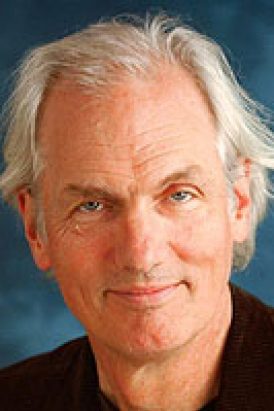 Webb Keane合作论文数College of Literature, Science, and the Arts, Sociocultural Faculty, University of Michigan, Ann Arbor;Center for Southeast Asian Studies, University of Michigan, Ann Arbor1
 Betsy R. Rymes合作论文数Educational Linguistics Division, Graduate School of Education, University of Pennsylvania1
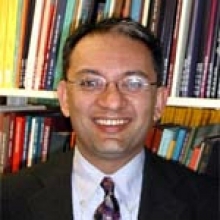 Asif Agha合作论文数Department of Anthropology, School of Arts & Sciences, University of Pennsylvania1
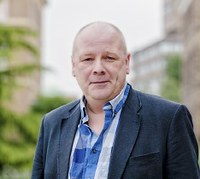 Ian Hutchby合作论文数Department of Sociology, University of Leicester1
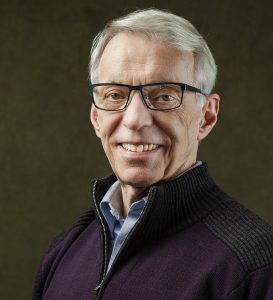 Douglas W. Maynard合作论文数Department of Sociology, University of Wisconsin-Madison1Andy Kirkpatrick合作论文数1
 Jan Blommaert合作论文数Babylon Center, Tilburg University1Monica Heller合作论文数1Michael Aceto合作论文数1
 Elizabeth Keating合作论文数1Suzanne Romaine合作论文数1Daniel E. Collins合作论文数1
 Yael Maschler合作论文数Department of Communication, University of Haifa1Allen D. Grimshaw合作论文数1Judith Rosenhouse合作论文数1Ceil Lucas合作论文数Dept Linguist, Gallaudet Univ1
 Walter Wolfram合作论文数Department of English, College of Humanities and Social Sciences, North Carolina State University1Christina Bratt Paulston合作论文数university of pittsburgh1
 Carol Myers-Scotton合作论文数1
 Jenny Cheshire合作论文数Queen Mary, University of London1Jack Bilmes合作论文数University of Hawaii1Joel Sherzer合作论文数1Terry Nadasdi合作论文数Dept Linguist, Univ Alberta1
 Scott F Kiesling合作论文数Department of Linguistics, University of Pittsburgh1
 Paul Drew合作论文数Department of Language and Linguistic Science, University of York1Lynne Bowker合作论文数University of Ottawa1
 David Britain合作论文数Department of Language and Linguistics;Essex University;Department of Language and Linguistics, Essex University1Lesley Milroy合作论文数1
 Penelope Gardner-Chloros合作论文数1
 Mary Bucholtz合作论文数Department of Linguistics, University of California1Helma Pasch合作论文数1




