F‐BAR proteins are multivalent adaptors that link plasma membrane and cytoskeleton and coordinate cellular processes such as membrane protrusion and migration. Yet, little is known about the function of F‐BAR proteins in vivo. Here we report, that the F‐BAR protein NOSTRIN is necessary for proper vascular development in zebrafish and postnatal retinal angiogenesis in mice. The loss of NOSTRIN impacts on the migration of endothelial tip cells and leads to a reduction of tip cell filopodia number and length. NOSTRIN forms a complex with the GTPase Rac1 and its exchange factor Sos1 and overexpression of NOSTRIN in cells induces Rac1 activation. Furthermore, NOSTRIN is required for fibroblast growth factor 2 dependent activation of Rac1 in primary endothelial cells and the angiogenic response to fibroblast growth factor 2 in the in vivo matrigel plug assay. We propose a novel regulatory circuit, in which NOSTRIN assembles a signalling complex containing FGFR1, Rac1 and Sos1 thereby facilitating the activation of Rac1 in endothelial cells during developmental angiogenesis. This paper reveals the contribution of the F‐BAR‐domain protein Nostrin towards vascular development and angiogenesis by virtue of its interactions with the FGFR1, Rac1 and SOS.
Nitric oxide (NO) is an essential vasodilator. In vascular diseases, oxidative stress attenuates NO signaling by both chemical scavenging of free NO and oxidation and downregulation of its major intracellular receptor, the αβ heterodimeric heme-containing soluble guanylate cyclase (sGC). Oxidation can also induce loss of the heme of sGC, as well as the responsiveness of sGC to NO. sGC activators such as BAY 58-2667 bind to oxidized/heme-free sGC and reactivate the enzyme to exert disease-specific vasodilation. Here, we show that oxidation-induced downregulation of sGC protein extends to isolated blood vessels. Mechanistically, degradation was triggered through sGC ubiquitination and proteasomal degradation. The heme-binding site ligand BAY 58-2667 prevented sGC ubiquitination and stabilized both α and β subunits. Collectively, our data establish oxidation–ubiquitination of sGC as a modulator of NO/cGMP signaling and point to a new mechanism of action for sGC activating vasodilators by stabilizing their receptor, oxidized/heme-free sGC.
Endothelium-derived nitric oxide (NO) activates the heterodimeric heme protein soluble guanylate cyclase (sGC) to form cGMP. In different disease states, sGC levels and activity are diminished possibly involving the sGC binding chaperone, heat shock protein 90 (hsp90). Here we show that prolonged hsp90 inhibition in different cell types reduces protein levels of both sGC subunits by about half, an effect that was prevented by the proteasome inhibitor MG132. Conversely, acute hsp90 inhibition affected neither basal nor NO-stimulated sGC activity. Thus, hsp90 is a molecular stabilizer for sGC tonically preventing proteasomal degradation rather than having a role in short-term activity regulation.
Oxidative stress attenuates the NO-cGMP pathway, e.g. in the vascular system, through scavenging of free NO radicals by superoxide O2•-, by inactivation of soluble guanylyl cyclase (sGC) via oxidation of its central Fe2+ ion, and by down-regulation of sGC protein levels. While the former pathways are well established, the molecular mechanisms underlying the latter are still obscure. Using oxidative sGC inhibitor ODQ we demonstrate rapid down-regulation of sGC protein in mammalian cells. Co-incubation with proteasomal inhibitor MG132 results in accumulation of ubiquitinated sGC whereas sGC activator BAY 58–2667 prevents ubiquitination. ODQ-induced down-regulation of sGC is mediated through selective ubiquitination of its b subunit, and BAY 58–2667 abrogates this effect. Ubiquitination of sGC-b is dramatically enhanced by E3 ligase CHIP. Our data indicate that oxidative stress promotes ubiquitination of sGC b subunit through E3 ligase CHIP, and that sGC activator 58–2667 reverts this effect, most likely through stabilization of the heme-free b subunit. Thus the deleterious effects of oxidative stress can be counter-balanced by an activator of a key enzyme of vascular homeostasis.
Recently, we characterized a novel endothelial nitric-oxide synthase (eNOS)-interacting protein, NOSTRIN (for eNOS-trafficking inducer), which decreases eNOS activity upon overexpression and induces translocation of eNOS away from the plasma membrane. Here, we show that NOSTRIN directly binds to caveolin-1, a well-established inhibitor of eNOS. Because this interaction occurs between the N terminus of caveolin (positions 1-61) and the central domain of NOSTRIN (positions 323-434), it allows for independent binding of each of the two proteins to eNOS. Consistently, we were able to demonstrate the existence of a ternary complex of NOSTRIN, eNOS, and caveolin-1 in Chinese hamster ovary (CHO)-eNOS cells. In human umbilical vein endothelial cells (HUVECs), the ternary complex assembles at the plasma membrane upon confluence or thrombin stimulation. In CHO-eNOS cells, NOSTRIN-mediated translocation of eNOS involves caveolin in a process most likely representing caveolar trafficking. Accordingly, trafficking of NOSTRIN/eNOS/ caveolin is affected by altering the state of actin filaments or cholesterol levels in the plasma membrane. During caveolar trafficking, NOSTRIN functions as an adaptor to recruit mediators such as dynamin-2 essential for membrane fission. We propose that a ternary complex between NOSTRIN, caveolin-1, and eNOS mediates translocation of eNOS, with important implications for the activity and availability of eNOS in the cell.
Abstract Recently, we characterized a novel endothelial NO synthase (eNOS) interacting protein, NOSTRIN, which decreases eNOS activity upon overexpression and induces translocation of eNOS away from the plasma membrane. Here, we show that NOSTRIN directly binds to caveolin-1, a well-established inhibitor of eNOS. Since this interaction occurs between ,the N-terminus of caveolin ,(positions 1-61) and the
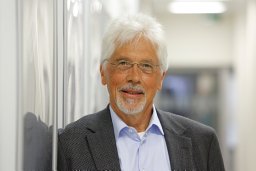 Werner Müller-Esterl合作论文数Institute for Biochemistry II, University of Frankfurt Medical School5
 H.H.H.W. Schmidt合作论文数Department of Pharmacology and Personalised Medicine, Maastricht University4
 Stefanie Oess合作论文数4Sabine Meurer合作论文数4Simone Matt合作论文数3
 Peter Schmidt合作论文数RF360 Europe GmbH2Pioch Sylke合作论文数2Kirstin Schilling合作论文数2Anja Wiesenthal合作论文数2Ann Icking合作论文数2Kristina Wagner合作论文数2
 Ritva Tikkanen合作论文数2Kristina Gegenbauer合作论文数1Sandra Geschka合作论文数1Helmut Mueller合作论文数1
 Grant Drummond合作论文数Department of Physiology, Anatomy and Microbiology, La Trobe University;School of Agriculture, Biomedicine and Environment, La Trobe University1kirstin zimmermann合作论文数1Tobias Beckhaus合作论文数1
 Griffin Aliesha合作论文数1Hu Jiong合作论文数1
 Igor Kovacevic合作论文数1Johannes-Peter Stasch合作论文数1
 Stavros Selemidis合作论文数School of Health and Biomedical Sciences, RMIT University;STEM College, RMIT University;ViraLok Therapeutics Pty Ltd;Envision Sciences Pty Ltd1
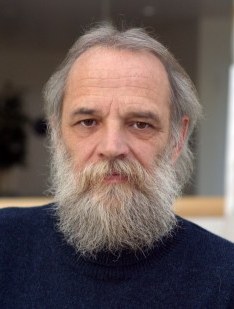 Michael Karas合作论文数Institute of Pharmaceutical Chemistry, School of Pharmacy, Goethe-Universitat Frankfurt Am Main1
 Pavel I Nedvetsky合作论文数1Ann Siehoff-Icking合作论文数1Tatiana Y. Nedvetskaya合作论文数1Alan L. Munn合作论文数1
 Ingrid Fleming合作论文数Institute for Vascular Signalling, Goethe University Frankfurt am Main1
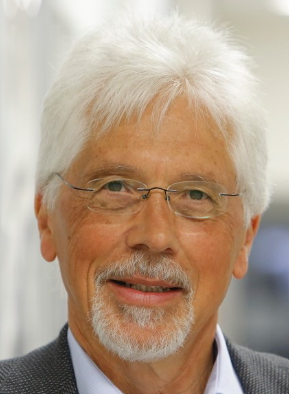 Werner Müller Esterl合作论文数Medizin Fachbereich, Goethe-Universitat Frankfurt am Main1Meike Hoffmeister合作论文数1
 Andrew C. Perkins合作论文数Department of Physiology, Monash University1Benno Jungblut合作论文数1
 Ruediger Popp合作论文数1Tatjana Pabst合作论文数1




