Based on Arimoto's work in 1978 [1], we propose an iterative algorithm for computing the capacity of a discrete memoryless classical-quantum channel with a finite input alphabet and a finite dimensional output, which we call the Blahut-Arimoto algorithm for classical-quantum channel, and an input cost constraint is considered. We show that to reach ε accuracy, the iteration complexity of the algorithm is up bounded by log n log ε ε where n is the size of the input alphabet. In particular, when the output state {ρ x } x∈X is linearly independent in complex matrix space, the algorithm has a geometric convergence. We also show that the algorithm reaches an ε accurate solution with a complexity of O(m 3 log n log ε/ε), and O(m 3 log ε log (1-δ) D(ε/p*||p N(0) )) in the special case, where m is the output dimension and D(p*||p N(0) ) is the relative entropy of two distributions and δ is a positive number.
In this paper we obtain a lower bound of exponent of average probability of error for classical quantum multiple access channel, which implies that for all rate pairs in the capacity region is achievable by a code with exponential probability of error. Thus we re-obtain the direct coding theorem.
We study an analog of the well-known Gel'fand Pinsker Channel which uses quantum states for transmission of data. We consider the case where both the sender's inputs to the channel and the channel states are elements of a finite set (cq-channel with state information at the sender).While the receiver has no information about the channel states, we distinguish between two cases at the sender: he either gets causal or non-causal channel state information. We give a single-letter description of the capacity in the first case and present two different regularized expressions of the capacity for the second. It turns out that the change from causal to non-causal channel state information at the encoder causes the complexity of numerical computation of the capacity formula to change from simple to seemingly difficult. Still, even in the difficult non-causal case we draw nontrivial conclusions, for example regarding continuity of the capacity with respect to changes in the system parameters.
For a multiple input channel, one may define different capacity regions, according to the criterions of error, types of codes, and presence of feedback. In this paper, we aim to draw a complete picture of relations among these different capacity regions. To this end, we first prove that the average-error-probability capacity region of a multiple input channel can be achieved by a random code under the criterion of maximum error probability. Moreover, we show that for a non-deterministic multiple input channel with feedback, the capacity regions are the same under two different error criterions. In addition, we discuss two special classes of channels to shed light on the relation of different capacity regions. In particular, to illustrate the roles of feedback, we provide a class of MAC, for which feedback may enlarge maximum-error-probability capacity regions, but not average-error-capacity regions. Besides, we present a class of MAC, as an example for which the maximum-error-probability capacity regions are strictly smaller than the average-error-probability capacity regions (first example showing this was due to G. Dueck). Differently from G. Dueck’s enlightening example in which a deterministic MAC was considered, our example includes and further generalizes G. Dueck’s example by taking both deterministic and non-deterministic MACs into account. Finally, we extend our results for a discrete memoryless two-input channel, to compound, arbitrarily varying MAC, and MAC with more than two inputs.
We study a two-hop multiple access channel (MAC), where two source nodes communicate with the destination node via a set of amplify-and-forward (AF) relays. To characterize the optimal rate region, we focus on deriving the boundary points of it, which is formulated as a weighted sum rate maximization problem. In the first part, we are concerned with the scenario that all relays are under a sum power constraint. Although the optimal AF rate region for the case has been obtained, we revisit the results by an alternative method. The first step is to investigate the algebraic structures of the three SNR functions in the rate set of the two-hop MAC with a specific AF scheme. Then an equivalent optimization problem is established for deriving each boundary point of the optimal rate region. From the geometric perspective, the problem has a simple solution by optimizing a one-dimensional problem without constraint. In the second part, the optimal rate region of a two-hop MAC under the individual power constraints is discussed, which is still an open problem. An algorithm is proposed to compute the maximum individual and sum rates along with the corresponding AF schemes.
This paper investigates amplify-and-forward (AF) schemes for both one and two-way relay channels. Unlike most existing works assuming independent noise at the relays, we consider a more general scenario with correlated relay noise. We first propose an approach to efficiently solve a class of quadratically constrained fractional problems via second-order cone programming (SOCP). Then it is shown that the AF relay optimization problems studied in this paper can be incorporated into such quadratically constrained fractional problems. As a consequence, the proposed approach can be used as a unified framework to solve the optimal AF rate for the one-way relay channel and the optimal AF rate region for the two-way relay channel under both sum and individual relay power constraints. In particular, for one-way relay channel under individual relay power constraints, we propose two suboptimal AF schemes in closed-form. It is shown that they are approximately optimal in certain conditions of interest. Furthermore, we find an interesting result that, on average, noise correlation is beneficial no matter the relays know the noise covariance matrix or not for such scenario. Overall, the obtained results recover and generalize several existing results for the uncorrelated counterpart. (unsubmitted)
We determine the capacity of the classical compound quantum wiretapper channel with channel state information at the transmitter. Moreover we derive a lower bound on the capacity of this channel without channel state information and determine the capacity of the classical quantum compound wiretap channel with channel state information at the transmitter.
In this paper, we study the performance of an amplify-and-forward (AF) based analog network coding (ANC) relay scheme in a multi-hop wireless network under individual power constraints. In the first part, a unicast scenario is considered. The problem of finding the maximum achievable rate is formulated as an optimization problem. Rather than solving this non-concave maximization problem, we derive upper and lower bounds for the optimal rate. A cut-set like upper bound is obtained in a closed form for a layered relay network. A pseudo-optimal AF scheme is developed for a two-hop parallel network, which is different from the conventional scheme with all amplification gains chosen as the maximum possible values. The conditions under which either the novel scheme or the conventional one achieves a rate within half a bit of the upper bound are found. Then we provide an AF-based multi-hop ANC scheme with the two schemes for a layered relay network. It is demonstrated that the lower bound of the optimal rate can asymptotically achieve the upper bound when the network is in the generalized high-SNR regime. In the second part, the optimal rate region for a two-hop multiple access channel (MAC) via AF relays is investigated. In a similar manner, we first derive an outer bound for it and then focus on designing low complexity AF-based ANC schemes for different scenarios. Several examples are given and the numerical results indicate that the achievable rate region of the ANC schemes can perform close to the outer bound.
In a recent paper [4], Maríc et al. analyzed the performance of the analog network coding (ANC) in a layered relay network for the high-SNR regime. They have proved that under the ANC scheme, if each relay transmits the received signals at the upper bound of the power constraint, the transmission rate will approach the network capacity. In this paper, we consider a more general scenario defined as the generalized high-SNR regime, where the relays at layer l in a layered relay network with L layers do not satisfy the high-SNR conditions, and then determine an ANC relay scheme in such network. By relating the received SNR at the nodes with the propagated noise, we derive the rate achievable by the ANC scheme proposed in this paper. The result shows that the achievable ANC rate approaches the upper bound of the ANC capacity as the received powers at relays in high SNR increase. A comparison of the two ANC schemes implies that the scheme proposed in [4] may not always be the optimal one in the generalized high-SNR regime. The result also demonstrates that the upper and lower bounds of the ANC rate coincide in the limit as the number of relays at layer L-1 dissatisfying the high-SNR conditions tends to infinity (to be infinite), yielding an asymptotic capacity result.
Network coding is an emerging and powerful solution that can significantly improve the throughput and power efficiency of wireless networks by allowing mixing of various traffic flows into a single packet. However, when network coding is applied, a packet will have to wait to be network-coded with others, which may result on large delay and packet-loss rate. It will bring negative influence to the application of network coding in real-time video transmission. To overcome the large delay by forcing to use network coding, a novel opportunistic network coding algorithm is proposed in this paper based on the queue state of node's buffer and the topology of the wireless network (BQST-ONC). Besides, in order to analyze the performance of the algorithm, the Packet Delivery Delay (PDD) is calculated based on a discrete Markov Chain Model, by which the optimal coding opportunity can be obtained. Simulation results show the correctness and effectiveness of the method.
In this paper, convolutional network coding is formulated by means of matrix power series representation of the local encoding kernel (LEK) matrices and global encoding kernel (GEK) matrices to establish its theoretical fundamentals for practical implementations. From the encoding perspective, the GEKs of a convolutional network code (CNC) are shown to be uniquely determined by its LEK matrix $K(z)$ if $K_0$, the constant coefficient matrix of $K(z)$, is nilpotent. This will simplify the CNC design because a nilpotent $K_0$ suffices to guarantee a unique set of GEKs. Besides, the relation between coding topology and $K(z)$ is also discussed. From the decoding perspective, the main theme is to justify that the first $L+1$ terms of the GEK matrix $F(z)$ at a sink $r$ suffice to check whether the code is decodable at $r$ with delay $L$ and to start decoding if so. The concomitant decoding scheme avoids dealing with $F(z)$, which may contain infinite terms, as a whole and hence reduces the complexity of decodability check. It potentially makes CNCs applicable to wireless networks.
Store-and-forward had been the predominant technique for transmitting information through a network until its optimality was refuted by network coding theory. Network coding offers a new paradigm f...
We analyze wire-tape channels with secure feedback from the legitimate receiver. We present a lower bound on the transmission capacity (Theorem 1), which we conjecture to be tight and which is proved to be tight (Corollary 1) for Wyner's original (degraded) wire-tape channel and also for the reversely degraded wire-tape channel for which the legitimate receiver gets a degraded version from the enemy (Corollary 2).Somewhat surprisingly we completely determine the capacities of secure common randomness (Theorem 2) and secure identification (Theorem 3 and Corollary 3). Unlike for the DMC, these quantities are different here, because identification is linked to non-secure common randomness.
NETWORKING and information theory have long promised interesting connections. Yet, for many years the most fruitful exchange between these two fields lay in the researchers who worked in both areas or migrated from one to the other. The research itself witnessed less cross fertilization. On the one hand, information theory began with basic models and fundamental questions. On the other hand, the reality of networking turned to increasingly complex networks. In the early days, Ford and Fulkerson, as well as Elias, Feinstein, and Shannon, attacked and solved the same network related problem at the same time in different publications. But as progress on multiterminal information theory slowed and networking tackled more and more complex problems, the gap between these sister disciplines seemed to grow ever wider. The result was succinctly summarized in the survey article by Ephremides and Hajek, “Information Theory and Communications Networks: An Unconsummated Union” [1]. Still, networking and information theory always showed a strong connection, and exciting recent developments point to a new world of especially fruitful common ground between these two areas. On the networking side, the complexity of physicallayer issues, particularly in wireless networks, has prompted an interlayer approach that fits well in the context of information theory. On the information-theoretic side, classical approaches to multiuser information theory have been enhanced by an active interest in casting practical networking problems in an information-theoretic setting. In particular, developments in information theory have drastically changed the angle of attack on information-theoretic problems of networking. Examples of such intersection areas are scaling laws in networks, network coding, implementation and theory of multiuser systems, wireless network design involving multiple-input multiple-output channels, data dissemination algorithms, a network utility maximization framework which quantifies end-user application utilities realized by physical-layer innovations, and queuing and delay issues in information-theoretic capacity settings. This Special Issue reflects these areas in a reasonably equitable fashion. While the custom of previous special issues of the IEEE TRANSACTIONS ON INFORMATION THEORY was to give a short description of each paper, we forego that tradition here. Clearly, this issue is quite large already. Nevertheless, we would like to comment on the broad areas in this issue. About a quarter
It is well–known that search problems with a stochastic response matrix acting independently for the questions can be equivalently formulated as transmission problems for a discrete memoryless channel (DMC) with feedback. In this paper we analyze this robust model with a time delay for the noiseless feedback. In the terminology of search this means that the answers are given with delay. We determine the (asymptotically) optimal performances, that is, find the capacities, for the cases where the delay is constant and linear in the blocklength. Finally we also give the corresponding results for the DMC with zero–error probability.
Error correction in existing point-to-point communication networks is done on a link-by-link basis, which is referred to in this paper as classical error correction.Inspired by network coding, we introduce in this two-part paper a new paradigm called network error correction.The theory thus developed subsumes classical algebraic coding theory as a special case.In Part I, we discuss the basic concepts and prove the network generalizations of the Hamming bound and the Singleton bound in classical algebraic coding theory.By studying a few elementary examples, the relation between network error correction and classical error correction is investigated.
Watermarking identification codes were introduced by Y. Steinberg and N. Merhav. In this paper we assume that the attacker chooses an unknown (for both information hider and decoder) channel from a set of channels or a compound channel, to attack the watermark. We present two models. In the first model according to the output sequence of covertext the information hider generates side information componentwise as the secret key. In the second model the only constraint to the key space is an upper bound for its rate. We present lower bounds for the identification capacities in the above models, which include the Steinberg and Merhav results on lower bounds. For the models with a single channel, we obtain the capacities of common randomness. For the models with a compound channel, we have lower and upper bounds and the differences of lower and upper bounds are due to the exchange and different orders of the max–min operations.
In Part I of this paper, we introduced the paradigm of network error correction as a generalization of classical link-by-link error correction. We also obtained the network generalizations of the Hamming bound and the Singleton bound in classical algebraic coding theory. In Part II, we prove the network generalization of the Gilbert-Varshamov bound and its enhancement. With the latter, we show that the tightness of the Singleton bound is preserved in the network setting. We also discuss the implication of the results in this paper. Definition 2. An etwork code ist-error-correcting if it can correct all τ -errors for τ ≤ t, i.e., if the total number of errors in the network is at most t, then the source message can be recovered by all the sink nodes u ∈U.A network code is Y-error-correcting if it can correct E-errors for all E ∈ Y. In Part I, we have proved the network generalizations of the Hamming bound and the Singleton bound. In this part, we will prove a network generalization of the Gilbert-Varshamov bound and its enhancement. With the latter, we will show that the tightness of the Singleton bound is preserved in the network setting. The rest of Part II is organized as follows. In Section 2, we prove the Gilbert bound and the Varshamov bound for network error-correcting codes. In Section 3, we sharpen the Varshamov bound obtained in Section 2 to the strengthened Varshamov bound. By means of the latter, we prove the tightness of the Singleton bound for
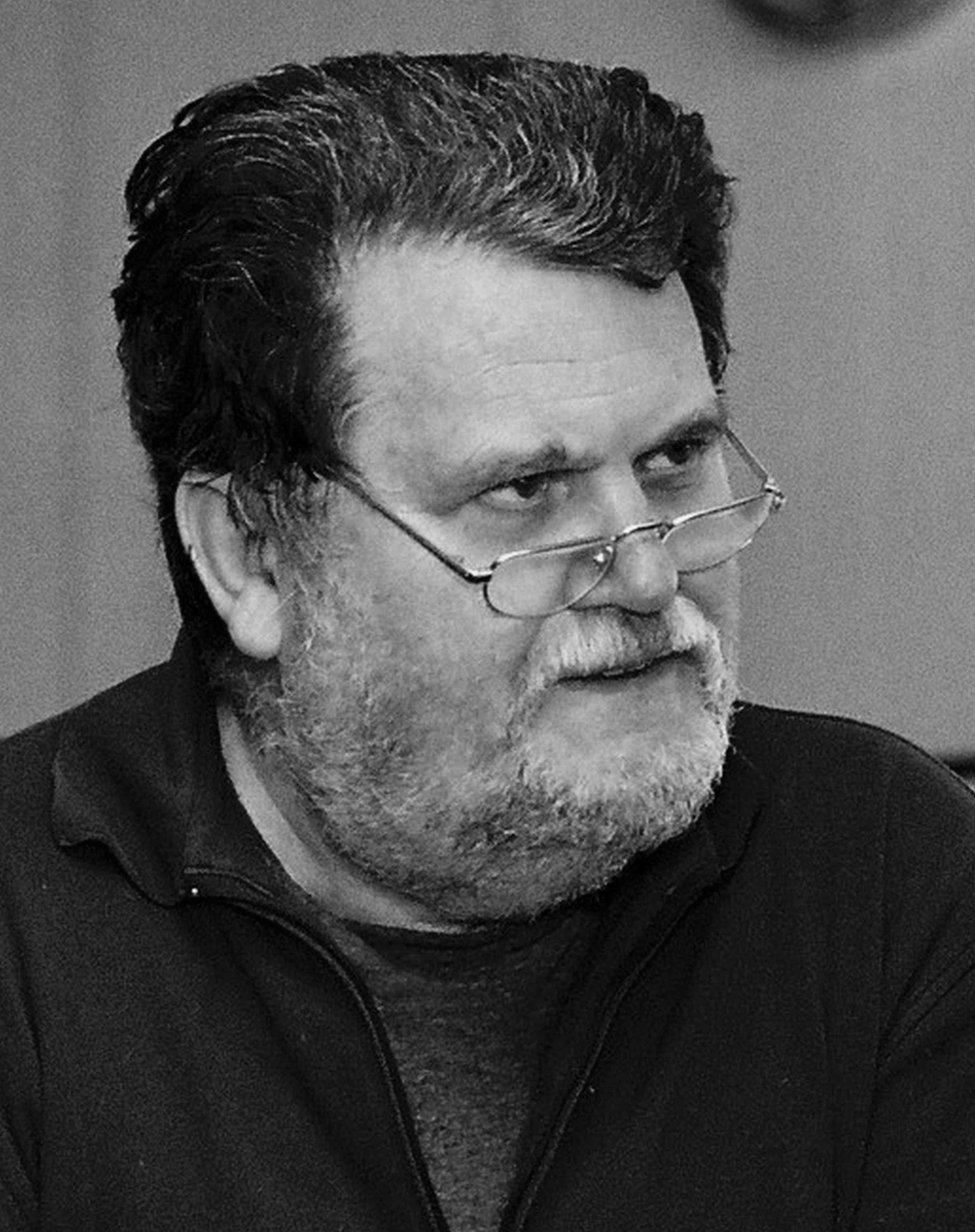 Rudolf Ahlswede合作论文数Fakultat fur Mathematik, Universitat Bielefeld41
 Raymond Yeung Wai Ho (楊偉豪)合作论文数Department of Information Engineering, The Chinese University of Hong Kong;Institute of Network Coding, The Chinese University of Hong Kong11
 Binyue Liu合作论文数4
 Zhen Zhang (张箴)合作论文数Department of Electrical Engineering - Systems, University of Southern California3Z Zhang合作论文数2
 Christian Deppe合作论文数Department of Mathematics, University of Bielefeld2
 Qifu Tyler Sun合作论文数1Harout Aydinian合作论文数1Haik Mashurian合作论文数1Jianchao Du合作论文数1Haobo Li合作论文数1
 Ye Yang合作论文数1Z. Zhang合作论文数1
 Mung Chiang合作论文数Elmore Family School of Electrical and Computer Engineering, College of Engineering, Purdue University1
 Robert Shuo Yen Li (李碩彥)合作论文数Department of Information Engineering, Faculty of Engineering, The Chinese University of Hong Kong;Li Institute of Mathematical Technology, University of Electronic Science and Technology of China1
 Terence Chan合作论文数Institute for Telecommunications Research, University of South Australia1
 Henk D.L. Hollmann合作论文数Philips Research Laboratories1
 Balaji Prabhakar合作论文数Department of Electrical Engineering, Stanford University;Department of Computer Science, Stanford University1
 Michelle Effros合作论文数Department of Electrical Engineering, Division of Engineering and Applied Science, California Institute of Technology;Data Compression Lab, California Institute of Technology1
 Don Towsley合作论文数Department of Computer Science, University of Massachusetts Amherst1
 Xiao Song (宋晓)合作论文数School of Cyber Science and Technology, Beihang University1
 Li Zhang合作论文数1
 R. Srikant合作论文数Department of Electrical and Computer Engineering, The Grainger College of Engineering, University of Illinois at Urbana-Champaign1Ludo M. G. M. Tolhuizen合作论文数1
 Vladimir Blinovsky合作论文数1
 Masahito Hayashi (林正人)合作论文数School of Data Science, The Chinese University of Hong Kong, Shenzhen;Shenzhen Institute for Quantum Science and Engineering;Centre for Quantum Technologies, National University of Singapore;Graduate School of Mathematics, Nagoya University1
 Minglai Cai合作论文数1Bernhard Balkenhol合作论文数1
 Wangmei Guo合作论文数1
 Ralf Koetter合作论文数Institute for Communications Engineering, Department of Electrical and Computer Engineering, Technical University of Munich1
 LAM, Kwok Yan合作论文数School of Computer Science and Engineering, Nanyang Technological University;President’s Office, Nanyang Technological University;National Centre for Research in Digital Trust1Lars Bäumer合作论文数1
 Janis Nötzel合作论文数Lehrstuhl Theoret Informat Tech, Tech Univ Munich1Ulrich Tamm合作论文数1




