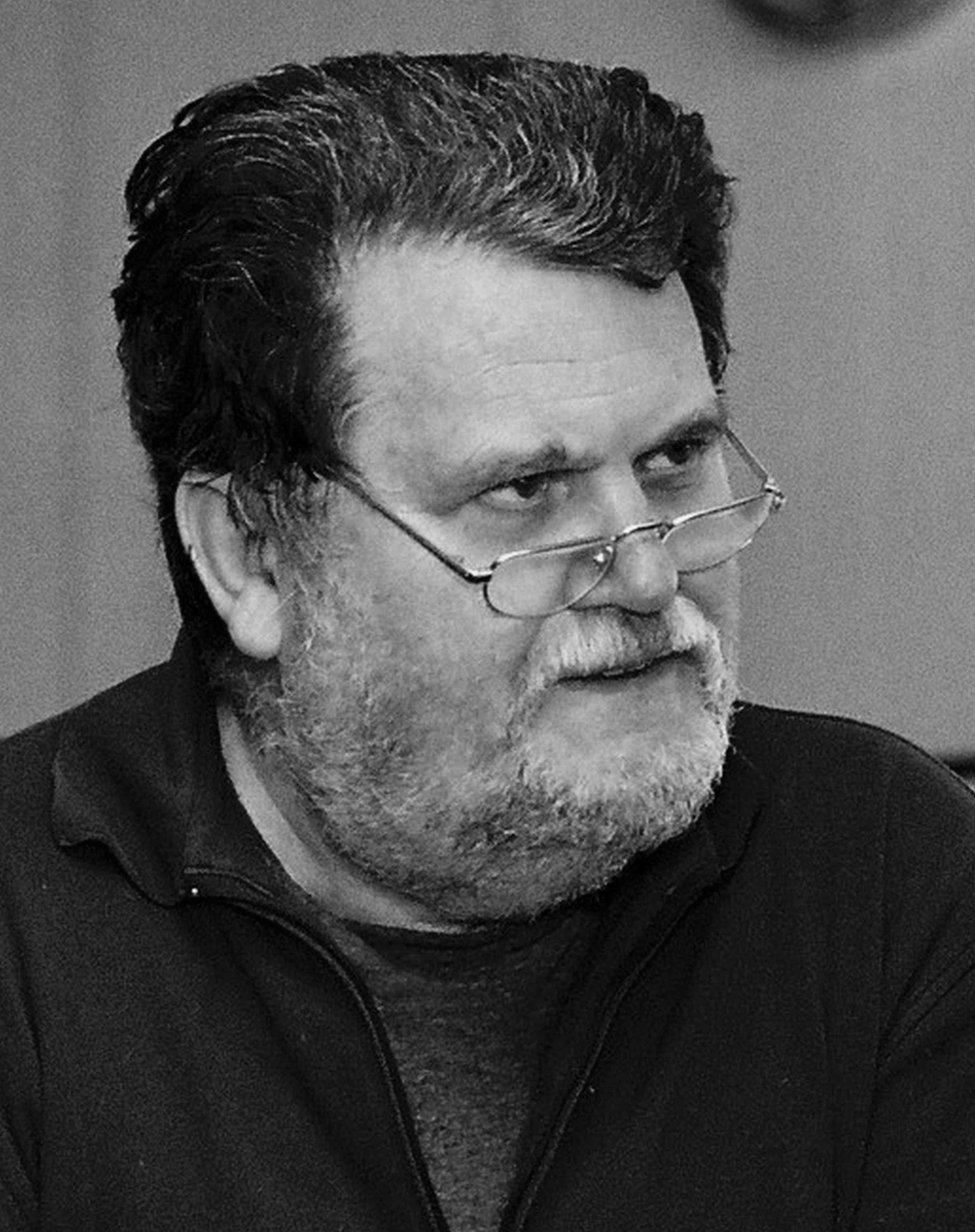
It is with heavy hearts that we mourn the passing of Ning Cai, a luminary whose pioneering spirit illuminated the realms of network coding and beyond. On May 25, 2023, at the age of 75, Prof. Cai bid farewell, leaving behind a profound legacy that continues to resonate across generations of researchers. His contributions spanned a vast spectrum, from the groundbreaking explorations in network coding to the intricate realms of quantum information theory. Ning's indelible mark on the academic landscape is a testament to his unwavering dedication and relentless pursuit of knowledge. Among his many accolades, Ning's seminal works garnered widespread recognition, exemplified by the prestigious 2005 IEEE Information Theory Society Paper Award for his work "Linear Network Coding." Furthermore, his enduring impact was underscored by the 2018 ACM SIGMOBILE Test-of-Time Paper Award, bestowed upon his paper "Network Information Flow." In addition to his scholarly achievements, Ning's unwavering commitment to mentorship has left an indelible mark on countless aspiring scholars. His guidance and wisdom continue to inspire and guide future generations in their scholarly pursuits. As we bid farewell to a titan in the field, let us cherish the legacy of Ning Cai, whose brilliance and generosity of spirit will forever endure in the annals of academia.
In computer science, often computational problems can be transformed into communication problems. The most illustrative example is probably the evaluation of a function via a Boolean formula. The correspondence to an equivalent communication game is as follows. A Boolean formula computing the function valueg(x1, . . . , xk) can be represented by a binary tree. The leaves are labeled with variables xi ∈ {0, 1} or their negations (the same variable may occur on several leaves). In each inner vertex the two incoming subtrees are combined either via an “and” ( ∧) gate or an “or” ( ∨) gate, i. e., in these inner nodes the results g1 and g2 obtained so far, are processed according to g1 ∧ g2 or g1 ∨ g2. The result g(x1, . . . , xk) will finally be found at the root of the tree. So a computation is carried out as a process starting at the leaves and ending at the root. The depth (minimal length of a path from a leaf to a root) of an optimal Boolean formula for the calculation of a functiong is an important parameter in theoretical computer science. The equivalent communication game is as follows. Alice holds an input (x1, . . . , xk) with g(x1, . . . , xk) = 1 and Bob holds an input (y1, . . . , yk) with g(y1, . . . , yk) = 0. They exchange bits of information until they find a component i ∈ {1, . . . , k} in which xi = yi. The minimal number of communication bits exchanged by Alice and Bob maximized over all inputs is the communication complexity of this game. The communication protocol can be represented by a binary tree. In this tree the vertices are labeled with the person whose turn it is to send, further an edge to the left successor of a vertex corresponds to a bit 1 and an edge to the right successor correspond to a bit 0. A one–to– one correspondence to a Boolean formula now is obtained by assigning the∨– gates to Alice and the∧–gates to Bob (so it is the respective person’s turn to send in these vertices). Hence, we can use the same tree as for the Boolean formula with the difference that communication starts in the root and terminates in the leaves. For recent results on this model we refer to [4]. A similar communication model, based on a decision problem rather than a search problem, is introduced in the next section. Methods from data compression are used to derive lower bounds. Finally, the application to a computation problem will be discussed.
Claude Shannon's pioneering paper on computer chess found immediate interest in the journal “Chess Review” whose New York corespondent Edward Lasker was responsible for three articles involving Claude Shannon in 1950, 1951, and 1957, respectively. We shall briefly review these three articles and sketch the further development of computer chess which was essentially based on Shannon's ideas.
Integer codes correcting a single error in the maximum metric are considered. This corresponds to a packing of tori by cubes. For an asymmetric error of size one these cubes have side length 2 and the problem can be shown to be equivalent to finding zero-error codes for cycles in the sense of Shannon and Lovasz. For side length greater 3 the equivalence of single error correcting integer codes and zero-error codes does not hold any more.
Among the mostly investigated parameters for noisy channels are code size, error probability in decoding, block length; rate, capacity, reliability function; delay, complexity of coding. There are several statements about connections between these quantities. They carry names like “coding theorem”, “converse theorem” (weak, strong, ...), “direct theorem”, “capacity theorem”, “lower bound”, “upper bound”, etc. There are analogous notions for source coding.
In [13] 1948 C.E. Shannon initiated research in Information Theory with his paper 'A Mathematical Theory of Communication', in which he investigated several problems concerning the transmission of information from a source to a destination (see Chap. 1 ). In this lecture we shall discuss the three fundamental results of this pioneering paper: (1) the Source Coding Theorem for the Discrete Memoryless Source (DMS), (2) the Coding Theorem for the Discrete Memoryless Channel (DMC), (3) the Rate Distortion Theorem. In each of these fundamental theorems the entropy arises as a measure for data compression.
The purpose of this paper is to analyze the effects of organizational formalization on the behavioral, market, product, and process types of firm innovativeness as well as the interplay between these different innovativeness types. Based on data collected through a survey of the financial services industry in Turkey, the analyses show that formalization directly hinders both behavioral and market innovativeness. Moreover, as behavioral innovativeness influences product and process innovativeness, formalization's effect on these types of innovativeness are indirect. As expected, the study also finds that process innovativeness facilitates both product and market innovativeness and that product innovativeness foster market innovativeness. This study makes a contribution to the literature by examining the linkages between formalization in firms and the various firm innovativeness types, which have previously been studied only separately. The study thus provides a richer understanding of the relationship between formalization and firm innovativeness types.
Computation of the capacity $$C=C(W)$$ of a DMC $$W:{\mathcal X}\rightarrow {\mathcal Y}$$ involves the solution of a convex programming problem.
Up to now we had an operational access to the entropy function, i.e., the entropy was involved into the solution of a mathematical problem. More specifically, the entropy turned out to be a measure for data compression. In this lecture we will take a different approach and interpret the entropy as a measure of uncertainty of an experiment with \(n\) possible outcomes, where each outcome will take place with a certain probability. The approach will be axiomatic, i.e., some “reasonable” conditions which a measure of uncertainty should possess are postulated.
A binary symmetric channel, abbreviated by BSC, is a DMC with a transmission matrix $$W=\left( \begin{array}{cc} 1-\varepsilon &{} \varepsilon \\ \varepsilon &{} 1-\varepsilon \end{array} \right) , \quad 0 \le \varepsilon \le \frac{1}{2}$$ .
After C.E. Shannon had presented his mathematical theory of communication [54] its ideas had a very strong impact in several scientific communities in the world.
In this chapter, we present the results of Krichevsky [6]. We consider the following estimation problem, which arises in the context of data compression, is discussed: For a given discrete memoryless source, we want to estimate the unknown underlying source probabilities by means of a former source output, assuming that the estimated probabilities are used to encode the letters of the source alphabet.
The volume Storing and Transmitting Data is based on Rudolf Ahlswede's introductory course on \"Information Theory I\" and presents an introduction to Shannon Theory. Readers, familiar or unfamiliar with the technical intricacies of Information Theory, will benefit considerably from working through the book; especially Chapter VI with its lively comments and uncensored insider views from the world of science and research offers informative and revealing insights. This is the first of several volumes that will serve as a collected research documentation of Rudolf Ahlswedes lectures on information theory. Each volume includes comments from an invited well-known expert. Holger Boche contributed his insights in the supplement of the present volume.Classical information processing concerns the main tasks of gaining knowledge, storage, transmitting and hiding data. The first task is the prime goal of Statistics. For the two next, Shannon presented an impressive mathematical theory called Information Theory, which he based on probabilistic models. The theory largely involves the concept of codes with small error probabilities in spite of noise in the transmission, which is modeled by channels. The lectures presented in this work are suitable for graduate students in Mathematics, and also in Theoretical Computer Science, Physics, and Electrical Engineering with background in basic Mathematics. The lectures can be used as the basis for courses or to supplement courses in many ways. Ph.D. students will also find research problems, often with conjectures, that offer potential subjects for a thesis. More advanced researchers may find the basis of entire research programs.
The source model discussed throughout this chapter is the Discrete Source (DS). Such a source is a pair $$(\mathcal{X},P)$$ , where $$\mathcal{X}\triangleq \{1,\dots ,a\}$$ , say, is a finite alphabet and $$P\triangleq (P(1),\dots ,P(a))$$ is a probability distribution on $$\mathcal{X}$$ . A discrete source can also be described by a random variable $$X:\mathcal{X}\rightarrow \mathcal{X}$$ , where $$\text {Prob}(X=x)=P(x)$$ for all $$x\in \mathcal{X}$$ .
In Chap. 1, we introduced $$\lambda $$ -capacities with several specifications and mainly concentrated on CC.
First, we notice that problems related to hypotheses testing in statistics can be viewed as extensions of source coding problems.
Coding theorem and weak converse of the coding theorem are proved for averaged semicontinuous stationary channels and for almost periodic discrete channels whose phases are statistically known. Explicit formulas for the capacities are given. The strong converses of the coding theorems do not hold.
Sliding-block codes are non-block coding structures consisting of discrete time time-invariant possibly nonlinear filters.
 Rudolf Ahlswede合作论文数Fakultat fur Mathematik, Universitat Bielefeld18
 Christian Deppe合作论文数Department of Mathematics, University of Bielefeld18
 Alexander Ahlswede合作论文数17
 Ingo Althoefer合作论文数14
 Ingo Althofer合作论文数Fakultaet fuer Mathematik und Informatik, Friedrich-Schiller-Universitaet Jena3
 Imre Csiszár合作论文数Alfred Renyi Institute of Mathematics1
 Holger Boche合作论文数School of Computation, Information and Technology, Technical University of Munich;Institute of Theoretical Information Technology, Technical University of Munich1
 Ning Cai (蔡宁)合作论文数Schoool of Information Science and Technology, ShanghaiTech University1
 Andreas Winter合作论文数Department of Maths/CS, Mathematisch-Naturwissenschaftliche Fakultät, Universität zu Köln1Kingo Kobayashi合作论文数1
 Serdar S. Durmusoglu合作论文数Sch Business, Univ Dayton1
 Dilek Zamantili Nayir合作论文数Department of Business Administration in German Language, 81610 Anadoluhisari, Istanbul, Turkey1




