Recent years have seen a rising popularity of FPGA-based compute acceleration as well as significant advances in the compilation tools that aim to make FPGAs accessible to software programmers. Modern FPGA-specific compilers, especially in the form of high-level synthesis (HLS) tools, have been increasingly used to automatically generate optimized accelerators from software programs. In this chapter the authors begin by surveying contemporary HLS compilers, followed by an anatomy of factors affecting the throughput of a custom accelerator, i.e., parallelism, utilization, and frequency. The authors then discuss four major categories of optimization techniques that are commonly used in HLS to generate high-performance accelerators, including pipelining, parallelization, memory customization, and data type customization. For each category, the authors survey a subset of the optimization techniques found in the recent literature and commercial tools. In the end, the authors use a binarized neural network as a case study to demonstrate the usage and benefits of these techniques.
We introduce Dot Product Attention Free Transformer (DAFT), an efficient variant of Transformers \citep{transformer} that eliminates the query-key dot product in self attention. The core idea is to construct a decomposable attention map for each dimension of the query, key and value. This compositionality enables an implementation where the attention tensor does not to be computed or stored explicitly. A DAFT layer has a memory complexity linear w.r.t. both the context size and the dimension of features, making it compatible with both large input and model sizes. We also introduce DAFT-conv, a model variant that takes advantage of locality and spatial weight sharing while maintaining global connectivity. We conduct experiments on ImageNet-1K classification, as well as CIFAR10 and Enwik8, two autoregressive modeling tasks. We show that DAFT demonstrates competitive performance on all the benchmarks, while providing excellent efficiency at the same time.
Modeling the world can benefit robot learning by providing a rich training signal for shaping an agent's latent state space. However, learning world models in unconstrained environments over high-dimensional observation spaces such as images is challenging. One source of difficulty is the presence of irrelevant but hard-to-model background distractions, and unimportant visual details of task-relevant entities. We address this issue by learning a recurrent latent dynamics model which contrastively predicts the next observation. This simple model leads to surprisingly robust robotic control even with simultaneous camera, background, and color distractions. We outperform alternatives such as bisimulation methods which impose state-similarity measures derived from divergence in future reward or future optimal actions. We obtain state-of-the-art results on the Distracting Control Suite, a challenging benchmark for pixel-based robotic control.
Learning generalizeable policies from visual input in the presence of visual distractions is a challenging problem in reinforcement learning. Recently, there has been renewed interest in bisimulation metrics as a tool to address this issue; these metrics can be used to learn representations that are, in principle, invariant to irrelevant distractions by measuring behavioural similarity between states. An accurate, unbiased, and scalable estimation of these metrics has proved elusive in continuous state and action scenarios. We propose entangled bisimulation, a bisimulation metric that allows the specification of the distance function between states, and can be estimated without bias in continuous state and action spaces. We show how entangled bisimulation can meaningfully improve over previous methods on the Distracting Control Suite (DCS), even when added on top of data augmentation techniques.
State-of-the-art learning-based monocular 3D reconstruction methods learn priors over object categories on the training set, and as a result struggle to achieve reasonable generalization to object categories unseen during training. In this paper we study the inductive biases encoded in the model architecture that impact the generalization of learning-based 3D reconstruction methods. We find that 3 inductive biases impact performance: the spatial extent of the encoder, the use of the underlying geometry of the scene to describe point features, and the mechanism to aggregate information from multiple views. Additionally, we propose mechanisms to enforce those inductive biases: a point representation that is aware of camera position, and a variance cost to aggregate information across views. Our model achieves state-of-the-art results on the standard ShapeNet 3D reconstruction benchmark in various settings.
Offline Reinforcement Learning promises to learn effective policies from previously-collected, static datasets without the need for exploration. However, existing Q-learning and actor-critic based off-policy RL algorithms fail when bootstrapping from out-of-distribution (OOD) actions or states. We hypothesize that a key missing ingredient from the existing methods is a proper treatment of uncertainty in the offline setting. We propose Uncertainty Weighted Actor-Critic (UWAC), an algorithm that detects OOD state-action pairs and down-weights their contribution in the training objectives accordingly. Implementation-wise, we adopt a practical and effective dropout-based uncertainty estimation method that introduces very little overhead over existing RL algorithms. Empirically, we observe that UWAC substantially improves model stability during training In addition, UWAC out-performs existing offline RL methods on a variety of competitive tasks, and achieves significant performance gains over the state-of-the-art baseline on datasets with sparse demonstrations collected from human experts.
Offline Reinforcement Learning promises to learn effective policies from previously-collected, static datasets without the need for exploration. However, existing Q-learning and actor-critic based off-policy RL algorithms fail when bootstrapping from out-of-distribution (OOD) actions or states. We hypothesize that a key missing ingredient from the existing methods is a proper treatment of uncertainty in the offline setting. We propose Uncertainty Weighted Actor-Critic (UWAC), an algorithm that models the epistemic uncertainty to detect OOD state-action pairs and down-weights their contribution in the training objectives accordingly. Implementation-wise, we adopt a practical and effective dropout-based uncertainty estimation method that introduces very little overhead over existing RL algorithms. Empirically, we observe that UWAC substantially improves model stability during training. In addition, UWAC out-performs existing offline RL methods on a variety of competitive tasks, and achieves significant performance gains over the state-of-the-art baseline on datasets with sparse demonstrations collected from human experts.
We tackle the challenge of learning a distribution over complex, realistic, indoor scenes. In this paper, we introduce Generative Scene Networks (GSN), which learns to decompose scenes into a collection of many local radiance fields that can be rendered from a free moving camera. Our model can be used as a prior to generate new scenes, or to complete a scene given only sparse 2D observations. Recent work has shown that generative models of radiance fields can capture properties such as multiview consistency and view-dependent lighting. However, these models are specialized for constrained viewing of single objects, such as cars or faces. Due to the size and complexity of realistic indoor environments, existing models lack the representational capacity to adequately capture them. Our decomposition scheme scales to larger and more complex scenes while preserving details and diversity, and the learned prior enables high-quality rendering from viewpoints that are significantly different from observed viewpoints. When compared to existing models, GSN produces quantitatively higher-quality scene renderings across several different scene datasets.
We introduce Attention Free Transformer (AFT), an efficient variant of Transformers that eliminates the need for dot product self attention. In an AFT layer, the key and value are first combined with a set of learned position biases, the result of which is multiplied with the query in an element-wise fashion. This new operation has a memory complexity linear w.r.t. both the context size and the dimension of features, making it compatible to both large input and model sizes. We also introduce AFT-local and AFT-conv, two model variants that take advantage of the idea of locality and spatial weight sharing while maintaining global connectivity. We conduct extensive experiments on two autoregressive modeling tasks (CIFAR10 and Enwik8) as well as an image recognition task (ImageNet-1K classification). We show that AFT demonstrates competitive performance on all the benchmarks, while providing excellent efficiency at the same time.
Sparse-sparse matrix multiplication (SpGEMM) is a computation kernel widely used in numerous application domains such as data analytics, graph processing, and scientific computing. In this work we propose MatRaptor, a novel SpGEMM accelerator that is high performance and highly resource efficient. Unlike conventional methods using inner or outer product as the meta operation for matrix multiplication, our approach is based on row-wise product, which offers a better tradeoff in terms of data reuse and on-chip memory requirements, and achieves higher performance for large sparse matrices. We further propose a new hardware-friendly sparse storage format, which allows parallel compute engines to access the sparse data in a vectorized and streaming fashion, leading to high utilization of memory bandwidth. We prototype and simulate our accelerator architecture using gem5 on a diverse set of matrices. Our experiments show that MatRaptor achieves 129.2× speedup over single-threaded CPU, 8.8× speedup over GPU and 1.8× speedup over the state-of-the-art SpGEMM accelerator (OuterSPACE). MatRaptor also has 7.2× lower power consumption and 31.3× smaller area compared to OuterSPACE.
We introduce a new routing algorithm for capsule networks, in which a child capsule is routed to a parent based only on agreement between the parent's state and the child's vote. The new mechanism 1) designs routing via inverted dot-product attention; 2) imposes Layer Normalization as normalization; and 3) replaces sequential iterative routing with concurrent iterative routing. When compared to previously proposed routing algorithms, our method improves performance on benchmark datasets such as CIFAR-10 and CIFAR-100, and it performs at-par with a powerful CNN (ResNet-18) with 4x fewer parameters. On a different task of recognizing digits from overlayed digit images, the proposed capsule model performs favorably against CNNs given the same number of layers and neurons per layer. We believe that our work raises the possibility of applying capsule networks to complex real-world tasks. Our code is publicly available at: this https URL An alternative implementation is available at: this https URL
Tensor factorizations are powerful tools in many machine learning and data analytics applications. Tensors are often sparse, which makes sparse tensor factorizations memory bound. In this work, we propose a hardware accelerator that can accelerate both dense and sparse tensor factorizations. We co-design the hardware and a sparse storage format, which allows accessing the sparse data in vectorized and streaming fashion and maximizes the utilization of the memory bandwidth. We extract a common computation pattern that is found in numerous matrix and tensor operations and implement it in the hardware. By designing the hardware based on this common compute pattern, we can not only accelerate tensor factorizations but also mixed sparse-dense matrix operations. We show significant speedup and energy benefit over the state-of-the-art CPU and GPU implementations of tensor factorizations and over CPU, GPU and accelerators for matrix operations.
Offline Reinforcement Learning promises to learn effective policies from previously-collected, static datasets without the need for exploration. However, existing Q-learning and actor-critic based off-policy RL algorithms fail when bootstrapping from out-of-distribution (OOD) actions or states. We hypothesize that a key missing ingredient from the existing methods is a proper treatment of uncertainty in the offline setting. We propose Uncertainty Weighted Actor-Critic (UWAC), an algorithm that models the epistemic uncertainty to detect OOD stateaction pairs and down-weights their contribution in the training objectives accordingly. Implementation-wise, we adopt a practical and effective dropout-based uncertainty estimation method that introduces very little overhead over existing RL algorithms. Empirically, we observe that UWAC substantially improves model stability during training. In addition, UWAC out-performs existing offline RL methods on a variety of competitive tasks, and achieves significant performance gains over the state-of-the-art baseline on datasets with sparse demonstrations collected from human experts.
We propose a method to learn object representations from 3D point clouds using bundles of geometrically interpretable hidden units, which we call geometric capsules. Each geometric capsule represents a visual entity, such as an object or a part, and consists of two components: a pose and a feature. The pose encodes where the entity is, while the feature encodes what it is. We use these capsules to construct a Geometric Capsule Autoencoder that learns to group 3D points into parts (small local surfaces), and these parts into the whole object, in an unsupervised manner. Our novel Multi-View Agreement voting mechanism is used to discover an object's canonical pose and its pose-invariant feature vector. Using the ShapeNet and ModelNet40 datasets, we analyze the properties of the learned representations and show the benefits of having multiple votes agree. We perform alignment and retrieval of arbitrarily rotated objects -- tasks that evaluate our model's object identification and canonical pose recovery capabilities -- and obtained insightful results.
We present a language and compilation framework for productively generating high-performance systolic arrays for dense tensor kernels on spatial architectures, including FPGAs and CGRAs. It decouples a functional specification from a spatial mapping, allowing programmers to quickly explore various spatial optimizations for the same function. The actual implementation of these optimizations is left to a compiler. Thus, productivity and performance are achieved at the same time. We used this framework to implement several important dense tensor kernels. We implemented dense matrix multiply for an Arria-10 FPGA and a research CGRA, achieving 88% and 92% of the performance of manually written, and highly optimized expert (ninja") implementations in just 3% of their engineering time. Three other tensor kernels, including MTTKRP, TTM and TTMc, were also implemented with high performance and low design effort, and for the first time on spatial architectures."
Modern high-level synthesis (HLS) tools greatly reduce the turn-around time of designing and implementing complex FPGA-based accelerators. They also expose various optimization opportunities, which cannot be easily explored at the register-transfer level. With the increasing adoption of the HLS design methodology and continued advances of synthesis optimization, there is a growing need for realistic benchmarks to (1) facilitate comparisons between tools, (2) evaluate and stress-test new synthesis techniques, and (3) establish meaningful performance baselines to track progress of the HLS technology. While several HLS benchmark suites already exist, they are primarily comprised of small textbook-style function kernels, instead of complete and complex applications. To address this limitation, we introduce Rosetta, a realistic benchmark suite for software programmable FPGAs. Designs in Rosetta are fully-developed applications. They are associated with realistic performance constraints, and optimized with advanced features of modern HLS tools. We believe that Rosetta is not only useful for the HLS research community, but can also serve as a set of design tutorials for non-expert HLS users. In this paper we describe the characteristics of our benchmarks and the optimization techniques applied to them. We further report experimental results on an embedded FPGA device as well as a cloud FPGA platform.
We use multilayer Long Short Term Memory (LSTM) networks to learn representations of video sequences. Our model uses an encoder LSTM to map an input sequence into a fixed length representation. This representation is decoded using single or multiple decoder LSTMs to perform different tasks, such as reconstructing the input sequence, or predicting the future sequence. We experiment with two kinds of input sequences - patches of image pixels and high-level representations ("percepts") of video frames extracted using a pretrained convolutional net. We explore different design choices such as whether the decoder LSTMs should condition on the generated output. We analyze the outputs of the model qualitatively to see how well the model can extrapolate the learned video representation into the future and into the past. We try to visualize and interpret the learned features. We stress test the model by running it on longer time scales and on out-of-domain data. We further evaluate the representations by finetuning them for a supervised learning problem - human action recognition on the UCF-101 and HMDB-51 datasets. We show that the representations help improve classification accuracy, especially when there are only a few training examples. Even models pretrained on unrelated datasets (300 hours of YouTube videos) can help action recognition performance.
 Ruslan Salakhutdinov合作论文数Machine Learning Department, School of Computer Science, Carnegie Mellon University18
 Geoffrey E. Hinton合作论文数Department of Computer Science, University of Toronto;Vector Institute10
 Joshua M Susskind合作论文数Apple9
 Shuangfei Zhai合作论文数Apple7
 Hanlin Goh合作论文数7
 Alex Krizhevsky合作论文数Dessa6
 Walter Talbott合作论文数5
 Zhiru Zhang合作论文数Computer Systems Laboratory, School of Electrical and Computer Engineering, College of Engineering, Cornell University5
 Ilya Sutskever合作论文数Safe Superintelligence Inc5Hanchen Jin合作论文数3
 Jian Zhang合作论文数Apple Inc.3
 David H. Albonesi合作论文数Computer Systems Laboratory, School of Electrical and Computer Engineering, Cornell University3Yi-Hsiang Lai合作论文数2
 Martin Bertran合作论文数Amazon Web Services2TS Goutham合作论文数2
 Miguel Angel Bautista合作论文数Apple2
 Gai Liu合作论文数Google2
 Elman Mansimov合作论文数Amazon Web Services2
 Yue Wu合作论文数Machine Learning Department, School of Computer Science, Carnegie Mellon University;Microsoft2
 Chen Huang (黄琛)合作论文数Apple Inc.2
 Hongbo Rong合作论文数CAPSL, ECE, University of Delaware2Varunesh Mishra合作论文数2Jie Liu合作论文数1Yichuan Charlie Tang合作论文数1Huanqi Cao合作论文数Hangzhou DeepSeek Artificial Intelligence Co., Ltd1Adam Herr合作论文数1Joseph Featherston合作论文数1Gustavo Angarita Velasquez合作论文数1Fabienne Maupas合作论文数1Guanyu Feng (冯冠宇)合作论文数1
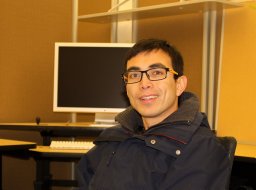 Prithayan Barua合作论文数Georgia Institute of Technology1
 Shaden Smith合作论文数Microsoft AI1
 Ritchie Zhao合作论文数NVIDIA1
 Udit Gupta合作论文数Jacobs Technion-Cornell Institute, Cornell Tech1
 Yao-Hung Hubert Tsai合作论文数Spuree1
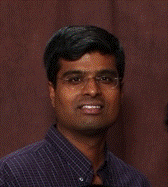 Sreenivas Gollapudi合作论文数Google1
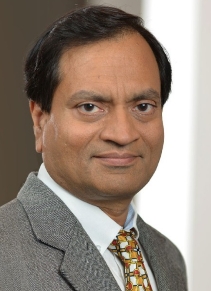 Pradeep Dubey合作论文数Parallel Computing Lab, Intel Corporation1
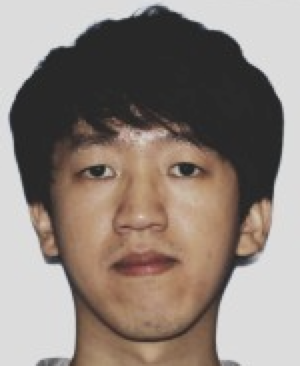 Ruixiang Zhang合作论文数Apple1
 Wenguang Chen (陈文光)合作论文数Department of Computer Science and Technology, School of Information Science and Technology, Tsinghua University;School of Computer Science and Technology, Qinghai University1Yuan Zhou合作论文数1
 Graham Taylor合作论文数School of Engineering, University of Guelph1
 Vivek Sarkar合作论文数School of Computer Science, College of Computing, Georgia Institute of Technology1
 Bhiksha Raj Ramakrishnan合作论文数Language Technologies Institute, School of Computer Science, Carnegie Mellon University;Department of Electrical and Computer Engineering, College of Engineering, Carnegie Mellon University;FPrime AI1
 Roger Grosse合作论文数Department of Computer Science, University of Toronto;Schwartz Reisman Institute for Technology and Society;Anthropic1
 Christopher Hughes合作论文数Intel Corporation1
 Sebastien Lemaire合作论文数1
 Rakesh Agrawal合作论文数Data Insights Laboratories1Walter D. Andrews合作论文数Department of Defense1