Middleware handles many important functionalities for ubiquitous computing. The authors distinguish various middleware technologies providing key elements for all applications‘ requirements such as discovery, adaptation/composition, context management, and management of ubiquitous applications. In this chapter, they propose a classification for some of the most employed ubiquitous middleware. The classification was established upon the challenges raised by ubiquitous computing – effective use of smart spaces, invisibility, and localized scalability - and upon how the various ubiquitous middleware respond to them in terms of interoperability, discoverability, location transparency, adaptability, context awareness, scalability, security, and autonomous management. This classification shows that if many middleware are mature enough and offer specific functionalities respecting the properties of ubiquity, a real lack is noticed in having an interoperable, autonomous and scalable middleware for the execution of ubiquitous applications. The development of the service-oriented paradigm, the semantics, the Web middleware, and the ambient intelligence shows the new trend the middleware research field is engaged in.
In recent decades, it has become evident that the condition for normal functioning of mitochondria in higher eukaryotes is the presence of membrane transport systems of macromolecules (proteins and nucleic acids). Natural competence of the mitochondria in plants, animals, and yeasts to actively uptake DNA may be directly related to horizontal gene transfer into these organelles occurring at much higher rate compared to the nuclear and chloroplast genomes. However, in contrast with import of proteins and tRNAs, little is known about the biological role and molecular mechanism underlying import of DNA into eukaryotic mitochondria. In this review, we discuss current state of investigations in this area, particularly specificity of DNA import into mitochondria and its features in plants, animals, and yeasts; a tentative mechanism of DNA import across the mitochondrial outer and inner membranes; experimental data evidencing several existing, but not yet fully understood mechanisms of DNA transfer into mitochondria. Currently available data regarding transport of informational macromolecules (DNA, RNA, and proteins) into the mitochondria do not rule out that the mechanism of protein and tRNA import as well as tRNA and DNA import into the mitochondria may partially overlap.
Mitochondria have retained indispensable but limited genetic information and they import both proteins and nucleic acids from the cytosol. RNA import is essential for gene expression and regulation, whereas competence for DNA uptake is likely to contribute to organellar genome dynamics and evolution. Contrary to protein import mechanisms, the way nucleic acids cross the mitochondrial membranes remains poorly understood. Using proteomic, genetic and biochemical approaches with both plant and yeast organelles, we develop here a model for DNA uptake into mitochondria. The first step includes the voltage-dependent anion channel and an outer membrane-located precursor fraction of a protein normally located in the inner membrane. To proceed, the DNA is then potentially recruited in the intermembrane space by an accessible subunit of one of the respiratory chain complexes. Final translocation through the inner membrane remains the most versatile but points to the components considered to make the mitochondrial permeability transition pore. Depending on the size, DNA and RNA cooperate or compete for mitochondrial uptake, which shows that they share import mechanisms. On the other hand, our results imply the existence of more than one route for nucleic acid translocation into mitochondria.
A computing infrastructure where everything is a service offers many new system and application possibilities. Among the main challenges, however, is the issue of service substitution for the application execution in such heterogeneous environments. An application would like to continue to execute even when a service disappears, or it would like to benefit from the environment by using better services with better QoS when possible. In this article, we define a generic service model and describe the equivalence relations between services considering the functionalities they propose and their non functional QoS properties. We define semantic equivalence relations between services and equivalence degree between non functional QoS properties. Using these relations we propose semantic substitution mechanisms upon the appearance and disappearance of services that fits the application needs. We developed a prototype as a proof of concept and evaluated its efficiency over a real use case.
Institute of Plant Molecular Biology, CNRS and University of Strasbourg (UdS) 12, General Zimmer Str., Strasbourg, France, 67084 Siberian Institute Plant Physiology and Biochemistry, Siberian Branch of the RAS 132, Lermontova Str., Irkutsk, Russian Federation, 664033 Institute for Cell and Molecular Biosciences, Medical School, Newcastle University Framlington Place, Newcastle upon Tyne, UK, NE2 4HH School of Pharmacy, MCPHS University, 179, Longwood Ave., Boston, USA, MA 02115
The web has evolved from a technological platform to a real social milieu thereby be- coming a continuous source of Big Social Data (BSD). BSD is characterized by a combination of factual content such as the coordinates of a restaurant, the content of a webpage or the title of a movie, behavior data such as exchanges between social relationships, as well as subjective data such as users' opinions, reviews, and tags. The goal of a social application is to analyze BSD and process it in order to understand it and transform it into valuable content to users. Building social applications requires an essential data preparation step during which raw BSD is sanitized, normalized, enriched, pruned, and transformed making it readily available for fur- ther processing. We argue for the need to formalize data preparation and develop appropriate tools to enable easy prototyping of social applications. We describe SOCLE, our framework for BSD preparation. We provide an architecture inspired from typical social applications, the state of the art of existing languages and algebras for manipulating BSD, and the scientific challenges and opportunities underlying the development of SOCLE. RESUME.Le web, initialement une plateforme technologique, est devenu un veritable eco-systeme socialetunesourcecontinuedeBigDatasociales(BSD).Nousytrouvonsdesdonneesfactuelles et objectives telles que les coordonnees d'un restaurant, des donnees comportementales telles que les echanges entre amis et enfin, des donnees subjectives comme les revues, les etiquettes, les notes ou les etoiles. Ces donnees brutes ont besoin d'etre filtrees et organisees pour en extraire des informations utiles et permettre le developpement d'applications sociales qui ap- portent une valeur ajoutee aux utilisateurs. Dans cet article, nous motivons le besoin de for- maliser l'etape de preparation des BSD et decrivons SOCLE, notre plateforme pour le faire. Nous presentons une architecture inspiree d'applications sociales types, un etat de l'art des langages et algebres existants et les defis scientifiques du developpement de SOCLE.
Aim. Investigation of different features of DNA import into plant and human mitochondria, for a better understanding of mitochondrial genetics and generation of biotechnological tools.Methods.DNA up-take experiments with isolated plant mitochondria, using as substrates various sequences associated or not with the specific terminal inverted repeats (TIRs) present at each end of the plant mitochondrial linear plasmids.Results.It was established that the DNA import efficiency has a non-linear dependence on DNA size.It was shown that import into plant mitochondria of DNA molecules of «medium» sizes, i. e. between 4 and 7 kb, barely has any sequence specificity: neither TIRs from the 11.6 kb Brassica plasmid, nor TIRs from the Zea mays S-plasmids influenced DNA import into Solanum tuberosum mitochondria.Conclusions.The data obtained support the hypothesis about species-specific import mechanism operating under the mitochondrial linear plasmids transfer into plant mitochondria.
Execution traces have become essential resources that many developers analyze to debug their applications. Ideally, a developer wants to quickly detect whether there are anomalies on his application or not. However, in practice, the size of multimedia applications trace can reach gigabytes, which makes their exploitation very complex. Usually, developers use visualization tools before stating a hypothesis. In this paper, we argue that this solution is not satisfactory and propose to automatically provide a diagnosis by comparing execution traces. We use distance-based models and conduct a user case to show how TED, our automatic trace diagnosis tool, provides semantic added-value information to the developer. Performance evaluation over real world data shows that our approach is scalable.
The analysis of multimedia application traces can reveal important information to enhance program execution comprehension. However typical size of traces can be in gigabytes, which hinders their effective exploitation by application developers. In this paper, we study the problem of finding a set of sequences of events that allows a reduced-size rewriting of the original trace. These sequences of events, that we call blocks , can simplify the exploration of large execution traces by allowing application developers to see an abstraction instead of low-level events. The problem of computing such set of blocks is NP-hard and naive approaches lead to prohibitive running times that prevent analysing real world traces. We propose a novel algorithm that directly mines the set of blocks. Our experiments show that our algorithm can analyse real traces of up to two hours of video. We also show experimentally the quality of the set of blocks proposed, and the interest of the rewriting to understand actual trace data.
Cytoplasmic organelles in eukaryotes retain their own genome. Mutations in the human mitochondrial DNA are the most common cause of hereditary neuromuscular diseases. These degenerative disorders are still incurable and would need gene therapy. In plants, mitochondrial genetics provides traits of great agronomical relevance. Conventional methodologies failed to enable genetic transformation of mitochondria in mammalian and plant cells, but a variety of alternative complementation strategies and organelle transfection approaches are currently developed. Copyright (C) 2012 S. Karger AG, Basel
Mitochondria are competent for DNA uptake in vitro, a mechanism which may support delivery of therapeutic DNA to complement organelle DNA mutations. We document here key aspects of the DNA import process, so as to further lay the ground for mitochondrial transfection in intact cells.
Maintenance of the mitochondrial genome is a major challenge for cells, particularly as they begin to age. Although it is established that organelles possess regular DNA repair pathways, many aspects of these complex processes and of their regulation remain to be investigated. Mitochondrial transfection of isolated organelles and in whole cells with customized DNA synthesized to contain defined lesions has wide prospects for deciphering repair mechanisms in a physiological context. We document here the strategies currently developed to transfer DNA of interest into mitochondria. Methodologies with isolated mitochondria claim to exploit the protein import pathway or the natural competence of the organelles, to permeate the membranes or to use conjugal transfer from bacteria. Besides biolistics, which remains restricted to yeast and Chlamydomonas reinhardtii, nanocarriers or fusion proteins have been explored as methods to target custom DNA into mitochondria in intact cells. In further approaches, whole mitochondria have been transferred into recipient cells. Repair failure or error-prone repair leads to mutations which potentially could be rescued by allotopic expression of proteins. The relevance of the different approaches for the analysis of mitochondrial DNA repair mechanisms and of aging is discussed.
One of the challenges of ambient systems lies in providing all the available services of the environment to the ambient devices, even if they do not physically host those services. Although this challenge has come to find a solution through cloud computing, there are still few devices and operating systems that enable applications execution by only uploading the required components into the runtime environment. The ROCS (Remote OSGi Caching Service) framework is a novel proposal which relies on a heavy-weighted standard Java/OSGi stack. It is distributed between class servers and ambient devices to provide full functionalities to resource-constrained environments. The ROCS framework provides improvements in two areas. First, it defines a minimal bootstrap environment that runs a standard Java/OSGi stack. Secondly, it provides an architecture for loading any necessary missing class from remote servers into memory at runtime. Our first results show similar performances when classes are either remotely downloaded into the main memory from a local network or from a flash drive. These results suggest a way to design minimalistic middleware that dynamically obtain their applications from the network as a first step towards cloud-aware operating systems.
The emergence of ambient computing introduces wireless and portable technologies that democratize access to information and data through services and thereby opens new research challenges for data querying. The most popular method to access data within these novel dynamic execution environments in a convenient and efficient way is still to consider declarative queries. Such queries, so-called hybrid queries may involve streaming and on demand data originated from services, possibly with temporal and mobile properties. For evaluating these queries we propose the HYPATIA system that tackles two main issues (i) using service coordination for building query plans and (ii) efficient and flexible evaluation capabilities.
This paper presents an approach and an associated system named Hypatia for accessing and processing data by coordinating services in dynamic environments. A dynamic environment consists of applications, servers and devices that can be static and nomad, and that produce or consume data on demand (e.g., online applications, Web-hosted DBMS) or continuously (messaging systems, mobile services). In such an environment, data are hidden behind services that export application programming interfaces (API) through heterogeneous networks and that provide functions for retrieving and processing data. In order to have an aggregated and integrated view of the dynamic environment at every moment (e.g., accessing Google's agenda service and feeding a Twitter service for continuously locating friends as we all stroll in a city), data consumers have to execute sets of service calls, i.e., subscribe to continuous data producers, aggregate results and feed other services and then obtain results and eventually start over again. No off-the-shelf DBMS provides such service oriented querying approach including continuous, one-shot, mobile and static query evaluation. Our work introduces the notion of hybrid query that declaratively expresses data consumers requirements and an associated query evaluator, Hypatia, that executes data oriented query service coordinations; taking advantage of the services available in the network (data providers and devices computing capacity) and yielding the query result.
Both endogenous processes and exogenous physical and chemical sources generate deoxyribonucleic acid (DNA) damage in the nucleus and organelles of living cells. To prevent deleterious effects, damage is balanced by repair pathways. DNA repair was first documented for the nuclear compartment but evidence was subsequently extended to the organelles. Mitochondria and chloroplasts possess their own repair processes. These share a number of factors with the nucleus but also rely on original mechanisms. Base excision repair remains the best characterized. Repair is organized with the other DNA metabolism pathways in the organelle membrane-associated nucleoids. DNA repair in mitochondria is a regulated, stress-responsive process. Organelle genomes do not encode DNA repair enzymes and translocation of nuclear-encoded repair proteins from the cytosol seems to be a major control mechanism. Finally, changes in the fidelity and efficiency of mitochondrial DNA repair are likely to be involved in DNA damage accumulation, disease and aging. The present review successively addresses these different issues.
In pervasive environments, services are fastly developing and are being deployed everywhere. In this article, we introduce a Servicebook, a new social network of services, where services create and join group of service profile providing to users better access to all the services in their vicinity. We propose a novel technique to realize this Servicebook, the user-excentric service composition. This user-excentric composition relies on two service relations: the compatible relation and the composition relation. We developed and evaluated an OSGi-prototype as a proof-of-concept.
Mitochondrial DNA encodes a set of 13 polypeptides and is subjected to constant oxidative stress due to ROS production within the organelle. It has been shown that DNA repair in the mitochondrion proceeds through both short- and long-patch base excision repair (BER). In the present article, we have used the natural competence of mammalian mitochondria to import DNA and study the sub-mitochondrial localization of the repair system in organello. Results demonstrate that sequences corresponding to the mtDNA non-coding region interact with the inner membrane in a rapid and saturable fashion. We show that uracil containing import substrates are taken into the mitochondrion and are used as templates for damage driven DNA synthesis. After further sub-fractionation, we show that the length of the repair synthesis patch differs in the soluble and the particulate fraction. Bona fide long patch BER synthesis occurs on the DNA associated with the particulate fraction, whereas a nick driven DNA synthesis occurs when the uracil containing DNA accesses the soluble fraction. Our results suggest that coordinate interactions of the different partners needed for BER is only found at sites where the DNA is associated with the membrane.
 Frederic Le Mouel合作论文数INRIA / INSA Lyon19
 Stephane Frenot合作论文数INRIA Ares – CITI Lab, INSA Lyon15
 André Dietrich合作论文数11Robert N. Lightowlers合作论文数6
 Milana Koulintchenko合作论文数6Frederique Weber-Lotfi合作论文数6Anne Cosset合作论文数5Pierre Boesch合作论文数5
 Amira Ben Hamida合作论文数4Denis Beras合作论文数4
 Pierre Parrend合作论文数INRIA Rhône-Alpes4F. Weber-Lotfi合作论文数4
 Yuri M. Konstantinov合作论文数Siberian Institute of Plant Physiology and Biochemistry, Russian Academy of Sciences4Yvan Royon合作论文数4
 Marine Minier合作论文数Computer Science Department, Université de Lorraine;LORIA Laboratory3
 Christine Collet合作论文数Institut polytechnique de Grenoble3Stéphane Ubéda合作论文数National Institute of Applied Sciences of Lyon (INSA-Lyon) ;Center for Innovations in Telecommunication and Services integration (CITI Lab)3Genoveva Vargas-Solar合作论文数French Council of Scientific Research (CNRS)3Christiane Kamdem Kengne合作论文数3Yu. M. Konstantinov合作论文数3Samuel Galice合作论文数3
 Vladislav I. Tarasenko合作论文数3Veronique Legrand合作论文数3Jacques Saraydaryan合作论文数3
 Marie-Christine Rousset合作论文数Laboratoire d'Informatique de Grenoble, CNRS;Department of Computer Science, University of Grenoble Alpes3Fatiha Benali合作论文数3E. S. Klimenko合作论文数2
 Daria Mileshina合作论文数2
 Sihem Amer-Yahia合作论文数Laboratoire d’Informatique de Grenoble;Centre National de Recherche Scientifique2François Paulus合作论文数2Wilfried Jouve合作论文数2Inria Ares合作论文数2
 Wassim Znaidi合作论文数2Mathieu Chantrel合作论文数2
 Victor Cuevas合作论文数UJF, Grenoble Institute of Technology2T.A. Bolotova合作论文数1Romain Val合作论文数1
 Guillaume Chelius合作论文数1stephane dalu合作论文数1R Lightowlers合作论文数1A Dietrich合作论文数1Philippe Hammann合作论文数1alexandre caminada合作论文数1yu chen合作论文数1
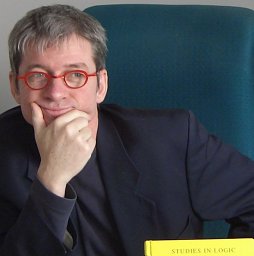 John Mullins合作论文数1
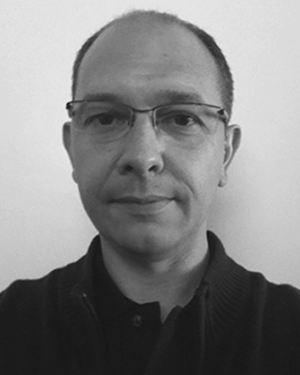 Thierry Delot合作论文数University Lille North of France1
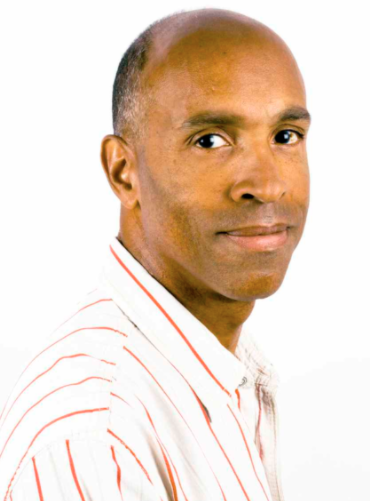 Charles Consel合作论文数Department of of Computer Science, Bordeaux INP1
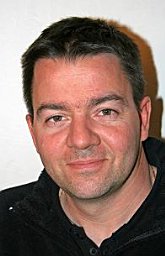 Eric Fleury合作论文数Adv Met Res Ctr, Korea Inst Sci Technol1
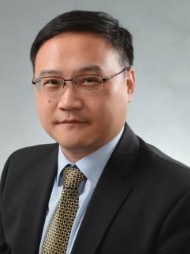 Jialiang Lu (陆佳亮)合作论文数Ecole d'Ingenieurs Paris SJTU1




