Professor Nigel Hunt has been Professor and Head of the Department of Orthodontics at the UCL Eastman Dental Institute since 1998. His clinical interest is the management of craniofacial deformity, and he leads a research team in the field of craniofacial reconstruction and tissue engineering. Nigel was elected Dean of the Faculty of Dental Surgery at the Royal College of Surgeons of England in June 2014. He is also the immediate past-Chairman of the British Orthodontic Society and its President for 2015.
Orthodontic treatment is not without risk. This article aims to look at some of the dento-legal issues surrounding orthodontic treatment, the risks to both the clinician and the patient, and how some of these risks can be mitigated.
Tissue engineering has the potential to serve as an alternative to surgical tissue transfer for the management of soft tissue defects. The perceived advantages include reduced donor site morbidity and restoration of function and aesthetics to ideal. Degradable scaffolds are utilised in the early stages of cell growth and development with the advantage of eventual elimination to leave space for the engineered tissue and a reduced chance of rejection.
Environmental remodelling of the craniofacial musculature is obligatory for successful outcomes following interventions such as functional appliance therapy or orthognathic surgery. Genetically driven remodelling of the craniofacial musculature is also seen in individuals with altered facial form. The processes that are involved in the remodelling of intramuscular connective tissue need to be activated in such situations. Such processes require activity of matrix metalloproteinases (MMPs) and the tissue inhibitors of matrix metalloproteinases (TIMPs), which are responsible for extracellular matrix (ECM) turnover. The aim of this study was, therefore, to establish the expression of MMP-2 and MMP-9 and their inhibitors, TIMP-1 and TIMP-2, in the masseter muscle of humans with both normal and increased vertical facial form and to assess whether this expression had any value as a predictor of facial form.Biopsies were taken from 20 subjects (10 with vertical facial deformity and 10 with normal vertical facial form to act as a control group). The sample group consisted of 15 females and 5 males and the average age of the donors +/- standard deviation (SD) was 26.04 +/- 6.16 years (range: 17.67-31.25 years). Biopsy samples were then subjected to zymography and reverse zymography to assess MMP and TIMP expression, respectively. Lateral skull cephalograms were analysed for each subject using Spearman's rho correlation coefficients and Mann-Whitney U-tests.TIMP-1 activity was consistently expressed in human masseter muscle. MMP-2, MMP-9, and TIMP-2 activity, when detected, was at a low level. These data indicate that in most individuals, an excess of TIMP-1, compared with MMP-2 and MMP-9, limits ECM turnover in human masseter muscle. There was a demonstrable variation in proteinase expression between different individuals. These preliminary findings, however, do not confirm that indices of ECM turnover are a reflection of an individual's vertical facial form.
The current technique to replace missing craniofacial skeletal muscle is the surgical transfer of local or free flaps. This is associated with donor site morbidity, possible tissue rejection and limited supply. The alternative is to engineer autologous skeletal muscle in vitro, which can then be re-implanted into the patient. A variety of biomaterials have been used to engineer skeletal muscle with limited success. This study investigated the use of phosphate-based glass fibres as a potential scaffold material for the in vitro engineering of craniofacial skeletal muscle. Human masseter (one of the muscles of mastication)--derived cell cultures were used to seed the glass fibres, which were arranged into various configurations. Growth factors and matrix components were to used to manipulate the in vitro environment. Outcome was determined with the aid of microscopy, time-lapse footage, immunofluorescence imaging and CyQUANT proliferation, creatine kinase and protein assays. A 3-dimensional mesh arrangement of the glass fibres was the best at encouraging cell attachment and proliferation. In addition, increasing the density of the seeded cells and using Matrigel and insulin-like growth factor I enhanced the formation of prototypic muscle fibres. In conclusion, phosphate-based glass fibres can support the in vitro engineering of human craniofacial muscle.
A mathematical formula based on a geometric model is described that will permit greater accuracy in planning orthodontic treatment and orthognathic surgery for patients who require differential maxillary impaction.
AIM:To determine the self-perception and need for orthodontic treatment in young sensory [visual (VI) and hearing (HI)] impaired children attending special schools in Riyadh, Saudi Arabia. Also, to determine if gender and social class background influence the rating and self-perception of malocclusion among the children.LOCATION:Riyadh, Saudi Arabia.DESIGN:A prospective study on orthodontic treatment need in sensory impaired children.SUBJECTS:Seventy-seven VI, 210 HI, and 494 control (C) children aged 11-16 years.METHOD:The aesthetic component (AC) of the Index of Orthodontic Treatment Need (IOTN) was determined using the standard 10 pictures for the C group and HI with a modified version (tactile graphic) for VI. The dental health component (DHC) and AC of IOTN were used to allocate each child to no need, borderline need and definite need for treatment subgroups.RESULTS:Sixty-five per cent of VI, 21.8 per cent HI, and 18.7 per cent of the C were perceived to be in need of orthodontic treatment. However, 55.8 VI, 43 per cent HI and 34 per cent C were rated for treatment need based upon the AC. The difference between the examiner and the child's rating of treatment need was found to be statistically significant among the HI and control children (P < 0.001).CONCLUSION:The VI children who were scored for treatment by the examiner as having need for treatment had similar perceptions of their treatment need irrespective of their social background. Male VI children had a higher DHC score, but both VI and HI males had a higher normative and self-perceived need based on AC.
- The aim of this study was to determine the prevalence of traumatised permanent teeth among sensory (visual (VI) and hearing (HI)) impaired children attending special schools in Riyadh, Saudi Arabia. All the dental injuries involved incisor teeth, and trauma was noted in 33 (6.7%) children attending government schools (control group) compared to 7 (9%) VI children and 24 (11.4%) HI children. Differences in the dental trauma only reached statistical significance between the HI and control group (P < 0.05). Gender differences were only apparent in the HI group, with males having higher levels of traumatised teeth. In addition, HI children aged 11-12 years were more prone to trauma than children in the control group of the same age (P < 0.05). In conclusion, sensory impaired children do have a tendency for more dental trauma. However, this was only statistically significant for HI children. Whereas a gender difference was most noticeable for the HI group, with males having higher levels of trauma, this was noticeable by its absence among VI children.
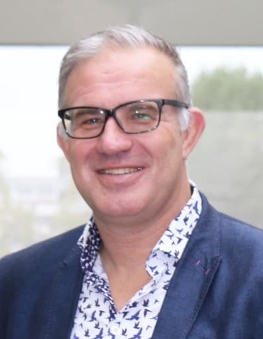 Mark Lewis合作论文数School of Sport, Exercise and Health Sciences, Loughborough University26
 Susan Cunningham合作论文数Department of Craniofacial Growth & Development, Eastman Dental Institute, University College London13
 acm sinanan合作论文数7
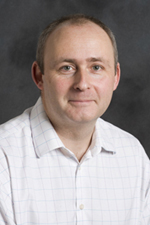 Jonathan Knowles合作论文数Division of Biomaterials and Tissue Engineering, University College London;Eastman Dental Institute, University College London;Dankook University7a j a madgwick合作论文数6JRA Machell合作论文数5Cochrane S M合作论文数5
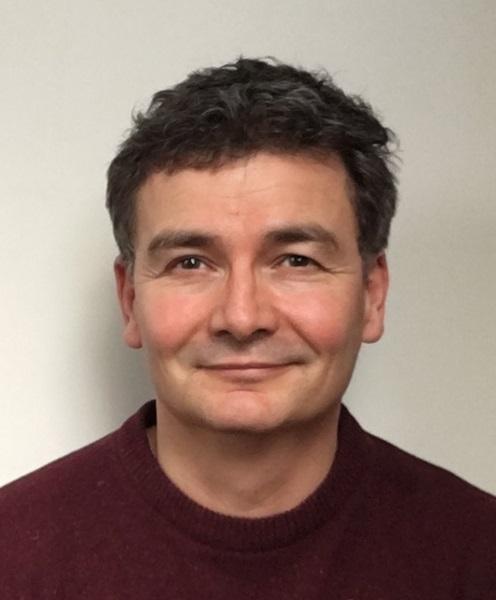 Gareth Thomas合作论文数Faculty of Medicine, University of Southampton5
 Rishma Shah合作论文数Division of Craniofacial and Surgical Care, Adams School of Dentistry, The University of North Carolina at Chapel Hill5R. Bedi合作论文数5H. L. Tippett合作论文数5James J. Sciote合作论文数4Am Rowlerson合作论文数3GT Wynne-Hughes合作论文数3
 Nicola Mordan合作论文数3C. Hopper合作论文数3Z. L. Nelson-Moon合作论文数3
 Joseph Noar合作论文数3M. Al-Sarheed合作论文数3SA Whawell合作论文数2a k singh合作论文数2Griffiths B M合作论文数2Morgan M J合作论文数2
 Mark Wilson合作论文数Department of Chemistry, University of Oxford;Brasenose College, University of Oxford2Toshio Deguchi合作论文数2
 Charlotte Feinmann合作论文数2H. Kpendema合作论文数2Mark S. Gilthorpe合作论文数2Andrew Garratt合作论文数2
 Stjohn Crean合作论文数Barts and the London, Queen Mary's School of Medicine and Dentistry, London, United Kingdom2M Manisali合作论文数1E N Horrocks合作论文数1Takao Kuroda合作论文数1Nobuyuki Ishii合作论文数1trudy l burns合作论文数1Ifty Ahmed合作论文数1R D Holt合作论文数1T Deguchi合作论文数1Jh Noar合作论文数1John A Hobkirk合作论文数1Anthony J Ireland合作论文数1
 Crispian Scully合作论文数Eastman Dental Institute, University College London1Titshall M J合作论文数1Woodley N J合作论文数1Barber P M合作论文数1Thomson A M合作论文数1Akahane Y合作论文数1Hodges S J合作论文数1




