Phenotypic plasticity, the ability of an organism to express multiple phenotypes in response to the prevailing environmental conditions without genetic change, may result in a response to anthropogenic environmental change. Given that increasing climate variability is predicted to pose a greater risk than directional climate change, we tested the effect of a water temperature differential of 4 °C on the Arctic charr phenotypic within a single generation. We demonstrate that Arctic charr phenotype can respond rapidly and markedly to an environmental temperature cue. The plastic response to different temperature regimes comprised a shift in the mean expressed phenotype but also coupled with a reduction in the between-individual phenotypic variation in the expressed head shape. The magnitude of shape difference between temperature conditions was cumulative over time but the rate of divergence diminished as fish became larger. Overall, individuals raised in the elevated temperature treatment expressed a phenotype analogous to a benthivorous ecotype of this species, rather than that of the parental pelagic feeding form. The response of cold-water freshwater species to temperature change is likely to be an interaction between the capacity of the organism for phenotypic plasticity, the mean speed of change in the environment, and the degree of short interval variation in the environment.
Understanding the extent to which ecological divergence is repeatable is essential for predicting responses of biodiversity to environmental change. Here we test the predictability of evolution, from genotype to phenotype, by studying parallel evolution in a salmonid fish, Arctic charr (Salvelinus alpinus), across eleven replicate sympatric ecotype pairs (benthivorous-planktivorous and planktivorous-piscivorous) and two evolutionary lineages. We found considerable variability in eco-morphological divergence, with several traits related to foraging (eye diameter, pectoral fin length) being highly parallel even across lineages. This suggests repeated and predictable adaptation to environment. Consistent with ancestral genetic variation, hundreds of loci were associated with ecotype divergence within lineages of which eight were shared across lineages. This shared genetic variation was maintained despite variation in evolutionary histories, ranging from postglacial divergence in sympatry (ca. 10-15kya) to pre-glacial divergence (ca. 20-40kya) with postglacial secondary contact. Transcriptome-wide gene expression (44,102 genes) was highly parallel across replicates, involved biological processes characteristic of ecotype morphology and physiology, and revealed parallelism at the level of regulatory networks. This expression divergence was not only plastic but in part genetically controlled by parallel cis-eQTL. Lastly, we found that the magnitude of phenotypic divergence was largely correlated with the genetic differentiation and gene expression divergence. In contrast, the direction of phenotypic change was mostly determined by the interplay of adaptive genetic variation, gene expression, and ecosystem size. Ecosystem size further explained variation in putatively adaptive, ecotype-associated genomic patterns within and across lineages, highlighting the role of environmental variation and stochasticity in parallel evolution. Together, our findings demonstrate the parallel evolution of eco-morphology and gene expression within and across evolutionary lineages, which is controlled by the interplay of environmental stochasticity and evolutionary contingencies, largely overcoming variable evolutionary histories and genomic backgrounds.
A major goal of evolutionary science is to understand how biological diversity is generated and altered. Despite considerable advances, we still have limited insight into how phenotypic variation arises and is sorted by natural selection. Here we argue that an integrated view, which merges ecology, evolution and developmental biology (eco evo devo) on an equal footing, is needed to understand the multifaceted role of the environment in simultaneously determining the development of the phenotype and the nature of the selective environment, and how organisms in turn affect the environment through eco evo and eco devo feedbacks. To illustrate the usefulness of an integrated eco evo devo perspective, we connect it with the theory of resource polymorphism (i.e. the phenotypic and genetic diversification that occurs in response to variation in available resources). In so doing, we highlight fishes from recently glaciated freshwater systems as exceptionally well-suited model systems for testing predictions of an eco evo devo framework in studies of diversification. Studies on these fishes show that intraspecific diversity can evolve rapidly, and that this process is jointly facilitated by (i) the availability of diverse environments promoting divergent natural selection; (ii) dynamic developmental processes sensitive to environmental and genetic signals; and (iii) eco evo and eco devo feedbacks influencing the selective and developmental environments of the phenotype. We highlight empirical examples and present a conceptual model for the generation of resource polymorphism - emphasizing eco evo devo, and identify current gaps in knowledge.
Large and long-lived piscivorous brown trout, Salmo trutta, colloquially known as ferox trout, have been described from a number of oligotrophic lakes in Britain and Ireland. The "ferox" life history strategy is associated with accelerated growth following an ontogenetic switch to piscivory and extended longevity (up to 23 years in the UK). Thus, ferox trout often reach much larger sizes and older ages than sympatric lacustrine invertebrate-feeding trout. Conventional models suggest that S. trutta adopting this life history strategy grow slowly before a size threshold is reached, after which, this gape-limited predator undergoes a diet switch to a highly nutritional prey source (fish) resulting in a measurable growth acceleration. This conventional model of ferox trout growth was tested by comparing growth trajectories and age structures of ferox trout and sympatric invertebrate-feeding trout in multiple lake systems in Scotland. In two of the three lakes examined, fish displaying alternative life history strategies, but living in sympatry, exhibited distinctly different growth trajectories. In the third lake, a similar pattern of growth was observed between trophic groups. Piscivorous trout were significantly older than sympatric invertebrate-feeding trout at all sites, but ultimate body size was greater in only two of three sites. This study demonstrates that there are multiple ontogenetic growth pathways to achieving piscivory in S. trutta and that the adoption of a piscivorous diet may be a factor contributing to the extension of lifespan.
Divergence into discrete foraging specialist morphs living in sympatry is relatively well described in lacustrine fishes of the Salmonidae. Although piscivorous forms of Salmo trutta have been widely reported, other trophic foraging specialists are strangely rarely recorded amongst Salmo species. Microsatellite and mitochondrial genetic data segregated S. trutta collected from Loch Laidon, Scotland, into four distinct genetic groups. Three groups analysed in this study showed significant differences in body shape, stomach contents, muscle stable isotope signature, gill raker length and spacing, and habitat use. We conclude that the three genetically defined groups comprise: a generalist foraging morph, a pelagic feeding specialist morph and a profundal macrobenthos feeding morph. The features distinguishing these morphs, however, show a degree of overlap. This appears to be only the second record of invertebrate resource use partitioning associated with expression of alternative morphologies in sympatry this species and the first report of a profundal invertebrate feeding morph. Why such polymorphisms are generally rare in Salmo species remains unclear, but potential explanations are discussed.
Understanding the extent to which evolution is predictable is fundamental to advancing research on biodiversity origins. We studied the evolution of ecotypes in Arctic charr in 18 freshwater lakes and two evolutionary lineages. We find significant phenotypic parallelism across replicates, with the degree of parallelism most pronounced in adaptive traits associated with foraging. Genome-wide analyses of the underlying population variation revealed a strong influence of historical demography and gene flow. Some divergent genomic regions were significantly shared across ecotype replicates, though there was a high proportion of population-specific variation. Functional molecular bases to ecotypes in gene expression and biological pathways were extensively and significantly shared across ecotype pairs. These results demonstrate a spectrum of predictability, from low parallelism at the nucleotide level to high parallelism in regulatory molecular bases and functional adaptive aspects of morphology, and advance our understanding of parallel evolution through divergent evolutionary routes.
Understanding the extent to which evolution is predictable under multifarious selection is a longstanding question in evolutionary biology. However, the interplay of stochastic and contingent factors influencing the extent of parallelism in nature is not well understood. To test the predictability of evolution, we studied a ‘natural experiment’ on different organismal levels across lakes and evolutionary lineages of a freshwater salmonid fish, Arctic charr (Salvelinus alpinus). We identified significant phenotypic parallelism between Arctic charr ecotype pairs within a continuum of parallel evolution and highly parallel adaptive morphological traits. Variability in phenotypic predictability was explained by complex demographic histories, differing genomic backgrounds and genomic responses to selection, variable genetic associations with ecotype, and environmental variation. Remarkably, gene expression was highly similar across ecotype replicates, and explained the observed parallelism continuum. Our findings suggest that parallel evolution by non-parallel evolutionary routes is possible when the regulatory molecular phenotype compensates for divergent histories.
Sympatric speciation is thought to be strongly linked to resource specialization with alternative resource use acting as a fundamental agent driving divergence. However, sympatric speciation through niche expansion is dependent on foraging specialization being consistent over space and time. Standard metabolic rate is the minimal maintenance metabolic rate of an ectotherm in a post-absorptive and inactive state and can constitute a significant portion of an animal's energy budget; thus, standard metabolic rate and growth rate are two measures frequently used as an indication of the physiological performance of individuals. Physiological adaptations to a specific diet may increase the efficiency with which it is utilized, but may have an increased cost associated with switching diets, which may result in a reduced standard metabolic rate and growth rate. In this study, we use the diet specialization often seen in polymorphic Arctic charr (Salvelinus alpinus) populations to study the effects of different prey on standard metabolic rate and growth rate as well as the effects that early prey specialization may have on the ability to process other prey types efficiently. We found a significant effect of prey type on standard metabolic rate and growth rate. Furthermore, we found evidence of diet specialization with all fish maintaining a standard metabolic rate and growth rate lower than expected when fed on a diet different to which they were raised, possibly due to a maladaptation in digestion of alternative prey items. Our results show that early diet specialization may be reinforced by the elevated costs of prey switching, thus promoting the process of resource specialization during the incipient stages of sympatric divergence.
Abstract Identifying the processes by which new phenotypes and species emerge has been a long‐standing effort in evolutionary biology. Young adaptive radiations provide a model to study patterns of morphological and ecological diversification in environmental context. Here, we use the recent radiation (ca. 12k years old) of the freshwater fish Arctic charr (Salvelinus alpinus) to identify abiotic and biotic environmental factors associated with adaptive morphological variation. Arctic charr are exceptionally diverse, and in postglacial lakes there is strong evidence of repeated parallel evolution of similar morphologies associated with foraging. We measured head depth (a trait reflecting general eco‐morphology and foraging ecology) of 1,091 individuals across 30 lake populations to test whether fish morphological variation was associated with lake bathymetry and/or ecological parameters. Across populations, we found a significant relationship between the variation in head depth of the charr and abiotic environmental characteristics: positively with ecosystem size (i.e., lake volume, surface area, depth) and negatively with the amount of littoral zone. In addition, extremely robust‐headed phenotypes tended to be associated with larger and deeper lakes. We identified no influence of co‐existing biotic community on Arctic charr trophic morphology. This study evidences the role of the extrinsic environment as a facilitator of rapid eco‐morphological diversification.
A fixed receiver array was used to examine the movement patterns and space use of the European eel Anguilla anguilla in an oligotrophic Irish lake between July and September. We assessed home range size, temporal change in spatial behaviour and activity patterns of broad-headed ( n = 11) and narrow-headed ( n = 8) morphotypes. Broad-headed individuals displayed a larger home range (mean KUD 95 (km 2 ):0.296 ± 0.04 S.E.) in comparison to narrow-headed individuals (mean KUD 95 (km 2 ):0.143 ± 0.02 S.E.). Eel activity was strongly dependent on light conditions. Narrow-headed individuals’ movement peaks occurred at dawn and dusk in comparison to broad-headed individuals which exhibited a more stable movement pattern throughout night and into dawn, suggesting that narrow-headed eels are more crepuscular in nature whereas broad-headed individuals are more nocturnal. Lunar phase period also influenced eel movement within the lake. These results provide valuable insights into the spatio-temporal distribution of yellow eels in a lake system, demonstrating that individuality in foraging behaviour has direct influence on spatial patterns.
Partial migration, in which some individuals of a population migrate while other individuals remain resident, is generally associated with ontogenetic shifts to better feeding or as a response to adversity, but its underlying mechanisms remain relatively unknown. Brown trout (Salmo trutta) exhibit partial migration, with some individuals remaining in fresh water (freshwater-resident) while others undertake an anadromous migration, gain most of their adult size at sea, and then return to fresh water to spawn. The option adopted by an individual trout is thought to be partly determined by its growth performance in early life, which in the stochastic and dynamic environment of freshwater streams may be dependent on its flexibility. To examine potential effects of parent type on phenotypic flexibility, we measured the metabolism, growth, and morphology of full-sibling groups of offspring from freshwater-resident and anadromous parents both before and after a switch in diet. We found that fry had a higher growth rate and a more rounded head and body shape when reared on chironomid larvae compared with when they were reared on Daphnia, but diet had no effect on standard metabolic rate. Interestingly, offspring of anadromous parents were less able to maintain their growth rate when fed on Daphnia than were those of freshwater-residents and showed a correspondingly greater increase in growth following a switch from Daphnia to chironomid larvae. Offspring of anadromous parents also showed less morphological flexibility in response to diet than did the offspring of freshwater-residents. We discuss how the migration history of the parents might interact with phenotypic flexibility in early life to influence the migration probability of the offspring.
This study revealed between-lake genetic structuring between Coregonus lavaretus collected from the only two native populations of this species in Scotland, U.K. (Lochs Eck and Lomond) evidenced by the existence of private alleles (12 in Lomond and four in Eck) and significant genetic differentiation (FST = 0·056) across 10 microsatellite markers. Juvenile C. lavaretus originating from eggs collected from the two lakes and reared in a common-garden experiment showed clear phenotypic differences in trophic morphology (i.e. head and body shape) between these populations indicating that these characteristics were, at least partly, inherited. Microsatellite analysis of adults collected from different geographic regions within Loch Lomond revealed detectable and statistically significant but relatively weak genetic structuring (FST = 0·001-0·024) and evidence of private alleles related to the basin structure of the lake. Within-lake genetic divergence patterns suggest three possibilities for this observed pattern: (1) differential selection pressures causing divergence into separate gene pools, (2) a collapse of two formerly divergent gene pools and (3) a stable state maintained by balancing selection forces resulting from spatial variation in selection and lake heterogeneity. Small estimates of effective population sizes for the populations in both lakes suggest that the capacity of both populations to adapt to future environmental change may be limited.
Phenotypic variation in populations of fishes that inhabit postglacial lakes is often associated with trophic specialisations. A common sympatric foraging divergence seen in Arctic charr is into either plankton or littoral-zoobenthos feeding specialisms. In this study, we report a sympatric polymorphic Arctic charr population which is not centred on this divergence but instead manifests as a plankton (pelagic)-profundal zoobenthos foraging specialisms. The head shape of profundal fish was round and robust, the body thick set and pectoral fins long and wide. In contrast, the head of pelagic fish was pointed and slender, the body fusiform in shape and with short, narrow pectoral fins. There was no difference between profundal and pelagic fish in gill raker number. Body lipid content was significantly higher in pelagic fish as were the number or Diphyllobothrium cysts. The carbon isotope ratio was more heavily depleted in profundal fish. There was no dietary overlap in the prey items recovered from stomach contents of profundal and pelagic fish. We suggest the proximate driver behind the sympatric divergence was the successful exploitation of the profundal zone. The consequences of this have led to the development of adaptations in morphology and behaviour to support and maintain this divergence.
Biodiversity loss is an important environmental issue globally. Local Biodiversity Action Plans (LBAPs) provide an important conservation tool and should represent national priority species where they are present. Although much effort has gone in to developing LBAPs, their value as a conservation tool has been questioned. Here the effectiveness of the LBAP system to raise awareness of the freshwater fishes of national and international priority in Scotland is tested. Inclusion of freshwater fish in the LBAP suite was evaluated using current distribution data taken from available literature sources. Of the 25 examined LBAPs in Scotland, there were 79 LBAP entries for the 12 priority freshwater fishes found in Scotland. This contrasts with an expectation of 139 entries. Nineteen authorities failed to represent all priority freshwater fish species extant in their geographical boundary. Fourteen authorities provided cover for 50% or less for the species distributed in their area and five authorities included no rare freshwater fish species where one or more was expected. Possible underlying reasons for this mismatch include: frequently changing conservation status and taxonomic blindness of this group. It is plausible to suggest that this low rate of inclusion will have a detrimental effect on the allocation of limited conservation resources.
 Colin Adams合作论文数Institute of Biodiversity, Animal Health & Comparative Med, School of Biodiversity, One Health & Veterinary Medicine, University of Glasgow;Scottish Centre for Ecology & the Natural Environment, University of Glasgow14
 Travis E Van Leeuwen合作论文数4
 Kathryn R. Elmer合作论文数Department of Biology, University of Konstanz4
 Eric B Rondeau合作论文数3
 Madeleine Carruthers合作论文数School of Biological Sciences, University of Bristol3
 Andrey A. Yurchenko合作论文数St Petersburg State Univ, Theodosius Dobzhansky Ctr Genome Bioinformat, St Petersburg 199004, Russia3
 Ben Koop合作论文数Department of Biology, University of Victoria3
 Jacobs Arne合作论文数3
 Jong S Leong合作论文数Centre for Biomedical Research, University of Victoria3
 Sergey S. Alekseyev合作论文数3
 Bean Colin W.合作论文数Scottish Natural Heritage Caspian House3Natalia V. Gordeeva合作论文数2
 Minkley David R合作论文数Centre for Biomedical Research, University of Victoria2
 Jennifer A. Dodd合作论文数2
 James Barry合作论文数Scottish Centre for Ecology &IBAHCM, University of Glasgow;Scottish Centre for Ecology & the Natural Environment, University of Glasgow2
 Rune Knudsen合作论文数Department of Arctic and Marine Biology, University of Tromsø2
 Jason Newton合作论文数NERC Life Sci Mass Spectrometry Facil, Scottish Univ Environm Res Ctr2Ron Greer合作论文数1p s maitland合作论文数1A R D Gowans合作论文数1Alan Kettle-White合作论文数1Alastair Thorne合作论文数1
 Camille A.-L. Leblanc合作论文数Dept Aquaculture & Fish Biol, Holar Univ1
 Skúli Skúlason合作论文数Icelandic Museum of Natural History Reykjavík Iceland.1
 Matthew Newton合作论文数1
 Eric Verspoor合作论文数Institute for Biodiversity and Freshwater Conservation, University of the Highlands and Islands1
 Hudson Alan G合作论文数Division of Aquatic Ecology &Institute of Ecology and Evolution, University of Bern1Etheridge E C合作论文数1
 Martin Hughes合作论文数1
 Pia Bartels合作论文数Evolutionary Biology Centre, Uppsala University1
 Gunnar Ohlund合作论文数1
 Neil Metcalfe合作论文数School of Biodiversity, One Health & Veterinary Medicine, University of Glasgow;Institute for Biodiversity, Animal Health & Comparative Medicine, University of Glasgow1
 Hans Recknagel合作论文数Institute of Biodiversity, Animal Health &Comparative Medicine, College of Medical, Veterinary &Life Sciences, University of Glasgow;College of Medical, Veterinary & Life Sciences, University of Glasgow1
 Gudbrandsson Jóhannes合作论文数Institute of Life and Environmental Sciences, University of Iceland1
 Moira Ferguson合作论文数Department of Integrative Biology, University of Guelph1Patrick Boylan合作论文数1
 Göran Englund合作论文数Department of Ecology and Environmental Science, Umea University1
 Janette Boughman合作论文数Michigan State University;Boughman Stickleback Lab1Carl H. Smith合作论文数Carl H. Smith Research Lab1
 Sigurður S. Snorrason合作论文数Univ Iceland1
 Kevin J. Parsons合作论文数Department of Integrative Biology, University of Guelph1
 Zophonias O. Jonsson合作论文数Department of Veterinary Biochemistry, University of Zürich-Irchel1
 Paulo A. Prodohl合作论文数Inst Global Food Secur, Queens Univ Belfast1
 Bjarni Kristofer Kristjansson合作论文数Hólar University College1
 Per Arne Amundsen合作论文数Department of Arctic and Marine Biology, UiT The Arctic University of Norway1
 Richard Svanback合作论文数Evolutionary Biology Centre, Uppsala University1
 Ian J Winfield (Ian Winfield)合作论文数Lake Ecosystems Group, Centre for Ecology & Hydrology1
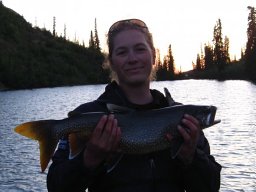 Louise Chavarie合作论文数Department of Biology, University of Waterloo1
 Kim Præbel合作论文数Norwegian College of Fisheries Science, University of Tromsø1




