This study advances Electromagnetic Compatibility (EMC) by investigating how electromagnetic interference (EMI) from Radio Frequency (RF) sources affects digital interconnects. Unlike traditional analyses centered on Continuous Wave (CW) signals, we adopt an RF-focused approach using S-parameter data and consistent RF power to emphasize steady-state responses. This method eliminates the need for time-domain conversions, allowing for more accurate analysis. Our research introduces a novel image-based classification system that accurately assesses signal safety based on steady-state responses. By leveraging a Generative Adversarial Network (GAN) trained on ‘safe’ and ‘unsafe’ signal images, our system can effectively recognize and distinguish between these two states. The GAN’s ability to generate realistic signal patterns enhances classification accuracy, especially when empirical data is limited. This approach has been validated through multiple transformations to ensure robustness and reliability. The findings offer significant improvements in EMC analysis and provide practical guidelines for designing robust digital interconnects. These advancements contribute to enhancing the reliability and security of electronic devices in environments with high RF interference, making them better suited for real-world commercial applications where signal integrity is critical.
The coupling of electromagnetic interference (EMI) from extraneous Radio Frequency (RF) sources on digital electronic interconnects is of critical importance in the Electromagnetic Compatibility (EMC) engineering community. Typically, in such analysis, the EMI is treated as a Continuous Wave (CW) signal that impinges on the digital electronic system. However, it should be noted that EMI signals can have varied temporal and spectral characteristics, and the question arises on how to incorporate waveform modulation into EMI analysis of digital interconnects. In this paper, we present a mathematical formulation on how to incorporate waveform modulation into EMI coupling analysis and utilize it to demonstrate that specific waveform modulations can lead to enhanced coupling effectiveness as compared to conventional CW stimulus. In a test case studied in this paper, the use of our methodology suggests that an optimally modulated EMI signal can enhance coupling by 27% as compared to a single-tone CW EMI signal. We also present an analytical optimization method to obtain the optimal EMI waveform modulation that maximizes the coupling effectiveness of EMI using a Fourier series approximation approach. This technique can be utilized by EMC engineers to develop robust shielding margins for various classes of EMI signals.
We propose a novel data-driven approach for synthesizing unintended emission signals that can then be used to improve and optimize regulatory thresholds. The main component of our approach is a GAN's generator which is trained with a collection of unintended emission and then, in the inference phase, is asked to produce new and similar signals. We demonstrate that, with correlation as the measure of similarity, the GAN-generated signals are similar to the dataset.
Radio source detection through conventional algorithms has been unreliable when trying to solve for large number of sources in the presence of low SINR and less number of snapshots. We address this by reformulating source detection as a multi-class classification problem solved using deep learning frameworks. Incoming waveforms are sampled using a centro-symmetric linear array with omni-directional elements and the normalized upper triangle of the autocorrelation matrix is extracted as the input feature to a modified convolutional neural network with uni-dimensional filters, trained to detect the sources in the presence of both uncorrelated and correlated signals. Two detection algorithms are introduced and referred to as CNNDetector and RadioNet, and subsequently benchmarked against the conventional source detection algorithms. By including pre-processing in forward backward spatial smoothing, RadioNet can also resolve the number of uncorrelated sources in the presence of correlated paths. Finally, the algorithms are stress tested under challenging operational conditions and extensive evaluations are presented showing the efficacy and contributions of the introduced predictive models. To the best of our knowledge, this is the first time the source detection problem has resolved L-1 sources, for an antenna array of L elements using a deep learning framework.
In this paper, we propose the use of GANs as learned, data-driven knowledge database that can be queried for rapid synthesis of suitable antenna designs given a desired response. As an example, we consider the problem of designing the Log-Periodic Folded Dipole Array (LPFDA) antenna for two non-overlapping ranges of Q-factor values. By representing the antenna with the vector of its structural parameters and considering each desirable range of the Q-factor as a class, we transform our problem to that of generating new samples from a given class. We develop two alternative models, a Conditional Wasserstein GAN and a label-switched library of vanilla Wasserstein GANs and train them with a dataset of features and their associated labels (parameter vectors and Q-factor range). The main component of these models is a generator network that learns to map a normally distributed noise vector along with a binary label to the vector of parameters of candidate structures. We demonstrate that in inference mode, these models can be relied upon for fast generation of suitable designs.
This paper introduces a Convolutional Neural Network (CNN) architecture for radio event and source detection. The upper triangle of the auto-correlation matrix is extracted as the feature input to an uni-dimensional (1D) CNN and trained to detect the presence of a source in the sampled signal and estimate the number of signals. Since, the number of source signals present in the sampled waveform can vary between 0 and $L-1$ , where $L$ is the number of sensors in the array, the network is modeled as a multi-class, multi-label classification problem. The proposed method is robust to a varying number of incoming signals to resolve and Signal to Interference Plus Noise Ratio (SINR). The CNN architecture is trained and tested with the number of sources varying between 0 and 4. The source detection architecture is introduced and its efficacy is validated using simulations closely replication real-time RF events.
This paper introduces a novel way to reproduce antennas with Q-factor within a pre-determined threshold using Generative Adversarial Networks (GAN), a class of artificial intelligence algorithm. Instead of optimizing the Q-factor using a conventional optimization techniques, a GAN is trained to learn the distribution on desirable parameter vectors of the antenna and its Q-factor as obtained from a full wave solver. The trained GAN is subsequently used to generate antenna parameters from the learned distribution with a predicted Q-factor. The predicted antenna parameters are imported to CST and simulated using the parameters generated by GAN and the Q-factors are analyzed. The results obtained provides an unique perspective to learning the correlation between antenna parameter distribution and its Q-factor. Simulation results are provided to explain this approach of reproducing antennas with a low Q-factor.
In this paper, we propose a deep neural network based model to predict the time evolution of field values in transient electrodynamics. The key component of our model is a recurrent neural network, which learns representations of long-term spatial-temporal dependencies in the sequence of its input data. We develop an encoder-recurrent-decoder architecture, which is trained with finite difference time domain simulations of plane wave scattering from distributed, perfect electric conducting objects. We demonstrate that, the trained network can emulate a transient electrodynamics problem with more than 17 times speed-up in simulation time compared to traditional finite difference time domain solvers.
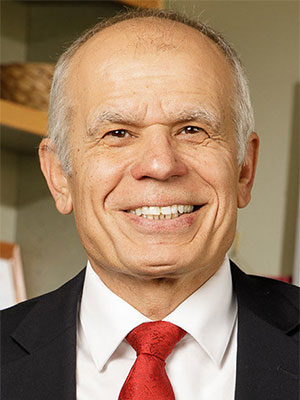 Christos Christodoulou合作论文数Antenna & RF Lab, Department of Electrical and Computer Engineering, School of Engineering, The University of New Mexico8
 Jayakrishnan Vijayamohanan合作论文数4
 Arjun Gupta合作论文数Department of Electrical and Computer Engineering, University of New Mexico4
 Edl Schamiloglu合作论文数Department of Electrical and Computer Engineering, The University of New Mexico3
 Mona Esmaeili合作论文数Dept Elect & Comp Engn, Univ NM2
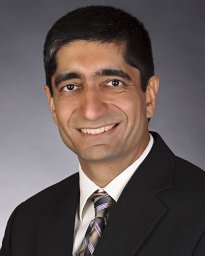 Payman Zarkesh-Ha合作论文数Dept Elect & Comp Engn, Univ New Mexico2
 Sameer Hemmady合作论文数2
 Zhen Peng合作论文数Department of Electrical and Computer Engineering, The Grainger College of Engineering, University of Illinois at Urbana-Champaign1
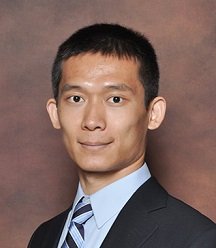 Shu Wang合作论文数Huazhong University of Science and Technology, Huazhong University of Science and Technology Huazhong Univ of Sci and Technol1
 Sotirios K. Goudos合作论文数Department of Applied and Environmental Physics, School of Physics, Faculty of Sciences, Aritostle University of Thessaloniki1
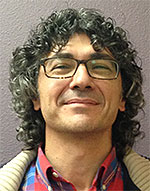 Manel Martinez-Ramon合作论文数Department of Electrical and Computer Engineering, The University of New Mexico1




