This paper deals with two approximation methods for obtaining the optimal deformable model: a discretization scheme by finite differences that generates an algorithm providing the approximating solution for energy-minimizing surfaces and a reconstruction method based on the Chebyshev discrete best approximation which approximates a plane deformable model represented by a finite set of points. Estimates for the approximation-error of these methods and results concerning their convergence or the topological structure of the set of unbounded divergence are presented, too.
After a brief survey on the parametric deformable models, we develop an iterative method based on the finite difference schemes in order to obtain energy-minimizing snakes. We estimate the approximation error, the residue, and the truncature error related to the corresponding algorithm, then we discuss its convergence, consistency, and stability. Some aspects regarding the prosthetic sugical methods that implement the above numerical methods are also pointed out.
In this paper we extend the IIeron's method for cube root to nth root and give an automatic error control using interval arithmetic.
In this paper .we obtain an approximation of the freezing front propagation in a tissue, in a process of freezing and heating, using two identical sources. The mathematical model of the temperature distribution is based on Pennes equation. The theoretical results obtained applying a numerical procedure are compared with the experimental data measured using five sensors implanted in tissue.
In this paper we define the notion of n-m convexity and find the connection with n-order convex function defined by Tiberiu Popoviciu.
 Sergiu Nedevschi合作论文数Department of Computer Science, Faculty of Automation and Computer Science, Technical University of Cluj-Napoca2
 Paulina Mitrea合作论文数Faculty of Automation and Computer Science, Technical University of Cluj-Napoca2Alexandru Mitrea合作论文数Department of Mathematics, Technical University2
 Mircea Ivan合作论文数1
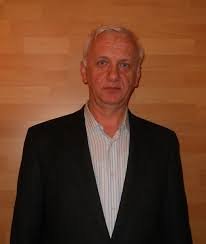 Dorian Popa合作论文数Technical University of Cluj-Napoca1
 Radu Badea合作论文数Medical Clinic;University of Medicine and Pharmacy1
 Delia Mitrea合作论文数Computer-Science Department, Technical University of Cluj-Napoca1




