The Mercury Imaging X-ray Spectrometer is a highly novel instrument that is designed to map Mercury’s elemental composition from orbit at two angular resolutions. By observing the fluorescence X-rays generated when solar-coronal X-rays and charged particles interact with the surface regolith, MIXS will be able to measure the atomic composition of the upper ∼10-20 μm of Mercury’s surface on the day-side. Through precipitating particles on the night-side, MIXS will also determine the dynamic interaction of the planet’s surface with the surrounding space environment. MIXS is composed of two complementary elements: MIXS-C is a collimated instrument which will achieve global coverage at a similar spatial resolution to that achieved (in the northern hemisphere only – i.e. ∼ 50 – 100 km) by MESSENGER; MIXS-T is the first ever X-ray telescope to be sent to another planet and will, during periods of high solar activity (or intense precipitation of charged particles), reveal the X-ray flux from Mercury at better than 10 km resolution. The design, performance, scientific goals and operations plans of the instrument are discussed, including the initial results from commissioning in space.
We present a new concept for a medical imaging system, the Hybrid Mini Gamma Camera (HMGC). This combines an optical and a gamma-ray camera in a co-aligned configuration that offers high spatial resolution multi-modality imaging for superimposition of a scintigraphic image on an optical image. This configuration provides visual identification of the sites of localisation of radioactivity that would be especially suited to medical imaging. An extension of the new concept using two hybrid cameras (The StereoScope) offers the potential for stereoscopic imaging with depth estimation for a gamma emitting source.
The Life Marker Chip (LMC) is one of the instruments being developed for possible flight on the 2018 ExoMars mission. The instrument uses solvents to extract organic compounds from samples of martian regolith and to transfer the extracts to dedicated detectors based around the use of antibodies. The scientific aims of the instrument are to detect organics in the form of biomarkers that might be associated with extinct life, extant life or abiotic sources of organics. The instrument relies on a novel surfactant-based solvent system and bespoke, commercial and research-developed antibodies against a number of distinct biomarkers or molecular types. The LMC comprises of a number of subsystems designed to accept up to four discrete samples of martian regolith or crushed rock, implement the solvent extraction, perform microfluidic-based multiplexed antibody-assays for biomarkers and other targets, optically detect the fluorescent output of the assays, control the internal instrument pressure and temperature, in addition to the associated instrument control electronics and software. The principle of operation, the design and the instrument development status as of December 2011 are reported here. The instrument principle can be extended to other configurations and missions as needed.
We describe a high resolution, small field of view (SFOV), Charge Coupled Device (CCD) based camera for imaging small volumes of radionuclide uptake in tissues. The Mini Gamma Ray Camera (MGRC) is a collimated, scintillator-coated, low cost, high performance imager using low noise CCDs. The prototype MGRC has a 600 μm thick layer of columnar CsI(Tl) and operates in photon counting mode using a thermoelectric cooler to achieve an operating temperature of - 10°C. Collimation was performed using a pin hole collimator. We have measured the spatial resolution, energy resolution and efficiency using a number of radioisotope sources including 140 keV gamma-rays from 99mTc in a specially designed phantom. We also describe our first imaging of a volunteer patient.
The Geostationary Earth Radiation Budget (GERB) instrument is an Earth observing scientific payload launched on-board the European Space Agency Meteosat Second Generation (MSG) satellite in September 2002. The instrument measures reflected and emitted radiation in two wavebands, 0.3 - 4 µm and 4 - 30 µm. The detector system comprises the focal plane and supporting front-end electronics. The focal plane consists of a 256-element thermoelectric linear array operating at ~300 K and four application specific integrated circuits (ASIC) providing parallel amplification, filtering and digitisation. The front-end electronics are built around a digital signal processor, which performs integration and additional filtering of the ASIC product. This paper describes in detail the design, operation and performance of the GERB detector system.
The Beagle 2 project [1] is the UK-led effort that placed a small lander on the surface of Mars in December 2003, as a component of the European Space Agency's Mars Express mission. Unfortunately, communications were never established with the Beagle 2 and so we cannot report results, or even the state of the lander. However, this setback does not prevent us from describing the operations architecture, the approach to cruise and landed phase operations, and the early part of the surface mission. The primary purpose of the project is to examine the surface of Mars, performing astrobiology and geology experiments. A unique project in numerous aspects, the Beagle 2 lander has presented specific spacecraft operations challenges. This paper describes the ground segment architecture of the Beagle 2 mission from an operations perspective. A summary of the mission is given, followed by a description of each component of the lander operations network and their interactions. This highlights some specific areas of interest within the spacecraft operations community: multi-site planning and control; international cooperation in data relay services; the mixing of strong industrial and academic teams; the use of ‘off-the-shelf’ solutions; the role of virtual reality; approaches to operations planning; the user interface and internet technology. Finally, a planning and operations cycle is demonstrated, including both platform management and science-related functions. The scenario provided is taken from real Beagle 2 mission operations planning, as uplinked to Beagle-2 just prior to ejection from Mars Express. Mission and Lander Overview The Beagle-2 lander was a late addition to the Mars Express mission. With a tight mass budget constraint and little time for development, the lander has almost no redundancy in any system, and has a simple execution model based in a single processor. It is nevertheless a complex machine, with some key characteristics given in list form below. • High payload fraction designed for in-situ analysis of sample composition • Robotic ARM supports PAW (position adjustable workbench) • PAW supports most payload items • Imaging payload (stereo cameras, microscope) • Lander base contains mass spectrometer and gas analysis package (GAP) • ‘Static’ lander (no mobility) • Piggyback payload of Mars Express • Rapid development and build programme • Minimal mass budget (60kg)
Sensitivity rankings of energetic materials are not generally consistent across a range of stimuli–shock, shear, and thermal. Ultimately, one desires an initiation criterion and fundamental understanding of each. For thermal and shock stimuli, several useful models and experiments exist. However, many hazard scenarios lead to “shear” initiation in which the energetic material experiences a complex and poorly understood flow field. Energy is deposited in local regions in the material over short timescales. Thus, temperatures quickly rise to high values leading to a precarious competition between the energy input between deviatoric strain energy and chemical energy and energy loss due to heat conduction.
 PE Blackshaw合作论文数3
 Alan C. Perkins合作论文数Department of Medical Physics;University Hospital;Department of Medical Physics, University Hospital3J.E. Lees合作论文数3d j bassford合作论文数2Gillian Butcher合作论文数2mark r sims合作论文数1Chris Bicknell合作论文数1B.S. Bhatia合作论文数1Emile Schyns合作论文数1julien seguy合作论文数1Tony Crawford合作论文数1Graeme Hall合作论文数1Nick Nelms合作论文数1d pullan合作论文数1P.V. Drumm合作论文数1Petra Majewski合作论文数1Maria Genzer合作论文数1Rosie Hodnett合作论文数1Tuomo Tikkanen合作论文数1Duncan Ross合作论文数1carla rato合作论文数1
 Peter Millington-Hotze合作论文数1
 Hugo R. Williams合作论文数School of Engineering, University of Leicester1S. T. Lindsay合作论文数1Seppo Korpela合作论文数1Julian Thornhill合作论文数1Paul Houghton合作论文数1Timo Väisänen合作论文数1
 M. Grande合作论文数Aberystwyth Univ1
 Mark Sephton合作论文数Department of Earth Science & Engineering, Faculty of Engineering, Imperial College London1García-Con Luis Miguel合作论文数1
 Catherine S. Rix合作论文数1Pérez-Mercader Juan合作论文数1
 Sarah L. Bugby合作论文数Physics &, Space Research Centre;Astronomy, University of Leicester;Space Research Centre, Physics & Astronomy, University of Leicester1
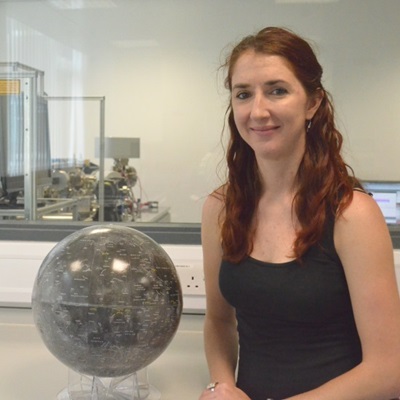 Katherine Joy合作论文数University of Manchester1Derveni Mariliza合作论文数1
 Ulrich R. Christensen合作论文数Max Planck Institute for Solar System Research1C Feldman合作论文数1
 Tim Yeoman合作论文数School of Physics and Astronomy, University of Leicester1Martin Hilchenbach合作论文数Max-Planck-Institut für Aeronomie, D-37191 Katlenburg-Lindau, Germany1Adrian Martindale合作论文数1Robert Lieb合作论文数1
 Mahesh Anand合作论文数Department of Mineralogy, The Natural History Museum1
 Antti Penttilä合作论文数Department of Physics, Faculty of Science, University of Helsinki1
 Tomas Kohout合作论文数Faculty of Natural Sciences, Charles University1
 Phil Bland合作论文数School of Earth and Planetary Sciences, Faculty of Science and Engineering, Curtin University;Space Science & Technology Centre, Curtin University;Space Machines Company1
 Michele Dougherty合作论文数Department of Physics, Faculty of Natural Sciences, Imperial College London1Juhani Huovelin合作论文数1Suzanne M. Imber合作论文数Department of Physics and Astronomy;University of Leicester;Department of Physics and Astronomy, University of Leicester1




