In modern industrial production, multiple robots often collaborate to complete complex manufacturing tasks. Large language models (LLMs), with their strong reasoning capabilities, have shown potential in coordinating robots for simple household and manipulation tasks. However, in industrial scenarios, stricter sequential constraints and more complex dependencies within tasks present new challenges for LLMs. To address this, we propose IMR-LLM, a novel LLM-driven Industrial Multi-Robot task planning and program generation framework. Specifically, we utilize LLMs to assist in constructing disjunctive graphs and employ deterministic solving methods to obtain a feasible and efficient high-level task plan. Based on this, we use a process tree to guide LLMs to generate executable low-level programs. Additionally, we create IMR-Bench, a challenging benchmark that encompasses multi-robot industrial tasks across three levels of complexity. Experimental results indicate that our method significantly surpasses existing methods across all evaluation metrics.
We introduce a method for transferring material information from a partial scan to a CAD model by establishing a dense correspondence between the scan and the CAD model. Our method is enabled by a pipeline composed of a material decomposition network, a geometry mapping network, and material completion networks. Specifically, given a single RGB-D source image and a target CAD model aligned to the scan, we employ a material decomposition network to extract material and illumination parameters from the image. Next, we sample point clouds from the image and CAD model, and establish a dense correspondence between the two point clouds with a geometry mapping network, which maps the point clouds to a shared template space where correspondences can be derived from closest points and aligned UV maps can be obtained. Finally, based on the established correspondence, we transfer the decomposed material information from the source to the target, and further perform material completion via diffusion on the point clouds and in the UV space. We demonstrate with qualitative and quantitative evaluations that our method is able to obtain more accurate material transfers than previous work in challenging input cases with imperfect shape alignment, so that the shapes with transferred materials better resemble the scanned shapes.
We propose a new method for synthesizing an arbitrarily sized novel vector texture given a single raster exemplar. Our method first segments the exemplar to extract the primary textons, and then clusters them based on visual similarity. We then compute a descriptor to capture each texton's neighborhood which contains the inter-category relationships that are used at synthesis time. Next, we use a simple procedure to both extract and place the secondary textons behind the primary polygons. Finally, our method constructs a gradient field for the background which is defined by a set of data points and colors. The color of the secondary polygons are also adjusted to better match the gradient field. To compare our work with other methods, we use a wide range of perceptual-based metrics.
We present an algorithm that creates interesting abstract expressionist images from segments of an input image. The algorithm operates by first segmenting the input image at multiple scales, then redistributing the resulting segments across the image plane to obtain an aesthetic abstract output. Larger segments are placed using neighborhood-aware descriptors, and smaller segments are arranged in a Poisson disk distribution. In our thorough analysis, we show that our results score highly according to several relevant aesthetic metrics, and that our style is indeed abstract expressionism. The results are visually appealing, provided the exemplar has a somewhat diverse color pallette and some amount of structure.
Procedural modeling is a popular technique for 3D content creation and offers a number of advantages over alternative techniques for modeling 3D shapes. However, given a procedural model, predicting the procedural parameters of existing data provided in different modalities can be challenging. This is because the data may be in a different representation than the one generated by the procedural model, and procedural models are usually not invertible, nor are they differentiable. In this paper, we address these limitations and introduce an invertible and differentiable representation for procedural models. We approximate parameterized procedures with a neural network architecture NNProc that learns both the forward and inverse mapping of the procedural model by aligning the latent spaces of shape parameters and shapes. The network is trained in a manner that is agnostic to the inner workings of the procedural model, implying that models implemented in different languages or systems can be used. We demonstrate how the proposed representation can be used for both forward and inverse procedural modeling. Moreover, we show how NNProc can be used in conjunction with optimization for applications such as shape reconstruction from an image or a 3D Gaussian Splatting.
Since the preparation of labeled data for training semantic segmentation networks of point clouds is a time-consuming process, weakly supervised approaches have been introduced to learn from only a small fraction of data. These methods are typically based on learning with contrastive losses while automatically deriving per-point pseudo-labels from a sparse set of user-annotated labels. In this paper, our key observation is that the selection of which samples to annotate is as important as how these samples are used for training. Thus, we introduce a method for weakly supervised segmentation of 3D scenes that combines self-training with active learning. Active learning selects points for annotation that are likely to result in improvements to the trained model, while self-training makes efficient use of the user-provided labels for learning the model. We demonstrate that our approach leads to an effective method that provides improvements in scene segmentation over previous work and baselines, while requiring only a few user annotations.
Emotions are complex neuro-physiological states that influence behavior. While emotions have been instrumental to our survival, they are also closely associated with prevalent disorders such as depression and anxiety. The development of treatments for these disorders has relied on animal models, in particular, mice are often used in pre-clinical testing. To compare effects between treatment groups, researchers have increasingly used machine learning to help quantify behaviors associated with emotionality. Previous work has shown that computer vision can be used to detect facial expressions in mice. In this work, we create a novel dataset for depressive-like mouse facial expressions using varying LypoPolySaccharide (LPS) dosages and demonstrate that a machine learning model trained on this dataset was able to detect differences in magnitude via dosage amount.### Competing Interest StatementThe authors have declared no competing interest.
Methods that use neural networks for synthesizing 3D shapes in the form of a part-based representation have been introduced over the last few years. These methods represent shapes as a graph or hierarchy of parts and enable a variety of applications such as shape sampling and reconstruction. However, current methods do not allow easily regenerating individual shape parts according to user preferences. In this paper, we investigate techniques that allow the user to generate multiple, diverse suggestions for individual parts. Specifically, we experiment with multimodal deep generative models that allow sampling diverse suggestions for shape parts and focus on models which have not been considered in previous work on shape synthesis. To provide a comparative study of these techniques, we introduce a method for synthesizing 3D shapes in a part-based representation and evaluate all the part suggestion techniques within this synthesis method. In our method, which is inspired by previous work, shapes are represented as a set of parts in the form of implicit functions which are then positioned in space to form the final shape. Synthesis in this representation is enabled by a neural network architecture based on an implicit decoder and a spatial transformer. We compare the various multimodal generative models by evaluating their performance in generating part suggestions. Our contribution is to show with qualitative and quantitative evaluations which of the new techniques for multimodal part generation perform the best and that a synthesis method based on the top-performing techniques allows the user to more finely control the parts that are generated in the 3D shapes while maintaining high shape fidelity when reconstructing shapes.
We address the problem of scene-aware activity program generation, which requires decomposing a given activity task into instructions that can be sequentially performed within a target scene to complete the activity. While existing methods have shown the ability to generate rational or executable programs, generating programs with both high rationality and executability still remains a challenge. Hence, we propose a novel method where the key idea is to explicitly combine the language rationality of a powerful language model with dynamic perception of the target scene where instructions are executed, to generate programs with high rationality and executability. Our method iteratively generates instructions for the activity program. Specifically, a two-branch feature encoder operates on a language-based and graph-based representation of the current generation progress to extract language features and scene graph features, respectively. These features are then used by a predictor to generate the next instruction in the program. Subsequently, another module performs the predicted action and updates the scene for perception in the next iteration. Extensive evaluations are conducted on the VirtualHome-Env dataset, showing the advantages of our method over previous work. Key algorithmic designs are validated through ablation studies, and results on other types of inputs are also presented to show the generalizability of our method.
Procedural models enable the generation of a large amount of diverse shapes by varying the parameters of the model. However, writing a procedural model for replicating a collection of reference shapes is difficult, requiring much inspection of the original and replicated shapes during the development of the model. In this paper, we introduce a data‐guided method for aiding a programmer in creating a procedural model to replicate a collection of reference shapes. The user starts by writing an initial procedural model, and the system automatically predicts the model parameters for reference shapes, also grouping shapes by how well they are approximated by the current procedural model. The user can then update the procedural model based on the given feedback and iterate the process. Our system thus automates the tedious process of discovering the parameters that replicate reference shapes, allowing the programmer to focus on designing the high‐level rules that generate the shapes. We demonstrate through qualitative examples and a user study that our method is able to speed up the development time for creating procedural models of 2D and 3D man‐made shapes.
Image registration is an essential part of Medical Image Analysis. Traditional local search methods (e.g., Mean Square Errors (MSE) and Normalized Mutual Information (NMI)) achieve accurate registration but require good initialization. However, finding a good initialization is difficult in partial image matching. Recent deep learning methods such as images-to-transformation directly solve the registration problem but need images of mostly same sizes and already roughly aligned. This work presents a learning-based method to provide good initialization for partial image registration. A light and efficient network learns the mapping from a small patch of an image to a position in the template space for each modality. After computing such mapping for a set of patches, we compute a rigid transformation matrix that maps the patches to the corresponding target positions. We tested our method to register a 3DRA image of a partial brain to a CT image of a whole brain. The result shows that MSE registration with our initialization significantly outperformed baselines including naive initialization and recent deep learning methods without template. You can access our source code in https://github.com/ApisXia/PartialMedPreregistration .
We introduce a method for assigning photorealistic relightable materials to 3D shapes in an automatic manner. Our method takes as input a photo exemplar of a real object and a 3D object with segmentation, and uses the exemplar to guide the assignment of materials to the parts of the shape, so that the appearance of the resulting shape is as similar as possible to the exemplar. To accomplish this goal, our method combines an image translation neural network with a material assignment neural network. The image translation network translates the color from the exemplar to a projection of the 3D shape and the part segmentation from the projection to the exemplar. Then, the material prediction network assigns materials from a collection of realistic materials to the projected parts, based on the translated images and perceptual similarity of the materials. One key idea of our method is to use the translation network to establish a correspondence between the exemplar and shape projection, which allows us to transfer materials between objects with diverse structures. Another key idea of our method is to use the two pairs of (color, segmentation) images provided by the image translation to guide the material assignment, which enables us to ensure the consistency in the assignment. We demonstrate that our method allows us to assign materials to shapes so that their appearances better resemble the input exemplars, improving the quality of the results over the state-of-the-art method, and allowing us to automatically create thousands of shapes with high-quality photorealistic materials. Code and data for this paper are available at https://github.com/XiangyuSu611/TMT.
We introduce a modeling tool which can evolve a set of 3D objects in a functionality-aware manner. Our goal is for the evolution to generate large and diverse sets of plausible 3D objects for data augmentation, constrained modeling, as well as open-ended exploration to possibly inspire new designs. Starting with an initial population of 3D objects belonging to one or more functional categories, we evolve the shapes through part recombination to produce generations of hybrids or crossbreeds between parents from the heterogeneous shape collection. Evolutionary selection of offsprings is guided both by a functional plausibility score derived from functionality analysis of shapes in the initial population and user preference, as in a design gallery. Since cross-category hybridization may result in offsprings not belonging to any of the known functional categories, we develop a means for functionality partial matching to evaluate functional plausibility on partial shapes. We show a variety of plausible hybrid shapes generated by our functionality-aware model evolution, which can complement existing datasets as training data and boost the performance of contemporary data-driven segmentation schemes, especially in challenging cases. Our tool supports constrained modeling, allowing users to restrict or steer the model evolution with functionality labels. At the same time, unexpected yet functional object prototypes can emerge during open-ended exploration owing to structure breaking when evolving a heterogeneous collection.
The interpretation of colors in visualizations is facilitated when the assignments between colors and concepts in the visualizations match human's expectations, implying that the colors can be interpreted in a semantic manner. However, manually creating a dataset of suitable associations between colors and concepts for use in visualizations is costly, as such associations would have to be collected from humans for a large variety of concepts. To address the challenge of collecting this data, we introduce a method to extract color-concept associations automatically from a set of concept images. While the state-of-the-art method extracts associations from data with supervised learning, we developed a self-supervised method based on colorization that does not require the preparation of ground truth color-concept associations. Our key insight is that a set of images of a concept should be sufficient for learning color-concept associations, since humans also learn to associate colors to concepts mainly from past visual input. Thus, we propose to use an automatic colorization method to extract statistical models of the color-concept associations that appear in concept images. Specifically, we take a colorization model pre-trained on ImageNet and fine-tune it on the set of images associated with a given concept, to predict pixel-wise probability distributions in Lab color space for the images. Then, we convert the predicted probability distributions into color ratings for a given color library and aggregate them for all the images of a concept to obtain the final color-concept associations. We evaluate our method using four different evaluation metrics and via a user study. Experiments show that, although the state-of-the-art method based on supervised learning with user-provided ratings is more effective at capturing relative associations, our self-supervised method obtains overall better results according to metrics like Earth Mover's Distance (EMD) and Entropy Difference (ED), which are closer to human perception of color distributions.
Polygonal modeling is a core task of content creation in Computer Graphics. The complexity of modeling, in terms of the number and the order of operations and time required to execute them makes it challenging to learn and execute. Our goal is to automatically derive a polygonal modeling sequence for a given target. Then, one can learn polygonal modeling by observing the resulting sequence and also expedite the modeling process by starting from the auto-generated result. As a starting point for building a system for 3D modeling in the future, we tackle the 2D shape modeling problem and present AutoPoly, a hybrid method that generates a polygonal mesh construction sequence from a silhouette image. The key idea of our method is the use of the Monte Carlo tree search (MCTS) algorithm and differentiable rendering to separately predict sequential topological actions and geometric actions. Our hybrid method can alter topology, whereas the recently proposed inverse shape estimation methods using differentiable rendering can only handle a fixed topology. Our novel reward function encourages MCTS to select topological actions that lead to a simpler shape without self-intersection. We further designed two deep learning-based methods to improve the expansion and simulation steps in the MCTS search process: an n-step "future action prediction" network (nFAP-Net) to generate candidates for potential topological actions, and a shape warping network (WarpNet) to predict polygonal shapes given the predicted rendered images and topological actions. We demonstrate the efficiency of our method on 2D polygonal shapes of multiple man-made object categories.
We compare the quality of latent spaces learned by different neural network models for organizing collections of 3D shapes. To accomplish this goal, our first contribution is to introduce a synthetic dataset of shapes with known semantic attributes. We use a procedural method to generate a dataset comprising four categories, with a total of over 10,000 shapes, providing a controlled setting for studying the properties of latent spaces. In contrast to previous work, the synthetic shapes generated with our method have a more realistic appearance, similar to objects in manually-modeled collections. We use 8,800 shapes from the generated dataset to perform a quantitative and qualitative evaluation of the latent spaces learned with a set of representative neural network models. Our second contribution is to perform the quantitative evaluation with measures that we developed for numerically assessing the properties of the latent spaces, which allow us to objectively compare different models based on statistics computed on large sets of shapes.
We present a neural optimization model trained with reinforcement learning to solve the coordinate ordering problem for sets of star glyphs. Given a set of star glyphs associated to multiple class labels, we propose to use shape context descriptors to measure the perceptual distance between pairs of glyphs, and use the derived silhouette coefficient to measure the perception of class separability within the entire set. To find the optimal coordinate order for the given set, we train a neural network using reinforcement learning to reward orderings with high silhouette coefficients. The network consists of an encoder and a decoder with an attention mechanism. The encoder employs a recurrent neural network (RNN) to encode input shape and class information, while the decoder together with the attention mechanism employs another RNN to output a sequence with the new coordinate order. In addition, we introduce a neural network to efficiently estimate the similarity between shape context descriptors, which allows to speed up the computation of silhouette coefficients and thus the training of the axis ordering network. Two user studies demonstrate that the orders provided by our method are preferred by users for perceiving class separation. We tested our model on different settings to show its robustness and generalization abilities and demonstrate that it allows to order input sets with unseen data size, data dimension, or number of classes. We also demonstrate that our model can be adapted to coordinate ordering of other types of plots such as RadViz by replacing the proposed shape-aware silhouette coefficient with the corresponding quality metric to guide network training.
We introduce an approach to incorporate user guidance into shape generation approaches based on deep networks. Generative networks such as autoencoders and generative adversarial networks are trained to encode shapes into latent vectors, effectively learning a latent shape space that can be sampled for generating new shapes. Our main idea is to enable users to explore the shape space with the use of high-level semantic keywords. Specifically, the user inputs a set of keywords that describe the general attributes of the shape to be generated, e.g., "four legs" for a chair. Then, our method maps the keywords to a subspace of the latent space, where the subspace captures the shapes possessing the specified attributes. The user then explores only this subspace to search for shapes that satisfy the design goal, in a process similar to using a parametric shape model. Our exploratory approach allows users to model shapes at a high level without the need for advanced artistic skills, in contrast to existing methods that allow to guide the generation with sketching or partial modeling of a shape. Our technical contribution to enable this exploration-based approach is the introduction of a label regression neural network coupled with shape encoder/decoder networks. The label regression network takes the user-provided keywords and maps them to distributions in the latent space. We show that our method allows users to explore the shape space and generate a variety of shapes with selected high-level attributes.
We introduce a learning framework for automated floorplan generation which combines generative modeling using deep neural networks and user-in-the-loop designs to enable human users to provide sparse design constraints. Such constraints are represented by a layout graph. The core component of our learning framework is a deep neural network, Graph2Plan, which converts a layout graph, along with a building boundary, into a floorplan that fulfills both the layout and boundary constraints. Given an input building boundary, we allow a user to specify room counts and other layout constraints, which are used to retrieve a set of floorplans, with their associated layout graphs, from a database. For each retrieved layout graph, along with the input boundary, Graph2Plan first generates a corresponding raster floorplan image, and then a refined set of boxes representing the rooms. Graph2Plan is trained on RPLAN, a large-scale dataset consisting of 80K annotated floorplans. The network is mainly based on convolutional processing over both the layout graph, via a graph neural network (GNN), and the input building boundary, as well as the raster floorplan images, via conventional image convolution. We demonstrate the quality and versatility of our floorplan generation framework in terms of its ability to cater to different user inputs. We conduct both qualitative and quantitative evaluations, ablation studies, and comparisons with state-of-the-art approaches.
 Hao (Richard) Zhang (张皓)合作论文数School of Computing Science, Faculty of Applied Sciences, Simon Fraser University23
 Ruizhen Hu (胡瑞珍)合作论文数College of Computer Science and Software Engineering, Shenzhen University22
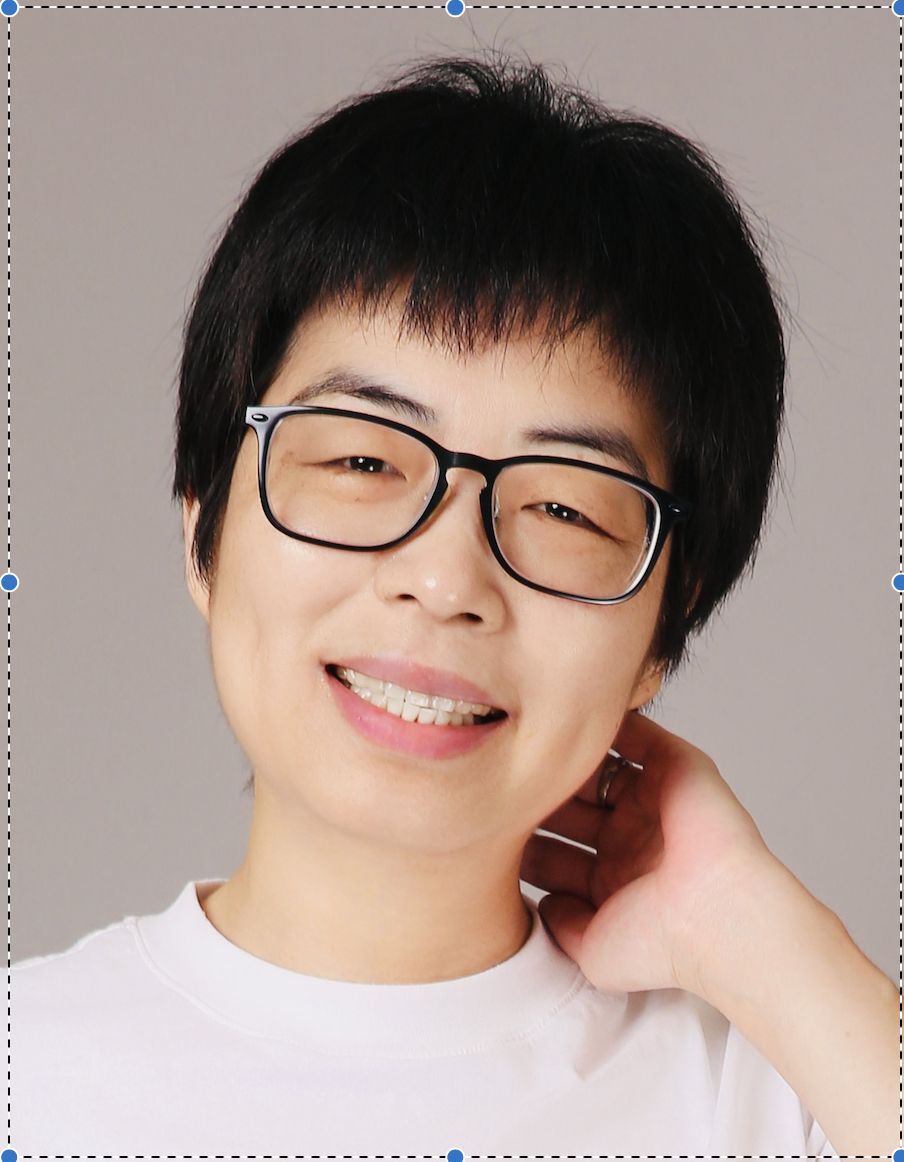 Hui Huang (黄惠)合作论文数Visual Computing Research Center, Shenzhen University16
 Daniel Cohen-Or合作论文数School of Computer Science, Tel Aviv University12
 Hélio Pedrini合作论文数Institute of Computing, University of Campinas6
 Ariel Shamir合作论文数Efi Arazi School of Computer Science, Reichman University5
 Ghassan Hamarneh合作论文数School of Computing Science, Simon Fraser University5
 Yanran (Isaac) Guan (管焱然)合作论文数Carleton University4
 Luanmin Chen合作论文数3
 Noa Fish合作论文数Tel Aviv Univeristy3
 Zihao Yan合作论文数Shenzhen University3
 Manolis Savva合作论文数School of Computing Science, Simon Fraser University3
 Takeo Igarashi合作论文数Department of Computer Science, Graduate School of Information Science and Technology, The University of Tokyo3
 I-Chao Shen (沈奕超)合作论文数Department of Computer Science, Graduate School of Information Science and Technology, The University of Tokyo;Department of Information Science, Graduate School of Information Science and Technology, The University of Tokyo3
 Yanir Kleiman合作论文数The Academic College of Tel-Aviv Yaffo3
 Wenchao Li (李文超)合作论文数Huawei2
 Tansin Jahan合作论文数2
 Han Liu合作论文数KAUST, Thuwal, Saudi Arabia2
 Bin Chen (陈彬)合作论文数College of Electronics and Information Engineering, Shenzhen University2
 Melinos Averkiou合作论文数2Rong Liu合作论文数2David Mould合作论文数Carleton University2
 Olga Sorkine-Hornung合作论文数Department of Computer Science, ETH Zurich;Interactive Geometry Lab, Institute of Visual Computing, ETH Zurich2
 Kai (Kevin) Xu (徐凯)合作论文数Institute of AI for Industries, Chinese Academy of Sciences2
 Oliver Deussen合作论文数Department of Computer and Information Science, University of Konstanz2
 William Schwartz合作论文数Department of Computer Science, Federal University of Minas Gerais2
 Murilo V. G. da Silva合作论文数Department of Computer Science, Federal University of Technology Parana2
 Andrea Tagliasacchi合作论文数Google Brain;School of Computing Science, Simon Fraser University2
 Ramsay Dyer合作论文数Simon Fraser University2Xiuping Liu合作论文数1D Cohen-Or合作论文数1OM van Kaick合作论文数1MVG da Silva合作论文数1Diego Gonzalez Becerra合作论文数1Zeyu Huang合作论文数1Shuyang Sun合作论文数1Zejia Su合作论文数1D. van de Ven合作论文数1Yuhan Tang合作论文数1
 Andre Telfer合作论文数1Jingwen Zhang合作论文数1Gengxin Liu合作论文数1Cheng Wen合作论文数1Xiangkai Chen合作论文数1Xiangyu Su合作论文数1Sharjeel Ali合作论文数1Tingkai Sha合作论文数Shenzhen University, Visual Computing Research Center, China1
 Ding Xia合作论文数Univ Tokyo1Bojian Wu合作论文数Alibaba Group1




