The aim of this study was to address concurrent and construct validity of two instruments, the Self-care Ability Scale for the Elderly (SASE) and the self-report form of the Appraisal of Self-care Agency Scale (ASA-A), by testing them with home-dwelling, elderly Swedish patients. The two self-report instruments, including some additional new questions, were mailed to an age-stratified random sample of 420 elderly subjects and were finally completed by 125 of them. Bivariate and multivariate statistical methods were used in the analyses. An analysis of the non-respondents revealed no significant differences between them and the respondents. Standardized regression coefficients for reported abilities/activities on the scores were 0.71 for SASE (p < 0.0001) and for ASA-A 0.51 (p < 0.0001). SASE and ASA-A were found to measure related but not identical concepts (r = 0.69). Sensitivity and specificity ratings for managing without any help from official and unofficial caregivers were 68% and 72% respectively for SASE, and 50% and 64% for ASA-A. Individuals of 80+ years of age had lower scores than younger respondents on the SASE (p < 0.001) and ASA-A (p < 0.05) scales. Respondents living independently had higher scores on both scales than those living in institutions (p < 0.001). Lower scores on both scales were found for respondents who were not in good health compared with those who were in good health (p < 0.001). A five-factor solution for SASE explained 70.2% of the variances, and an eight-factor solution explained 67.9% of the variances for ASA-A. The results of this study confirm that the SASE and ASA-A assessments substantially measured what they were intended to measure in the studied group of lucid, elderly subjects.
AIMS AND OBJECTIVES:To describe and explore experiences of next of kin during the older persons' transition into long-term care.BACKGROUND:Moving into long-term care is a challenge for both resident and next of kin. Next of kin experience transitions at the same time as they play significant parts in their family members' transition into long-term care placement.DESIGN:Constructivist hermeneutical design.METHODS:Ten next of kin to newly admitted eight residents were recruited by purposeful sampling and interviewed. Periodic participant observation periods following new residents on arrival day and the first week after admission and some written documentation were the backdrops to the interviews.RESULTS:What happened prior to the long-term care placement as well as what happened in the initial period of transition influenced the experiences of next of kin. Characteristics of their experiences were: 'striving to handle the new situation', 'still feeling responsible', and 'maintaining dignity and continuity'.CONCLUSIONS:Next of kin were unprepared for the transition and had little support from staff. Staff lacked awareness about next of kin's transition experiences. Their involvement with next of kin was unpredictable, and this added to the burdens of next of kin in this period.RELEVANCE TO CLINICAL PRACTICE:Knowledge about experiences of next of kin needs to be acknowledged among healthcare professionals. Health professionals need to pay attention to what happens across institutional borders within families as well as between staff and family members. Individual family members need support in this period of change.
AIM:The aim of this study was to evaluate the effects of a telephone-based self-care intervention among urban living individuals 75+ years of age by comparing self-reported perceived health, mental health, sense of coherence, self-care ability, and self-care agency before and after the intervention.MATERIALS AND METHODS:In a randomized controlled study, 15 persons answered a questionnaire about perceived health, mental health, sense of coherence, self-care ability, and self-care agency. In a sex- and age-matched control group (n=15), the same questions were answered. Data were collected before and after intervention. An open-ended question about experiences of the intervention was included in the last questionnaire. The intervention consisted of a first meeting with health professionals and additional five self-care telephone calls. The control group did not receive any intervention or attention except for the questionnaires. Descriptive statistics were used to describe the study group. To compare the intervention group and control group on nominal and ordinal levels, the McNemar test and the Wilcoxon signed-rank test, respectively, were chosen.RESULTS:Thirty individuals (14 females and 16 males) participated in the study, ranging in age between 75 and 93 years. A significant difference was obtained in the intervention group regarding mental health. Mental health improved significantly in the intervention group (P=0.037). In the control group, mental health, sense of coherence, self-care ability, and self-care agency showed worse outcome results after the intervention (19 weeks).CONCLUSION:Self-care telephone talks improved mental health significantly in our sample, and mental health focus could be understood as a possible condition for health promotion to take place. Structured self-care telephone talks have proved to be successful and a relevant method to use in practice.
Research supervision is an area of great importance for developing new researchers and for high quality research. It is a pedagogical activity that is co-constructed between the persons involved and the theoretical and practical context, and it seems meaningful to discuss issues that may contribute to high quality research supervision. The aim of this article is to describe and discuss research supervision in relation to some quality aspects that were presented and elaborated on in a Nordic seminar among university teachers with different experiences of such supervision within health and sport sciences. The results were based on five group discussions. Important components in the structure were motivation and competence. The process was considered to be individual and time-dependent. The relation is critical and can offer ethical challenges. To motivate and challenge were seen as important tools in the supervision with enhanced independence and an implemented research report, characterised by a critical approach and high scientific quality, as a goal.
BACKGROUND:Knowledge about how to support nutritional self-care in the vulnerable elderly living in their own homes is an important area for health care professionals. The aim of this case study was to evaluate the effects of nutritional intervention by comparing perceived health, sense of coherence, self-care ability, and nutritional risk in two older home-dwelling individuals before, during, and after intervention and to describe their experiences of nutritional self-care before and after intervention.METHODS:A study circle was established to support nutritional self-care in two older home-dwelling individuals (≥65 years of age), who participated in three meetings arranged by health professionals over a period of six months. The effects of this study circle were evaluated using the Nutritional Form For the Elderly, the Self-care Ability Scale for the Elderly (SASE), the Appraisal of Self-care Agency scale, the Sense of Coherence (SOC) scale, and responses to a number of health-related questions. Qualitative interviews were performed before and after intervention to interpret the changes that occurred during intervention.RESULTS:A reduced risk of undernutrition was found for both participants. A higher total score on the SASE was obtained for one participant, along with a slightly stronger preference for self-care to maintain sufficient food intake, was evident. For the other participant, total score on the SASE decreased, but the SOC score improved after intervention. Decreased mobility was reported, but this did not influence his food intake. The study circle was an opportunity to express personal views and opinions about food intake and meals.CONCLUSION:An organized meeting place for dialogue between older home-dwelling individuals and health care professionals can stimulate the older person's engagement, consciousness, and learning about nutritional self-care, and thereby be of importance in reducing the risk of undernutrition.
Self-care is an activity of mature persons who have developed their abilities to take care of themselves. Individuals can choose to actualize their self-care abilities into self-care activities to maintain, restore, or improve health and well-being. It is of importance to understand the meaning of the actualization of self-care resources among older people. The aim of this study was to investigate the meaning of the actualization of self-care resources, i.e., actions taken to improve, maintain, or restore health and well-being, among a group of older home-dwelling individuals with a high sense of coherence. The design of this study was to reanalyse narratives revealing self-care activities from 11 (five females and six males) Norwegian older home-dwelling people (65 years or older) identified as having a high sense of coherence. In order to reveal the meaning and get an understanding of why these self-care resources were realized or actualized, a Gadamerian-based research method was chosen. The analysis revealed four themes that showed the meaning of actualization of self-care resources in the study group: “Desire to carry on”, “Be of use to others”, “Self-realization”, and “Confidence to manage in the future”. The findings showed what older people found meaningful to strive for, and this information can be used as a guide for health professionals when supporting older people in their self-care. Older people with self-care resources can also be an important resource for others in need of social contact and practical help. These resources have to be asked for in voluntary work among older people in need of help and, thereby, can be a valuable supplement to the community health care system.
Background: Promoting physical activity is a public health priority in most industrial countries, and physical function is an important factor when taking into consideration older people's self-care and health. Despite the increasing challenges associated with urbanization and the aging population, urban life appears to be positive in many ways for urban dwellers. However, the manner in which older people live in urban settings and how this influences their ability to take care of themselves should be considered important knowledge for health professionals and politicians to acquire. The aim of this study was to describe the lived experiences of self-care and features that may influence health and self-care among older urban home-dwelling individuals who are physically active.Methods: Ten subjects, three women and seven men, who were aged 65-82 years and identified to be physically active, were interviewed. The interviews were recorded, transcribed verbatim, and analyzed according to the descriptive phenomenological method devised by Giorgi.Results: Our findings showed beneficial self-care. The participants lived active everyday lives and were frequently physically active. They were part of a supportive, inclusive, and promoting fellowship, and they had the opportunity to travel. They utilized their competence and experienced making themselves useful. It was a privilege to be part of a family life as a husband, wife, parent, and/or a grandparent. They acknowledged physical and mental limitations, yet they felt they were in good health.Conclusion: Health professionals and politicians should identify places where fellowship and relationships can be built, as well as encourage older people to use their competence by engagement in volunteering. These interventions are important to support older people's self-care and health. This may also be a way to reduce ageism in Western societies.
Cost limitations might challenge the use of high-fidelity simulation as a teaching–learning method. This article presents the results of a Norwegian project including two simulation studies in which simulation teaching and learning were studied among students in the second year of a three-year bachelor nursing programme. The students were organised into small simulation groups with different roles; nurse, physician, family member and observer. Based on experiences in different roles, the students evaluated the simulation design characteristics and educational practices used in the simulation. In addition, three simulation outcomes were measured; knowledge (learning), Student Satisfaction and Self-confidence in Learning. The simulation was evaluated to be a valuable teaching–learning method to develop professional understanding and insight independent of roles. Overall, the students rated the Student Satisfaction and Self-confidence in Learning as high. Knowledge about the specific patient focus increased after the simulation activity. Students can develop practical, communication and collaboration skills, through experiencing the nurse's role. Assuming the observer role, students have the potential for vicarious learning, which could increase the learning value. Both methods of learning (practical experience or vicarious learning) may bridge the gap between theory and practice and contribute to the development of skills in reflective and critical thinking.
Among individuals diagnosed with the chronic neurologic disease, multiple sclerosis (MS), a majority suffers from fatigue, which strongly influences their every-day-life. The aim of this study was to investigate work capacity and health-related quality of life (HRQoL) in a group of MS patients and also to investigate if work capacity and HRQoL could be predicted by background factors, fatigue, heat sensitivity, cognitive dysfunction, emotional distress or degree of disability.
Introduction: To be next of kin to a home-dwelling person with dementia is known to be a heavy burden, especially early in the process. Studies have revealed a need for information and support during the disease process. Likewise, there is support for the positive impacts of physical and social activities for wellbeing in home-dwelling people with dementia. It is important to obtain experiences from next of kin whose spouses or parents participate in such physical and social activities.Aim: The aim of this study was to elucidate the experiences of next of kin to home-dwelling persons in an early stage of dementia who had an opportunity to participate in organized physical and social activities.Method: The study has a qualitative design. Focus group interviews were conducted with ten next of kin to home-dwelling dementia sufferers, who participated in physical and social activities in an activity center. The interview texts were analyzed using qualitative content analysis.Findings: In the analysis, two categories emerged: "a break in the everyday" and "being attended and cared about." Two sub-categories identified in each of the two main categories were: "need of relief" and "meaningful activities;" and "being confirmed" and "sharing experiences and getting advice and help," respectively. These categories were interpreted in an overall theme: - "contentment with adapted activities and group meetings provided with a person-centered approach."Conclusion: Adapted physical and social activities led by highly qualified personnel can provide needed relief and support to the next of kin, and meaningful activities to the dementia sufferers. However, it is crucial that the personnel provide person-centered care and are able to meet the needs of the dementia sufferers and their next of kin, to help to give them a new everyday life.
Self-care is a central concept in health care and may be considered as a means to maintain, restore, and improve one's health and well-being. When performed effectively, self-care contributes not only to human functioning but also to human structural integrity and human development (ie, to a dynamic and holistic state of health). Self-care as a clinical concept is relevant for health care professionals, and it should be meaningful to investigate it at a philosophical level and to further elaborate upon this concept. The aim of this article is to discuss and elaborate upon a phenomenological perspective on self-care in aging that is relevant for the health sciences. Self-care may be preliminarily regarded as a fundamental perspective for the conscious older individual, and as a way of being in the world with both the objective body and with the lived body. The lived body is the personal center of perception and the field of action, and it is also the center of self-care. The potentiality or ability for self-care activity and self-care activity itself are structures given to perception, with self-care ability as an integral part of the lived body. The actualization of self-care ability comes about through a certain meaning, which can be regarded as an important driving force. It is constituted by communication, a healthy lifestyle, and by building meaning and socializing. Successful self-care involves having contacts with the health care system, being conscious of a sound lifestyle, being physically and mentally active, being engaged, having social contacts with family and others, as well as being satisfied, positive, and being able to look forward. One fundamental cornerstone is serenity on behalf of the individual. Self-care can facilitate transitions, and it may also be an outcome of transitions.
Background: Living alone in urban areas when getting old is an important and necessary field for research as the growth of the urban population worldwide increases, and due to the fact that people live longer. How older people manage their self-care and health, and how this might influence their identity and life situation may be very important to understand when planning for a new, upcoming older generation. The aim of this study was to elucidate the meaning of self-care and health for the perception of life situation and identity among single-living older individuals in urban areas in southern Norway.Methods: A phenomenological-hermeneutic approach inspired by Ricoeur was applied. Nine single-living older persons in urban areas, 70-82 years of age, and identified to be in good health were interviewed. The interviews were audiotaped, transcribed verbatim, and analyzed using a phenomenological-hermeneutic method.Results: Strength and a time dimension characterized the meaning of self-care and health for the perception of life situation and identity as narrated by the group of single-living older individuals in urban areas in southern Norway. The informants were, as older individuals, caring, autonomous, and robust characters, who had gone through difficult times in life, and in a resilient way moved towards a new future. They valued and were grateful for what they had learned in their lives and could go forward and still experience and explore.Conclusion: Self-care is significant in the perception of life situation and identity among single urban older people in this study, and characterized by strength, temporality, gratitude, autonomy, and natality. Society needs to acknowledge the strengths and capabilities of older people to a greater extent.
 Ulrika Soderhamn合作论文数25
 Bjørg Dale合作论文数12
 Anne Valen-Senstad Skisland合作论文数10
 Geir Arild Espnes合作论文数9
 Anna-Christina Ek合作论文数Department of Medical and Health Sciences, Linköping University7
 Gullvi Flensner合作论文数7
 Tomstad Solveig T合作论文数6
 Kari Sundsli合作论文数6
 Sylvi Flateland合作论文数5
 Hans Inge Saevareid合作论文数5
 Christina Cliffordson合作论文数Department of Nursing, Health and Culture, University West5
 John Olav Bjørnestad合作论文数5
 Marit Kirkevold合作论文数Department of Public Health Science, Institute of Health and Society, Faculty of Medicine, University of Oslo3
 Anne-Marie Landtblom合作论文数Department of Medical Sciences, Uppsala University3Herrman Margaretha合作论文数3
 Mariann Fossum合作论文数3Liss Jessen合作论文数3marika marusarz合作论文数2Bjørg Landmark合作论文数2Athlin Elsy合作论文数2Fex Angelika合作论文数2
 Maria E H Larsson合作论文数Department of Psychology, Stockholm University2Grete Vabo合作论文数2
 Janeth K. Leksell Rn合作论文数2
 Kristin Haraldstad合作论文数Oslo University College2
 Elsy Athlin合作论文数2
 Hilde Eide合作论文数Faculty of Nursing, Oslo University College2Catharina Lindencrona合作论文数1Linda Hansen合作论文数1Espnes Geir Arild合作论文数1Aasgaard Live合作论文数1
 Sigrun Hvalvik合作论文数1
 Marianne Eika合作论文数1Eriksen Sissel合作论文数1Thidemann Inger-Johanne合作论文数1Bengt G. Eriksson合作论文数1
 Anna Ehrenberg合作论文数School of Health and Social Studies, Dalarna University1
 Steven L. Baumann合作论文数1Tímea Gombos合作论文数1
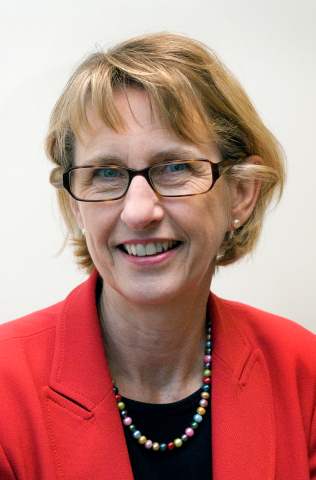 Ewa Idvall合作论文数Malmö Högskola1
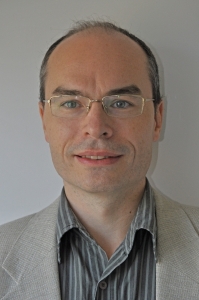 Zoltan Prohaszka合作论文数Research Laboratory, Department of Internal Medicine and Hematology, Semmelwies University1Ingrid From合作论文数1
 Margareta Ehnfors合作论文数1Inger Sand??N合作论文数1
 Ann L. Fruhling合作论文数University of Nebraska Omaha1




