Human communication involves a complex interplay of verbal and nonverbal signals, essential for conveying meaning and achieving interpersonal goals. To develop socially intelligent AI technologies, it is crucial to develop models that can both comprehend and generate dyadic behavioral dynamics. To this end, we introduce the Seamless Interaction Dataset, a large-scale collection of over 4,000 hours of face-to-face interaction footage from over 4,000 participants in diverse contexts. This dataset enables the development of AI technologies that understand dyadic embodied dynamics, unlocking breakthroughs in virtual agents, telepresence experiences, and multimodal content analysis tools. We also develop a suite of models that utilize the dataset to generate dyadic motion gestures and facial expressions aligned with human speech. These models can take as input both the speech and visual behavior of their interlocutors. We present a variant with speech from an LLM model and integrations with 2D and 3D rendering methods, bringing us closer to interactive virtual agents. Additionally, we describe controllable variants of our motion models that can adapt emotional responses and expressivity levels, as well as generating more semantically-relevant gestures. Finally, we discuss methods for assessing the quality of these dyadic motion models, which are demonstrating the potential for more intuitive and responsive human-AI interactions.
While style transfer techniques have been well-developed for 2D image stylization, the extension of these methods to 3D scenes remains relatively unexplored. Existing approaches demonstrate proficiency in transferring colors and textures but often struggle with replicating the geometry of the scenes. In our work, we leverage an explicit Gaussian Scale (GS) representation and directly match the distributions of Gaussians between style and content scenes using the Earth Mover's Distance (EMD). By employing the entropy-regularized Wasserstein-2 distance, we ensure that the transformation maintains spatial smoothness. Additionally, we decompose the scene stylization problem into smaller chunks to enhance efficiency. This paradigm shift reframes stylization from a pure generative process driven by latent space losses to an explicit matching of distributions between two Gaussian representations. Our method achieves high-resolution 3D stylization by faithfully transferring details from 3D style scenes onto the content scene. Furthermore, WaSt-3D consistently delivers results across diverse content and style scenes without necessitating any training, as it relies solely on optimization-based techniques. See our project page for additional results and source code: https://compvis.github.io/wast3d/.
Integration of Large Language Models (LLMs) into visual domain tasks, resulting in visual-LLMs (V-LLMs), has enabled exceptional performance in vision-language tasks, particularly for visual question answering (VQA). However, existing V-LLMs (e.g. BLIP-2, LLaVA) demonstrate weak spatial reasoning and localization awareness. Despite generating highly descriptive and elaborate textual answers, these models fail at simple tasks like distinguishing a left vs right location. In this work, we explore how image-space coordinate based instruction fine-tuning objectives could inject spatial awareness into V-LLMs. We discover optimal coordinate representations, data-efficient instruction fine-tuning objectives, and pseudo-data generation strategies that lead to improved spatial awareness in V-LLMs. Additionally, our resulting model improves VQA across image and video domains, reduces undesired hallucination, and generates better contextual object descriptions. Experiments across 5 vision-language tasks involving 14 different datasets establish the clear performance improvements achieved by our proposed framework.
Modern hierarchical vision transformers have added several vision-specific components in the pursuit of supervised classification performance. While these components lead to effective accuracies and attractive FLOP counts, the added complexity actually makes these transformers slower than their vanilla ViT counterparts. In this paper, we argue that this additional bulk is unnecessary. By pretraining with a strong visual pretext task (MAE), we can strip out all the bells-and-whistles from a state-of-the-art multi-stage vision transformer without losing accuracy. In the process, we create Hiera, an extremely simple hierarchical vision transformer that is more accurate than previous models while being significantly faster both at inference and during training. We evaluate Hiera on a variety of tasks for image and video recognition. Our code and models are available at https://github.com/facebookresearch/hiera.
Recently, Pyramid Adversarial training (Herrmann et al., 2022) has been shown to be very effective for improving clean accuracy and distribution-shift robustness of vision transformers. However, due to the iterative nature of adversarial training, the technique is up to 7 times more expensive than standard training. To make the method more efficient, we propose Universal Pyramid Adversarial training, where we learn a single pyramid adversarial pattern shared across the whole dataset instead of the sample-wise patterns. With our proposed technique, we decrease the computational cost of Pyramid Adversarial training by up to 70% while retaining the majority of its benefit on clean performance and distribution-shift robustness. In addition, to the best of our knowledge, we are also the first to find that universal adversarial training can be leveraged to improve clean model performance.
While most modern video understanding models operate on short-range clips, real-world videos are often several minutes long with semantically consistent segments of variable length. A common approach to process long videos is applying a short-form video model over uniformly sampled clips of fixed temporal length and aggregating the outputs. This approach neglects the underlying nature of long videos since fixed-length clips are often redundant or uninformative. In this paper, we aim to provide a generic and adaptive sampling approach for long-form videos in lieu of the de facto uniform sampling. Viewing videos as semantically consistent segments, we formulate a task-agnostic, unsupervised, and scalable approach based on Kernel Temporal Segmentation (KTS) for sampling and tokenizing long videos. We evaluate our method on long-form video understanding tasks such as video classification and temporal action localization, showing consistent gains over existing approaches and achieving state-of-the-art performance on long-form video modeling.
We introduce Patch Aligned Contrastive Learning (PACL), a modified compatibility function for CLIP's contrastive loss, intending to train an alignment between the patch tokens of the vision encoder and the CLS token of the text encoder. With such an alignment, a model can identify regions of an image corresponding to a given text input, and therefore transfer seamlessly to the task of open vocabulary semantic segmentation without requiring any segmentation annotations during training. Using pre-trained CLIP encoders with PACL, we are able to set the state-of-the-art on the task of open vocabulary zero-shot segmentation on 4 different segmentation benchmarks: Pascal VOC, Pascal Context, COCO Stuff and ADE20K. Furthermore, we show that PACL is also applicable to image-level predictions and when used with a CLIP backbone, provides a general improvement in zero-shot classification accuracy compared to CLIP, across a suite of 12 image classification datasets.
Objection detection (OD) has been one of the most fundamental tasks in computer vision. Recent developments in deep learning have pushed the performance of image OD to new heights by learning-based, data-driven approaches. On the other hand, video OD remains less explored, mostly due to much more expensive data annotation needs. At the same time, multi-object tracking (MOT) which requires reasoning about track identities and spatio-temporal trajectories, shares similar spirits with video OD. However, most MOT datasets are class-specific (e.g., person-annotated only), which constrains a model's flexibility to perform tracking on other objects. We propose TrIVD (Tracking and Image-Video Detection), the first framework that unifies image OD, video OD, and MOT within one end-to-end model. To handle the discrepancies and semantic overlaps of category labels across datasets, TrIVD formulates detection/tracking as grounding and reasons about object categories via visual-text alignments. The unified formulation enables cross-dataset, multi-task training, and thus equips TrIVD with the ability to leverage frame-level features, video-level spatio-temporal relations, as well as track identity associations. With such joint training, we can now extend the knowledge from OD data, that comes with much richer object category annotations, to MOT and achieve zero-shot tracking capability. Experiments demonstrate that multi-task co-trained TrIVD outperforms single-task baselines across all image/video OD and MOT tasks. We further set the first baseline on the new task of zero-shot tracking.
We aim to build image generation models that generalize to new domains from few examples. To this end, we first investigate the generalization properties of classic image generators, and discover that autoencoders generalize extremely well to new domains, even when trained on highly constrained data. We leverage this insight to produce a robust, unsupervised few-shot image generation algorithm, and introduce a novel training procedure based on recovering an image from data augmentations. Our Augmentation-Interpolative AutoEncoders synthesize realistic images of novel objects from only a few reference images, and outperform both prior interpolative models and supervised few-shot image generators. Our procedure is simple and lightweight, generalizes broadly, and requires no category labels or other supervision during training.
While deep neural networks have achieved remarkable success in various computer vision tasks, they often fail to generalize to new domains and subtle variations of input images. Several defenses have been proposed to improve the robustness against these variations. However, current defenses can only withstand the specific attack used in training, and the models often remain vulnerable to other input variations. Moreover, these methods often degrade performance of the model on clean images and do not generalize to out-of-domain samples. In this paper we present Generative Adversarial Training, an approach to simultaneously improve the model's generalization to the test set and outof-domain samples as well as its robustness to unseen adversarial attacks. Instead of altering a low-level pre-defined aspect of images, we generate a spectrum of low-level, midlevel and high-level changes using generative models with a disentangled latent space. Adversarial training with these examples enable the model to withstand a wide range of attacks by observing a variety of input alterations during training. We show that our approach not only improves performance of the model on clean images and out-of-domain samples but also makes it robust against unforeseen attacks and outperforms prior work. We validate effectiveness of our method by demonstrating results on various tasks such as classification, segmentation and object detection.
We propose a novel approach for generating unrestricted adversarial examples by manipulating fine-grained aspects of image generation. Unlike existing unrestricted attacks that typically hand-craft geometric transformations, we learn stylistic and stochastic modifications leveraging state-of-the-art generative models. This allows us to manipulate an image in a controlled, fine-grained manner without being bounded by a norm threshold. Our approach can be used for targeted and non-targeted unrestricted attacks on classification, semantic segmentation and object detection models. Our attacks can bypass certified defenses, yet our adversarial images look indistinguishable from natural images as verified by human evaluation. Moreover, we demonstrate that adversarial training with our examples improves performance of the model on clean images without requiring any modifications to the architecture. We perform experiments on LSUN, CelebA-HQ and COCO-Stuff as high resolution datasets to validate efficacy of our proposed approach.
We provide results for new characters and additional samples of existing characters in Figure A. The first character is from Adobe Character Animator [1], and the second one is from Sykora et al. [4]. We use 33/10 and 22/8 train/test samples respectively. As we observe, our method clearly outperforms the baselines in all cases. We also show generated images for the character in the wild (corresponding to Section 4.4. and Figure 7 in the main paper). In this case, we feed masked input images to the discriminator of the conditional GAN. Figure B illustrates additional in-betweening results, and corresponds to Section 4.1. and Figure 5 in the main paper. Figure C depicts character deformations based on various constraints (corresponding to Section 4.2. and Figure 6 in the main paper). We also provide videos showing smooth interpolations and deformations of the characters. Interpolation.mp4 shows examples of in-betweening for various poses. Deformation.mp4 illustrates user-constrained deformations corresponding to Figure 6 of the paper, and compares our model with ARAP. In our method, we first generate the z -values using a uniform step size as in equation (9) in the paper. In order to make the deformation look smoother, we then re-sample the z values uniformly. Let z init and z final denote the initial and final z values. The i -th re-sampled
We propose a novel neural architecture for representing 3D surfaces, which harnesses two complementary shape representations: (i) an explicit representation via an atlas, i.e., embeddings of 2D domains into 3D; (ii) an implicit-function representation, i.e., a scalar function over the 3D volume, with its levels denoting surfaces. We make these two representations synergistic by introducing novel consistency losses that ensure that the surface created from the atlas aligns with the level-set of the implicit function. Our hybrid architecture outputs results which are superior to the output of the two equivalent single-representation networks, yielding smoother explicit surfaces with more accurate normals, and a more accurate implicit occupancy function. Additionally, our surface reconstruction step can directly leverage the explicit atlas-based representation. This process is computationally efficient, and can be directly used by differentiable rasterizers, enabling training our hybrid representation with image-based losses.
We propose a learning based method for generating new animations of a cartoon character given a few example images. Our method is designed to learn from a traditionally animated sequence, where each frame is drawn by an artist, and thus the input images lack any common structure, correspondences, or labels. We express pose changes as a deformation of a layered 2.5D template mesh, and devise a novel architecture that learns to predict mesh deformations matching the template to a target image. This enables us to extract a common low-dimensional structure from a diverse set of character poses. We combine recent advances in differentiable rendering as well as mesh-aware models to successfully align common template even if only a few character images are available during training. In addition to coarse poses, character appearance also varies due to shading, out-of-plane motions, and artistic effects. We capture these subtle changes by applying an image translation network to refine the mesh rendering, providing an end-to-end model to generate new animations of a character with high visual quality. We demonstrate that our generative model can be used to synthesize in-between frames and to create data-driven deformation. Our template fitting procedure outperforms state-of-the-art generic techniques for detecting image correspondences.
Point clouds provide a compact and efficient representation of 3D shapes. While deep neural networks have achieved impressive results on point cloud learning tasks, they require massive amounts of manually labeled data, which can be costly and time-consuming to collect. In this paper, we leverage 3D self-supervision for learning downstream tasks on point clouds with fewer labels. A point cloud can be rotated in infinitely many ways, which provides a rich label-free source for self-supervision. We consider the auxiliary task of predicting rotations that in turn leads to useful features for other tasks such as shape classification and 3D keypoint prediction. Using experiments on ShapeNet and ModelNet, we demonstrate that our approach outperforms the state-of-the-art. Moreover, features learned by our model are complementary to other self-supervised methods and combining them leads to further performance improvement.
We aim to build image generation models that generalize to new domains from few examples. To this end, we first investigate the generalization properties of classic image generators, and discover that autoencoders generalize extremely well to new domains, even when trained on highly constrained data. We leverage this insight to produce a robust, unsupervised few-shot image generation algorithm, and introduce a novel training procedure based on recovering an image from data augmentations. Our Augmentation-Interpolative AutoEncoders synthesize realistic images of novel objects from only a few reference images, and outperform both prior interpolative models and supervised few-shot image generators. Our procedure is simple and lightweight, generalizes broadly, and requires no category labels or other supervision during training.
Differential privacy (DP) is a popular mechanism for training machine learning models with bounded leakage about the presence of specific points in the training data. The cost of differential privacy is a reduction in the model's accuracy. We demonstrate that in the neural networks trained using differentially private stochastic gradient descent (DP-SGD), this cost is not borne equally: accuracy of DP models drops much more for the underrepresented classes and subgroups. For example, a gender classification model trained using DP-SGD exhibits much lower accuracy for black faces than for white faces. Critically, this gap is bigger in the DP model than in the non-DP model, i.e., if the original model is unfair, the unfairness becomes worse once DP is applied. We demonstrate this effect for a variety of tasks and models, including sentiment analysis of text and image classification. We then explain why DP training mechanisms such as gradient clipping and noise addition have disproportionate effect on the underrepresented and more complex subgroups, resulting in a disparate reduction of model accuracy.
Estimating fundamental matrices is a classic problem in computer vision. Traditional methods rely heavily on the correctness of estimated key-point correspondences, which can be noisy and unreliable. As a result, it is difficult for these methods to handle image pairs with large occlusion or significantly different camera poses. In this paper, we propose novel neural network architectures to estimate fundamental matrices in an end-to-end manner without relying on point correspondences. New modules and layers are introduced in order to preserve mathematical properties of the fundamental matrix as a homogeneous rank-2 matrix with seven degrees of freedom. We analyze performance of the proposed models using various metrics on the KITTI dataset, and show that they achieve competitive performance with traditional methods without the need for extracting correspondences.
In this paper, we propose novel generative models for creating adversarial examples, slightly perturbed images resembling natural images but maliciously crafted to fool pre-trained models. We present trainable deep neural networks for transforming images to adversarial perturbations. Our proposed models can produce image-agnostic and image-dependent perturbations for targeted and non-targeted attacks. We also demonstrate that similar architectures can achieve impressive results in fooling both classification and semantic segmentation models, obviating the need for hand-crafting attack methods for each task. Using extensive experiments on challenging high-resolution datasets such as ImageNet and Cityscapes, we show that our perturbations achieve high fooling rates with small perturbation norms. Moreover, our attacks are considerably faster than current iterative methods at inference time.
Since the advent of online real estate database companies like Zillow, Trulia and Redfin, the problem of automatic estimation of market values for houses has received considerable attention. Several real estate websites provide such estimates using a proprietary formula. Although these estimates are often close to the actual sale prices, in some cases they are highly inaccurate. One of the key factors that affects the value of a house is its interior and exterior appearance, which is not considered in calculating automatic value estimates. In this paper, we evaluate the impact of visual characteristics of a house on its market value. Using deep convolutional neural networks on a large dataset of photos of home interiors and exteriors, we develop a method for estimating the luxury level of real estate photos. We also develop a novel framework for automated value assessment using the above photos in addition to home characteristics including size, offered price and number of bedrooms. Finally, by applying our proposed method for price estimation to a new dataset of real estate photos and metadata, we show that it outperforms Zillow’s estimates.
 Serge Belongie合作论文数Department of Computer Science, University of Copenhagen;European Laboratory for Learning and Intelligent Systems;Det Nationale Center for AI i Samfundet7
 Ser-Nam Lim合作论文数Department of Computer Science, College of Engineering & Computer Science, University of Central Florida;Institute of Artificial Intelligence, University of Central Florida6
 Ashish H Shah合作论文数University Hospital of Wales, East Carolina University Hospitals4
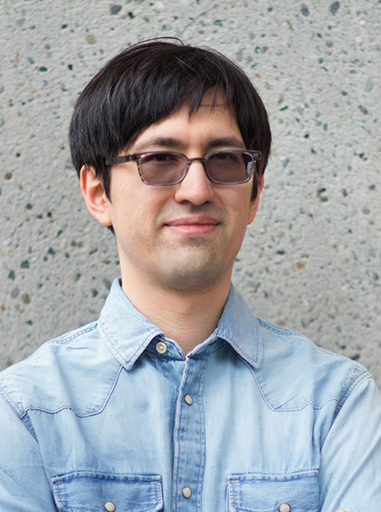 Vladimir (Vova) Kim合作论文数Adobe4
 Tianxing Jiang合作论文数3
 Satya Narayan Shukla合作论文数Facebook AI3
 Jawad A. Salehi合作论文数Optical Networks Research Laboratory, Department of Electrical Engineering, Sharif University of Technology3
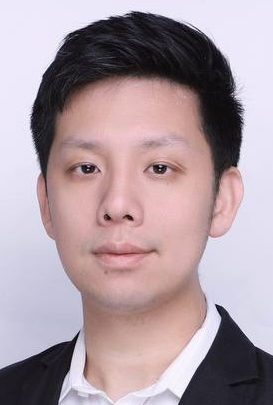 Harry Yang合作论文数The Hong Kong University of Science and Technology;Everlyn2Rakesh Ranjan合作论文数2Rui Wang合作论文数2Sreyas Mohan合作论文数Department of Electrical Engineering, Indian Institute of Technology Madras2
 Yipin Zhou合作论文数Meta2
 Eli Shechtman合作论文数Imaging Lab, Adobe Research2Tsung-Yu Lin合作论文数Facebook AI2
 Pengchuan Zhang合作论文数2
 Jun Saito合作论文数NVIDIA2
 Bharath Hariharan合作论文数College of Engineering, Cornell University2
 Farhad Akhoundi合作论文数2Olga Grebenkova合作论文数1Yilei Li合作论文数1Christophe Ropers合作论文数1
 Vasu Sharma合作论文数1Safiyyah Saleem合作论文数1Fabian Andres Prada Nino合作论文数1Tomas Matera合作论文数1
 Pingchuan Ma (馬平川)合作论文数Meta1
 Hirofumi Inaguma合作论文数Meta1Benjamin Peloquin合作论文数1
 Michael S. Ryoo合作论文数Department of Computer Science, Stony Brook University;Salesforce AI Research1
 Avinash Paliwal合作论文数Morphic1
 Anna Sun合作论文数1Bram Wasti合作论文数Meta1Somya Jain合作论文数1Sreya Dutta Roy合作论文数1Qiuren Fang合作论文数Cornell Univ, Ithaca, NY 14850 USA1Williamson Mary合作论文数Facebook1Bicheng Gao合作论文数Cornell Univ, Ithaca, NY 14853 USA1
 vaibhav aggarwal合作论文数1Xuefei Cao合作论文数Meta1
 Eugene Bagdasarian合作论文数Manning College of Information & Computer Sciences, University of Massachusetts Amherst1
 Daniel Bolya合作论文数Meta1
 Nikolaos Sarafianos合作论文数University of Houston1
 Saeed Sharifi Malvajerdi合作论文数Univ Penn1
 Mohammad Javad Khojasteh合作论文数1
 Mohamed Afham合作论文数Department of Electronics and Telecommunication Engineering, University of Moratuwa1
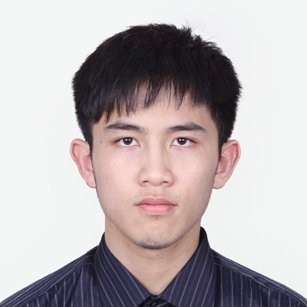 Guandao Yang (杨关道)合作论文数Cornell University1
 Matt Fisher合作论文数Adobe Research1
 Yanghao Li合作论文数OpenAI1
 Yuchen Fan (范雨晨)合作论文数Meta1




