In this paper the teaching of IT and mathematical courses for the international bachelor program in English is discussed. A combination of automated and traditional control procedures are used. The results of midterm and final examinations are analyzed. Correlation and clustering results are presented.
The problem of image classification using neural networks is considered. Various methods of image preprocessing based on wavelet analysis are used to optimize neural network training. Among these methods are the Haar wavelet transformation, the Dobeshi wavelet transformation, as well as combined methods that include wavelet transformations and moments of color.A Python script is developed for the experiments. During the work methods are compared with each other to identify the most effective among others.
The paper is devoted to the problem of automatizing knowledge assessment. There is given the analysis of existing learning management systems and questionnaire tools to support educational process. On the example of joint bachelor program in the field of Metallurgy is presented the scheme to knowledge in Mathematics of students studying in English.
A clustering-based model reduction approach is presented. It combines the Galerkin-Petrov method with graph clustering. A reduced order model of a large-scale system can be constructed using a characteristic clustering matrix of the graph. It is shown that the use of the concepts of hypergraph and metagraph is more natural and correct than the use of the concept of an ordinary graph; thus, the characteristic graph clustering matrix is actually the incidence matrix of a suitable hypergraph. A simple example is presented.
This paper is a survey devoted to the transformations $$\begin{aligned} C&\mapsto \frac{1}{(2\pi i)^2}\int _{\Gamma _1}\int _{\Gamma _2}f(\lambda ,\mu )\,R_{1,\,\lambda }\,C\, R_{2,\,\mu }\,{\mathrm{d}}\mu \,{\mathrm{d}}\lambda ,\\ C&\mapsto \frac{1}{2\pi i}\int _{\Gamma }g(\lambda )R_{1,\,\lambda }\,C\, R_{2,\,\lambda }\,{\mathrm{d}}\lambda , \end{aligned}$$ where $$R_{1,\,(\cdot )}$$ and $$R_{2,\,(\cdot )}$$ are pseudo-resolvents acting in a Banach space, i. e., the resolvents of bounded, unbounded, or multivalued linear operators, and f and g are analytic functions; here $$\Gamma _1$$ , $$\Gamma _2$$ , and $$\Gamma$$ surround the singular sets (spectra) of the pseudo-resolvents $$R_{1,\,(\cdot )}$$ , $$R_{2,\,(\cdot )}$$ , and the both, respectively. Several applications are considered: a representation of the impulse response of a second-order linear differential equation with operator coefficients, a representation of the solution of the Sylvester equation, and properties of the differential of the ordinary functional calculus.
A training program for modeling the thermal mode of hot rolling mill 2000 was developed. It allows to calculate the temperature of the strip and working rolls for a given rolling regime. It is possible to interactively vary the rolling parameters to analyze and adjust the technology. The model was tested and adapted to the actual data for several steel grades. Results of numerical experiments on strip temperature comparison under different cooling conditions are presented. The program is useful for students of mathematics and metallurgy, as well as for advanced training of mill personnel and process engineers.
Mathematical models of temperature distribution along the thickness of the strip and working rolls are constructed. The models are based on the heat equation with different boundary conditions. The model type is determined by the current zone (rolling gap, interstand gap, cooling zone on the surface of the roll). The software for calculation the temperature of the working rolls and the strip is developed. The results of modeling are compared with actual data from the hot rolling mill.
An approximate method for solving second-order linear differential equation x" = Bx + g with an unbounded self-adjoint operator coefficient B is suggested. The method uses calculation of a rational function of the operator B. The estimates of the approximation error are obtained.
We suggest an approximate method for evaluating functions of a linear pencil (λ) = λA — B with self-adjoint operator coefficients A and B. It is based on the calculation of a special rational function of . We assume that the operator A is bounded and positive definite, and the operator B can be unbounded. The estimates of the approximation error are obtained. As an application, an approximate method for calculating the impulse response of a linear differential equation Ax' = Bx + g(t) is given. The suggested approach can be used in remodeling of the complicated systems.
The software for calculation the thermal conditions of the hot rolling mill is developed. The software includes several mathematical models of the temperature distribution along the thickness of the strip and working rolls. The base of all models is the heat equation with different boundary conditions. The type of model is defined by the current zone (rolling gap, interstand gap, cooling zone on the surface of the roll). The heat flows in the boundary conditions for a strip at the interstand gaps are taking into account the parameters of interstand cooling systems. The information about the construction and settings of the nozzles and roll anti-peeling systems is used for calculating the heat flow on the surface of the working roll.
We suggest an approximate method for the linear differential equation x'' (t)+ 2 alpha x' (t) + Ax (t) = f (t), where A is an unbounded self-adjoint operator, alpha is a given scalar and the operator A alpha(2)1 is positive semidefinite. A priori estimates of the approximation error are obtained. The results of numerical experiments for the hyperbolic equation are presented. The suggested approach can be used in the remodeling problems for complicated objects and systems if the initial mathematical model is such an equation.
For the abstract parabolic equation \(\dot x = Bx + bv\left( t \right)\) with an unbounded self-adjoint operator B, where b is a vector and v(t) is a scalar function, we suggest a solution method based on the evaluation of some rational function of the operator B. We obtain a priori estimates of the approximation error for the output function y(t) = , where l is a given vector. The results of a numerical experiment for the inhomogeneous heat equation are presented.
We consider normal unbounded operators acting in a real Hilbert space. The standard approach to solving spectral problems related with such operators is to apply the complexification, which is a passage to a complex space. At that, usually, the final results are to be decomplexified, that is, the reverse passage is needed. However, the decomplexification often turns out to be nontrivial. The aim of the present paper is to extend the classical results of the spectral theory for the case of normal operators acting in a real Hilbert space. We provide two real versions of the spectral theorem for such operators. We construct the functional calculus generated by the real spectral decomposition of a normal operator. We provide examples of using the obtained functional calculus for representing the exponent of a normal operator.
The simplest interconnection model for an integrated circuit is a discrete RC -circuit governed by a system Ri ′ + Di = u ′ of differential equations with positive definite matrices R and D . Such a system usually has a high dimension, so it is natural to solve it approximately. Traditionally it is investigated by means of Krylov subspace methods. In this article a close approach is discussed. This approach admits an effective estimation of accuracy. It is based on the approximation of the main factor e At (here A = − R −1 D ) in the impulse response H ( t ) = e At R −1 by a polynomial r ( A , t ) = a 0 ( t ) 1 + a 1 ( t ) A + ··· + a n ( t ) A n with the coefficients a k ( t ) depending on t or by a rational function of a similar form.
 Monika Dabas合作论文数3
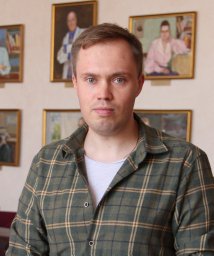 Anton Sysoev合作论文数Dept Appl Math, Lipetsk State Tech Univ2
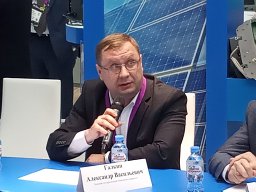 A. Galkin合作论文数Lipetsk State Tech Univ2
 V.G. Kurbatov合作论文数Voronezh State University2Semen Blyumin合作论文数1
 Elena Khabibullina合作论文数Lipetsk State Technical University1
 Irina Vital'evna Kurbatova合作论文数Institute of Solid State Physics ul, Russian Academy of Sciences1




