Under isothermal crystallization (T-c) from the melt, polyacetals spaced by 12, 18, 19, or 23 methylenes develop two or three distinctive layered polymorphs. The polymorphs formed in the lowest T-c range are kinetically favored (hexagonal and Form I) and characterized by highly nucleated small axialites up to T-c very close to their melting point. In the higher range of T-c, a thermodynamically more stable Form II develops that melts at 5-8 degrees higher temperatures and forms large spherulites. Form I and Form II overlap in a very small range of T-c. While the overall crystallization kinetics of Form I display the usual negative temperature coefficient, an inversion of the dependence of the rate of Form II with temperature occurs when approaching from above the narrow T-c range where Form I and Form II coexist. The inversion is attributed to a competition in nucleation between Form I and Form II. Just before inception of Form II, the crystallization rate is so low that it becomes basically extinguished. The degree of crystallinity recovers when pure Form II develops with a small increase in T-c. Although in the overlapping range, the growth rates of Form I are significantly lower than those of Form II, compared at a fixed undercooling, the rates of Form I are one order of magnitude higher than those of Form II. The difference is attributed to a two to six times higher energy barrier for nucleation of Form II, calculated from analysis of growth rate data according to surface nucleation theory. Such a difference explains the observed variation in nucleation density between the two polymorphs. A minimum in the growth rate of Form I of PA-12, consistent with the effect of "self-poisoning", occurs at T-c approaching the melting point of the hexagonal phase from above.
Rapidly melt-crystallized polyethylenes with acetal groups (-O-CH2-O-) precisely spaced by 12, 18, 19, or 23 methylene backbone carbons exhibit two reorganizations and three melting endotherms on heating at relatively low heating rates. Real-time wide-angle X-ray diffraction (WAXD) experiments further confirm that these transitions are associated with a reorganization to a different crystalline structure. The differential scanning calorimetry endotherms are associated with melting of the initially formed disordered (or hexagonal) phases, followed by melting of Form I and by melting of Form II crystals with increasing temperature. In parallel with these structural changes, the long spacing undergoes a discrete step increase at the polymorphic transitions. Upon the transition from disordered to Form I crystals, the core crystal thickness increases by one repeating unit, whereas the crystal thickness remains basically unchanged during the transition from Form I to Form II crystallites. The effect of even vs odd CH, spacer on the observed melting temperatures is prevalent for spacer <10 CH2 units. The even or odd number of methylenes between acetals also affects the type and kinetics of packing assembly in layered crystallites. Although a disordered mesomorphic-like structure develops under fast cooling in odd-spaced polyacetals (PA-19, PA-23), the formation of Form I crystals cannot be bypassed in PA-12 and PA-18. Furthermore, some differences are also found in the WAXD patterns of Form II between odd- and even-spaced polyacetals, denoting that staggering of the acetals in the crystallites is affected by the configuration of consecutive acetals with respect to the methylene sequence.
We have investigated the potential of polymers containing precisely spaced side-branches for thin film applications, particularly in the context of organic electronics. Upon crystallization, the side-branches were excluded from the crystalline core of a lamellar crystal. Thus, the surfaces of these crystals were covered by side-branches. By using carboxyl groups as side-branches, which allow for chemical reactions, we could functionalize the crystal with semiconducting molecules. Here, we compare properties of crystals differing in size: small nanocrystals and large single crystals. By assembling nanocrystals on a Langmuir trough, large areas could be covered by monolayers consisting of randomly arranged nanocrystals. Alternatively, we used a method based on local supersaturation to grow large area single crystals of the precisely side-branched polymer from solution. Attachment of the semiconducting molecules to the lamellar surface of large single crystals was possible, however, only after an appropriate annealing procedure. As a function of the duration of the grafting process, the morphology of the resulting layer of semiconducting molecules changed from patchy to compact.
Other than their established short-chain congeners, polycondensates based on long-chain difunctional monomers are often dominated by the long methylene sequences of the repeat units in their solid-state structures and properties. This places them between traditional polycondensates and polyethylenes. The availability of long chain monomers as a key prerequisite has benefited much from advances in the catalytic conversion of plant oils, via biotechnological and purely chemical approaches, likewise. This has promoted studies of, among others, applications-relevant properties. A comprehensive account is given of long-chain monomer syntheses and the preparation and physical properties, morphologies, mechanical behavior, and degradability of long chain polyester, polyamides, polyurethanes, polyureas, polyacetals, and polycarbonates.
Long-spaced polyketones containing 0-52.6 ketone groups per 1000 methylene units were prepared by ADMET copolymerization of docosa-1,21-dien-11-one (1) with undeca-1,10-diene (2), followed by exhaustive hydrogenation. Melting point differences of 5-10 °C were found between these polyketones and their reported congeners from ethylene/CO copolymerizations with comparable CO contents, which were related to additional methyl branching occurring in insertion copolymerization. Consequently, ADMET-derived polyketones can act as defect-free model polyketones. Comparison with polymers containing the same degrees of other carbonyl functionalities (esters, carbonates) shows that the partial compensation of the disturbance of polyethylene crystallization goes along with the groups' polarity.
Aliphatic polyamides with so far inaccessibly low amide contents were prepared by acyclic diene metathesis (ADMET) copolymerization of N-(undec-10-en-1-yl)undec-10-enamide (1) and undeca-1,10-diene (2) applying different Grubbs and Hoveyda-Grubbs type olefin metathesis catalyst precursors, followed by exhaustive postpolymerization hydrogenation to yield saturated copolymers. These polyamides, containing between 1.0 and ca. 50.5 amide groups per 1000 methylene units, fill the gap between polyamides from classical polymerization approaches, like polycondensation of diamines with diacids, and linear polyethylene. With reduced amide concentrations the melting points of polyamides converge toward polyethylene, passing through a distinct melting point minimum observed around 110 degrees C for polyamides with ca. 35 amide groups per 1000 methylene units. The minimum goes in hand with a change in the crystal structure related to the different ratios of intersegment interactions from hydrogen bonding and nonpolar van der Waals forces depending on the amide group content in the crystalline state. Furthermore, the influence of hydrogen bonds between amide and ester groups has been quantified for polyesteramides with various amide/ester ratios, prepared by ADMET copolymerization of N-(undec-10-en-1-yl)undec-10-enamide (1) with undec-10-en-l-yl undec-10-enoate (3) and postpolymerization hydrogenation.
Long-chain polyacetals and polycarbonates were prepared by polycondensation of alpha,omega-diols (C-18, C-19, C-23) derived from fatty acids as a renewable feedstock with diethoxymethane and dimethyl carbonate, respectively, in one step. Studies of hydrolytic degradation of the solid polymers show a much higher stability compared to their shorter-chain counterparts. Long-chain polyacetals were found to degrade slowly under acidic conditions, while the long-chain polycarbonates also degraded in a basic environment. To rationalize the impact of acetal and carbonate groups on the thermal and crystalline properties of polyacetals and polycarbonates, additional model polymers with a further reduced and systematically varied functional group density were generated by ADMET copolymerization of the unfunctionalized undeca-1,10-diene with bis(undec-10-en-1-yloxy) methane or di(undec-10-en-1-yl) carbonate, respectively, followed by exhaustive hydrogenation. Long-chain polycarbonates possess polyethylene-like solid state structures. By comparison to polyesters, a given density of carbonate groups in the polymer chain reduces melting and crystallization temperatures significantly more strongly. By contrast, long-chain polyacetals possess more complex non-uniform crystal structures, and only adopt a polyethylene-like structure at very low densities of acetal groups. Also, acetal groups more strongly impact melting and crystallization temperatures vs. carbonates.
Long-spaced aliphatic model polyesters were synthesized by acyclic diene metathesis (ADMET) copolymerization of undec-10-en-1-yl undec-10-enoate and undeca-1,10-diene followed by exhaustive hydrogenation. Resulting polyesters contained 52.6 to 0.9 ester groups per 1000 methylene units, randomly distributed in the polyethylene main chain. Melting points of these materials quantitatively agree with an inclusion model and decrease linearly vs linear polyethylene with the mole fraction of ester groups. By comparison to methyl branched polyethylenes and regularly spaced long-chain A(2) + B-2 polyesters, these findings can be related to steric demand and regular versus nonregular spacing of polar ester groups in crystallized polyester chains, respectively.
Nanoparticles with a defined shape and surface chemistry result from an encoding of crystal size directly in the polymer microstructure. This is brought about by carboxy groups spaced precisely on every 21st or 45th carbon atom of linear polyethylene chains synthesized by acyclic diene metathesis polymerization (ADMET) of precisely branched, long-chain α,ω-dienes. These hydrophilic functional groups form a layer on the nanocrystal surface, which interacts with the aqueous dispersing medium and, thus, self-stabilizes the nanocrystals. The nanocrystal thickness is directly predeterminded by the length of the long-chain methylene spacer between the functional groups.
Self-metathesis of erucic acid by [(PCy(3))(η-C-C(3)H(4)N(2)Mes(2))Cl(2)Ru = CHPh] (Grubbs second- generation catalyst) followed by catalytic hydrogenation and purification via the ester yields 1,26-hexacosanedioate (>99% purity). Polyesterification with 1,26-hexacosanediol, generated from the diester, affords polyester-26,26, which features a T(m) of 114 °C (T(c) = 92 °C, ΔH(m) = 160 J g(-1)). Ultralong-chain model polyesters-38,23 (T(m) = 109 °C) and -44,23 (T(m) = 111 °C), generated via multistep procedures including acyclic diene metathesis polymerization, underline that melting points of such aliphatic polyesters do not gradually increase with methylene sequence chain length. Available data suggest that to mimic linear polyethylenes thermal properties, even longer sequences, amounting to at least four times a fatty acid chain, fully incorporated in a linear fashion are required.
 Stefan Mecking合作论文数Department of Chemistry, University Konstanz12
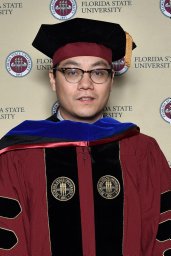 Xiaoshi Zhang合作论文数Dept Chem & Biomed Engn, FAMU FSU4
 R.G. Alamo合作论文数Department of Chemical and Biomedical Engineering, Florida A&M University – Florida State University College of Engineering4
 Stempfle Florian合作论文数2
 Cameron Carter合作论文数School of Medicine, University of California, Irvine;Department of Psychiatry and Behavioral Sciences, University of California, Davis;Imaging Research Center, University of California, Davis2Heckler Ilona合作论文数1Florian P. Wimmer合作论文数1
 Tobias Lemke合作论文数Theoret Chem, Univ Konstanz1Stephanie F. Marxsen合作论文数1
 Rainhard Machatschek合作论文数Institute of Biomaterial Science, Helmholtz-Zentrum Geesthacht and Berlin-Brandenburg Center for Regenerative Therapies1Trzaskowski Justyna合作论文数1
 Günter Reiter合作论文数Institute of Physics, Faculty of Mathematics and Physics, Albert-Ludwig-University of Freiburg1
 Xiaobing Zuo (左晓兵)合作论文数Structural Biophysics Laboratory, National Institutes of Health1Xiaobin Zuo合作论文数1Marina Krumova合作论文数1




