This review of research into Arctic Tourism launches the Annals of Tourism Research Curated Collection on Arctic Tourism. Instead of dwelling on the question of what Arctic tourism is, the review proceeds to inquire how the Arctic comes to matter for tourism research and what we, as scholars and practitioners of tourism, can learn from a focus on the Arctic. By discussing what the authors believe are the most relevant and dominant research traits—climate change, the wilderness, posthumanism, Arctic adventures, indigenous tourism and different selling strategies—the review illustrates that despite the historical images of the Arctic, it nowadays matters to tourism research increasingly as a relational, dynamic, fluid and negotiated topic of interest.
In this paper, we propose skiing-with as an ethnographic methodological exploration of being proximate with snowy landscapes and the crisis they face. Skiing is a traditional way of moving across and on snow. Skiing also sits at the heart of winter tourism and much is based on extensive fixed infrastructure, and driven by growth-oriented business models. However, the environment and business of skiing are threatened due to climate change and snow uncertainties. By building on the tradition of walking-with methods, we explore how skiing-with as a proximate ethnographic methodology helps us to re-think the current challenges around sustainability from an onto-epistemological point of view. Through skiing-with, we develop a new repertoire for knowing and (re)shaping ski-tourism priorities in the snowy landscapes. In so doing, we illustrate a feminist and posthuman ethnographic methodology for tourism research.
This article addresses the methodological aspects of a multi-voiced, collaborative ethnographic research process, in particular how video can enhance and amplify this research endeavour. The authors illustrate and discuss how experimental filmic methodologies can help to capture processes of becoming in a collaborative research endeavour, both enabling the development and production of diverse empirical materials and enhancing the multivocality of research practices. Using explorations of the National Tourist Route towards Havøysund in northern Norway as our empirical context, we reflect on diverse engagements along the process, such as becoming aware how the camcorder becomes a member in the research team. The filmed material forms an entanglement where our explorations along the route, our cultural practices related to the northern landscape and diverse disciplinary practices come together. We address three main ways video contributed to our research process and the creation of research materials. First, we highlight how video enables the creation of empirical traces that can be used as research materials. Second, we explore how video can work for mobilisation of multivocal dialogues. Finally, we point out that video opens the way for integration of the sensual into the research process.
The Anthropocene, introduced by scientists in 2000 to name the current geological epoch, draws attention to the scale and force of anthropogenic impacts on Earth systems. With this special issue, we aim to inspire and assemble scholarship that has an intentional focus on understanding, critiquing, and (re)imagining relationships between leisure and the Anthropocene. More specifically, we have invited contributing authors to explore questions such as: how is the field of leisure studies grappling with global ecological crises? How does leisure matter in the Anthropocene? How has leisure been complicit in producing the Anthropocene? How might leisure help heal, or inflict further damage to, human and more-than-human relations within planetary systems? This article introduces the special issue by presenting brief background information for readers and illuminating three cross-cutting themes within the special issue manuscripts, namely: (a) times, temporalities, and rhythms; (b) ethical relationships and responsibilities; and (c) "new" sensibilities.
Tässä katsausartikkelissa Lapin yliopiston matkailututkijat tarkastelevat teemoja, joiden voidaan katsoa sijoittuvan suomalaisen kriittisen yhteiskuntatieteellisen matkailututkimuksen keskiöön. Uuden työn, matkailun vastuullisen talouden, hitauden ja läheisyyden, monilajisuuden, osallisuuden ja kulttuurisensitiivisyyden teemojen kautta on viime vuosina rakennettu aktiivisesti tutkimusta, jota voisi kuvailla Matkailututkimuksen pohjoista koulukuntaa (Nordic School of Tourism Research) edustavaksi tutkimukseksi – tutkimukseksi, joka pyrkii muun muassa purkamaan vastakkainasetteluita (kuten me ja toiset, luonto ja kulttuuri) ja ottaa aktiivisesti kantaa siihen, millaisia matkailun maailmoja tutkijat ovat tutkimuksen kautta luomassa. Kriittinen yhteiskuntatieteellinen tutkimusote näkyy käsillä olevan katsauksen teemoissa myös siinä, että useampi teemoista tuo esiin myös muiden kuin ihmistoimijoiden roolin yhteiskuntatieteellisiä kysymyksiä käsiteltäessä.
• Demands reconsideration and transformation of tourism due to planetary crises • Extends the idea of community and wellbeing to non-human nature • Calls for relational, proximate approaches for reconfiguring tourism theory
AbstractIn this book, we have been messing up and speculating rather than classifying, offering accurate representations or nailing things down. Instead of providing clear answers or claiming to solve the ecological crisis, we have tested different ways of attending to our proximate relations with a curiosity about what might happen or become. In this spirit, the last pages of the book provide suggestions that can help us continue to engage with the mode of wonder in the Anthropocene.
AbstractRemote places are often portrayed as marginal, immobile and static. However, these places are also shaped by various mobility practices which are intertwined in the landscape. In this chapter, we focus on shifting place mobilities through the concept of freedom to roam (allemansrätten, everyone’s rights) and explore the ways in which it turns into moral aspects of landscape practices and questions of ownership. We approach mobilities from the perspective of relational ontology and investigate how the different types of interconnected local and global mobilities transform into becoming in a landscape. Here, we apply Ingold’s ideas about landscape as a process of temporalities, various movements and mobilities that are continually unfolding and changing. The plurality of ways locals encounter tourism in the landscape of Posio in south-east Lapland, Finland, becomes illustrated through the destinization and commodification of the landscape, changes taking place in the physical landscape and in the embodied ways of using the landscape, as well as in the context of ownership issues related to the landscape. These diverse becomings demonstrate how the seemingly marginalised local mobility practices and local ownership in the landscape are affected by the abruptly increased recreational mobility.
AbstractOur chapter springs from discussions about our roles as tourism researchers in the Arctic in the midst of ecological crisis. We see this chapter as an opportunity to become and stay proximate with the idea of fragility as a collective space where we recognise our weaknesses, dependencies, and solidarities—the fragility of life. We approach fragility as a relational notion helping us to gain new understandings of our entanglements with the more-than-human world and as a vital element of carefull research orientations. As our inspiration, we use memory recalling, looking back, and writing about our experiences as tourism researchers at the University of Lapland. The feminist memory-work method highlights the collective construction of memories through sharing, discussing, and theorising about them as a whole. Applying collective memory work on and with fragility offers us a research method that we have started to call a collective fragility work. Our stories underline the importance of recognising our shared fragilities in relational approaches of becoming—of being and living in the damaged world and engaging in research from those premises.
AbstractThis chapter seeks to cultivate the art of attentiveness to more-than-human ways of being and knowing that have ended up in the margins of our everyday attention. It problematises the human-centred idea of marginality by engaging in multispecies storytelling with local mosses in the Pyhä-Luosto National Park in northern Finland. The authors explore the possibilities of including non-human voices in the place-making and tourism development processes, posing questions on mobility and wellbeing and growth from mosses’ point of view. Following in the footsteps of Robin Wall Kimmerer, the chapter asks what could be learnt from mosses that have succeeded in surviving in nearly every ecosystem on earth longer than any other plant groups. The authors introduce multispecies storytelling as a genre that encourages us to slow down, attune with alternative rhythms and temporalities, listen to more-than-human concerns and further mobilise inspiration, activism and hope. While mosses are generally perceived as something insignificant, one of their many secrets seems to lie in their ability to take full advantage of being slow, small and flourishing in the shade. Hence, by attuning to mosses’ life-sustaining agencies, the authors propose smallness and slowness as key features in living well on Earth.
AbstractThe introductory chapter ‘Staying proximate’ welcomes the reader to stay with more-than-human relations in present times of ecological crisis, known as the age of the Anthropocene. The chapter joins feminist, postcolonial, and Indigenous environmental scholars’ call for more nuanced alternatives to the Anthropocenic imaginary, ones that attend to the multiplicity, difference, and uneven distribution of more-than-human responsibilities, vulnerabilities, and sufferings in the world. We seek alternatives to the distancing, generalising, and even apocalyptic imaginaries of the Anthropocene by engaging with mundane beings, relations, and places in the north. By gathering around uncomfortable concerns, we develop modes of proximity as affirmative entry points underlining the commitment to stay with the trouble in caring, sensitive, and thoughtful ways. We suggest openness, affinity, engagement, irritation, middleness, and scopic modes of attuning to and engaging with more-than-human worlds. It is these modes of attuning to our proximate relations that provide a radical standpoint of proximity that intensifies, enriches, and complicates our research inquiries in such times of all-encompassing ecological turmoil.
The research at hand experiments with the communication that occurs in the encounters and entanglements between human and more-than-human agencies. It builds on the emerging debates on qualitative methodologies informed by new materialism, which help us recognize how more-than-humans can communicate and participate in producing and sharing knowledge. The main purpose of this article is to introduce the approach of sensitive communication with human and more-than-human others in tourism settings. The article explores and tests sensitive reading as a way of conducting research on sensitive communication in proximate surroundings by presenting two empirical examples from Iceland and Sweden. The research is driven by curiosity about the different ways of communicating with and about mundane and ordinary places in the context of proximity tourism. The idea of proximity refers here to curious and caring relations toward our proximate surroundings, beings, and thoughts. This approach to proximity tourism reopens ideas of nearness and farness and offers an alternative approach to current quantitative macrolevel discussions and inquiries of the Anthropocene.
This literature review aims to build an understanding of the scope and amount of research published on the topic of proximity tourism within the tourism and hospitality literature. In addition to referring to a particular form of tourism that emphasises local destinations, short distances and lower-carbon modes of transportation, proximity tourism builds upon an idea of seeing our proximate, everyday surroundings anew. Despite the currency and relevance of the topic of proximity, the existing literature in tourism and leisure studies on proximity tourism is relevantly scarce. In addition, there is variance in the usage of concepts referring to proximity tourism. With these notions forming the motivation for our study, we conducted a systematic, thematic literature review of international research publications concerning the topic at hand. We identified a considerable potential in this emerging strand of research of proximity tourism to renegotiate tourism, its concepts and future(s). By re-examining the dichotomy between tourist and local; challenging the definition of tourism on the basis of distance as ‘nearness’ and ‘farness’ and; envisioning brave new tourism futures, the reviewed research literature of proximity tourism disrupts the very basic concepts of tourism. The existing literature of proximity (in) tourism is thus able to create space for new conceptualisations within tourism studies that make way for the plurality of tourism futures.
This chapter (Chapter 5) offers an examination of Arctic tourism. Viewed through the lens of the “destination,” this chapter explores the various ways tourism has developed, and continues to develop, in the Arctic. Many Arctic actors assume that the publicity of a specific place or region will lead to increased numbers of tourists and investors. But this has not proven to be the case across the entire circumpolar region. Rather, an important success criterion for the tourism industry is to provide the right experience to the right visitor. For this to happen, the image of the Arctic alongside realities of small communities must be addressed.
 Anu Valtonen合作论文数Fac Social Sci, Univ Lapland12
 Gunnar Thór Jóhannesson合作论文数11
 Emily Hockert合作论文数11
 Kaarina Tervo-Kankare合作论文数University of Oulu9
 Dieter K. Müller合作论文数Department of Geography, Umeå University8
 Seija Tuulentie合作论文数Northern Regional Unit, Finnish Forest Research Institute7
 Patrick Maher合作论文数Resource Recreation and Tourism Program, University of Northern British Columbia7Suzanne De La Barre合作论文数7
 Brynhild Granas合作论文数6
 Jarkko Saarinen合作论文数University of Johannesburg/University of Botswana/University of Oulu6Heli Ilola合作论文数5Maaria Niskala合作论文数5
 Tarja Salmela合作论文数Univ Lapland, Fac Social Sci, POB 122, Rovaniemi 96101, Finland5
 Riikka Puhakka合作论文数3
 Maria Lahteenmaki合作论文数2
 Minni Haanpaa合作论文数University of Lapland2
 Trine Kvidal-Røvik合作论文数Dept Tourism & Northern Studies, UiT Arctic Univ Norway2jarno valkonen合作论文数Faculty of Social Sciences2
 Toni Ruuska合作论文数Dept Econ & Management, Univ Helsinki2
 Jose-Carlos Garcia-Rosell合作论文数University of Lapland2
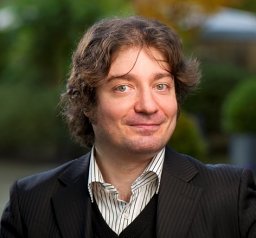 Paolo Davide Farah合作论文数Tsinghua Univ, Tsinghua Univ.2
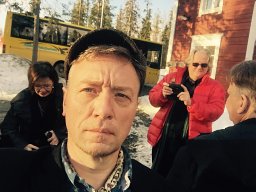 Peter Varley合作论文数2
 Pasi Heikkurinen合作论文数Industrial Management, Finland and MTT Agrifood Research, University of Vaasa2Marja Uusitalo合作论文数2
 Maria Hakkarainen合作论文数2
 Bryan Grimwood合作论文数2
 Soile Veijola合作论文数2Arto Naskali合作论文数1Salla Jutila合作论文数1
 Monika Luthje合作论文数Multidimensional Tourism Institute1kevin c hillmerpegram合作论文数1
 Doris A. Carson合作论文数Department of Geography, Umeå University1Juho Rajaniemi合作论文数Fac Built Environm, Tampere Univ1
 Marja Roslund合作论文数Ecosyst & Environm Res Programme, Univ Helsinki1
 Timo Jokela合作论文数Oulu University, Finland1
 Olli Laitinen合作论文数A.I. Virtanen Institute, University of Kuopio1Helsingin Yliopisto合作论文数1Arild Røkenes合作论文数1
 Jennie Germann Molz合作论文数University1
 Vesa Markuksela合作论文数1
 Johan R Edelheim合作论文数1
 Hans Gelter合作论文数1
 Aki Sinkkonen合作论文数Department of Environmental and Ecological Sciences, University of Helsinki1
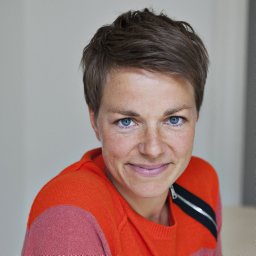 Carina Ren合作论文数University of Southern Denmark1Gill Pomfret合作论文数1
 Aulikki Herneoja合作论文数1Ville Hallikainen合作论文数Northern Regional Unit, Finnish Forest Research Institute1
 Gestur Hovgaard合作论文数Center for Local and Regional Development1




