Palaeoclimatic and palaeoenvironmental interpretations are reconstructed from the sedimentary sequences of the Late Oligocene and Miocene-Pliocene boundary in the cankm-corum Basin based on evidence obtained from palynofloras and ostracod and mammal faunas. Information on the main role of mixed mesophytic and broad-leaved evergreen forests was obtained from the Late Oligocene data from the Giivendik Formation. The pollen records of the formation showed a greater proportion of the hygrophytic forest communities. Thermophilic taxa and the taxonomic diversity of these forest communities developed mainly under dry subtropical climate conditions.Palynofloras and ostracods of the Latest Miocene and Earliest Pliocene were determined from coal bearing sediments of the Akaglaki Formation in Central Turkey. The Latest Miocene palynoflora was represented by low diversity and abundance of spores and pollen, and it was characterized by mainly grassland species. The Earliest Pliocene palynoflora differs from that of the Latest Miocene through the presence of abundant and diverse palynomorphs. This palaeovegetation diversification from the Latest Miocene to Earliest Pliocene can be related to changes in temperature and precipitation in the southern part of the cankm-corum Basin. The identified ostracods, palynomorphs indicative of brackish environments, and a high abundance of gypsum crystals observed from the lower part of the Akkasdagi Formation suggest brackish conditions during the Latest Miocene. Palynological evidence and results using the Coexistence Approach indicate that climate evolution in Central Turkey during this period can be referred to ongoing tectonic activity in this area and global climate change during the Neogene. (C) 2016 Elsevier B.V. All rights reserved.
A new assemblage of ruminants from five distinct Oligocene localities of the Kizilirmak Formation, Central Anatolia, Turkey is described. The tragulids Iberomeryx parvus, and Iberomeryx sp. (large), as well as a probable large lophiomerycid have been recognized. The stem pecoran Dremotherium guthi, cf. Palaeohypsodontus and a large indeterminate Pecora have been identified as well. In the five localities, the majority of the ruminant material is referred to Iberomeryx parvus, but the sample from the locality Tepe 641 (upper member of the Kizilirmak Formation) shows some distinctive characters suggesting a more derived species/forms that probably lived in more open environments. The ruminant taxa recorded in the Kizilirmak Formation are congruent with a Late Oligocene age, probably close in age to the Benara fauna of southern Georgia. The possible occurrence of Palaeohypsodontus in Central Anatolia would significantly expand its geographical range and suggest biogeographical affinities with Central Asia. The ruminant fauna from the Kizilirmak Formation suggests the existence of lowland forests with more open landscapes in central Anatolia during the Late Oligocene.
A new assemblage of ruminants from five distinct Oligocene localities of the Kizilirmak Formation, Central Anatolia, Turkey is described. The tragulids Iberomeryx parvus, and Iberomeryx sp. (large), as well as a probable large lophiomerycid have been recognized. The stem pecoran Dremotherium guthi, cf. Palaeohypsodontus and a large indeterminate Pecora have been identified as well. In the five localities, the majority of the ruminant material is referred to Iberomeryx parvus, but the sample from the locality Tepe 641 (upper member of the Kizilirmak Formation) shows some distinctive characters suggesting a more derived species/forms that probably lived in more open environments. The ruminant taxa recorded in the Kizilirmak Formation are congruent with a late Oligocene age, probably close in age to the Benara fauna of southern Georgia. The possible occurrence of Palaeohypsodontus in Central Anatolia would significantly expand its geographical range and suggest biogeographical affinities with Central Asia. The ruminant fauna from the Kizilirmak Formation suggests the existence of lowland forests with more open landscapes in central Anatolia during the late Oligocene.
Background Preservation of fossil vertebrates in volcanic rocks is extremely rare. An articulated skull (cranium and mandible) of a rhinoceros was found in a 9.2±0.1 Ma-old ignimbrite of Cappadocia, Central Turkey. The unusual aspect of the preserved hard tissues of the skull (rough bone surface and brittle dentine) allows suspecting a peri-mortem exposure to a heating source. Methodology/Principal Findings Here we describe and identify the skull as belonging to the large two-horned rhinocerotine Ceratotherium neumayri, well-known in the late Miocene of the Eastern Mediterranean Province. Gross structural features and microscopic changes of hard tissues (bones and teeth) are then monitored and compared to the results of forensic and archaeological studies and experiments focusing on heating effects, in order to reconstruct the hypothetical peri-mortem conditions. Macroscopic and microscopic structural changes on compact bones (canaliculi and lamellae vanished), as well as partial dentine/cementum disintegration, drastic enamel-dentine disjunctions or microscopic cracks affecting all hard dental tissues (enamel, cementum, and dentine) point to continued exposures to temperatures around 400–450°C. Comparison to other cases of preservation of fossil vertebrates within volcanic rocks points unambiguously to some similarity with the 79 AD Plinian eruption of the Vesuvius, in Italy. Conclusions/Significance A 9.2±0.1 Ma-old pyroclastic density current, sourced from the Çardak caldera, likely provoked the instant death of the Karacaşar rhino, before the body of the latter experienced severe dehydration (leading to the wide and sustainable opening of the mouth), was then dismembered within the pyroclastic flow of subaerial origin, the skull being separated from the remnant body and baked under a temperature approximating 400°C, then transported northward, rolled, and trapped in disarray into that pyroclastic flow forming the pinkish Kavak-4 ignimbrite ∼30 km North from the upper Miocene vent.
The hydrocarbon source rock potential and the thermal maturity of the Late Jurassic Tokmar Formation in the Boguntu area of the central Taurus region have been investigated. Tokmar Formation includes organic matter-rich dark grey shales alternating with carbonates that were deposited under dysoxic to anoxic marine conditions prevailed in the Late Jurassic. A total of 14 samples have been analyzed by Leco and Rock-Eval pyrolysis for determination of their hydrocarbon source rock characteristics and organic maturity. The total organic carbon content of the samples range from 0.26 to 1.53 wt%. The actual Rock-Eval pyrolytic yields (S-1 + S-2 peak values) are between 0.25 and 3.63 mg HC/g rock. The calculated hydrogen index and oxygen index values imply that the main organic matter types are Type II and Type III kerogens. T-max versus hydrogen index values indicate that the Boguntu samples are thermally mature and took place in the oil generation window.
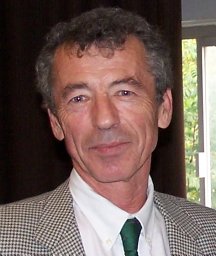 Sevket Sen合作论文数Laboratoire de Paléontologie, Muséum national d'Histoire naturelle4
 Gerçek Saraç合作论文数3
 Ebru Albayrak合作论文数General Directorate of Mineral Research and Exploration, Natural History Museum3
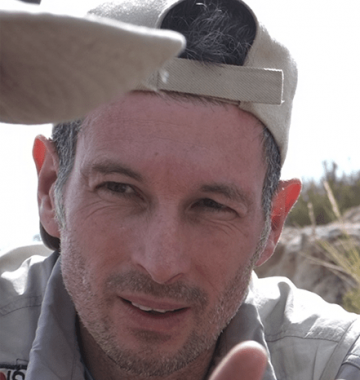 Pierre Olivier Antoine合作论文数Institut des Sciences de l’Evolution Montpellier, Universite de Montpellier3
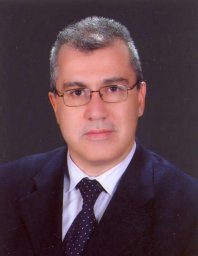 Levent Karadenizli合作论文数Faculty of Sciences, Ankara University3
 Yesim Buyukmeric合作论文数Jeol Muhendisligi Bolumu, Zonguldak Bulent Ecevit Univ2
 Ozan Erdal合作论文数Eurasia Inst Earth Sci, Istanbul Tech Univ2
 Gregoire Metais合作论文数Section of Vertebrate Paleontology, Carnegie Museum of Natural History2TS Yurtsever合作论文数1
 Alaettin Tuncer合作论文数sDept Geol Engn, Hacettepe Univ1Atici Gokhan合作论文数1Mine Sezgül Kayseri合作论文数1
 Cemal Tunoğlu合作论文数Department of Geological Engineering, Hacettepe University1
 Ismail Hakki Demirel合作论文数1
 Inan Ulusoy合作论文数Department of Geological Engineering, Hacettepe University1
 Funda Akgun合作论文数Dokuz Eylül University;Department of Geological Engineering1
 Erkan Aydar合作论文数Department of Geological Engineering, Hacettepe University1H. Evren Cubukcu合作论文数Department of Geological Engineering, Hacettepe University1
 Maeva Orliac合作论文数1
 Erdal Sen合作论文数Département de géologie, université Hacettepe1




