In the present work, high resolution wind and wave model data, derived for the needs of metocean climate study for two European areas, are compared with existing in situ measurements and model results from ECHOWAVE coastal database. The data cover two nearshore areas in the Atlantic Ocean around two existing wind farms located in the North Sea (East Anglia One: EAO), and west of Portugal (WindFloat Atlantic: WFA). It is the first time that metocean conditions for these two areas have been produced at such a high spatial (∼1 km for wind and ∼100 m for waves) and temporal (1 hr) resolution for an extent of ten (10) years. For the generation of the model data, two regional numerical models, atmospheric model WRF and wave model SWAN, have been implemented using detailed geographical information acquired from EMODnet (European Marine Observation and Data network) database, and wind and wave boundary conditions from global database ERA5 (ECMWF Re-Analysis, v.5). Both model and measured wind and wave data have been statistically analysed, and compared against each other, using both standard and enhanced error metrics. Comparisons cover the seasonal variability, the directional behaviour, the probability structure, and the duration analysis of the data. Taking into account (a) the differences in the model databases (models used, grid resolution, boundary conditions, quality of geographical information etc.), (b) the various sources of uncertainties in measured data (different temporal extent, distance from the wind farm, missing values, different quality and sampling methods etc.), the presently derived datasets can be considered being in a good agreement with both in situ measurements and ECHOWAVE database.
The present work, which has been carried out in the framework of EEA project BLUE-GREENWAY, is a contribution to the study of the evolution of hypoxia/anoxia in Aitoliko lagoon, Greece. The study area suffers from anoxia which is a very important environmental problem lately mainly due to anthropogenic activities. Unpublished data from two measurement campaigns (2013–2014, 2023) have been used, and a 3D ocean model (SINMOD) has been configured for the region, that couples hydrodynamics, biochemistry and ecology. The analysis of model results includes monthly, annual and interannual variability of fields of dissolved oxygen, temperature, salinity, density, currents and wind as well as Brunt-Väisala frequency and Richardson number. Main results concerning oxygen are: a) the lagoon shows anoxic behavior at 5–7 m depth with a seasonal dependence, b) the seasonal variability in the upper water column with deeper ventilation during winter when the surface stratification is weaker than that during summer, c) anoxic water is reaching the surface of the lagoon for a short period of time.
Biological invasions of jellyfish may critically affect ecosystems and ecosystem services, yet their complex life cycle makes tracking their origins and dispersal vectors a challenging task. Here we combine citizen science observations, oceanographic modeling, and population genetics to track swarms of the invasive nomad jellyfish, Rhopilema nomadica , across the Eastern Mediterranean Sea. Jellyfish observations were recorded by citizens from two Israeli beaches in two consecutive years. A Lagrangian model coupled with a high-resolution 3D hydrodynamic model (SINMOD) was then used to simulate drift of ephyrae from probable polyp bed locations. Finally, mitochondrial DNA (mtDNA) sequence was constructed to examine swarm connectivity. Temporal (both seasonal and interannual) variation in observed swarms generally exceeded spatial differences between the two surveyed beaches. Early detection of swarms by citizens in offshore waters and the higher offshore particle distribution shown by the drift model, point to considerable offshore transport of the swarms. However, a higher probability was found for a nearshore location of the polyp beds, as nearshore origins were more closely correlated to hits on target beaches. R. nomadica released as ephyrae in early spring were likely to reach target beaches 200-300 km down current within two to three months as swarms of young adults in the early summer bathing season. R. nomadica populations exhibited little temporal or spatial genetic differentiation, a typical feature of a species that has recently undergone rapid population expansion. The offshore transport, the lack of genetic structure, and the interannual differences in both hydrodynamics and citizen scientist observations, all indicate decentralized swarm origins. This type of interdisciplinary approach can thus provide viable tools to track bloom formations. Understanding the complexity of jellyfish swarm dynamics supports future management strategies such as forecasting, preparedness and public education.
Phase averaged wave models is a good supplement of in situ measurements for the study of wave climate in a specific location. In spite of having been tested in smoothly varying coastal areas, they haven’t previously been systematically validated in complex topography (coastline and bathymetry) such as Norwegian fjords, due to lack of measurements. However, in planning for large fjord crossings, the Norwegian Public Roads Administration have launched a number of buoys which allow for validation of model setup. In the present work, nearshore wave conditions in the area of Sulafjord, central Norway, are investigated as derived from numerical modelling with several different setups, and are compared against in situ buoy measurements with good accordance. The analysis is carried out by transferring offshore wave conditions to the nearshore area by successive applications of the well-known third-generation wave model SWAN. As input has been used a very detailed bathymetry of the area, and time series of wind and wave parameters derived from ERA5 and NORA10 datasets. Various scenarios reconstructing the wave input spectra have been considered.
Over the last decades, a dense population of the deep-sea/oceanic scyphozoan jellyfish Periphylla periphylla has established itself as top predator in the Trondheimsfjord in Norway, which has caused the traditional fisheries in this fjord to suffer. This was, however, not the first fjord this jellyfish invaded, and data suggest that it will not be the last one, either. With warmer temperatures, the jellyfish is moving northward in Norway, but not all fjords are created equal, and it is not thriving or taking up residence just anywhere. The current article explores three fjords in which Periphylla periphylla has become the top predator and outcompeted former ones. The main question of interest is why the jellyfish becomes dominant in one fjord and not another. The next question is which other Norwegian fjords further north exist with similar characteristics where we therefore would expect Periphylla periphylla to proliferate in the future. The latter is important from a policy and adaptation perspective for the local community of people, since the proliferation of the species unmistakably leads to fewer fish for commercial harvest and potentially less attractive waters for tourism purposes. Results show that three northern fjords, the Skjerstadfjorden the Holandsfjorden, and Stordjupna in the Vestfjord appear to be particularly vulnerable to a future Periphylla periphylla invasion.
Large-scale artificial upwelling was tested as a method to enhance the environmental conditions for the growth of non-toxic algae in a Norwegian fjord (61°0′N, 6°22′E). The experiment was designed to evaluate if nutrient-rich seawater, brought up from below the mixed zone of a stratified fjord to the euphotic zone by air bubbling, would stimulate the growth of non-toxic relative to toxic algae. Pumping 44 m3 min−1 of air at 1 atm through a pipe diffuser submerged at 40 m depth formed a buoyancy flux that lifted 60 m3 s−1 of deep water to the upper 17 m over a period of 21 days. The supply of silicate, inorganic nitrogen and phosphate to the upper 10 m in the fjord increased, and a significant increase in the biomass of non-toxic algae was observed. The upwelling gave an increased growth of the non-toxic dinoflagellates Ceratium furca and C. tripos. After termination of the experiment, the phytoplankton biomass decreased significantly, whereas a distinct increase occurred in the relative biomass of the potentially toxic Dinophysis spp. The result is considered promising when it comes to creating controlled geographical areas with non-toxic food for mussel production.
Pancreas disease (PD) is a viral disease causing negative impacts on economy of salmon farms and fish welfare. Its transmission route is horizontal, and water transport by ocean currents is an important factor for transmission. In this study, the effect of temperature changes on PD dynamics in the field has been analysed for the first time. To identify the potential time of exposure to the virus causing PD, a hydrodynamic current model was used. A cohort of salmon was assumed to be infected the month it was exposed to virus from other infective cohorts by estimated water contact. The number of months from exposure to outbreak defined the incubation period, which was used in this investigation to explore the relationship between temperature changes and PD dynamics. The time of outbreak was identified by peak in mortality based on monthly records from active sites. Survival analysis demonstrated that cohorts exposed to virus at decreasing sea temperature had a significantly longer incubation period than cohorts infected when the sea temperature was increasing. Hydrodynamic models can provide information on the risk of being exposed to pathogens from neighbouring farms. With the knowledge of temperature-dependent outbreak probability, the farmers can emphasize prophylactic management, avoid stressful operations until the sea temperature is decreasing and consider removal of cohorts at risk, if possible.
The culture of certain fish species to sizes at which they can reproduce has led to the escape of fertilised eggs or 'escape through spawning'. To investigate the extent and ecological importance of spawning in sea-cages for Atlantic cod Gadus morhua (L.), we (1) evaluated the extent, frequency and timing of spawning in cod culture; (2) analysed the quality of eggs released from farms in terms of variation in fatty acids; (3) modelled the distribution of eggs and larvae from a commercial cod culture site; and (4) predicted the post-escape survival of eggs through summarizing existing knowledge on survival rates of different life stages. Collectively, our results indicate that cod farming has the potential to produce large amounts of eggs and larvae through spawning in cages, with numbers of eggs spawned being 4 to 5 times higher in the second than in the first year. Our scenarios suggest that a typical sea-cage with 60 000 fish may produce 1.4 to 21 tons of 3 yr old first generation farmed cod through spawning in sea-cages. The quality of escaped eggs and larvae is likely to be sufficient for larvae to survive until the first feeding, while survival until adulthood, though difficult to predict, may be high under favourable conditions. Simulations indicate that eggs and larvae from farms may mix with those of wild fish during the spawning season, and thus experience comparable larval environments. However, several implementable management measures exist that will diminish the extent of egg escape in future cod farming.
Norwegian salmon production doubled from 0.43 million tons in 1999 to 0.86 million tons in 2009, with further growth expected. A considerable amount of the feed used is released into the surrounding waters as respiratory products, faeces and uneaten feed, and there is an increasing concern regarding the potentially negative impacts that this nutrient load may have. One of the major challenges for the sustainable development of salmon aquaculture is therefore to minimize waste discharges that may lead to degradation of the local marine environment. For this purpose, it has been suggested to cultivate extractive and filter feeding species, e.g. seaweed and mussels, close to fish farms in integrated multi-trophic aquaculture (IMTA), thereby contributing to a more ecologically balanced ecosystem approach in marine aquaculture.The primary objectives of this thesis were to investigate whether blue mussels (Mytilus edulis) can incorporate and utilize components of salmon fish feed and faeces particles for growth. The secondary objectives were to assess the ambient conditions for mussel cultivation in the coastal areas of Central Norway, and to test for the possibility of using land-based storage or creating non-toxic areas for storage of mussels at sea to meet a possible increase in mussel production from a development of IMTA in Norway. Mussels cleared salmon feed and faeces particles out of suspension with a high efficiency, suggesting that mussels can remove particulate wastes from salmon farming. In combination with a better growth for mussels fed salmon feed than faeces, a more pronounced incorporation of salmon feed compared to salmon faeces components in mussel tissues indicated that mussels will utilize salmon fish feed more efficiently than faeces particles in an integrated production with salmon.A one-year case study further revealed the incorporation of salmon fish feed in mussel tissues and five months with a higher soft tissue weight of mussels co-produced with salmon compared to control mussels, particularly during autumn and winter when phytoplankton concentrations were low, while control mussels demonstrated a higher soft tissue weight after peak phytoplankton levels in early summer. Mussels at the salmon farm showed a faster growth in length during the spring, while control mussels grew faster during the summer, thus resulting in equal growth rates for the fastest growing mussels co-produced with salmon and control mussels for the entire year. The results suggest that the combined production of mussels and salmon can be seen as a strategy to mitigate environmental effects of particulate nutrient wastes from salmon farming, and to maintain a higher soft tissue content of mussels during autumn and winter.Ambient Chl a concentrations in the coastal areas of Central Norway ranged bellow 2 μg L−1 after the spring bloom and were considered low. Food availability measured as suspended particulate matter (SPM) was, however, consistently above the threshold level of 4 mg L-1 for pseudo-faeces production in mussels of 1 g soft tissue dry matter, with an organic content of 32-44%, and did not appear to restrict mussel growth. SPM may therefore be an important food source to sustain mussel growth when phytoplankton concentrations are low.Temperature-dependent feed requirements were evident from significantly higher oxygen consumption and ammonia-N excretion rates at 14°C compared to 7°C at landbased storage conditions. Minimum feed requirements for the weight maintenance of mussels with 500 mg soft tissue dry matter is estimated at 240 and 570 μg C ind-1 h-1 at 7°C and 14°C, respectively. Mussels kept at land-based storage conditions maintained their soft tissue content and thus a high quality in early summer (May-June) while a significant decrease in soft tissue matter was evident among farmed mussels at sea in the same period. The results suggest that land-based storage can be used for obtaining a continuous mussel production in Norway independent of harvesting problems related to toxic algae blooms and extreme weather.Artificial upwelling in a stratified fjord resulted in an increased nutrient supply to euphotic waters and a correspondingly increase in phytoplankton biomass with a relative reduction of toxic algae. The increase in phytoplankton biomass was mainly represented by non-toxic dinoflagellates, and not diatoms, which was expected from an increased input of silicate from deep water. Nevertheless, the result is promising when it comes to creating controlled geographical areas with non-toxic food for storage of mussels and a continuous mussel production.
In this study 36 hydrographic transects occupied between 1991 and 2007 in the vicinity of the WOCE A1E/AR7E section are used to investigate various aspects of the Irminger Gyre, a narrow cyclonic recirculation in the southwest Irminger Sea. Vertical sections of absolute geostrophic velocity were constructed using satellite and shipboard velocity measurements, and analyzed in conjunction with the hydrographic data and meteorological fields. The Irminger Gyre is a weakly baroclinic feature with a mean transport of 6.8±1.9Sv (1Sv=106m3/s). At mid-depth it contains water with the same properties as Labrador Sea Water (LSW). During the 17-year study period large changes occurred in the gyre and also within the boundary flow encircling the Irminger Sea. The gyre intensified and became more stratified, while the upper-layer circulation of the boundary current system weakened. The latter is consistent with the overall decline of the North Atlantic subpolar gyre reported earlier. However, the decline of the upper-ocean boundary currents was accompanied by an intensification of the circulation at deeper levels. The deep component of both the northward-flowing boundary current (the Irminger Current) and the southward-flowing boundary current (the Deep Western Boundary Current) strengthened. The increase in transport of the deep Irminger Current is due to the emergence of a second deep limb of the current, presumably due to a shift in pathways of the branches of the subpolar gyre. Using a volumetric water mass analysis it is argued that LSW was formed locally within the Irminger Gyre via deep convection in the early 1990s. In contrast, LSW appeared outside of the gyre in the eastern part of the Irminger Sea with a time lag of 2–3 years, consistent with transit from the Labrador Sea. Thus, our analysis clarifies the relative contributions of locally-versus remotely-formed LSW in the Irminger Sea.
During the MAR-ECO expedition in June and July 2004, 39 deep CTD stations were occupied with uneven spacing along the Mid-Atlantic Ridge (MAR) between 41°N and 61°N. The CTD stations coincided with the biological sampling stations and thus gave a detailed vertical description of the water properties at these locations.
The upper ocean circulation in the sub‐polar northeast Atlantic has been a challenge to quantify due to strong and variable wind‐forcing, and strong and variable deep currents that lead to large uncertainties in the use of the standard dynamical method. Since 1999 we have been operating an acoustical Doppler current profiler on a container vessel that operates between Denmark and Greenland to repeatedly sample upper ocean currents across the northeast Atlantic. Individual transects exhibit a highly energetic mesoscale variability, but ensemble‐averaging of the sections reveals a striking organization of the mean field along the Reykjanes Ridge: a distinct southward flow along its eastern slope and two clearly defined peaks with seasonal modulation flowing to the north along its western slope. Higher values of eddy kinetic energy (about 150–600 cm2 s−2) are observed along the transect, O(1.5) greater than surface drifter estimates.
 Ingrid Ellingsen合作论文数SINTEF Fisheries and Aquaculture4karl tangen合作论文数2Jarle Mork合作论文数2
 Aleksander Handa合作论文数2
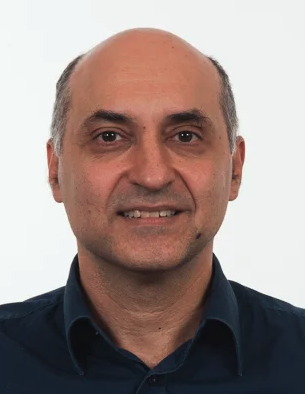 Christos Stefanakos合作论文数Department Fisheries and New Biomarine Industry, SINTEF Ocean2
 Yngvar Olsen合作论文数Department of Biology, Norwegian University of Science and Technology2
 Kjell Inge Reitan合作论文数SINTEF Fisheries and Aquaculture2lionel eisenhauer合作论文数1Hila Dror合作论文数1
 Ashild Løvas Borgersen合作论文数1Thomas A. McClimans合作论文数1Irene Biliani合作论文数1
 Rebekka Varne合作论文数1
 Konstantinos Christakos合作论文数Geophysical Institute, University of Bergen1
 Øyvind J. Hansen合作论文数1
 Yajie Liu (刘亚杰)合作论文数1
 Tim Dempster合作论文数Sustainable Aquaculture Laboratory – Temperate and Tropical, School of BioSciences, Faculty of Science, University of Melbourne1
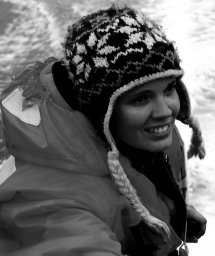 Majaneva Sanna合作论文数The University Centre in Svalbard;Faculty of Biological and Environmental Sciences, University of Helsinki;The University Centre in Svalbard, University of Helsinki1Stene A合作论文数1
 Robert Pickart合作论文数Department of Physical Oceanography, Woods Hole Oceanographic Institution1
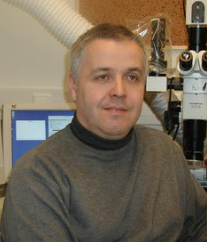 Olav Kjesbu合作论文数Havfor sknings instituttet1
 Thomas A. Mcclimans合作论文数1
 Jennifer L. Bailey合作论文数1
 Herle Mercier合作论文数Laboratoire de Physique des Océans, UBO1Pål Arne Bjørn合作论文数1Hendrik M Van Aken合作论文数1Britt Bang Jensen合作论文数Faculty of Life Sciences, University of Copenhagen1
 Birgitte R. Furevik合作论文数Risø National Laboratory;Energy Department, Wind;Environmental Remote Sensing Centre1
 Rachel Gjelsvik Tiller合作论文数1
 Dor Edelist合作论文数Leon Recanati Institute of Maritime Studies, University of Haifa1Svein Østerhus合作论文数Bjerknes Centre for Climate Research, University of Bergen1
 Artem Sarafanov合作论文数1Bogi Hansen合作论文数1
 Dror Angel合作论文数Israel Oceanographic and Limnological Research;National Center for Mariculture;National Center for Mariculture, National Center for Mariculture1
 Anna Olsen合作论文数SINTEF Fisheries and Aquaculture1Sheldon Bacon合作论文数1Hans V. Bjelland合作论文数NTNU1
 Pascale Lherminier合作论文数1Jens Meincke合作论文数1W.P. Budgell合作论文数1
 Harald G. Svendsen合作论文数1
 H. Thomas Rossby合作论文数Graduate School of Oceanography, University of Rhode Island1
 Ierotheos Zacharias合作论文数Department of Environmental and Natural Resources Management, University of Ioannina1Rune Nilsen合作论文数Norwegian Institute of Fisheries and Aquaculture Research1
 Kjetil Våge合作论文数Geophys Inst, Univ Bergen1
 Henrik Søiland合作论文数1Ingebrigt Uglem合作论文数Norwegian Institute for Nature Research1Hildegunn Viljugrein合作论文数Center for Ecological and Evolutionary Synthesis (CEES),, University of Oslo1Detlef Quadfasel合作论文数1




