We present an automatized workflow which, starting from molecular dynamics simulations, identifies reaction events, filters them, and prepares them for accurate quantum chemical calculations using, for example, Density Functional Theory (DFT) or Coupled Cluster methods. The capabilities of the automatized workflow are demonstrated by the example of simulations for the combustion of some polycyclic aromatic hydrocarbons (PAHs). It is shown how key elementary reaction candidates are filtered out of a much larger set of redundant reactions and refined further. The molecular species in question are optimized using DFT and reaction energies, barrier heights, and reaction rates are calculated. The setup is general enough to include at this stage configurational sampling, which can be exploited in the future. Using the introduced machinery, we investigate how the observed reaction types depend on the gas atmosphere used in the molecular dynamics simulation. For the re-optimization on the DFT level, we show how the additional information needed to switch from reactive force-field to electronic structure calculations can be filled in and study how well ReaxFF and DFT agree with each other and shine light on the perspective of using more accurate semi-empirical methods in the MD simulation.
Using diode laser vibration-rotation-tunneling spectroscopy near 15 Thz (500 cm−1), we have measured and assigned 142 transitions to three a-type librational subbands of the water hexamer-d12 prism. These subbands reveal dramatically enhanced (ca. 1000×) tunneling splittings relative to the ground state. This enhancement is in agreement with that observed for the water dimer, trimer, and pentamer in this same frequency region. The water prism tunneling motion has been predicted to potentially describe the motions of water in interfacial and confined environments; hence, the results presented here indicate that excitation of librational vibrations has a significant impact on the hydrogen bond dynamics in these macroscopic environments.
 Christof Hättig合作论文数Faculty for Chemistry and Biochemistry, Ruhr-Universitat Bochum2
 Bastian Schnieder合作论文数1Akber Sheikh合作论文数1
 William T. S. Cole合作论文数Univ Calif Berkeley, Berkeley, CA 94720 USA1Carsten Wedler合作论文数University of Western Australia1
 Markus Richter合作论文数Professorship Appl Thermodynam, Tech Univ Chemnitz1
 Farrell James Daniel合作论文数Beijing National Laboratory for Condensed Matter Physics, Institute of Physics, Chinese Academy of Sciences1
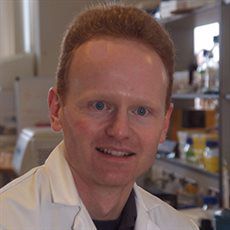 Mark Viant合作论文数School of Biosciences, University of Birmingham;Centre for Environmental Research and Justice;Michabo Health Science Ltd;Environmental Metabolomics Research Laboratory, University of Birmingham1
 Gunnar Schmitz合作论文数Lehrstuhl für Theoretische Chemie, Ruhr-Universität Bochum1Raymond S. Fellers合作论文数1
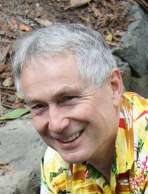 Richard J Saykally合作论文数College of Chemistry, University of California, Berkeley1
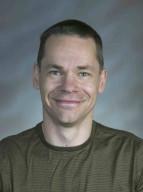 David Wales合作论文数Yusuf Hamied Department of Chemistry, University of Cambridge;Downing College, University of Cambridge1
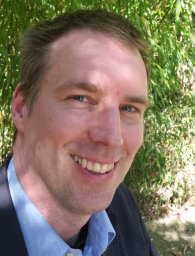 Rochus Schmid合作论文数Lehrstuhl für Anorganische Chemie II, Ruhr-University Universitätsstr.1
 Roland Span合作论文数Institut fur Thermo- und Fluiddynamik, Ruhr-Universitat Bochum1




