This paper presents simulation results of nonlinear filtering algorithms applied to the cooperative object tracking problem. Cooperative tracking refers to observing a object from multiple mobile sensor platforms that communicate with each other, either directly or through a central node. Inter-agent communication also enables cooperative guidance, which can be used to achieve agent formation configurations advantageous to object tracking.
This paper presents Lyapunov functions for proving the stability of steady gliding motions for vehicles with hydrodynamic or aerodynamic forces and moments. Because of lifting forces and moments, system energy cannot be used as a Lyapunov function candidate. A Lyapunov function is constructed using a conservation law discovered by Lanchester in his classical work on phugoid-mode dynamics of an airplane. The phugoid-mode dynamics, which are cast here as Hamiltonian dynamics, correspond to the slow dynamics in a multi-time-scale model of a hydro/aerodynamically-forced vehicle in the longitudinal plane. Singular perturbation theory is used in the proof of stability of gliding motions. As an intermediate step, the simplifying assumptions of Lanchester are made rigorous. It is further shown how to design stabilizing control laws for gliding motions using the derived function as a control Lyapunov function and how to compute the corresponding regions of attraction.
In this paper we present a dynamical systems model and control algorithms for a small, vertical axis wind turbine (VAWT). The wind turbine is designed for the domestic market, including regions without very favorable wind conditions. Good performance at low wind speeds is an important requirement for developing an economically viable, suburban VAWT. The performance of a VAWT can be greatly enhanced by incorporating estimation and control capabilities. Individual blade pitch and camber controls are considered in our VAWT design. Pitch control is achieved by rotating each individual blade about its vertical axis, while camber control is realized using a trailing edge flap on each blade. Using camber and pitch controls help in creating a greater force differential across the turbine than using pitch control alone. In this paper we present a simple strategy for implementing pitch control and demonstrate the resulting efficiency improvement through a simulation.
In this paper we present a control law that yields exponential stability of steady gliding motions of the conventional take off and landing (CTOL) aircraft model. We interpret the CTOL aircraft model as an interconnected system and prove closed-loop exponential stability by constructing a Lyapunov function. We use the stability of steady gliding motions to propose a methodology for approximately tracking desired trajectories. The stabilization and tracking methods presented here are also applicable to other air and underwater vehicles subject to aerodynamic moments, and lift and drag forces. One of the attractions of tracking based on stable gliding is the very low control effort requirement compared to dynamic inversion based methods. We demonstrate the proposed method with a simulation of the CTOL aircraft model.
The Autonomous Ocean Sampling Network-II (AOSN-II) and Adaptive Sampling And Prediction (ASAP) projects aim to develop a sustainable, portable, adaptive ocean observing and prediction system for use in coastal environments. These projects employ, among other observation platforms, autonomous underwater vehicles that carry sensors to measure physical and biological signals in the ocean. The measurements from all sensing platforms are assimilated in real-time into advanced ocean models. The objective is to coordinate the mobile assets in order to collect data of highest possible utility. Critical to this effort are reliable, efficient and adaptive control strategies to enable the mobile sensor platforms to collect data autonomously. In this paper, we summarize feedback control strategies that enable us to gather useful information over a wide spectrum of spatial and temporal scales. First, we design formation control strategies useful for sampling small spatial scale processes (less than 5 km). In this framework, the feedback control laws maintain a desired formation of vehicles and allow the group to locate interesting features in the ocean. Some of these control strategies were implemented on a group of underwater gliders in Monterey Bay in August 2003, as part of the AOSN-II project. Second, we direct mobile sensor networks to provide synoptic coverage to investigate larger scales ( 5−100 km). Coordinated vehicle trajectories are designed according to the spatial and temporal variability in the field in order to keep sensor measurements appropriately distributed in space and time.
Operations with multiple autonomous underwater vehicles (AUVs) have a variety of underwater applications. For example, a coordinated group of vehicles with environmental sensors can perform adaptive ocean sampling at the appropriate spatial and temporal scales. We describe a methodology for cooperative control of multiple vehicles based on virtual bodies and artificial potentials (VBAP). This methodology allows for adaptable formation control and can be used for missions such as gradient climbing and feature tracking in an uncertain environment. We discuss our implementation on a fleet of autonomous underwater gliders and present results from sea trials in Monterey Bay in August, 2003. These at-sea demonstrations were performed as part of the Autonomous Ocean Sampling Network (AOSN) II project.
The energy of a mechanical system naturally provides a Lyapunov function to prove stability of steady motions. This is no longer the case when the system is subject to aerodynamic forces. We derive a Lyapunov function to prove stability of steady, gliding motions for vehicles subject to lift and drag. We make use of a conservation law derived by Lanchester in his original phugoid mode model and in so doing prove conditions under which Lanchester's simplifying assumptions are valid. We apply the results to prove stability and estimate the region of attraction for an underwater glider.
Autonomous underwater vehicles, and in particular autonomous underwater gliders, represent a rapidly maturing technology with a large cost-saving potential over current ocean sampling technologies for sustained (month at a time) real-time measurements.In this paper we give an overview of the main building blocks of an underwater glider system for propulsion, control, communication and sensing. A typical glider operation, consisting of deployment, planning, monitoring and recovery will be described using the 2003 AOSN-II field experiment in Monterey Bay, California.We briefly describe recent developments at NRC-IOT, in particular the development of a laboratory-scale glider for dynamics and control research and the concept of a regional ocean observation system using underwater gliders.
Global Aerospace Corporation is developing a revolutionary concept for a global constellation and network of hundreds of stratospheric superpressure balloons. Global Aerospace Corporation and Princeton University are studying methods of controlling the geometry of these stratospheric balloon constellations using concepts related to and inspiration derived from biological group behavior such as schooling, flocking, and herding. The method of artificial potentials determines control settings for trajectory control systems in the steady flow regions. Weak Stability Boundary theory is used to (a) determine the interfaces between smooth flow and areas where chaotic conditions exist and (b) calculate control settings in regions of chaotic flow.
In this paper we present strategies for adaptive sampling using Autonomous Underwater Vehicle (AUV) ∞eets. The central theme of our strategies is the use of feedback that integrates distributed in-situ measurements into a coordinated mission planner. The measurements consist of GPS updates and estimated gradients of the environmental flelds (e.g., temperature) that are used to navigate the AUV ∞eets enabling effective front tracking and/or feature detection. To this efiect these ∞eets are required to translate to collect and seek good data, expand/contract to efiect changes in sensor resolution, and rotate and reconflgure to maximize sensing coverage, all while retaining a prescribed formation. These strategies play a key role in directing a cooperative ∞eet of autonomous underwater gliders in the flrst experiment of the O‐ce of Naval Research sponsored Autonomous Ocean Sampling Network II (AOSN-II) project in Monterey Bay, during August-September 2003. We present the coordination framework and investigate the efiectiveness of our sampling strategies in the context of AOSN-II via detailed simulations.
An underwater glider is a buoyancy-driven, fixed-wing underwater vehicle that redistributes internal mass to control attitude. We examine the dynamics of a glider restricted to the vertical plane and derive a feedback law that stabilizes steady glide paths. The control law is physically motivated and with the appropriate choice of output can be interpreted as providing input-output feedback linearization. With this choice of output, we extend the feedback linearization approach to design control laws to coordinate the gliding motion of multiple underwater gliders.
 Naomi Ehrich Leonard合作论文数Department of Mechanical and Aerospace Engineering, School of Engineering and Applied Science, Princeton University13
 Michael Paluszek合作论文数6
 Ralf Bachmayer合作论文数Chair for Ocean Technology;Faculty of Engineering and Applied Science;Memorial University of Newfoundland;Faculty of Engineering and Applied Science, Memorial University of Newfoundland4
 Edward Belbruno合作论文数3
 Alexey A. Pankine合作论文数Global Aerospace Corporation3
 Matthew Kuperus Heun合作论文数3R. Stephen Schlaifer合作论文数3Kerry T. Nock合作论文数3E Fiorelli合作论文数3
 Kim Aaron合作论文数3
 David M. Fratantoni合作论文数2Igor Shulman合作论文数Naval Research Laboratory, Stennis Space Center2
 Edward Fiorelli合作论文数2
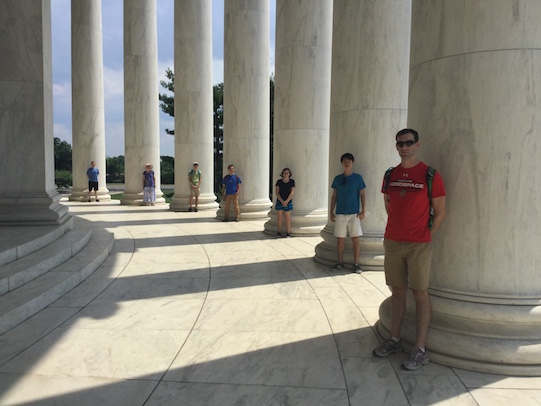 Derek A. Paley合作论文数Maryland Robotics Center2
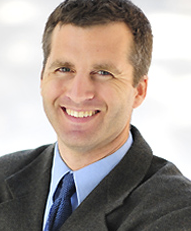 Derek A. Paley合作论文数A. James Clark School of Engineering, University of Maryland1
 Graver, J.G.合作论文数1
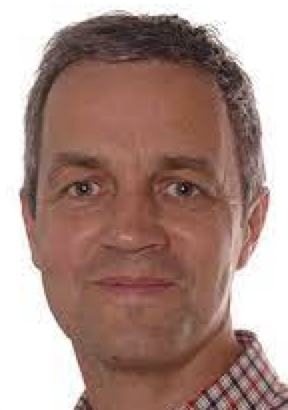 Rodolphe Sepulchre合作论文数Dpt of Engineering, University of Cambridge;Dpt of Electrical Engineering, KU Leuven1
 Francois Lekien合作论文数Massachusetts Institute of Technology1
 Alok Sinha合作论文数Department of Mechanical Engineering, College of Engineering, Pennsylvania State University;Center for Acoustics and Vibration, Pennsylvania State University1
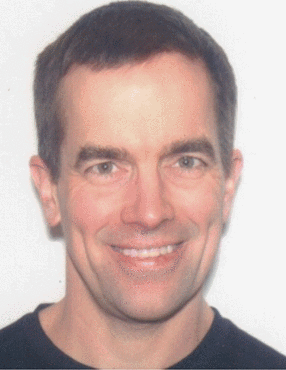 Joseph B. Mueller合作论文数Princeton Satellite Systems1
 Pierre Lermusiaux合作论文数Department of Mechanical Engineering, Massachusetts Institute of Technology1




