The rise of climate change on the global political agenda coincided with the growth of partisan polarization in US politics and, in many ways, their trajectories mirror one another. When the climate crisis first began to attract political attention 30 years ago, Republicans and Democrats responded with similar levels of interest and concern. Today, partisan division overwhelms all other aspects of climate-change politics and environmental politics more broadly (Egan, Konisky, and Mullin 2022; Egan and Mullin 2017).
Here we document an under-studied but important phenomenon that we call ascendant public opinion, which emerges when a new concern is framed as an instance of a broader issue and gains ascendancy over that issue in the public's mind. We focus on the ever-increasing role climate change has come to play over the past three decades in shaping how Americans think about broader environmental concerns. We show that news coverage of the environment has focused increasingly on climate change over time, while climate change concurrently has come to dominate all other environmental problems in the strength of its association with general environmental concern in opinion surveys. Panel studies provide evidence that the growing correlation between attitudes on climate change and the environment is predominantly due to the impact of the former on the latter. These developments have been consequential: we estimate that Americans' level of concern about the environment is now both more elevated and more polarized along party lines than if climate change did not occupy its dominant place on the environmental agenda. Climate change is likely just one example of how ascendant public opinion can have important consequences for politics and policy.
Abstract Here we document an under-studied but important phenomenon that we call ascendant public opinion, which emerges when a new concern is framed as an instance of a broader issue and gains ascendancy over that issue in the public’s mind. We focus on the ever-increasing role climate change has come to play over the past three decades in shaping how Americans think about broader environmental concerns. We show that news coverage of the environment has focused increasingly on climate change over time, while climate change concurrently has come to dominate all other environmental problems in the strength of its association with general environmental concern in opinion surveys. Panel studies provide evidence that the growing correlation between attitudes on climate change and the environment is predominantly due to the impact of the former on the latter. These developments have been consequential: we estimate that Americans’ level of concern about the environment is now both more elevated and more polarized along party lines than if climate change did not occupy its dominant place on the environmental agenda. Climate change is likely just one example of how ascendant public opinion can have important consequences for politics and policy.
Does social media educate voters, or mislead them? This study measures changes in political knowledge among a panel of voters surveyed during the 2015 UK general election campaign while monitoring the political information to which they were exposed on the Twitter social media platform. The study's panel design permits identification of the effect of information exposure on changes in political knowledge. Twitter use led to higher levels of knowledge about politics and public affairs, as information from news media improved knowledge of politically relevant facts, and messages sent by political parties increased knowledge of party platforms. But in a troubling demonstration of campaigns' ability to manipulate knowledge, messages from the parties also shifted voters' assessments of the economy and immigration in directions favorable to the parties' platforms, leaving some voters with beliefs further from the truth at the end of the campaign than they were at its beginning.
Political science generally treats identities such as ethnicity, religion, and sexuality as "unmoved movers" in the chain of causality. I hypothesize that the growing salience of partisanship and ideology as social identities in the United States, combined with the increasing demographic distinctiveness of the nation's two political coalitions, is leading some Americans to engage in a self-categorization and depersonalization process in which they shift their identities toward the demographic prototypes of their political groups. Analyses of a representative panel data set that tracks identities and political affiliations over a 4-year span confirm that small but significant shares of Americans engage in identity switching regarding ethnicity, religion, sexual orientation, and class that is predicted by partisanship and ideology in their pasts, bringing their identities into alignment with their politics. These findings enrich and complicate our understanding of the relationship between identity and politics and suggest caution in treating identities as unchanging phenomena.
Are legislators responsive to the priorities of the public? Research demonstrates a strong correspondence between the issues about which the public cares and the issues addressed by politicians, but conclusive evidence about who leads whom in setting the political agenda has yet to be uncovered. We answer this question with fine-grained temporal analyses of Twitter messages by legislators and the public during the 113th US Congress. After employing an unsupervised method that classifies tweets sent by legislators and citizens into topics, we use vector autoregression models to explore whose priorities more strongly predict the relationship between citizens and politicians. We find that legislators are more likely to follow, than to lead, discussion of public issues, results that hold even after controlling for the agenda-setting effects of the media. We also find, however, that legislators are more likely to be responsive to their supporters than to the general public.
A review of research findings and polling data about Americans' attitudes on climate change reveals a lack of meaningful long-term change in mass opinion. Instead, the structure of Americans' attitudes toward belief in climate change's existence, concern about its consequences, and demand for policy response is similar to that regarding many other issues in contemporary US politics: stability in aggregate opinion that masks partisan and ideological polarization enhanced by communications from elites. But features of the climate change problem elicit some distinctive determinants of opinion, including individuals' trust in science, risk processing, and personal experience. Although our review of the literature and data leaves us skeptical that majority opinion will spur elected officials anytime soon to undertake the costly solutions necessary to tackle this problem comprehensively at the national level, we identify several avenues by which attitudes might promote less substantial but nevertheless consequential policy action.
Journal Article Judicial Politics in Polarized Times Get access Judicial Politics in Polarized Times by Thomas M. Keck. Chicago, IL, University of Chicago Press, 2014. 352 pp. Cloth, $85.00; paper, $27.50. Patrick J. Egan Patrick J. Egan New York University Search for other works by this author on: Oxford Academic Google Scholar Political Science Quarterly, Volume 131, Issue 1, Spring 2016, Pages 169–170, https://doi.org/10.1002/polq.12462 Published: 28 March 2016
Population-weighted analysis of US weather conditions shows that the nation’s weather has generally become more pleasant since 1974, possibly explaining the lack of broad public support for action on climate change; projections of future US weather indicate that conditions will probably worsen.
Political knowledge is crucial to the functioning of democratic political systems, and therefore represents an important topic of study for political scientists. Attempts to measure determinants of political knowledge, however, have long relied on self-reports of key causal variables (such as media exposure) and often must contend with concerns regarding endogeneity. To address both these issues simultaneously, we conduct a panel survey that spans the 2015 UK election to measure changes in political knowledge and rely on a non-self-reported measure of media exposure. More specifically, we analyze respondents Twitter feeds to objectively measure exposure to political information, including the source of that information. We show that information from media accounts tends to increase knowledge of factual questions, and that information from politicians tends to increase knowledge of party platforms. We also examine issues specifically relevant to the 2015 UK election, and find that information from incumbent parties improves estimates of the state of the economy while tweets by opposition parties diminish them, and that information from UKIP about immigration tends to inflate beliefs about the number of immigrants to the UK.
Americans are more likely to believe in global warming when it's hot outside. A study now provides insights on why this reasoning process is not easily changed.
mericans are more likely to believe in global warming when it's hot outside. A study now provides insights on why this reasoning process is not easily changed.
When a public problem is perceived to be poorly addressed by current policy, it is often the case that credible alternative policies are proposed to both the status quo's left and right. Specially designed national surveys show that in circumstances like these, many Americans' preferences are not single-peaked on the standard left-right dimension. Rather, they simply want the government to "do something" about the problem and therefore prefer both liberal and conservative policies to the moderate status quo. This produces individual and collective preferences that are double-peaked with respect to the left-right dimension. Double-peakedness is less prevalent on issues where no consensus exists regarding policy goals, and it increases when exogenous events raise the public's concern about the seriousness of a policy problem.
1. Introduction 2. Consensus issues: amidst polarization, shared goals 3. The measure and meaning of issue ownership 4. Ruling out the policy and performance hypotheses 5. Partisan priorities: the source of issue ownership 6. How issue ownership distorts American politics 7. Conclusion.
 Megan Mullin合作论文数Department of Public Policy, Luskin School of Public Affairs, University of California, Los Angeles10
 Jack Citrin合作论文数Department of Political Science, University of California, Berkeley5
 Jonathan Nagler合作论文数Wilf Family Department of Politics, College of Arts & Science, New York University3
 Nathaniel Persily合作论文数Stanford Law School, Stanford University3
 Joshua A. Tucker合作论文数New York University3
 Kevin Munger合作论文数State Coll, Penn State Univ2
 Kenneth Sherrill合作论文数2
 David M. Konisky合作论文数Department of Political Science;Massachusetts Institute of Technology;Department of Political Science, Massachusetts Institute of Technology2
 Renee Gosline合作论文数1greg huber合作论文数1jessica bonney reveley合作论文数1Jonathan Ronen合作论文数Max Delbrueck Center for Molecular Medicine in the Helmholtz Association, Berlin Institute for Medical Systems Biology1
 Andreu Casas合作论文数Vrije Universiteit Amsterdam1
 Thad Kousser合作论文数Department of Political Science, University of California, San Diego1
 Seth K. Goldman合作论文数Univ Massachusetts Amherst1
 Markus Prior合作论文数Department of Politics, Princeton School of Public and International Affairs, Princeton University1William Minozzi合作论文数Department of Political Science, The Ohio State University;Department of Political Science, The Ohio State University1
 Pablo Barberá合作论文数1
 John Jost合作论文数Department of Psychology, Faculty of Arts & Science, New York University;Center for Data Science, New York University;Center for Social and Political Behavior, New York University1
 Richard Bonneau合作论文数Department of Biology and Computer Science, New York University1
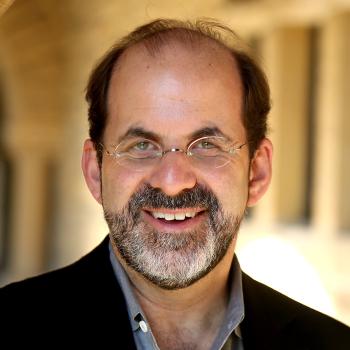 Jon A. Krosnick合作论文数Communication Department, Stanford University;Center for Survey Measurement, U.S. Census Bureau, United States Department of Commerce;Survey Research Laboratory, University of Illinois1
 Juan Ariel Bogliaccini合作论文数Catholic University of Uruguay Uruguay1
 Kosuke Imai合作论文数Department of Government, Harvard University;Department of Statistics, Harvard University;Institute for Quantitative Social Science, Harvard University1
 Luke J. Keele合作论文数Depts. of Surgery and Biostatistics, Perelman School of Medicine, University of Pennsylvania1




