This paper explores operationally reliable combinations of AI and physics through digital twins to optimize optical networks. Key methodologies and applications are discussed, addressing security, scalability, automation and sustainability.
We experimentally demonstrate sequential parameter refinement leveraging lightpath diversity in presence of various levels of uncertainty on parameter knowledge to iteratively improve QoT prediction accuracy by up to 1.8 dB.
We characterize SOP event localization with a commercial transponder on a 150 km link. Fast events achieved below 20 m of standard deviation. We propose a localization improvement of low-speed events, achieving constant performance up to 10 krad/s.
We study the use of longitudinal power monitoring (LPM) to improve SNR prediction for optical links where lumped power losses can be present. We define three scenarios: 1) no knowledge of the presence of power losses, 2) the amplifier gives information on the value of power loss and 3) LPM allows the estimation of both the loss location and the loss value. We determine the prediction gain between scenarios in a case with no uncertainty. We later introduce an uncertainty on the fiber attenuation. We show that LPM can significantly reduce the SNR prediction uncertainty interval down to 0.2 dB while for the amplifier scenario it is 1.7 dB.
We present a memory-efficient, computationally optimized longitudinal power monitoring method scalable to numerous spatial samples for embedded systems. Results show < 0.6 dB accuracy penalty across > 75% of the link versus linear least squares.
We propose a novel method for continual PDL monitoring that first detects PDL drift by tracking SNR distributional shifts at the receiver, and then provides a prediction of the updated PDL value. This approach achieves a root mean square error (RMSE) of approximately 0.15 dB over time.
We leverage binary classification models to provide digital twins with forecasting ability, to proactively mitigate the impact of failures on availability. Our preferred model achieves 98.5% accuracy on data collected from a live production network.
We experimentally measure the specific spectral signature of strong fiber bending and propose a metric to detect strong bending events. Leveraging telemetry from a production network we report short-lived anomalies which exhibit the aforementioned signature.
We propose a multi-stage computation for longitudinal power monitoring reducing the memory footprint compared to linear least square approach. We demonstrate a power accuracy penalty lower than 0.1dB over more than 85% of link.
As deploying large amounts of monitoring equipment results in elevated cost and power consumption, novel low-cost monitoring methods are being continuously investigated. A new technique called Power Profile Monitoring (PPM) has recently gained traction thanks to its ability to monitor an entire lightpath using a single post-processing unit at the lightpath receiver. PPM does not require to deploy an individual monitor for each span, as in the traditional monitoring technique using Optical Time-Domain Reflectometer (OTDR). In this work, we aim to quantify the cost and power consumption of PPM (using OTDR as a baseline reference), as this analysis can provide guidelines for the implementation and deployment of PPM. First, we discuss how PPM and OTDR monitors are deployed, and we formally state a new Optimized Monitoring Placement (OMP) problem for PPM. Solving the OMP problem allows to identify the minimum number of PPM monitors that guarantees that all links in the networks are monitored by at least n PPM monitors (note that using n>1 allows for increased monitoring accuracy). We prove the NP-hardness of the OMP problem and formulate it using an Integer Linear Programming (ILP) model. Finally, we also devise a heuristic algorithm for the OMP problem to scale to larger topologies. Our numerical results, obtained on realistic topologies, suggest that the cost (and power) of one PPM module should be lower than 2.6 times that of one OTDR for nation-wide and 10.2 times for continental-wide topology.
We predict anomalous fiber macro-bending conditions by using an artificial neural network, trained with data from a laboratory experiment. We discuss the performance and robustness of two feature extraction methods for different monitoring equipment capabilities.
We explore state-of-polarization sensing as a promising candidate for large-scale deployments thanks to longdistance monitoring capabilities. We further discuss scalability aspects related to monitoring placement to reduce telemetry streams, hence lowering alarms redundancy and data storage requirements. We also benchmark AI-based event classification techniques.
We propose a physics-based digital twin to predict the statistical QoT distribution of a realistic optical lightpath. We demonstrate up to 0.73 dB accuracy improvement in worst-case SNR prediction for short distance transmissions in linear regime.
We experimentally analyzed nonlinear effects from adjacent QPSK channels and ASE noise loading over a long-haul link, including the impact of CPE. ASE-induced penalties were smaller than predicted by format-dependent models, and CPE was found to significantly mitigate both intra- and interchannel nonlinearities.
We propose a method to localize and quantify anomalous polarization dependent loss through signal to noise ratio distributions monitored at the receiver. We demonstrate that anomalies can be localized with 100% accuracy and estimated with 0.01dB uncertainty in simulations and with 0.2dB uncertainty in experiments. (c) 2025 The Author(s)
We present an accuracy comparison between two longitudinal power profile estimation methods, the minimum mean square error (MMSE) method and the deconvolution of the correlation-based method. We first numerically evaluate the accuracy of each method and benchmark the deconvolution method versus the MMSE with respect to span input power, number of spans and modulation format. For both methods, we obtain a similar accuracy - root-mean square error (RMSE) of 0.14 dB at 5 dBm - at a given input power. We also show that using 16-QAM or 64-QAM for the modulation format instead of QPSK allows the deconvolution method to be more accurate and robust with the number of spans. Secondly, we perform a first experimental demonstration of the deconvolution method and assess the accuracy of both methods with commercial transponders in an optical networking testbed. We measure the RMSE of both - MMSE and deconvoluted - profiles with respect to the optical time-domain reflectometer (OTDR). We obtain close RMSE values as the average RMSE difference between both profiles is below 0.28 dB for the lightpath excluding the first span.
We propose a digital twin of coherent receivers based on an extended physical model for predicting quality of transmission under receiver power variations. We experimentally validate it, demonstrating an accuracy improved by up to 1.5dB.
Forecasting state of polarization (SOP) in aerial fibers poses several challenges due to exposure to dynamic und unpredictable environmental factors, such as wind-induced vibrations, leading to multi-timescale SOP variations. Traditional statistical and deterministic approaches may struggle to accurately model the complex, nonlinear, and multi-scale dynamics of these SOP fluctuations, making them less effective for real-world scenarios. To address these challenges, this study proposes a weather-adaptive forecasting framework combining discrete wavelet transform and artificial neural networks to predict SOP changes across varying timescales. By integrating environmental data, the model effectively captures rapid fluctuations and gradual drifts, significantly improving forecasting accuracy. Validation using field data across two locations demonstrates the model's reliability for both short-term and long-term predictions. Including environmental factors namely wind speed, temperature, and humidity improves long-term forecasting accuracy by over 64.5% compared to models taking as input SOP change data alone. Wind gusts enhance short-term forecasting under extremely windy conditions. Our proposed framework outperforms conventional techniques, offering a reliable framework for SOP change prediction and advancing proactive optical system monitoring.
We review methods for optical link tomography, particularly receiver-based power profile estimation. We highlight key works including a demonstration over 10,000 km and an accuracy comparison between linear least squares method and deconvoluted correlation-based method.
We demonstrate linear and nonlinear SNR estimation over a commercial 130 Gbaud coherent transponder by using received signal features. The obtained linear and nonlinear SNR estimation error were within 0.7 dB and 1.3 dB, respectively.
 Fabien Boitier合作论文数51
 Sébastien Bigo合作论文数Nokia Bell Labs29Camille Delezoide合作论文数27Petros Ramantanis合作论文数26
 Dupas, Arnaud合作论文数Bell-Labs, Alcatel-Lucent;c;Bell-Labs, Alcatel-Lucent23
 Matteo Lonardi合作论文数Nokia Bell Labs France14
 Raphaël Visoz合作论文数Telecom Research and Development;Department of Telecommunications;Department of Telecommunications, Telecom Research and Development14Antoine O. Berthet合作论文数14
 Luis Velasco合作论文数12Khouloud Abdelli合作论文数11Alix May合作论文数10Dominique Verchere合作论文数10
 Marc Ruiz合作论文数9Jean-Christophe Antona合作论文数8Sylvain Almonacil合作论文数7Eric Dutisseuil合作论文数7
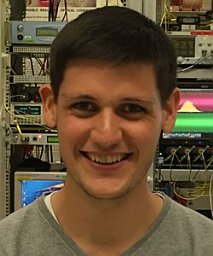 Philippe Jenneve合作论文数7
 Olsson, S.L.I.合作论文数Dept. of Microtechnol. & Nanosci., Chalmers Univ. of Technol.;c;Dept. of Microtechnol. & Nanosci., Chalmers Univ. of Technol.7
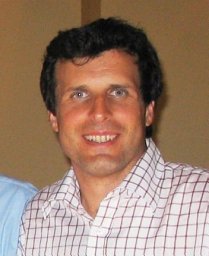 Roberto Morro合作论文数Hospital de Traumatología y Rehabilitación, Hospital Vall D’Hebron7
 Emilio Hugues-Salas合作论文数British Telecom7Jurgen Gripp合作论文数6
 Andrea Sgambelluri合作论文数6
 Shuangyi Yan合作论文数High Performance Networks Group, Univ. of Bristol;c;High Performance Networks Group, Univ. of Bristol6
 Nicola Sambo合作论文数Scuola Superiore Sant'Anna6
 Dimitra Simeonidou合作论文数Smart Internet Lab, Faculty of Engineering, University of Bristol;Bristol Digital Futures Institute, University of Bristol6Alexandre Gouin合作论文数5Vinod Bajaj合作论文数Delft Center for Systems and Control, Delft University of Technology5
 Ramon Casellas合作论文数Centre Tecnològic de Telecomunicacions de Catalunya5
 Piero Castoldi合作论文数Istituto di Tecnologie della Comunicazione, Informazione e Percezione, Scuola Superiore Sant'Anna5Annalisa Morea合作论文数Optical Networks Department, Alcatel-Lucent Bell Labs France5
 Antonio D'Errico合作论文数5
 Lluis Gifre合作论文数Optical Communications Group (GCO),, Universitat Politècnica de Catalunya (UPC),5Francesco Fresi合作论文数Istituto Nazionale di Neuroscienze5A. Napoli合作论文数4
 Giacomo Bernini合作论文数4Quan Pham Van合作论文数4
 Nikos Argyris合作论文数NVIDIA4
 Georgios Zervas合作论文数Department of Electronic and Electrical Engineering, Faculty of Engineering Sciences, University College London4Diego Roccato合作论文数4Marc Bohn合作论文数4
 Talha Rahman合作论文数4
 Reza Nejabati合作论文数University of Essex4
 Aristotelis Kretsis合作论文数4
 Djamal Zeghlache合作论文数Institut Mines-Télécom, Télécom SudParis4
 Óscar González De Dios合作论文数Telefónica I+D4
 Gianluca Meloni合作论文数National Laboratory of Photonic Networks, CNIT4
 Danish Rafique合作论文数Prod Dev & Res Programs Next Generat Transponder, Coriant R&D GmbH4
 Hercules Avramopoulos合作论文数School of Electrical and Computer Engineering, National Technical University of Athens;Photonics Communications Research Laboratory, Department of Electrical and Computer Engineering, National Technical University of Athens4
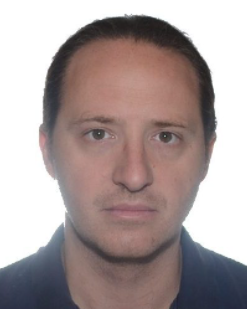 Massimo Tornatore合作论文数Department of Computer Science, College of Engineering, University of California, Davis;Department of Electronics, Information and Bioengineering, Politecnico di Milano4




