Experimental results for the electronic Raman effect in differently doped Cu−O superconductors are presented. Below Tc both critical pair breaking at frequencies close to the maximum of the gap and thermal pair breaking in the limit of small energy transfer is observed and found to be strongly polarization dependent. For all doping levels studied the spectra exhibit frequency and temperature power laws which are typical for an unconventional gap with line nodes.
Raman results of differently doped cuprate superconductors with one, two, and three CuO2 layers are presented. It is shown that the observed continua originate predominantly from carrier excitations in the planes. For the normal state we obtain carrier relaxation rates which are in qualitative agreement with transport measurements. The anisotropy of the superconducting order parameter depends on the doping level.
We have investigated the c-axis current transport in Bi2Sr2CaCu2O8, (Bi1−xPbx)2Sr2CaCu2O8, and Tl2Ba2Ca2Cu3O10 single crystals by direct measurements of AC and DC Josephson effects. The results show, that all materials intrinsically behave as stacks of SIS Josephson junctions. The elementary junction consists of adjacent CuO2 double (triple) layers acting as superconducting electrodes and the bismuth (thallium) layers acting as insulating barriers.
We present Raman scattering results obtained from high quality single crystals of Bi2Sr2CaCu208+δ (Bi 2212) and YBa2Cu3O7−δ (Y 123). The symmetry selection rules for the electronic scattering suggest the observed continuum to originate predominantly from the CuO2 planes. The superconducting spectra exhibit gap-like structures which show that even at T = 0 a finite electronic density of states at energies well below the pair breaking threshold is an intrinsic feature of this material class. The temperature dependence of the superconducting order parameter is shown to be sensitive to the anisotropy.
Single crystals of Bi2Sr2CaCu2O8+delta with different oxygen concentrations were investigated by Raman scattering. Dependent on the polarizations of the incident and the scattered light, the electronic spectra measured well below T(c) show either zero or finite intensity at small energy transfers. In oxygen-annealed crystals, the superconducting order parameter-DELTA is temperature dependent. In contrast, DELTA is almost constant in the essentially two-dimensional argon-annealed samples.
Raman-scattering experiments were carried out to investigate the electronic continuum at various temperatures. Emphasis is placed on parallel trends of the high-Tc compounds YBa2Cu3O7 and Bi2Sr2CaCu2O8 in the normal state. Discrepancies concerning the response at high energy transfers as well as the temperature dependence are pointed out.
In this paper we report the results of hydrostatic pressure experiments up to 6 kbar on the superconducting transition temperature Tc of sintered Bi2Sr2CaCu2O8+y as a function of the oxygen content. The transition to superconductivity is detected by an AC inductance technique and pure hydrostatic pressure is generated with a helium gas system. Over the range of oxygen content studied (0.11 ≤ y ≤ 0.24), Tc(y) passes through a maximum at y≅0.15. The pressure derivative (dTc/dp≅+0.15 K/k bar), however, is positive, nearly independent of the oxygen concentration, and, unlike for Tl2Ba2CuO6+y, not dependent on the temperature at which the pressure is changed.
We have developed a very sensitive torsion wire magnetometer with in situ variation of the sample orientation. In Bi2CaSr2Cu2O8 at field orientations close to the CuO planes, we observe torque jumps directed to perfect alignment. We interpret this as lock-in of the vortices to the interlayer space.
We report on measurements of DC and AC Josephson effects in small sized Bi2CaSr2Cu2O8 single crystals. The results are consistent with the assumption that adjacent CuO double layers are coupled via Josephson mechanisms.
In this paper we report recent determinations of Tc(p) from the complex ac-susceptibility for both single- and polycrystalline Tl2Ca1Ba2Cu2O8 and Y1Ba2Cu3O7 using a helium gas system to 10 kbar and a hydrostatic metal—gasket cell to 35 kbar.
Systematic Raman-scattering experiments have been performed on YBa 2 Cu 3 O 7 and Bi 2 Sr 2 CaCu 2 O 8 single crystals between T c and 270 K. At all four main symmetries the Raman-active electronic continuum is found to be almost constant up to energy transfers as high as 1 eV. Except for the (xy) symmetry in BSCCO, the low energy range of the spectra is dominated by a response function which is proportional to ħω/kT. We suggest that different mechanisms of electronic relaxation, which are briefly discussed, may govern the Raman intensity.
We present critical current and magnetization measurements of Nd1.85Ce0.15CUO4 sinters down to very low magnetic fields. DC SQUID operation was observed. Full shielding occurs only in fields below 15 mOe. The results can be explained by an effective medium theory of Josephson networks.
In this paper we discuss the preparation of several single-phase superconducting Thallium-compounds and their characterization using x-ray, SEM, AES, electrical transport and magnetization techniques.
In YBa2Cu3O7 removing oxygen leads to a reduction in both Tc and the Pauli paramagnetism, accompanied by strengthening of the magnetism in the CuO planes. For single- and polycrystalline YBa2Cu3O7 we find Tc to normally increase with pressure; however, for one single-crystal we observe ∂Tc/∂P = 0. For polycrystalline Tl2CaBa2Cu2O8 Tc(P) shows a broad maximum at 25 kbar.
The magnetization of polycrystalline samples of Tl 2 Ca 2 Ba 2 Cu 3 O 10 showing zero resistivity at temperatures as high as 120.5 K have been studied in the temperature range 4–300 K and in magnetic fields up to 60 kOe. In fields below 50 Oe the diamagnetic properties are dominated by supercurrents flowing across weak-link grain boundaries in the sintered material. H cl (4.2 K) takes on the value ∼900 Oe. The samples are dense and homogeneous enough to remain nearly perfectly diamagnetic to temperatures up to ∼100 K. From the high-field magnetic hysteresis loop we estimate the intragrain critical supercurrent density to be ∼7 × 10 6 A/cm 2 at 4 K. The magnetic susceptibility in the normal state can be analyzed in terms of a sizeable Curie-Weiss term plus a constant; the constant takes on an almost identical value per mol Cu to that found previously for superconducting La 1.85 Sr 0.15 CuO 4 and YBa 2 Cu 3 O 7 .
Single phase YBa2Cu3O7 and multiphase Y1.2Ba0.8CuOx sinters, and YBa2Cu3O7 single crystals have been irradiated with fast neutrons at the low temperature irradiation facility of the Munich research reactor. Tc and the resistivity at 100 K were measured as a function of the neutron fluence. The maximum neutron fluence was 1019 cm−2. Like all superconducting cluster compounds, YBa2Cu3O7 is very sensitive to neutron irradiation defects. Tc has decreased to half of its initial value at fluences of between 4 and 7★1018 cm−2. This rate of Tc degradation is comparable to that of Chevrel phase compounds. The Tc-residual resistivity correlations are very sensitive to the sample morphology.
We describe the synthesis and properties of specially dense and single phase sinters of YBa2Cu3O7 and show that they still exhibit different specific heat anomalies at low temperatures.
Single phase YBa 2 Cu 3 O 7 and multiphase Y 1.2 Ba 0.8 CuO 4 have been irradiated with fast reactor neutrons up to fluences of φt = 9.4 × 10 18 cm −2 ( E > 0.1 MeV). With increasing neutron fluence, we find an enhanced decrease of T c , considerable broadening of the transition width and an increase of ρ ( T = 100 K).
Single crystals of YBa2Cu3O7 were grown in flowing O2 and in air using the flux method. The samples were characterized by domain microscopy and X-ray diffraction. Tc was measured using a contactless eddy current method. Maximum sample surface areas were about 2×1mm2. DC susceptibility measurements are presented. The sample surfaces as grown were of good optical quality. We report on Raman scattering spectroscopy at different temperatures.
 R. Hackl合作论文数Walther Meissner Institut, Bayerische Akademie der Wissenschaften7
 Karl Hermann Andres合作论文数7
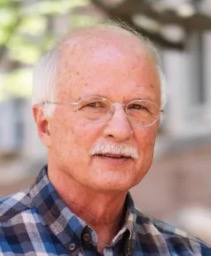 James Schilling合作论文数Department of Physics, College of Arts & Sciences, Washington University in St. Louis5
 Reinhold Kleiner合作论文数Physikalisches Institut, Faculty of Science, Eberhard Karls Universitat Tubingen5R. Nemetschek合作论文数4T. Staufer合作论文数4W. Reith合作论文数4J. Heise合作论文数3C. Allgeier合作论文数3R. Sieburger合作论文数3H. Veith合作论文数3F. Steinmeyer合作论文数3H. Gossner合作论文数2G. Saemann-Ischenko合作论文数2
 Peter M. Fischer合作论文数eth zurich2J. Diederichs合作论文数2Wolfram Schindler合作论文数2
 Barbara Stadlober合作论文数Institute of Nanostructured Materials and Photonics, Joanneum Research2R. Hoben合作论文数2
 Oleg V Misochko合作论文数Russian Academy of Sciences Institute of Solid State Physics Chernogolovka2H. Neumaier合作论文数2H. Gerstenberg合作论文数2B Avenhaus合作论文数1G. Kunkel合作论文数1K. Winzer合作论文数1D Einzel合作论文数1
 Thomas Koch合作论文数Inst Internal Combust Engines, Karlsruhe Inst Technol1Christian Kreuzer合作论文数Fakultät für Physik, Ludwig-Maximilians-University1H. Berndt合作论文数1H. Burzlaff合作论文数1
 László Forró合作论文数Department of Physics and Astronomy, College of Science, University of Notre Dame;Stavropoulos Center for Complex Quantum Matter, University of Notre Dame1Franz Gross合作论文数1K. Neumaier合作论文数1Jorg Strobel合作论文数1
 Helmuth Berger合作论文数Laboratory of Photoelectron Spectroscopy, École Polytechnique Fédérale de Lausanne1A. Moise合作论文数1
 John Neumeier合作论文数Department of Physics, College of Letters & Science, Montana State University1Charles T Kowal合作论文数1P. Gutsmiedl合作论文数1Helmut Kammermeier合作论文数1A.-K. Klehe合作论文数1
 Mathias Opel合作论文数1Chr. Probst合作论文数1Bernhard Aigner合作论文数1P. Pospischil合作论文数1




