We present a theoretical study of the localization1 of atoms with an angular momentumJg=3 toJe=4 transition (e.g., chromium atoms) in quantized optical molasses created by two counterpropagating linearly polarized laser beams. We study the localization as a function of the potential depth, the angle between the polarizations and the interaction time with the molasses in the low-intensity limit, and discuss the possibility of adiabatic compression and squeezing of the atomic distribution.
We demonstrate a new technique for the mechanical manipulation of atoms with light that may be used to deflect or split an atomic beam. This technique depends on the existence of an internal superposition state of the atom that is 'dark' to resonant excitation by a particular light field. An atom in a dark state may adiabatically follow a slowly varying light field in such a way that both the internal state and the atom's momentum are changed. Because the dark state never absorbs or fluoresces, the atomic coherence, necessary for atom interferometry, is preserved. We use laser-cooled Cs atoms to demonstrate the transfer of 8 photon momenta from the slowly varying laser field to the atom.
We discuss novel schemes for subrecoil cooling based on velocity selective coherent population trapping (VSCPT) in 2D laser configurations. In particular we are interested in configurations where polarization gradient cooling coexists with VSPCT and provides a precooling mechanism for dark state cooling.1 We consider both the case of free atoms (optical molasses) and of atoms confined to a trapping potential in the form of a box. We analyze the efficiency of these cooling schemes with quantum Monte Carlo wavefunction simulations, and present 2D bandstructure calculations in optical potentials.
We show that polarization gradient cooling occurs in the A-system simultaneously with velocity-selective coherent population trapping (VSCPT). Starting with a Doppler temperature sample, this process pre-cools atoms and contains them to within twice the recoil velocity, a range efficiently capturable by VSCPT. We present a Sisyphus-type model to illustrate the cooling mechanism; the cooling coefficient estimated from this model is in close agreement with the results we obtain numerically. We also present results from fully quantum simulations employing the Bloch states, verifying the basic features of this mechanism. The simulations show that, for sodium, this cooling may enhance the rate of three-dimensional VSCPT by 200 times over the rate achievable from Doppler precooling alone. We estimate that in 90 ms, for example, the atoms would be cooled in three dimensions to one-tenth the recoil temperature.
Get PDF Email Share Share with Facebook Tweet This Post on reddit Share with LinkedIn Add to CiteULike Add to Mendeley Add to BibSonomy Get Citation Copy Citation Text J. Lawall, M. Prentiss, L. S. Goldner, C. Gerz, R. J. C. Spreeuw, S. L. Rolston, C. I. West-brook, W. D. Phillips, P. Marte, and P. Zoller, "Pushing Atoms with Darkness: Adiabatic Momentum Transfer," Optics & Photonics News 5(12), 28-28 (1994) Export Citation BibTex Endnote (RIS) HTML Plain Text Citation alert Save article
We discuss theoretically the cooling and localization of atoms in deep potentials induced by a far-off-resonant standing-wave laser. For a two-level atom cooling occurs via a Sisyphus mechanism. For a LAMBDA system we discuss a Raman cooling scheme similar to the one proposed for laser cooling in ion traps.
We propose a novel scheme to prepare Fock states and photon superposition states in a cavity. It is based on the fact that the ground state Zeeman coherence of an atom which is passed through a cavity can be transferred on-to-one to a (coherent) superposition of photon number states of the cavity mode.
We have proposed a new scheme for generating Fock states in a cavity by “adiabatic passage from the vacuum.” In addition we have shown that an atomic Zeeman coherence can be mapped one-to-one to a photon coherence in a cavity. To the extent that arbitrary Zeeman coherences can be prepared in an atom by radio frequency fields and optical pumping, a “general superposition state” can be prepared in the cavity. The maximum number of photons in these states is limited by the Zeeman degeneracy. We emphasize that the scheme is robust against atomic spontaneous emission, and that the method of preparing the photon states is deterministic, since the atoms leave the cavity in a single final (pure) state.
We present results for laser cooling of optical molasses and the spectrum of resonance fluorescene based on a fully quantum mechanical treatment of the atomic center-of-mass motion for 1D and 2D laser configurations. Our calculations based on recently developed wave function simulations of the quantum master equation for laser cooling.
We show that polarization-gradient cooling occurs in the \ensuremath{\Lambda} system, simultaneously with velocity-selective coherent population trapping (VSCPT). Starting with a Doppler temperature sample, this process precools atoms and contains them, to within twice the recoil velocity, a range efficiently capturable by VSCPT. For sodium, this cooling may enhance the rate of three-dimensional VSCPT by 200 times over the rate achievable from Doppler precooling alone. We estimate that in 8 msec, for example, the atoms would be cooled in three dimensions to one-fourth the recoil temperature.
The study of mechanical light effects on atoms has been the subject of considerable theoretical and experimental interest during the past few years.1 In particular, progress in building an atomic interferometer (AI) has stimulated recent interest in coherent deflection of atoms by laser light.2–6
We study atomic-beam deflection by adiabatic passage between Zeeman ground levels via Raman transitioins induced by counterpropagating sigma +/- -polarized lasers. We show that complete population transfer between the ground states can be achieved, which corresponds to the scattering of the atomic wave packet into a single final momentum state by absorption and induced emission of laser photons. Although the lasers can be resonant, the excited state(s) are never populated during the adiabatic transfer, which suppresses the effects of spontaneous emission and preserves the coherence of the atomic wave function. This scheme has attractive features as a beam splitter and mirror for atomic interferometry.
 Peter Zoller (彼得·佐勒)合作论文数Institute for Theoretical Physics, University of Innsbruck;Institute for Quantum Optics and Quantum Information, Austrian Academy of Sciences13
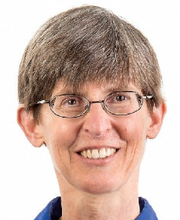 Mara Prentiss合作论文数Department of Physics, Harvard University3
 C. Gerz合作论文数2j mervis合作论文数2Dp Katz合作论文数2
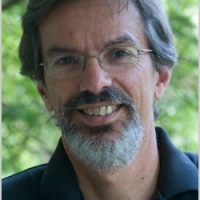 Steven Rolston合作论文数Joint Quantum Institute, University of Maryland;Department of Physics, College of Computer, Mathematical, and Natural Sciences, University of Maryland2
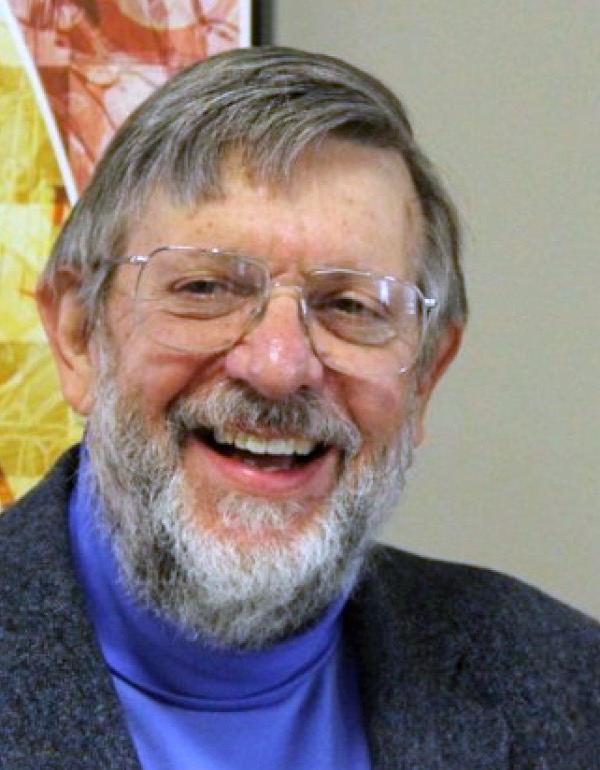 William D. Phillips合作论文数National Institute of Standards and Technology;Institute for Physical Science & Technology, College of Computer, Mathematical, & Natural Sciences, University of Maryland2
 Scott Parkins合作论文数Department of Physics, Faculty of Science, University of Auckland2
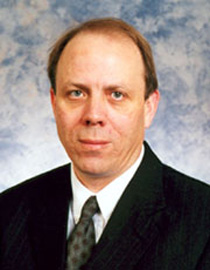 Philip Hemmer合作论文数Department of Electrical and Computer Engineering, College of Engineering, Texas A&M University2
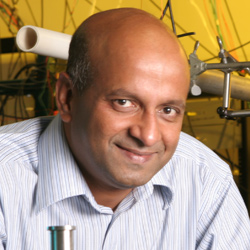 Selim M. Shahriar合作论文数Department of Electrical and Computer Engineering, Northwestern University2T Cai合作论文数2Lori S. Goldner合作论文数2Nicholas P Bigelow合作论文数2
 Robert J. C. Spreeuw合作论文数Van der Waals-Zeeman Institute, University of Amsterdam2Richard Taieb合作论文数LCPMR - Laboratoire de Chimie Physique - Matiere et Rayonnement, Sorbonne Universite2Ci Westbrook合作论文数1S. Marksteiner合作论文数1A. Chu合作论文数1
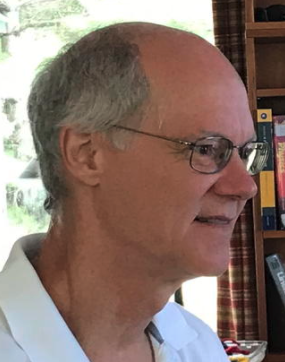 John R. Lawall合作论文数National Institute of Standards and Technology1
 John Hall合作论文数Joint Institute for Laboratory Astrophysics;Physics Department, University of Colorado;National Institute of Standards and Technology1
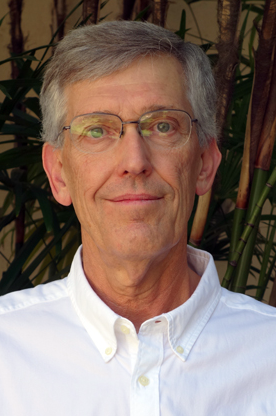 H. Jeff Kimble合作论文数Institute for Quantum Information and Matter;California Institute of Technology1
 Ignacio Cirac合作论文数Theory Division, Max Planck Institute of Quantum Optics;School of Natural Sciences, Technical University of Munich1H. Kimble合作论文数1R. Walser合作论文数1
 Paul D. Lett合作论文数Joint Quantum Institute|National Institute of Standards and Technology|University of Maryland1
 Chris Westbrook合作论文数Laboratoire Charles Fabry de l'Institut d'Optique;Univ Paris-Sud;Laboratoire Charles Fabry de l'Institut d'Optique, Univ Paris-Sud1




