The BRACED project investigated the ultimate behaviour of concentrically braced frames (CBFs). The research programme was designed to validate empirical models for the ductility capacity of hollow section bracing members and recent proposals for the improved detailing of gusset plate connections, to identify active yield mechanisms and failure modes in different brace member/connection configurations, and to provide essential data on the earthquake response of European CBFs. The central element of the integrated experimental and numerical research programme is a series of shake table experiments on full-scale model single-storey CBFs designed to Eurocode 8 (CEN EN 1998-1:2004, Eurocode 8: Design of structures for earthquake resistance—Part 1: General rules, seismic actions and rules for buildings. European committee for standardization, 2004). Twelve separate experiments were performed on the Azalee seismic testing facility at CEA Saclay. The properties of the brace members and gusset plate connections were varied between experiments to examine a range of feasible properties and to investigate the influence of conventional and improved design details on frame response. Each experiment examined the response of the test frame and brace-gusset plate specimens to table excitations scaled to produce elastic response, brace buckling/yielding and brace fracture. These experiments were supported by complementary quasi-static cyclic tests and correlative numerical simulations using pushover and time-history analysis using the OpenSees seismic analysis software. The outputs of the research programme represent a unique set of data on the ultimate earthquake response of CBFs with realistic brace members and connections. The principal experimental outcomes include measurements of elastic frame stiffness and its evolution with brace damage, measurements of the displacement ductility capacity of the brace specimens; an evaluation of the influence of brace connection configuration and gusset plate detailing on frame stiffness, damping and ductility; and observations on the contributions of brace and connection yielding to overall inelastic deformation of CBFs.
Two optimizations of the Expansion Due to Compression (EDC) test, which induces a near uniaxial loading, were proposed and developed to reach higher biaxiality ratios (ratio between mechanical quantities in axial and in circumferential direction). The first optimization, named HB-EDC for High-Biaxiality EDC, allowed to reach transverse plane strain conditions. The second optimization, named VHB-EDC for Very High Biaxiality EDC, was designed to reach higher loading biaxiality ratios. These optimized EDC tests were performed at 25 degrees C, 350 degrees C and 480 degrees C on unirradiated hydrided Cold Worked Stress Relieved (CWSR) Zircaloy-4 samples. First, samples unhydrided or uniformly hydrided up to 1130 wppm were tested. Second, samples hydrided at 310 wppm with a hydride blister were tested. A large ductility reduction is induced by the increase in biaxiality level in the absence of a hydride blister or with small blisters (< 50 mu m deep). The fracture strain decreases quickly with the blister depth at 25 degrees C, but more progressively at higher temperature. An equation that quantifies the fracture strain reduction with the blister depth is proposed. Eventually, one of the tests developed in the present study, the HB-EDC test, was proven to be a good compromise between the test complexity and the stress state reached. It is a good candidate to characterize the mechanical behaviour of irradiated cladding. (C) 2014 Elsevier B.V. All rights reserved.
The fuel handling operating rules exclude any accidental risk. However in the framework of the PRECCI R&D project, the bending of a spent fuel assembly resulting from its locking during a translation displacement is taken into account. This enabled us to develop an approach based on experiments and calculations that allows us to simulate the behaviour of an assembly under such loading. This study was carried out in CEA laboratories with the funding and the technical support of EDF. A three points bending test on a spent fuel rod segment was performed at the Laboratory for Mechanical Behaviour of Irradiated Materials (LCMI). From the experimental strength-displacement curve, a maximum failure strain, a maximum failure curvature and an equivalent constitutive equation were determined. CAST3M modelling of the fuel rod taking into account the elasto-plastic behaviour of the clad and the cracking of the UO2 fuel pellets was verified by the experimental results. Consequently, the identification of the respective contributions of the clad and of the pellets to the rod global behaviour was made possible. A two dimensional assembly with beam elements was modelled with CAST3M. The properties of the beams modelling the different parts of the assembly (top and bottom nozzle, grids) were chosen and adjusted according to their materials (zirconium alloys, steel) in order to obtain stiffness, tensile and shear behaviour, sliding and holding functions close to the experimental ones. Assembly bending calculations were performed. In order to obtain a rod integrity estimator, their maximum calculated strains and curvatures as a function of the bending angles can be compared to the failure experimental ones.
The European research project BANDIT investigated the effectiveness of a novel Post-Tensioned Metal Strapping (PTMS) strengthening technique at improving the seismic performance of deficient RC buildings using shake table tests. A full-scale two-story structure was designed with inadequate reinforcement detailing of columns and beam-column joints so as to simulate typical deficient buildings in Mediterranean and developing countries. Initial shaking table tests were carried out until significant damage was observed in the beam-column joints of the bare frame. Subsequently, the damaged building was repaired and strengthened using PTMS and additional tests were performed. The results of this study show that the adopted strengthening strategy improved significantly the seismic performance of the substandard RC building under strong earthquake excitations.
The effectiveness of a novel Post-Tensioned Metal Strapping (PTMS) technique at enhancing the seismic behavior of a substandard RC building was investigated through full-scale, shake-table tests during the EU-funded project BANDIT. The building had inadequate reinforcement detailing in columns and joints to replicate old construction practices. After the bare building was initially damaged significantly, it was repaired and strengthened with PTMS to perform additional seismic tests. The PTMS technique improved considerably the seismic performance of the tested building. While the bare building experienced critical damage at an earthquake of PGA = 0.15 g, the PTMS-strengthened building sustained a PGA = 0.35 g earthquake without compromising stability.
To take into account the reduced fatigue strength of welded joints, a reduction life factor applied on fatigue curves (Jf value) was introduced into the RCC-MR [Design and Construction Rules for Mechanical Components of FBR Nuclear Islands, AFCEN, 1993], for the design and construction of fast breeder reactors. To better assess this factor, previous work showed that mechanical behavior of a welded assembly is influenced by the geometry of the weld and by the interaction of the different cyclic plastic behavior of the two materials: base metal (BM) and weld metal (WM). A new procedure (named FFAST) was performed on welded joint specimens extracted from butt-welded pipe connections (uniaxial tensile–compressive load). An innovative experimental approach is proposed to study the local mechanical behavior of the welded joint specimens and then determine the Jf parameter. The main advantage of the method is to avoid problems due to the relative stiffness of weld part versus the BM part of the specimen. A continuous recording of the stress and strain in the weld allows an estimation of the mechanical behavior and finally the fatigue life of the joint. Observations of the crack surface show two different crack initiation zones near the weld depending on the load level. Calculations of the tests and comparison with experimental results are presented. These studies make it possible to assess in a practical way the Jf design method. It appears that Jf value cannot be considered as a single value for it is influenced by several factors depending on the weldment and on the load level.
Between 1999 and 2003, CEA conducted a R&D program on high temperature ductile tearing of French PWR vessel steel 16MND5. The main goal was to develop simplified high temperature tearing models, validated on experimental data, and allowing parametrical studies of various severe accident situations of vessel failure. These models are to give estimations of the final breach section (and therefore assess the risks of complete unzipping of the vessel), which are major safety concerns with regard to molten corium ejection and ex-vessel initial conditions. The model presented in this paper concerns circumferential tearing and applies to fast opening situations, for which breach propagation is coupled to vessel depressurisation. Following an experimental program of high-temperature tearing tests on Compact Tensile specimens and Centre Crack Panels, a perfect plastic behaviour with a strain rupture criterion have been chosen, and simple assumptions were made on stress and strain distribution. The equations of the model are based on the energetic differential balance between the kinetic energy, the external work of the pressure load and the energy dissipated in the tearing process, coupled to an isothermal depressurisation model. This system is numerically solved to obtain the breach length and section versus time during the depressurisation process. The application of this model to the LHF tests 3, 5 and 8 shown a very good agreement with the experimental results concerning the final breach size and the dynamic stability or instability of the structure. Dimensionless key parameters were identified, allowing simple assessments on the risks of catastrophic failure in experimental or reactor situations. Moreover, the importance of pressure history before failure was explained : lower and constant pressure values (implying creep failures) lead to dynamically stable situations and smaller breach sections, whereas fast plastic failures during pressure ramps lead to dynamically unstable situations and catastrophic failures may occur. Finally, a PWR severe accident situation with corium relocation in the vessel bottom head has been modelled. The main result is that catastrophic failure (complete unzipping of the vessel bottom head, like in the LHF 5 test) can occur in situations of late vessel reflooding, leading to a re-pressurisation of the primary circuit at high vessel temperature. These situations are of low probability, but these results might have important consequences on accident management and safety assessments.
 yasser helal合作论文数2
 Lejouad Chaymaa合作论文数CEA, Atom Energy & Alternat Energies Commiss2Sophie Capdevielle合作论文数2
 m a ciupala合作论文数ACE School of Architecture Computing and Engineering, University of East London2Yaser Jemaa合作论文数2
 Nicholas Kyriakides合作论文数Dept Civil Engn & Geomat, Cyprus Univ Technol2
 Benjamin Richard合作论文数2Frederic Ragueneau合作论文数2
 Mihai Budescu合作论文数Faculty of Civil Engineering, "Gh. Asachi" Technical University of Iasi2
 Nicolae Taranu合作论文数Faculty of Civil Engineering, "Gh. Asachi" Technical University of Iasi2
 Lluis Torres合作论文数MECÀNICA I DE LA CONSTRUCCIÓ;UNIVERSITAT DE GIRONA;MECÀNICA I DE LA CONSTRUCCIÓ, UNIVERSITAT DE GIRONA2
 Kypros Pilakoutas合作论文数Department of Civil and Structural Engineering, The University of Sheffield2
 Iman Hajirasouliha合作论文数Department of Civil and Structural Engineering, Faculty of Engineering, The University of Sheffield2
 Reyes Garcia合作论文数School of Engineering, The University of Warwick2
 Maurizio Guadagnini合作论文数Department of Civil and Structural Engineering, Faculty of Engineering, The University of Sheffield2
 Christis Z Chrysostomou合作论文数Dept Civil Engn & Geomat, Cyprus Univ Technol2
 Alper Ilki合作论文数Faculty of Civil Engineering Maslak, Istanbul Technical University2
 Mehdi Saiid Saiidi合作论文数Department of Civil & Environmental Engineering, University of Nevada, Reno2Y. Madi合作论文数1vincent macdonald合作论文数1P. Bouffioux合作论文数1
 Suhaib Salawdeh合作论文数1
 Guerin Caroline合作论文数1jerome crepin合作论文数1thomas le jolu合作论文数1
 Alan Hunt合作论文数Dept of Civil, Structural and Environmental Engineering, Trinity College Dublin1
 Gerard J. O'Reilly合作论文数Ctr Training & Res Reduct Seism Risk ROSE Ctr, Univ Sch Adv Studies IUSS Pavia1
 Arthur Hellouin de Menibus合作论文数1
 Franc Sinur合作论文数1Primož Može合作论文数1Alain Le Maoult合作论文数1
 Mihail Petkovski合作论文数Department of Civil and Structural Engineering, University of Sheffield1A. Miquet合作论文数1
 Q. Auzoux合作论文数1
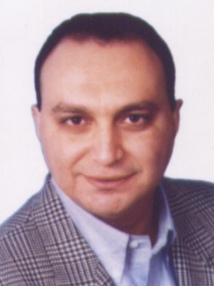 Ahmed Elghazouli合作论文数Department of Civil and Environmental Engineering, Faculty of Engineering, Imperial College London1
 Naman Recho合作论文数Institut JLRA, University Paris VI and ERMESS/EPF-Ecoles d’Ingénieurs1
 Jacques Besson合作论文数Centre Des Matériaux, Mines Paristech;Centre National De La Recherche Scientifique1
 Brian Broderick合作论文数Department of Civil, Structural and Environmental Engineering, Trinity College Dublin1Darko Beg合作论文数1P. Matheron合作论文数1C. Cappelaere合作论文数1
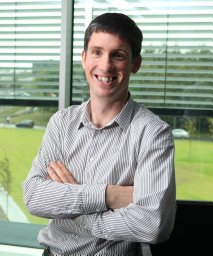 Jamie Goggins合作论文数Department of Civil, Structural and Environmental Engineering, Trinity College1




