Patients with kidney failure face complex health care decisions. In this context, shared decision-making is recommended as a key principle of person-centred care. Person-centred care has been recognized as a strategic priority at local, state, and national level.
Residual kidney function (RKF) is associated with improved solute clearance, anaemia and phosphate control in haemodialysis (HD) patients. Patients with end stage kidney disease on HD experience a high symptom burden which impacts on quality of life (QoL). However, little is known about the relationship between RKF and symptom burden.
The burden of patients requiring venous access to facilitate haemodialysis is well known. The preferred surgical access is the creation of a native arteriovenous fistula (AVF). However, these fistulae are known to have high early failure rates. The type of anaesthesia provided during this surgery may influence outcomes. No definitive studies have examined the difference that general anaesthesia (GA) compared to regional anaesthesia in the form of a brachial plexus block (BPB) may have on AVF patency rates.
The SYMPHONY study established low dose tacrolimus, mycophenolate, prednisolone and IL-2 receptor antagonist induction, as standard of care for immunosuppression in kidney transplant recipients (KTRs). In our service, we reduced the starting tacrolimus dose from 0.075mg/kg BD (higher dose (HD)) to 0.05mg/kg BD (lower dose (LD)) to minimise supratherapeutic tacrolimus levels in the early post-transplant period. The aim of our study was to compare the LD and HD starting tacrolimus regimens in KTRs with respect to achieved tacrolimus levels and clinical outcomes.
In contrast to peritoneal dialysis, residual kidney function (RKF) is commonly disregarded for haemodialysis (HD) patients and not regularly monitored or taken into account in routine clinical care. This is despite evidence that higher levels of RKF in HD patients are associated with better outcomes, including survival, total solute clearance, nutrition, inflammation and fluid balance. This review aims to summarise the clinical effects of RKF specifically in HD patients. Some level of RKF is present in over 80% of patients at the time of dialysis initiation, and while this declines over time, up to 30% of patients on HD for 5 years still have a measurable level of native kidney function. There is little evidence on how best to preserve RKF in HD patients, although it has been observed that intensive HD regimens in incident HD patients appear to accelerate RKF decline. RKF is not commonly factored into HD prescription and measures of adequacy, despite the fact that some guidelines such as Kidney Disease Outcomes Quality Initiative (KDOQI) and European Best Practice Guidelines suggest that it is reasonable to do so. This likely relates, at least in part, to perceived concerns regarding the inconvenience of timed urine collections and to the complexity and lack of consensus regarding the methods for integrating the intermittent clearance of HD with the continuous clearance of native renal function. Further research is required into how best to maintain and maximise the benefits of RKF in HD patients.
BackgroundAtypical haemolytic uraemic syndrome (aHUS) is a rare condition with the triad of microangiopathic haemolytic anaemia, thrombocytopenia and acute kidney injury. Other conditions that present in a similar manner peri-partum include thrombotic thrombocytopaenic purpura, and pregnancy associated conditions including HELLP syndrome (haemolysis, elevated liver enzymes and low platelets), severe pre-eclampsia and less commonly acute fatty liver of pregnancy.Case ReportsWe describe two cases of suspected aHUS, who presented post-partum with foetal death-in-utero at 33 and 37 weeks respectively. Both presented with the triad features of aHUS but had considerably different clinical courses. The first case required a prolonged ICU admission, needed intubation for neurological deterioration and dialysis for acute kidney injury, and developed complications including acute liver failure, septic shock, pancreatitis, and ischaemic colitis. Initial ADAMSTS13 activity was borderline-low (10.3%) and normal on repeat testing (42.6%), and there was no peri-partum pre-eclampsia. The other case remained clinically stable throughout her admission with creatinine peaking at 495, not requiring dialysis, minor liver transaminases derangement and was discharged after a week. Her ADAMSTS13 activity was normal (62%), and her pregnancy was complicated by peri-partum pre-eclampsia. Both eventually had a reduction in haemolysis with rapid and sustained reduction in LDH and normalised platelet counts, and complete recovery of renal function whilst receiving eculizumab therapy.ConclusionsIt can be difficult to distinguish aHUS from other causes in peri-partum patients presenting with features of microangiopathic haemolytic anaemia, thrombocytopenia and acute kidney injury, and often, aHUS can be precipitated by pregnancy. In the setting of the clinical urgency to treat aHUS early with eculizumab, this presents a diagnostic challenge, as confirmatory tests for aHUS are not immediately available.
Introduction and Aims:The recent improvements of next generation sequencing techniques allow relatively rapid and cheap identification of new gene mutations in patients with familial hypomagnesemia.Over the last years, many new genes are identified that regulate Mg2+ reabsorption in the kidney.However, translating the genetic findings into functional assays to examine the function of the affected genes remains challenging because of inadequate cell models, the absence of an Mg2+ radioisotope and limited availability of animal models.Methods: To elucidate the physiological role of newly identified magnesium transporters, a new Mg2+ transport assay using the stable 25Mg isotope was established.Moreover, the zebrafish knockdown model is used to study the in vivo functions.Results: For example, we have identified new mutations in the gene CNNM2 in five families suffering from mental retardation, seizures, and hypomagnesemia.For the first time, a recessive mode of inheritance of CNNM2 mutations was observed and mutations in CNNM2 are associated with mental disability.Using stable Mg2+ isotopes, we demonstrated that CNNM2 increases cellular Mg2+ uptake in HEK293 cells and that this process occurs through regulation of the Mg2+-permeable cation channel TRPM7.In contrast, cells expressing mutated CNNM2 proteins did not show increased Mg2+ uptake.Knockdown of cnnm2 isoforms in zebrafish resulted in disturbed brain development and reduced body Mg content.These phenotypes were rescued by injection of mammalian wild-type Cnnm2 cRNA, whereas mammalian mutant Cnnm2 cRNA did not improve the zebrafish knockdown phenotypes.Altogether these data show that CNNM2 is fundamental for brain development, neurological functioning and Mg2+ homeostasis.Conclusions: By establishing a novel Mg2+ transport assay using stable Mg2+ isotopes and the loss-of-function zebrafish model, we provide a unique system to examine the function of novel genes in Mg2+ homeostasis.These new in vitro and in vivo models may aid to explain the function of electrolyte transporters in the future.
 David Power合作论文数13
 K. Gleich合作论文数12Marina Katerelos合作论文数10
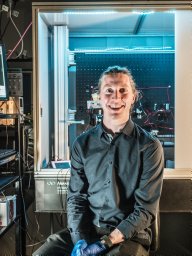 Scott A. Fraser合作论文数9N. Cook合作论文数5
 Bruce E. Kemp合作论文数St Vincent's Institute of Medical Research5M. Davies合作论文数4M. Ross-Smith合作论文数4
 Bryce Van Denderen合作论文数Monash University4M Lee合作论文数3J. Chuen合作论文数2K. Dwyer合作论文数2C Chiang合作论文数2Choy Suet-Wan合作论文数2Francesco L. Ierino合作论文数2f chahadi合作论文数1M. R. P. Davies合作论文数1S. Iuliano合作论文数1Jessica H Kong合作论文数1Justin Chua合作论文数1R Hill合作论文数1DA POWER合作论文数1L. A. Chen合作论文数1O. Farouque合作论文数1
 Emily J See合作论文数Sch Med, Univ Melbourne1M. Roberts合作论文数1B. Lu合作论文数1C. Somerville合作论文数1A. Salmon合作论文数1
 Joseph C Kong合作论文数Peter MacCallum Cancer Centre1P. Choi合作论文数1M. Desmond合作论文数1Frosa Katsis合作论文数1D. Goodman合作论文数1m pan合作论文数1
 D. Lee合作论文数Eastern Health Clinical School, Monash University1Ali Ghasem-Zadeh合作论文数1
 Rachael Morton合作论文数NHMRC Clinical Trials Centre, University of Sydney;Faculty of Medicine and Health, University of Sydney1
 Liliana Laranjo合作论文数School of Health Sciences, Faculty of Medicine and Health, The University of Sydney1
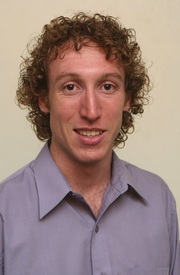 Chris Brown合作论文数NHMRC Clinical Trials Centre, Sydney Medical School, Faculty of Medicine and Health, The University of Sydney;Bean Bar You1
 Allison Tong合作论文数School of Public Health, Faculty of Medicine and Health, The University of Sydney1
 David Harris合作论文数School of Medicine, Faculty of Medicine and Health, The University of Sydney1
 Ruth Hubbard合作论文数Centre for Health Services Research, Faculty of Medicine, The University of Queensland1
 David Johnson合作论文数Department of Kidney and Transplant Services, Princess Alexandra Hospital1
 Carmel Hawley合作论文数Centre for Health Services Research, Faculty of Medicine, The University of Queensland1
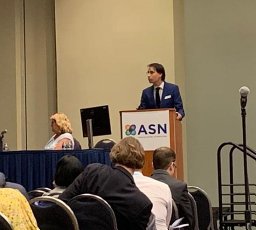 Jeroen H.F. de Baaij合作论文数Nijmegen Centre for Molecular Life Sciences, Radboud University Nijmegen Medical Centre1
 Jesudason Shilpanjali合作论文数Transplantation Immunology Laboratory and Department of Medicine, University of Adelaide1Xue Wang合作论文数1




