ADITYA-L1 is India′s first dedicated mission to observe the Sun and its atmosphere from a halo orbit around L1 point. Visible emission line coronagraph (VELC) is the primary payload on board Aditya-L1 to observe the Sun’s corona. VELC is designed as an internally occulted reflective coronagraph to meet the observational requirements of wide wavelength band and the field of view close to the solar limb (1.05 RSun). Images of the solar corona in continuum and spectra in three emission lines 5303Å [Fe xiv], 7892Å [Fe xi] and 10747Å [Fe xiii] obtained with high cadence are to be analyzed using software algorithms automatically. A reasonable part of these observations will be made in a synoptic mode in which the data are processed through a standard pipeline and the resulting products will be made available for public use. The procedure involves the calibration of instrument and detectors, converting the images into the FITS format, correcting the images and spectra for the instrumental effects, and aligning the images (in terms of position angles and image scales) etc. Then, develop image processing algorithms to detect the occurrence of energetic events using continuum images. Also derive physical parameters, such as temperature and velocity structure of solar corona using emission line observations. Here, we describe the calibration of detectors and the development of software algorithms to detect the occurrence of CMEs and analyze the spectroscopic data.
A state-of-the-art Visible Emission Line Coronagraph (VELC) payload on-board India's solar mission ADITYA-L1 was designed to study various solar phenomena. To maintain the thermal stability of the system, VELC design recommends silicon carbide (SiC)-based components because of their outstanding mechanical, thermal and optical properties. In particular, a SiC-based tertiary mirror (M3) was used for the collection of undesired sunrays and reflecting them out from the system, and a SiC radiator plate (popularly known as a cold finger) for efficient heat dissipation from the mirror and, in turn, from the system. This article describes the processing and evaluation of SiC-based M3 mirror and cold finger for VELC. The substrates for M3 mirror and cold finger were processed through dry pressing of SiC powder with the required formulation, followed by machining and temperature-assisted densification under an inert atmosphere. SiC components developed using powder metallurgical technique exhibited about 98.4% relative density (RD) and achieved the structural and thermal requirements of M3 mirror and cold finger. The optical requirement of M3 mirror was achieved through a coating of SiC substrate with 100% RD employing chemical vapour deposition followed by surface grinding and polishing. The final mirror achieved a surface flatness better than 20 nm, and microroughness data showed less than 5.1 angstrom root mean square surface roughness in a spatial scale of 0.02 to 0.9 mm.
One of the major objectives of the optomechanics is to support large optics required for the purpose and also to maintain high dynamic stability in operation. This requirement calls for more number of supports, to support large optics. While addressing this issue, the mounting system tends to become non-kinematic and distorts the optical surface and leads to poor image quality. The distorted optical surfaces bring in increased RMS surface wavefront errors which will result in poor image quality. In this context, a new concept is proposed in our previous publication (Nagabhushana et al., 2021) which involves introduction of deformable bushes at the optomechanical interfaces. These are deformed by applied clamping forces and also enabling all degrees of freedom (DOF) to be arrested. This also ensures that the clamping force in axial DOF is limited to a minimal value. This technique enables to arrest of axial DOF without exerting the clamping force on the optomechanical assembly there by reduces optical aberrations and improves the mounting system's dynamic stability. This is because deformable bushes absorb all the clamping forces and the strain has no impact on the mount and therefore does not lead deformation of the optical surface. The clamping forces are simulated by Finite Element (FE) methods. Further, in this paper, the concept is verified and validated by experiments. The simulation results are observed to be in close correlation with experiment results. Improved stability is also observed by additional constraints introduced to optomechanical mounts with no compromise in wavefront errors.
Ultra Violet Imaging Telescope (UVIT) is one of the 5 instruments on AstroSat satellite, which was launched on September 28, 2015. UVIT was designed to make images with a resolution of $$< 1.8''$$ , simultaneously in two ultraviolet channels: Far Ultraviolet (130–180 nm) and Near Ultraviolet (200–300 nm). Images are also made in visible region (320–550 nm) for tracking drifts in pointing. The shortest wavelengths to be observed with UVIT can be heavily absorbed by mono-molecular deposits/contamination on the optical surfaces. Keeping contamination under control in UVIT was a major challenge and it required a variety of actions: (i) strict control of the payload materials and process, (ii) mechanical configuration, (iii) baking of all the parts to release all the adsorbed molecules etc., (iv) assembly in ultra cleanrooms, (v) pre-inspection and auditing of all the areas, in which UVIT was placed, for any potential for contamination, (vi) continuous purging, with ultra-pure nitrogen gas, till a few days before the launch, etc. In order to minimise any possible cross contaminations from the other payloads/satellite, the doors of UVIT were opened 2 months after the launch. The high performance in the orbit and high stability of the sensitivity over 4 years in the orbit shows that the contamination was negligible. This paper presents the processes and protocols followed during the integration and testing phase to minimise the contamination in order to prevent any performance degradation.
Over the last 5 years, UVIT has completed observations of more than 500 proposals with ~ 800 unique pointings. In addition, regular planned monitoring observations have been made and from their analysis various key parameters related to in orbit performance of UVIT have been quantified. The sensitivities of the UV channels have remained steady indicating no effect of potential molecular contamination confirming the adequacy of all the protocols implemented for avoiding contamination. The quality of the PSF through the years confirms adequacy of thermal control measures. The early calibrations obtained during the Performance Verification (PV) phase have been further revised for more subtle effects. These include flat fields and detector distortions with greater precision. The operations of UVIT have also evolved through in orbit experience, e.g. tweaking of operational sequencing, protocol for recovery from bright object detection (BOD) shutdowns, parameters for BOD thresholds, etc. Finally, some effects of charged particle hits on electronics led to opimised strategy for regular resetting. The Near-UV channel was lost in one of such operations. All the above in-orbit experiences are presented here.
Results of the initial calibration of the Ultra-Violet Imaging Telescope (UVIT) were reported earlier by Tandon et al. (2017). The results reported earlier were based on the ground calibration as well as the first observations in orbit. Some additional data from the ground calibration and data from more in-orbit observations have been used to improve the results. In particular, extensive new data from in-orbit observations have been used to obtain (a) new photometric calibration which includes (i) zero-points (ii) flat fields (iii) saturation, (b) sensitivity variations (c) spectral calibration for the near Ultra Violet (NUV; 2000 - 3000 Angstroms) and far Ultra-Violet (FUV; 1300 - 1800 Angstroms) gratings, (d) point spread function and (e) astrometric calibration which included distortion. Data acquired over the last three years show continued good performance of UVIT with no reduction in sensitivity in both the UV channels.
ABSTRACT The region surrounding the well-known reflection nebula, NGC 7023, illuminated by a Herbig Be star, HD 200775, located in the dark cloud L1174 is studied in this work. Based on the distances and proper motion values from Gaia DR2 of 20 previously known young stellar object (YSO) candidates, we obtained a distance of 335 ± 11 pc to the cloud complex L1172/1174. Using polarization measurements of the stars projected on the cloud complex, we show additional evidence for the cloud to be at ∼335 pc distance. Using this distance and proper motion values of the YSO candidates, we searched for additional comoving sources in the vicinity of HD 200775 and found 20 new sources, which show low infrared excess emission and are of age ∼1 Myr. Among these, 10 YSO candidates and 4 newly identified comoving sources are found to show X-ray emission. Three of the four new sources for which we have obtained optical spectra show H α in emission. About 80 per cent of the total sources are found within ∼1 pc distance from HD 200775. Spatial correlation of some of the YSO candidates with the Herschel dust column density peaks suggests that star formation is still active in the region and may have been triggered by HD 200775.
The Lunar Ultraviolet Cosmic Imager (LUCI) is a near-ultraviolet (NUV) telescope with all-spherical mirrors, designed and built to fly as a scientific payload on a lunar mission with Team Industhe original Indian entry to the Google Lunar X-Prize. Observations from the Moon provide a unique opportunity of a stable platform with an unobstructed view of the space at all wavelengths due to the absence of atmosphere and ionosphere. LUCI is an 80mm aperture telescope, with a field of view of 27.6x20.4 and a spatial resolution of 5, will scan the sky in the NUV (200-320 nm) domain to look for transient sources. We describe here the assembly, alignment, and calibration of the complete instrument. LUCI is now in storage in a class 1000 clean room and will be delivered to our flight partner in readiness for flight.
The Lunar Ultraviolet Cosmic Imager (LUCI) is an innovative all-spherical mirrors telescope, proposed to fly as a scientific UV imaging payload on a lunar mission in collaboration with Indian Aerospace Company-TeamIndus, Axiom Research Labs Pvt. Ltd. Observations from the Moon provide a unique opportunity to observe the sky from a stable platform far above the Earths atmosphere. LUCI will observe at a fixed elevation angle and will detect stars in the near ultraviolet (200-320 nm) to a limiting magnitude of 12 AB, with a field of view of around 0.5 degrees. The primary science goal is to search for transient sources and flag them for further study. The instrument has been assembled in the class 1000 clean room at the M.G.K Menon Laboratory for Space Sciences. Here we will describe the optomechanical assembly procedures we have carried out during the optical alignment and integration of the payload. Opto-mechanical alignment of the instrument was carried out by using alignment telescope cum autocollimator (for coarse alignment) and ZYGO interferometer (fine alignment). We will also discuss the ground calibration tests performed on the assembled telescope. The results from the ground calibration activities will help in establishing the full calibration matrix of the instrument once operational.
We report the observations of the solar chromosphere from a newly commissioned solar telescope at the incursion site near Pangong Tso lake in Merak (Leh/Ladakh). This new \(\hbox {H}_{\alpha }\) telescope at the Merak site is identical to the Kodaikanal \(\hbox {H}_{\alpha }\) telescope. The telescope was installed in the month of August 2017 at the Merak site. The telescope consists of a 20-cm doublet lens with additional re-imaging optics. A Lyot filter with 0.5 Å passband isolates the Balmer line of the hydrogen spectra to make the observations of the solar chromosphere. The observations made in \(\hbox {H}_{\alpha }\) wavelength delineates the magnetic field directions at the sunspot and the quiet regions. A CCD detector records the images of the chromosphere with a pixel resolution of 0.27\(^{\prime \prime }\) and covers 9.2\(^{\prime }\) field-of-view. This telescope has a good guiding system that keeps the FoV in the intended position. We report the development of control software for tuning the filter unit, control detector system, observations and calibration of the data to make it useful for the scientific community. Some preliminary results obtained from the Merak \(\hbox {H}_{\alpha }\) telescope are also presented. This high altitude facility is a timely addition to regularly obtain \(\hbox {H}_{\alpha }\) images around the globe.
The performance of the ultraviolet telescope (UVIT) on-board ASTROSAT is reported. The performance in orbit is also compared with estimates made from the calibrations done on the ground. The sensitivity is found to be within ~15% of the estimates, and the spatial resolution in the NUV is found to exceed significantly the design value of 1.8 arcsec and it is marginally better in the FUV. Images obtained from UVIT are presented to illustrate the details revealed by the high spatial resolution. The potential of multi-band observations in the ultraviolet with high spatial resolution is illustrated by some results.
The Ultra-Violet Imaging Telescope (UVIT) is one of the payloads in ASTROSAT, the first Indian Space Observatory. The UVIT instrument has two 375. mm telescopes: one for the far-ultraviolet (FUV) channel (1300-1800 angstrom), and the other for the near-ultraviolet (NUV) channel (2000-3000 angstrom) and the visible (VIS) channel (3200-5500 angstrom). UVIT is primarily designed for simultaneous imaging in the two ultraviolet channels with spatial resolution better than 1.'' 8, along with provisions for slit-less spectroscopy in the NUV and FUV channels. The results of in-orbit calibrations of UVIT are presented in this paper.
We present the in-orbit performance and the first results from the ultra-violet Imaging telescope (UVIT) on ASTROSAT. UVIT consists of two identical 38cm coaligned telescopes, one for the FUV channel (130-180nm) and the other for the NUV (200-300nm) and VIS (320-550nm) channels, with a field of view of 28 arcmin. The FUV and the NUV detectors are operated in the high gain photon counting mode whereas the VIS detector is operated in the low gain integration mode. The FUV and NUV channels have filters and gratings, whereas the VIS channel has filters. The ASTROSAT was launched on 28th September 2015. The performance verification of UVIT was carried out after the opening of the UVIT doors on 30th November 2015, till the end of March 2016 within the allotted time of 50 days for calibration. All the on-board systems were found to be working satisfactorily. During the PV phase, the UVIT observed several calibration sources to characterise the instrument and a few objects to demonstrate the capability of the UVIT. The resolution of the UVIT was found to be about 1.4 - 1.7 arcsec in the FUV and NUV. The sensitivity in various filters were calibrated using standard stars (white dwarfs), to estimate the zero-point magnitudes as well as the flux conversion factor. The gratings were also calibrated to estimate their resolution as well as effective area. The sensitivity of the filters were found to be reduced up to 15% with respect to the ground calibrations. The sensitivity variation is monitored on a monthly basis. At the end of the PV phase, the instrument calibration is almost complete and the remaining calibrations will be completed by September 2016. UVIT is all set to roll out science results with its imaging capability with good resolution and large field of view, capability to sample the UV spectral region using different filters and capability to perform variability studies in the UV.
An array of seven atmospheric Cherenkov telescopes was commissioned at a high altitude site in Hanle in the Ladakh region of the Himalayas. The array called HAGAR has been designed to observe celestial γ-rays of energy >100 GeV. Each telescope is altitude-azimuth mounted and carries seven parabolic mirrors whose optic axes are co-aligned with the telescope axis. The telescopes point and track a celestial source using a PC-based drive control system. Two important issues in positioning of each HAGAR telescope are pointing accuracy of telescope axis and co-alignment of mirrors’ optic axes with the telescope axis. We have adopted a three pronged strategy to address these issues, namely use of pointing models to improve pointing accuracy of the telescopes, RA-DEC scan technique to measure the pointing offsets of the mirrors and mechanical fine-tuning of off-axis mirrors by sighting a distant stationary light source. This paper discusses our efforts in this regard as well as the current status of pointing and monitoring of HAGAR telescopes.
Ultra Violet Imaging Telescope on ASTROSAT Satellite mission is a suite of Far Ultra Violet (FUV; 130 - 180 nm), Near Ultra Violet (NUV; 200 - 300 nm) and Visible band (VIS; 320-550nm) imagers. ASTROSAT is a first multi wavelength mission of INDIA. UVIT will image the selected regions of the sky simultaneously in three channels & observe young stars, galaxies, bright UV Sources. FOV in each of the 3 channels is ~ 28 arc-minute. Targeted angular resolution in the resulting UV images is better than 1.8 arc-second (better than 2.0 arc-second for the visible channel). Two identical co-aligned telescopes (T1, T2) of Ritchey-Chretien configuration (Primary mirror of ~375 mm diameter) collect the celestial radiation and feed to the detector system via a selectable filter on a filter wheel mechanism; gratings are available in the filter wheels of FUV and NUV channels for slit-less low resolution spectroscopy. The detector system for each of the 3 channels is generically identical. One telescope images in the FUV channel, and other images in NUV and VIS channels. One time open-able mechanical cover on each telescope also works as Sun-shield after deployment. We will present the optical tests and calibrations done on the two telescopes. Results on vibrations test and thermo-vacuum tests on the engineering model will also be presented.
The Ultra Violet Imaging Telescope on ASTROSAT Satellite mission is a suite of Far Ultra Violet (FUV: 130 - 180 nm), Near Ultra Violet (NUV: 200 - 300 nm) and Visible band (VIS: 320-550nm) imagers. ASTROSAT is the multi-wavelength mission of ISRO. UVIT will image the sky simultaneously in three channels with a field of view diameter of similar to 28 arcminutes and an angular resolution < 1.8 ''. Two identical co-aligned telescopes (T1, T2) of Ritchey-Chretien configuration (Primary mirror of similar to 375 mm diameter) collect the celestial radiation and feed the detector systems via a selectable filter on a filter wheel mechanism; gratings are available in the filter wheels of FUV and NUV channels for slitless low-resolution spectroscopy. The photon-counting detector system for each of the 3 channels is generically identical. One of the telescopes images in the FUV channel, while the other images in NUV and VIS channels via a beamsplitter. Images from the VIS channel are principally used for measuring drift, used in construction of images on the ground by shift and add, and to reconstruct absolute aspect of the images. Adequate baffling has been provided for reducing the scattered background from the Sun, earth albedo and other bright objects. The one-time opening mechanical cover on each telescope also works as a Sun-shield after deployment.We will present the overall (mechanical, optical and electrical) design of the payload.
The High Altitude GAmma-Ray (HAGAR) ar- ray is a wavefront sampling array of 7 telescopes, set-up at Hanle, at 4270 m amsl, in the Ladakh region of the Hi- malayas (Northern India). It constitutes the first phase of the HImalayan Gamma-Ray Observatory (HIGRO) project. HA- GAR is the first array of atmospheric Cherenkov telescopes established at a so high altitude, and was designed to reach a relatively low threshold (currently around 200 GeV) with quite a low mirror area (31 m 2 ). Regular source observations are running since September 2008. Estimation of the sensi- tivity of the experiment is undergoing using several hours of data from the direction of Crab nebula, the standard candle source of TeV gamma-ray astronomy, and from dark regions. Data were acquired using the On-source/Off-source tracking mode, and by comparing these sky regions the strength of the gamma-ray signal could be estimated. Gamma-ray events arrive close to telescope axis direction while the cosmic-ray background events arrive from the whole field of view. We discuss our analysis procedures for the estimate of arrival di- rection, estimate of gamma ray flux from Crab nebula, and the sensitivity of the HAGAR system, in this paper.
 P. K. Mahesh合作论文数15s. Kathiravan合作论文数11
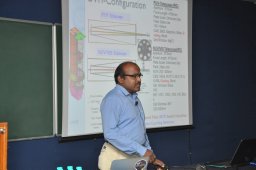 Sriram Sripadmanaban合作论文数Sri Ramakrishna Engineering College10s k duhan合作论文数8
 Nagabhushana Subramanya合作论文数8S. S. Upadhya合作论文数8
 Tushar Prabhu合作论文数Indian Institute of Astrophysics8
 Varsha R Chitnis合作论文数Department of High Energy Physics, School of Natural Sciences, Tata Institute of Fundamental Research8Prashanth R. Vishwanath合作论文数8
 Kiran Gothe合作论文数8B. B. Singh合作论文数7N. K. Parmar合作论文数7s k sharma合作论文数7g srinivasulu合作论文数7Tandon S合作论文数7Ghosh S合作论文数7
 Ramanath Cowsik合作论文数Tata Institute of Fundamental Research Homi Bhabha Road 400005 Colaba, Bombay7d tsewang合作论文数6n dorji合作论文数6
 L. Saha合作论文数Ctr Astrophys Harvard & Smithsonian6
 Amit Kumar合作论文数Medical Branch, University of Texas6
 B. S. Acharya合作论文数Department of High Energy Physics, Natural Sciences Faculty, Tata Institute of Fundamental Research6B. K. Nagesh合作论文数6
 Richard J. Britto合作论文数6C. S. Stalin合作论文数6P. V. Sudersanan合作论文数5J. Postma合作论文数5fozia saleem合作论文数5
 Annapurni Bubramaniam合作论文数Indian Institute of Astrophysics5R. Srinivasan合作论文数5
 Kameswara Rao Neelamraju合作论文数Indian Institute of Astrophysics5
 John Hutchings合作论文数National Research Council of Canada5Kasiviswanathan Sankarasubramanian合作论文数5V. Girish合作论文数5
 Jayant Murthy合作论文数Indian Institute of Astrophysics5
 G.C. Anupama合作论文数Indian Institute of Astrophysics5
 Indrajit Barve合作论文数5Ajay K. Saxena合作论文数5j p lancelot合作论文数4a k pati合作论文数4j manoharan合作论文数4S. K. Rao合作论文数4
 Amit Shukla合作论文数Dept. of Mech., Ind. & Nucl. Eng., Cincinnati Univ.;c;Dept. of Mech., Ind. & Nucl. Eng., Cincinnati Univ.4B. Raghavendra Prasad合作论文数4R. Mohan合作论文数3
 Avinash Kumar合作论文数3
 Neglia Joseph P合作论文数Dept Pediat, Univ Minnesota3
 Denis Leahy合作论文数Department of Physics and Astronomy, Faculty of Science, University of Calgary3Ravinder Koul合作论文数3




