BLUF Moral Inversion Syndrome: Moral Inversion Syndrome (MIS) refers to a pattern in which the perceived human-rights standing of Western democratic states declines relative to that of authoritarian regimes. Human Rights Difference Index (HRDI): We constructed a Human Rights Difference Index to capture relative evaluations of authoritarian and Western democratic states. The index was calculated as the average human-rights rating assigned to authoritarian regimes (Cuba, Sudan, China, Iran, and North Korea) minus the average rating assigned to Western democratic states (Switzerland, the United States, and Australia). Negative scores on this index indicate that democratic countries’ human rights records were rated higher than those of authoritarian ones, whereas positive scores indicate that authoritarian countries’ human rights records were rated higher than those of democratic ones. Higher scores reflect movement toward the inversion of widely accepted international ratings of human-rights records. Moral Inversion comprises a coherent ideological syndrome. Analyses found that higher scores on the Human Rights Difference Index were predicted by higher endorsement of antizionism (r = 0.33), generic antisemitism (r = 0.35), left-wing authoritarian political attitudes (r = 0.30), and narratives drawn directly from Soviet (r = 0.31) and Nazi (r = 0.39) propaganda about Israel. Antizionism, generic antisemitism, left-wing authoritarianism, and endorsement of Soviet and Nazi propaganda all correlated not only with the Human Rights Difference Index, but also with each other, revealing an interconnected matrix of attitudes. Two of the strongest predictors of Human Rights Difference Index scores were antizionism and generic antisemitism, which overlap but retain distinct characteristics. Across four studies, the two attitudes were significantly correlated (r ~ 0.56) but not identical. 4-12% of respondents expressed strong antizionist views despite reporting low levels of generic antisemitism whereas only about 0.1-0.4% expressed low levels of antizionism and high levels of generic antisemitism. NCRI assesses that antizionism constitutes a uniquely dangerous potential Trojan horse for Moral Inversion Syndrome and warrants concern on the basis of national security. Antizionism is capable of persisting without appearing to violate the taboos associated with older versions of antisemitism, and in our data proved the single strongest predictor for anti-hierarchical aggression and opposition to convention. Antizionism has the potential to empower political movements and foreign state actors to launder authoritarian and anti-democratic sentiment using the language of human rights.
Emotions coordinate our behavior and physiological states during survival-salient events and pleasurable interactions. Even though we are often consciously aware of our current emotional state, such as anger or happiness, the mechanisms giving ...Emotions are often felt in the body, and somatosensory feedback has been proposed to trigger conscious emotional experiences. Here we reveal maps of bodily sensations associated with different emotions using a unique topographical self-report method. In ...
Executive Summary: The murder of UnitedHealthcare CEO Brian Thompson has revealed a dangerous shift in societal norms. Using social media data, AI, and social psychology survey methods, we find an evolving online “permission structure,” a framework that justifies previously unacceptable beliefs or actions with a mutually reinforcing dynamic: Social media platforms provide amplification, while psychologically susceptible individuals provide justification. Together they form an emergent system that normalizes violence. Our data suggest that this is not simply about extremist fringe groups. These narratives are becoming popular on mainstream platforms in ways we have only previously seen on extremist platforms such as Gab or 4chan, creating widespread cultural shifts that lower moral boundaries for targeted violence against political, social, or class enemies. Our survey revealed that the more social media a person consumes, the more likely they are to believe that Mangione’s actions were at least somewhat justified.
We examined relations between foreign funding of U.S. colleges and universities and campus political developments. Seven studies investigated associations between foreign funding and campus liberal democratic norms, specifically, deterioration of free speech and academic freedom, and presence of antisemitism. Study I found that 349 colleges and universities received a total of almost $18 billion from foreign sources between 2014 and 2019. Study II examined relationships of foreign funding to campus deplatforming of speakers and punitive actions for speech protected by academic freedom. Main results were: 1. overall foreign funding was not strongly related to campus speech outcomes; 2. higher levels of deplatforming and speech punishment occurred on campuses that received funding from member states of the Organization of Islamic Cooperation and from authoritarian countries. Study III found weak evidence that foreign funding was associated with college students' reported exposure to antisemitic and anti-Zionist tropes. After demonstrating substantial correlations among three national measures of antisemitic incidents (Study IV), Study V found that foreign funding provided by member countries of the Organization for Islamic Cooperation or by authoritarian countries was associated with elevated levels of campus antisemitism and anti-Zionist incidents. Studies VI and VII found that antisemitic incidents on campus were associated with antisemitic incidents across the country. This research highlighted troubling possibilities about the potential role of foreign funding in higher education that deserve further investigation.
Science is among humanity’s greatest achievements, yet scientific censorship is rarely studied empirically. We explore the social, psychological, and institutional causes and consequences of scientific censorship (defined as actions aimed at obstructing particular scientific ideas from reaching an audience for reasons other than low scientific quality). Popular narratives suggest that scientific censorship is driven by authoritarian officials with dark motives, such as dogmatism and intolerance. Our analysis suggests that scientific censorship is often driven by scientists, who are primarily motivated by self-protection, benevolence toward peer scholars, and prosocial concerns for the well-being of human social groups. This perspective helps explain both recent findings on scientific censorship and recent changes to scientific institutions, such as the use of harm-based criteria to evaluate research. We discuss unknowns surrounding the consequences of censorship and provide recommendations for improving transparency and accountability in scientific decision-making to enable the exploration of these unknowns. The benefits of censorship may sometimes outweigh costs. However, until costs and benefits are examined empirically, scholars on opposing sides of ongoing debates are left to quarrel based on competing values, assumptions, and intuitions.
This chapter reviews evidence regarding the radicalization of academia. It is organized into the following major sections: A review of the evidence on the psychology of left-wing extremism and left-wing authoritarianism; a review of selected real-world events emblematic of left-wing extremism and authoritarianism in the American academy; we then review national surveys of Americans and American professors, which show that both the mainstream left and far left are massively overrepresented in the American academy, and this skew seems to be in the process of becoming even more extreme. This is then followed by a review of surveys showing that scholars on the right report far greater experiences of a hostile work environment than do scholars on the left and substantial minorities and sometimes majorities of scholars on the left express willingness to purge and punish their opponents. Evidence provided by surveys of academics also shows that academia is increasingly populated by demographic groups less supportive of free speech and academic freedom. As individuals hostile to free speech and academic freedom ascend into leadership positions in major academic organizations and institutions, they can be expected to implement policies reflecting that hostility. A review of recent developments at major universities, the National Institutes of Health, the apex science journal Nature, and the Society for Personality and Social Psychology confirms this expectation. We end by reviewing some of the ways the radicalization of the American academy has produced ideological corrupt and demonstrably invalid scholarship. We end by making some recommendations for reversing these trends but we are not optimistic that any will actually be adopted to any significant degree.
Our primary research question was whether memes and codewords, private or fringe online forums, and hybrid real-world/online militia—the three characteristic tactics that support outbreaks of extremist violence for both Jihadi and Boogaloo extremism—are also prevalent in anti-fascist and anarcho-socialist groups. We articulate three specific aims to address this research question: • Do anarcho-socialist memes and codewords, like those of Jihadi, Libertatrian-anarchist, and white supremacist extremists groups, appear during episodes of political violence? • Are anarcho-socialists extremists employing fringe and private online forums to communicate and recruit followers in the same ways in which Jihadi groups and libertarian anarchists do? • Are there anarcho-socialist online/real-world hybrid militias and weapons enthusiast groups that mirror libertarian-anarchist extremist groups such as the Boogaloo which constitute a potential threat to the public and to law enforcement?
Key Findings 1. Conspiratorial depictions of Jews reliably emerge in extremist communities online and are often camouflaged as conspiracy theories about individuals (for example, George Soros and President Trump). 2. Members of extremist online communities disseminate anti-Jewish disinformation in advance of and during elections, inaugurations, foreign interventions by the U.S., and during domestic terror attacks. 3. Russian trolls disseminate the same anti-Jewish conspiracy memes and themes online— and at the same time—as members of extremist communities, thus amplifying the antisemitic messaging. 4. Anti-Jewish disinformation by conspiracy groups such as QAnon peaked on Twitter at the onset of the Floyd social justice protests in May 2020, and remains higher now than it was before the coronavirus pandemic. 5. Anti-Jewish conspiracy theories appear not only in extremist online communities but also on mainstream online platforms, especially during civic unrest and transitions of power.
 Lee Jussim合作论文数Department of Psychology, School of Arts and Sciences, Rutgers University5
 Steve Stewart Williams合作论文数3
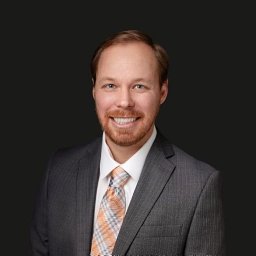 Nathan Honeycutt合作论文数Department of Psychology, Rutgers University—New Brunswick3
 Musa Al-Gharbi合作论文数3
 Roy F. Baumeister合作论文数School of Psychology, University of Queensland;Florida State University3
 Stephen Ceci合作论文数Department of Human Development, Cornell University3Del Giudice Marco合作论文数3Bo Winegard合作论文数3
 Chris Martin合作论文数Emory University3
 Cory Clark合作论文数School of Social Ecology, University of California, Irvine3
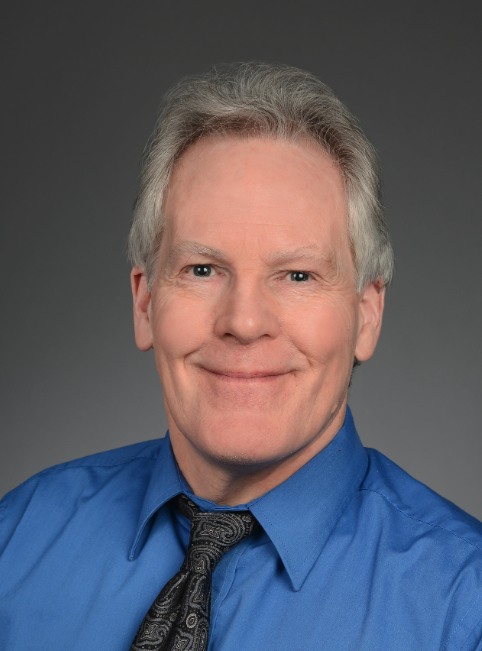 David C. Geary合作论文数Department of Psychological Sciences, University of Missouri3
 Geoffrey F. Miller合作论文数Department of Psychology, The University of New Mexico3
 Joseph P. Forgas合作论文数School of Psychology, University of New South Wales3Wendy M. Williams合作论文数3
 Anna Krylov合作论文数Department of Chemistry, College of Letters, Arts and Sciences, University of Southern California3
 Anne Wilson合作论文数Wilfrid Laurier University3
 April Bleske-Rechek合作论文数Department of Psychology, University of Wisconsin-Eau Claire3
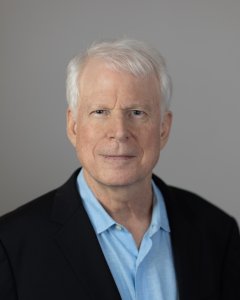 David M Buss合作论文数Department of Psychology, College of Liberal Arts, University of Texas at Austin3
 Catherine A. Salmon合作论文数University of Redlands Berkeley3
 Glenn Geher合作论文数Department of Psychology, SUNY New Paltz3Komi Frey合作论文数2
 William Von Hippel合作论文数The University of Queensland2
 Stevens Sean T合作论文数2Sonia Yanovsky合作论文数1Wilfred Reilly合作论文数1Louise Yunzi Lu合作论文数1Ayal Feinberg合作论文数Dept Polit Sci, Texas A&M Univ1Alexander Reid Ross合作论文数1
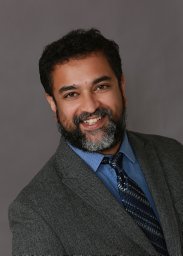 Hrishikesh Joshi合作论文数Department of Philosophy, Bowling Green State University1bradley campbell合作论文数1
 Nicole Barbaro合作论文数Dept Psychol, Oakland Univ1
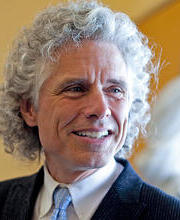 Steven Pinker合作论文数Department of Psychology, Harvard University1
 Philip Tetlock合作论文数Department of Management, The Wharton School, University of Pennsylvania1
 J. Michael Bailey合作论文数Department of Psychology, Northwestern University1
 Glenn C. Loury合作论文数Department of Political Science, Brown University1
 Michael Macy合作论文数Social Dynamics Laboratory, Department of Sociology, College of Arts & Sciences, Cornell University;Department of Information Science, Cornell University1John Mcwhorter合作论文数University of California1George Yancey合作论文数Division of Social and Policy Sciences, University of Texas-San Antonio1
 Peter H Ditto合作论文数Department of Psychology and Social Behavior, University of California, Irvine1
 Elizabeth F. Loftus合作论文数Department of Criminology, Law, and Society, School of Social Ecology, University of California, Irvine;School of Law, University of California, Irvine1
 Karl Aquino合作论文数Marketing & Behavioural Science Division, Sauder School of Business, The University of British Columbia1




