Partially observable locomotion requires a policy to act when task-relevant properties of the robot–environment state are not fully specified by instantaneous observations. Existing approaches often address this challenge by explicitly estimating missing physical variables or processing extended observation histories through structured architectures. We take a different view: partial observability is fundamentally an information-retention problem. The decisive question is not how task-relevant information enters the network, but whether the policy's internal state retains it. Guided by this perspective, we propose SleepWalking for Robot Locomotion (SWAQ), a one-stage end-to-end framework that uses next-step privileged physical reconstruction to shape what a recurrent history representation retains during policy learning, while the deployed actor uses only a direct history-to-action pathway. Under aligned training settings, SWAQ achieves a 15.0% higher peak mean terrain level than DWAQ, the strongest non-exteroceptive baseline, while using 44.4% fewer inference MACs per control step. Layerwise probes further show that information associated with the reconstructed physical variables remains linearly decodable through the policy head up to the layer preceding the action output. Complementary theoretical analysis relates privileged-variable recoverability to the achievable-return gap between history-based and privileged-information policy classes. These results suggest that semantic objectives can structure learning without requiring a corresponding architectural decomposition of the deployed controller.
The potential of knee-wheeled wheel-legged robots (KW-WLRs) might be underestimated within the domain of wheel-legged robots (WLRs). When transitioning into legged motion mode, KW-WLRs exhibit passability comparable to traditional legged mobile robots on rough terrain. However, this comes at the cost of reduced flexibility due to the larger inertia of legs, when carrying a redundant knee-wheel. To address this challenge, a wheel-leg cooperation strategy is proposed, that leverages the redundant knee-wheel to enhance legs motion. Analyzing the characteristics of hydraulic actuators for the legs and a permanent magnet synchronous motor (PMSM) for the wheel in our KW-WLR mechanism, we design a delayed nonlinear model predictive controller (DNMPC) to collaboratively control the wheel-leg system. Simulation results demonstrate that our proposed wheel-leg collaborative strategy and controller, which consider the actuators’ characteristics, improve toe-end tracking performance across diverse working conditions and enhance the overall KW-WLR’s locomotion skill.
This article proposes a framework to address the challenges of the uncalibrated cylinder-driven heavy-legged robot (HLR) in accurately observing the ground reaction force (GRF). The proposed framework eliminates the need for force/torque sensors mounted on end-effectors or joints. One key contribution of this article is the development of a combined model, referred to as an approximate PMSM model (APM), which incorporates permanent magnet synchronous motors (PMSMs), electric cylinders, and the HLR. This model establishes the relationship between the input phase currents and the movement of the HLR, and it captures the characteristics of GRF, the HLR nominal torque, and the overall disturbances. To enable GRF observation based on the measured currents, an improved sliding-mode observer with harmonic, nominal, and unmodeled compensation was used. Harmonic compensation enhanced real-time responses and accuracy. Additionally, a radial basis function neural network was used to compensate for the unmodeled portion, which includes friction in all drive components of the HLR. Subsequently, a modified form of the nonlinear disturbance observer compensation was introduced to account for the HLR nominal torque in the APM. Through experimental evaluation, the effectiveness of the proposed framework was validated for the GRF observation.
Trading-arm suspension vehicles (TAV) often encounter difficulties when navigating uneven terrains due to their unique mechanisms and coupling dynamics, rendering them susceptible to compromised ride comfort and significant posture changes. To address these challenges, we propose a decentralized posit ion-based impedance control (PIC) approach, which integrates posture stability metrics with impedance characteristics through a centralized skyhook model. Furthermore, we introduce the generalized momentum (CM) method to estimate the external torque at the arm joint induced by road disturbances, acting as the mapped Cartesian external force in the PIC loop. Through simulation experiments, we verify the efficacy of the proposed controller and juxtapose its performance against traditional PD suspension controllers. The results attest to the substantial enhancement in ride comfort and posture stability afforded by the proposed controller, thereby presenting a compelling control solution for TAV applications.
This paper introduces an adaptive steering control system for wheel-track hybrid vehicles, addressing the challenge of steering efficiency when both wheel and track systems are engaged. A kinematic model and rotational center prediction approach are proposed to enhance trajectory tracking on varied terrains. The concept of a virtual side slip angle is utilized to adjust the vehicle's steering center, improving adaptability. Simulation results validate the model's effectiveness in optimizing steering response under dynamic conditions. The study contributes to the advancement of hybrid vehicle dynamics and control systems.
Hybrid wheel–track systems have found extensive applications due to the advantages a combination of wheels and tracks. However, the coupling influence between the wheeled and tracked mechanisms poses a challenge to stable and efficient controller design and implementation. This paper focuses on the lateral dynamic control of a vehicle in scenarios where both tracks and wheels are in contact with the ground. A dynamic model of a vehicle is first established based on the tire brush model and linearized general track model. Based on the dynamic model, a novel adaptive model predictive control (AMPC) method is designed considering the coupling and nonlinearity of the wheels and tracks to simultaneously regulate both mechanisms. Compared with traditional model predictive control approaches, the AMPC controller takes the side-slip angle and slip ratio as constraints to prevent the vehicle from reaching unstable states. Simulations are conducted to validate the effectiveness of the controller, and the results indicate that the controller has the capacity to optimize the objective’s yaw-rate response while maintaining lateral vehicle stability and preventing slip by imposing constraints.
Wheel-legged robots (WLRs) with knee-wheel placement can switch motion mode into wheeled motion and legged motion depending on the road condition. However, in wheeled motion mode, robots are energy-efficiency and high maneuverability but struggle to handle rough terrain. To address this challenge, we propose a quarter-car model predictive controller (MPC) that utilizes both thigh and calf leg actuation to track sprung mass displacement and regulate tire force during unknown road disturbances. To overcome the high computational demands of whole-body MPC-based posture control for the entire robot, we propose a distributed MPC-based framework with inverse kinematics. Simulations, including quarter-car wheel-legged system simulation, posture tracking, braking, and steering with load transfer, were conducted to evaluate the effectiveness of our proposed control framework and the promising performance of multi-actuation involving the calf leg. The results of this paper demonstrate that our proposed approach is effective in improving the posture control and stability of knee-wheeled WLRs, particularly in rough terrain conditions.
The suspension system is vital to vehicle performance because it undertakes most of the interactions between wheels and the vehicle body. Due to the significant geometric nonlinearity, there is still a gap of suitable suspension models that are both accurate and computationally efficient. To solve the problem, this paper proposes an explicit solution to the nonlinear geometry of double wishbone suspension by decoupling steering and wheel jumping degrees of freedom (DOF). By discarding the small displacement assumption in the derivation process, the new model gets rid of repeated numerical iterations, resulting in substantial enhancement in computational efficiency. Furthermore, it is noticed in the comparative study that the proposed model can achieve the same level of accuracy as Adams. Benefiting from high computational efficiency and accuracy, the decoupling model presented is successfully used in the optimal design of a double wishbone suspension for smaller variation ranges of wheel alignment parameters. It is anticipated that the research will make significant contribution to fast dimension design of suspension geometry and real-time control of active variable geometry suspensions.
In this paper, we propose an improved and effective control framework for wheel-legged vehicles. Our framework allows the vehicle to navigate uneven terrains while maintaining balance and tracking the trajectory of the center of mass (CoM). In detail, single rigid body dynamics (SRBD) and whole body dynamics (WBD) are introduced to describe the body motion at first. Then, based on the SRBD, by introducing the output of the longitudinal speed controller as a constraint, a body balance controller is designed, which can simultaneously optimize the wheel driving force and the support force required by the body. The joint controller is designed through a WBD model and the overall dynamics compensation is performed. Ultimately, by adjusting gain weights to coordinate different control computation results, whole vehicle control is achieved. Validation in simulation demonstrates that our wheel-legged vehicle can navigate uneven terrain at a maximum of 3.0m/s, showing the feasibility of this framework.
To address the question of which posture trailing-arm vehicles (TAVs) should be adopted while driving, this study introduces an innovative active posture controller (APC) to improve both path-following and handling stability performance. Leveraging a nonlinear tire model that considers corner load variation and wheel camber, alongside the kinematics and double-track model of TAVs, the impact of vehicle body posture on handling performance has been investigated. To fully utilize the four-wheel independent drive and posture adjustable characteristics of the TAV mechanisms, an integrated nonlinear model predictive control (NMPC) combining APC and tire forces distribution is devised. Through simulations conducted using Simulink-Multibody (2023a), the effectiveness of the proposed controller is demonstrated, particularly when compared to the scheme that does not account for the unique posture adjustment mechanisms of TAVs.
Heavy quadrupedal drives have great potential for overcoming obstacles, showing great possibilities for transportation industries in complex environments. Ground reaction force (GRF) is a crucial state variable for quadrupedal control. Most GRF observations are implemented in lightweight quadrupeds, with little consideration of the loading being static or slippery on the body. However, the load information is vital to the heavy-duty quadruped applied in transportation tasks. In this paper, we disassembled the whole-body dynamics into the body dynamics combined with the individual floating single-leg dynamics and completed observing the virtual coupling effects between the body and legs. Based on the observed coupling force and centroidal dynamics (CD), the GRF of a stance leg is obtained without the awareness of body weight, movement, and load information. Furthermore, we utilized the body dynamics and the observed virtual force to obtain the body's unknown payload. By reconstructing the moment balance equation, we obtained the payload's position concerning the body coordinate. Compared to conventional quadrupedal GRF observation methods, this framework achieves higher observation accuracy in heavy quadrupeds without load and body information. Additionally, it enables real-time calculation of load magnitude and position.
In the field of wheel-legged robots (WLRs), two types of configurations exist: toe-wheeled and knee-wheeled. In the knee-wheeled configuration, the robot is capable of switching between leg walking and wheel driving modes. However, the participation of the calf leg in driving control is often limited during the switch to the wheel driving mode, which makes it similar to a rocker-arm suspension vehicle with an additional unsprung mass. The presence of redundant calf legs in knee-wheeled WLRs can increase the unsprung mass, potentially impacting the overall performance of the robot. To address this issue, this paper presents a collaborative control method based on road preview for knee-wheeled WLRs. The proposed approach simplifies the wheeled system to a quarter car model and designs a Model Predictive Controller (MPC). By effectively integrating the redundant calf legs into the control strategy, the proposed approach aims to mitigate the negative effects of increased unsprung mass and enhance the overall performance of the robot in terms of vertical comfort and road holding ability. Simulation results demonstrate that the vertical performance of the wheel leg system can be effectively improved through the control of the calf leg when traversing undulating terrains. The proposed anticipatory control method and collaborative controller were found to effectively enhance the overall performance of the robot in terms of comfort and road holding ability. The findings of this study provide insights into the development of control strategies for knee-wheeled legged robots and contribute to the advancement of wheeled legged locomotion research.
In unstructured environments, perceiving ground posture angles can help quadruped robots make some adjustments to their movement strategy. While using vision and lidar to perceive terrain is prone to be affected by weather, light, surface texture, etc. This paper introduces a proprioception approach based on the Inertial Measurement Unit (IMU) and kinematics to estimate the ground’s pitch and roll angle. Firstly, the posture angle of the robot body can be obtained according to the IMU under a framework of Extended Kalman Filtering (EKF), and the position of each foot end can be obtained based on the kinematics using the joint encoder information. In addition, a weighted Gaussian probability touchdown estimation model is proposed in this paper, which considers the amplitude of knee torque and the height of the foot end in the vertical direction. By selecting the position of the foot end in two stance phases, the spatial geometric parameters of the foothold support plane can be calculated using Moore–Penrose pseudoinverse based on the least squares method. Furthermore, a low pass filter is employed for smoothing the estimated ground posture angle. The experiment based on the Unitree Robotics GO1 quadruped robot shows the accurate estimation of the ground’s pitch and roll angle. Besides, the touchdown detection method has a good effect on estimating the contact state during trotting.
When legged robots walk on the unstructured road, it is significant for quadruped robots to use adaptive motion control strategies by sensing the terrain geometry. This paper introduces a contact probability approach, which fuses gait sequences, knee joint torque size, and kinematics model to promote the accuracy of contact state detection, only using proprioceptive sensing technology without using vision or lidar perception information. By fusing the amplitude of the knee joint torque, Inertial Measurement Unit (IMU), and kinematics, the contact information can be estimated under a framework of Kalman Filtering (KF). Furthermore, an estimation model of ground attitude angles is proposed in this paper, which utilizes the contact state estimation information to construct a virtual contact state plane based on the least squares method. What’s more, the pitch angle and roll angle of the contact state ground plane can be separated from the math model of the virtual plane. Experiments with the Unitree Robotics Go1 EDU robot show the success of estimating the ground’s pitch angle and roll angle, as well as the detection algorithm of contact state while trotting on the slope.
Prostate cancer is prevalent cancer worldwide, ranking fourth in frequency. A systematic biopsy can significantly increase a patient's 5-year survival rate. However, accurate and effective biopsy based on pre-biopsy magnetic resonance imaging (MRI) and hand-held transrectal ultrasound (TRUS) is reliant on the operator's expertise. This paper presents a novel MRI/TRUS auxiliary system based on the deep learning method for prostate intervention, including the system architecture and workflow. The system comprises a preprocessing unit, a registration unit, and a navigation unit. The nnU-net is utilized to generate segmentation labels for the prostate and surrounding organs. The DeepReg network is used in the registration unit to fuse real-time TRUS and pre-biopsy MRI. The navigation unit provides reference insertion positions and alerts the operator of potential collisions and damage to nearby organs. The experimental results, based on data from both the TCIA and hospitals, demonstrate the effectiveness and feasibility of the auxiliary system.
In this paper, we propose a framework that contains a cascade trajectory optimization (CTO) method and a hybrid control architecture for wheel-legged quadruped robots. Our framework allows the robot to go over high obstacles efficiently without pause in body movement and maintain stability simultaneously. In detail, the CTO is first presented for planning the support motion of the entire process over obstacles. The CTO is used to optimize the body states, the locations and contact forces of the end-effector (EE) for each leg in the support state, and the duration of the phase, with multiple constraints taken into count. Then, the output of the CTO is reprocessed to connect the support motion with the swing part for generalizing the final trajectory. A hybrid control architecture consisting of body motion control, EE control, and swing leg control is designed to track the reprocessed trajectory. Validation in simulation demonstrates that our wheel-legged robot can overcome high obstacles up to 0.90m, showing the feasibility of this framework.
The ability to navigate complex topography poses a significant challenge to the computational power of controllers for wheel-legged robots, as it requires the planning of the robot's motion path based on terrain height information and considering the sophisticated dynamics of the wheel-leg mechanism. Therefore, we propose a virtual force control method based on the vertical artificial potential field (APF) to address this problem. The virtual attractive and repulsive forces of the robot's center of mass (CoM) are obtained through pre-determined poles in the robot's body. We distribute the generalized virtual force to each tire by quadratic programming (QP) and then map it to the actuation joints of the legs and wheels. Additionally, a residual observer for external torque is implemented to determine the ground contact state of the wheels. The proposed control architecture is evaluated through simulations in the Simulink environment under conditions of obstacle avoidance and slope climbing. The results of these simulations demonstrate the effectiveness as well as potential of the proposed method in this paper.
The high self-weight and complex operating environment make implementing force sensor-based motion control of Heavy Quadruped Robots (HQR) challenging. In addition, for such robots, the mass of the heavy leg significantly impacts the ground reaction force (GRF) distribution and observation in the traditional control framework. This paper presents a GRF-Iess locomotion control framework for HQR based on five individual floating-base dynamics, fully considering the mass of legs and the coupled influence between the body and legs. We disassemble the full dynamics of the HQR into five spatially rigid parts with floating bases. The interaction effect between the body and legs is assumed to be a virtual spatial force (VSF), performing as the body's driving force and the loading force of the legs, which is obtained through the Nonlinear Disturbances Observer (NDOB). To realize the spatial trajectory control of the body, we utilize Quadratic Programming (QP) to solve the optimal VSF distribution on the body's hip joints. Furthermore, we employ Position-based Impedance Controllers (PIC) to build a VSF control loop to ensure that each grounded leg provides sufficient VSF to drive the body without slippage. Verification results show the promising locomotion control ability of the proposed framework for HQR.
Controlling highly dynamic quadruped robots is a challenging problem due to the high-dimensional states and complex dynamics of the legged system. In this study, we present a control framework for achieving stable trotting of an 8-DoF quadruped robot using the optimal time control approach. The transit time of the gait cycle is introduced as one of the performance indicators and a simplified half-robot model is proposed according to the characteristics of diagonal gait of a quadruped robot. The optimization problem is solved offline to serve as guidance for the robot's locomotion. Additionally, an anti-slip controller and a balance controller are designed to online modify the robot's actuation. This offline planning plus online modification control framework ensures a stable trotting of the robot. Experimental results on the robotic dog Gol demonstrate the effectiveness of the hybrid control architecture. The complete diagonal gait cycle is accomplished within 0.91 seconds under the corresponding control input constraints.
Existing research into the spinal morphology of quadruped robots predominantly simplifies it to a single degree of freedom (DOF) structure, a simplification that is valid for most locomotion gaits, but not optimally suited for a galloping gait where complex spinal movements could confer benefits. Observations of running cheetahs show that the elevation of the hips on the opposing sides of the torso is often uneven, suggesting a potential role of spinal torsion in locomotion. In this paper, a three DOF spine morphology is proposed, in which the front and rear torso have relative pitching DOF in the sagittal plane, while each has its own DOF in a rolling motion. Dynamic models are established for the front and rear torso separately, taking the rigid connection of the torso as constraints, and then motion planning is executed based on trajectory optimization. We adopt a galloping gait and compare this spinal morphology with the rigid torso and single DOF spinal morphology during the locomotion's rapid acceleration, constant high-speed running, and rapid deceleration phases. The results indicate that the DOF of the spine's pitch motion increases the stride between the front and rear legs, while the DOF of the rolling motion increases the stride between the left and right legs. It can be inferred that when the pitch joint angle of the spine is limited, the stride length can be further improved by adding the roll motion joints.
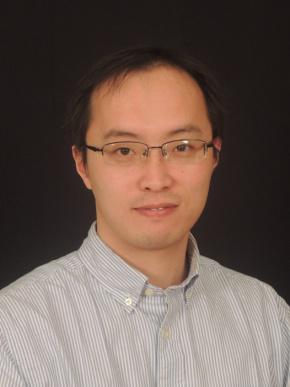 Rongrong Wang (王荣蓉)合作论文数20
 Shiyu Zhou合作论文数15Shaoxun Liu合作论文数14
 Boyuan Li合作论文数12
 Niu Zhihua合作论文数10Jiliang Wang合作论文数5Zhaopeng Lin合作论文数4Ying-hui Liang合作论文数2
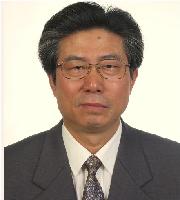 Xi Zhang (张喜)合作论文数School of Traffic and Transportation, Beijing Jiaotong University2Mohamed Abdullah合作论文数1Xiao Yang合作论文数1
 Liang Yu (余亮)合作论文数Northwestern Polytechnical University1
 Yang Xiao (肖杨)合作论文数Department of Computer Science, College of Engineering, The University of Alabama1
 Jun He (何俊)合作论文数School of Mechanical Engineering, Shanghai Jiao Tong University1




