This index covers all technical items—papers, correspondence, reviews, etc.—that appeared in this periodical during 2017, and items from previous years that were commented upon or corrected in 2017. Departments and other items may also be covered if they have been judged to have archival value. The Author Index contains the primary entry for each item, listed under the first author’s name. The primary entry includes the coauthors’ names, the title of the paper or other item, and its location, specified by the publication abbreviation, year, month, and inclusive pagination. The Subject Index contains entries describing the item under all appropriate subject headings, plus the first author’s name, the publication abbreviation, month, and year, and inclusive pages. Note that the item title is found only under the primary entry in the Author Index.
Developers spend much of their time reading and browsing source code, raising new opportunities for summarization methods. Indeed, modern code editors provide code folding, which allows one to selectively hide blocks of code. However this is impractical to use as folding decisions must be made manually or based on simple rules. We introduce the autofolding problem, which is to automatically create a code summary by folding less informative code regions. We present a novel solution by formulating the problem as a sequence of AST folding decisions, leveraging a scoped topic model for code tokens. On an annotated set of popular open source projects, we show that our summarizer outperforms simpler baselines, yielding a 28 percent error reduction. Furthermore, we find through a case study that our summarizer is strongly preferred by experienced developers. More broadly, we hope this work will aid program comprehension by turning code folding into a usable and valuable tool.
Developers spend much of their time reading and browsing source code, raising new opportunities for summarization methods. Indeed, modern code editors provide code folding, which allows one to selectively hide blocks of code. However this is impractical to use as folding decisions must be made manually or based on simple rules. We introduce the autofolding problem, which is to automatically create a code summary by folding less informative code regions. We present a novel solution by formulating the problem as a sequence of AST folding decisions, leveraging a scoped topic model for code tokens. On an annotated set of popular open source projects, we show that our summarizer outperforms simpler baselines, yielding a 28% error reduction. Furthermore, we find through a case study that our summarizer is strongly preferred by experienced developers. More broadly, we hope this work will aid program comprehension by turning code folding into a usable and valuable tool.
Combining abstract, symbolic reasoning with continuous neural reasoning is a grand challenge of representation learning. As a step in this direction, we propose a new architecture, called neural equivalence networks , for the problem of learning continuous semantic representations of algebraic and logical expressions. These networks are trained to represent semantic equivalence, even of expressions that are syntactically very different. The challenge is that semantic representations must be computed in a syntax-directed manner, because semantics is compositional, but at the same time, small changes in syntax can lead to very large changes in semantics, which can be difficult for continuous neural architectures. We perform an exhaustive evaluation on the task of checking equivalence on a highly diverse class of symbolic algebraic and boolean expression types, showing that our model significantly outperforms existing architectures.
We present a novel tool, TASSAL, that automatically creates a summary of each source file in a project by folding its least salient code regions. The intended use-case for our tool is the first-look problem: to help developers who are unfamiliar with a new codebase and are attempting to understand it. TASSAL is intended to aid developers in this task by folding away less informative regions of code and allowing them to focus their efforts on the most informative ones. While modern code editors do provide \emph{code folding} to selectively hide blocks of code, it is impractical to use as folding decisions must be made manually or based on simple rules. We find through a case study that TASSAL is strongly preferred by experienced developers over simple folding baselines, demonstrating its usefulness. In short, we strongly believe TASSAL can aid program comprehension by turning code folding into a usable and valuable tool. A video highlighting the main features of TASSAL can be found at https://youtu.be/_yu7JZgiBA4.
We present a novel tool, TASSAL, that automatically creates a summary of each source file in a project by folding its least salient code regions. The intended use-case for our tool is the first-look problem: to help developers who are unfamiliar with a new codebase and are attempting to understand it. TASSAL is intended to aid developers in this task by folding away less informative regions of code and allowing them to focus their efforts on the most informative ones. While modern code editors do provide code folding to selectively hide blocks of code, it is impractical to use as folding decisions must be made manually or based on simple rules. We find through a case study that TASSAL is strongly preferred by experienced developers over simple folding baselines, demonstrating its usefulness. In short, we strongly believe TASSAL can aid program comprehension by turning code folding into a usable and valuable tool. A video highlighting the main features of TASSAL can be found at https://youtu.be/_yu7JZgiBA4.
In this paper, our goal is to propose a socially and economically viable mechanism based on the FCD principle, through which the state of traffic congestion can be detected using inbuilt capabilities of modern smart-phones.
 Miltos Allamanis合作论文数Google DeepMind6
 Charles Sutton合作论文数Google DeepMind;School of Informatics, University of Edinburgh5
 Mirella Lapata合作论文数Institute for Language, Cognition and Computation, School of Informatics, The University of Edinburgh4
 Razvan Ranca合作论文数Tractable4
 Jaroslav M. Fowkes合作论文数School of Mathematics, University of Edinburgh4I Bate合作论文数1L. Baresi合作论文数1
 Chandima Fernando合作论文数University of Nebraska– Lincoln1
 Dinuni Fernando合作论文数Sch Comp, Univ Colombo1Z Chen合作论文数1Chamath Keppitiyagama合作论文数University of Colombo1Samarkoon, L.合作论文数1Sahabandu, L.合作论文数1Udalagama, S.合作论文数1Ranasinghe, C.合作论文数1
 Areti Ampatzoglou合作论文数Department of Applied Informatics, University of Macedonia1
 Hamid Bagheri合作论文数School of Computing, College of Engineering, University of Nebraska-Lincoln1
 Markus Borg合作论文数RISE SICS AB1
 Alan Burns合作论文数Department of Computer Science, University of York1
 Paris Avgeriou合作论文数Faculty of Science and Engineering, University of Groningen;Bernoulli Institute for Mathematics, Computer Science and Artificial Intelligence, University of Groningen1
 Kaustav Banerjee合作论文数Nanoelectronics Research Lab, University of California, Santa Barbara1
 Ansuman Banerjee合作论文数Indian Statistical Institute1
 Pushmeet Kohli合作论文数Google DeepMind1
 Jeffrey C. Carver合作论文数Department of Computer Science University of Alabama1
 Gerardo Canfora合作论文数Dipartimento di Ingegneria, Universita degli Studi del Sannio di Benevento1
 Tao T. Chen合作论文数School of Computer Science, University of Birmingham;Department of Computer Science, Loughborough University1
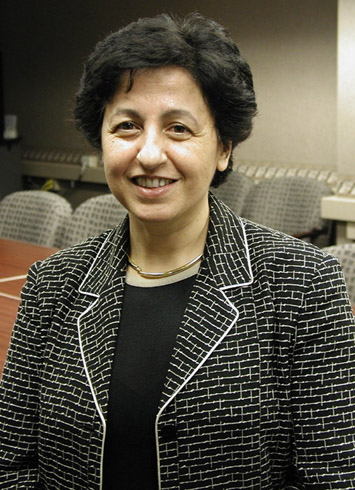 Elisa Bertino合作论文数Department of Computer Science, Purdue University;Cyber Space Security Lab, Purdue University1
 María-Emilia Cambronero合作论文数ReTiCS group, University of Castilla-La Mancha-Escuela Politécnica Superior de Albacete1
 Víctor Adrián Braberman合作论文数The Tools and Foundations for Software Engineering Lab, Department of Computing, Faculty of Science, University of Buenos Aires;CONICET1
 Christian Bird合作论文数Microsoft Research1
 Gabriele Bavota合作论文数Faculty of Informatics, Università della Svizzera Italiana1
 Rami Bahsoon合作论文数University of Birmingham1
 Alexander Chatzigeorgiou合作论文数Department of Applied Informatics, University of Macedonia1
 Reda Bendraou合作论文数UPMC Paris Universitas1
 Sven Amann合作论文数Technische Universität Darmstadt1
 Jesús Sánchez Cuadrado合作论文数Universidad Autónoma de Madrid1




